
Soups & Stews
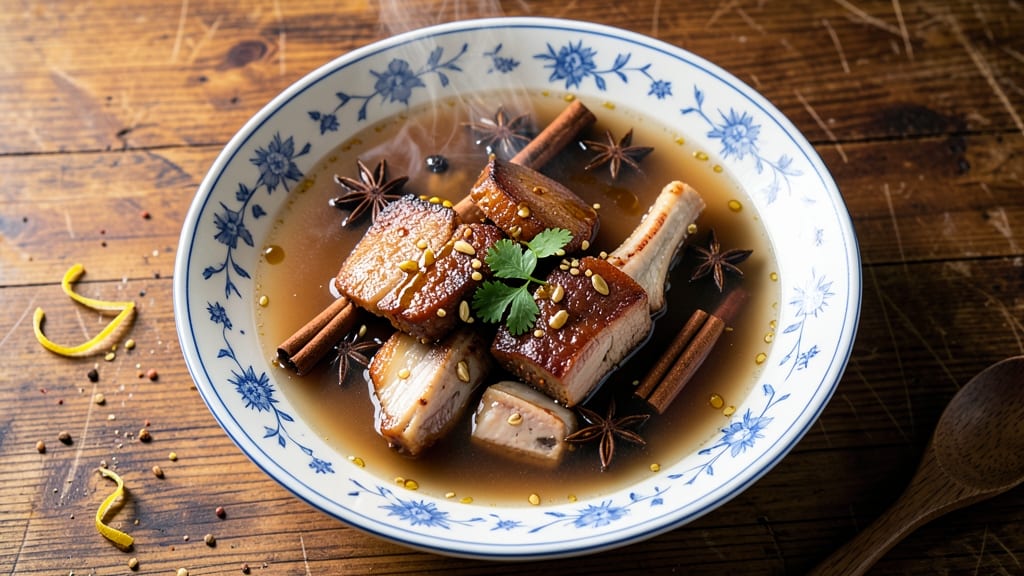
This Cantonese pork soup recipe delivers the comforting depth of a traditional Chinese home kitchen, where tender pork simmers in a fragrant five-spice broth until the flavors meld into perfect harmony. 💫 The secret lies in balancing sweet, salty, and umami notes—just like my grandmother taught me in Charleston—using star anise, cinnamon, and a touch of rock sugar to create a broth so aromatic it transforms simple ingredients into something extraordinary.
The process begins with a slow simmer that extracts maximum flavor from the pork bones and aromatics, resulting in a rich, golden broth that coats every spoonful.
I've perfected this technique over years of cooking for crowds at The Smoky Pig, ensuring the meat remains tender while the broth develops layers of complexity. The key? Patience—letting the flavors develop over 90 minutes of gentle simmering transforms this into a restaurant-quality dish you can make at home.
By the time you serve it, you'll have a steaming bowl of velvety pork pieces floating in a fragrant broth, garnished with crisp celery that adds both texture and visual appeal.
The five-spice blend—star anise, cinnamon, cloves, fennel, and pepper—creates an irresistible aroma that fills your kitchen long before the soup is ready. This is comfort food at its finest, perfect for family dinners or when you need a taste of home.
Serve with steamed rice to soak up every last drop of that precious broth, or pair it with simple stir-fried greens for a complete meal. The leftovers reheat beautifully, making this an ideal recipe for meal prep.
Let's get started on creating this timeless Cantonese classic that brings warmth and tradition to your table.
Ingredients for cantonese pork soup
Six aromatic ingredients transform simple pork into a fragrant, restaurant-quality Cantonese masterpiece.
| Ingredient | Amount | Notes |
|---|---|---|
| Pork Bones 🥩 | 2 lb | Marrow bones preferred for richness |
| Pork Shoulder 🥩 | 2 lb | Cut into 2-inch chunks |
| Star Anise 🌿 | 2 whole | Whole pods for infusion |
| Cinnamon Sticks 🌿 | 2 whole | 2-inch pieces for flavor |
| Cloves 🌿 | 6 whole | Whole, not ground |
| Fennel Seeds 🌿 | 1 tbsp | Toasted for depth |
| Black Peppercorns 🌶️ | 1 tbsp | Whole, lightly crushed |
| Rock Sugar 🍬 | ¼ cup | Or substitute brown sugar |
| Dried Shiitake Mushrooms 🍄 | 4 whole | Rehydrated, sliced |
| Fresh Ginger 🧅 | 2 tbsp | Grated, freshly peeled |
| Green Onions 🧅 | 4 whole | White and green parts separated |
| Celery Stalk 🥬 | 1 whole | Diagonally sliced for garnish |
| Light Soy Sauce 🍶 | ½ cup | Kikkoman preferred |
| Water 💧 | 8 cups | Filtered preferred |
| Cornstarch 🌾 | 1 tbsp | For broth thickening |
The pork bones are non-negotiable here—marrow bones from the butcher's case add that unmistakable richness. If you can't find them, neck bones work too, but they'll be a bit tougher. I always grab mine from Whole Foods or my local Asian market—they carry the best quality. For the five-spice blend, whole spices are essential. Star anise and cinnamon sticks infuse the broth with layers of flavor that ground spices can't match. Toast the fennel seeds lightly in a dry pan before adding—they'll release their aroma and deepen the flavor profile. Fresh ginger? Buy it in small chunks from the refrigerated section, not the jarred kind. It's worth the extra minute to grate it fresh.
No rock sugar? Brown sugar or coconut sugar works in a pinch, but it won't give you that same delicate sweetness. Running short on shiitake mushrooms? Dried porcini mushrooms are a solid swap—they add earthiness to the broth. The soy sauce matters here too. Kikkoman is my go-to, but any light soy will do. If you're using pre-sliced celery, rinse it well—it's often treated with preservatives that can make the broth bitter. For the cornstarch slurry, use cold water to mix it—this prevents clumping and gives you that silky texture. The green onions? Save the white parts for the broth and use the greens for garnish—they add that fresh pop of color.
This soup tastes even better the next day—plan ahead. Store it in the fridge for up to 5 days or freeze portions for 3 months. I like to portion it into containers with a little extra broth on top—it keeps everything moist and flavorful. The celery garnish? Add it just before serving so it stays crisp. If you're making this ahead for a crowd, double the broth and keep it warm in a slow cooker. The flavors only get more complex as it sits, so don't rush it.
Why You'll Love This Recipe
- One-Pot Magic: The pork bones and shoulder practically melt together—no chopping, no fuss, just dump-and-simmer. I swear, the hardest part is deciding when to stop stirring (which, honestly, is basically never).
- Spice Without Effort: Star anise and cinnamon sticks infuse the broth with that warm, aromatic depth, but you don’t have to fuss over spices. Toss them in, let them work their magic, and suddenly your soup tastes like a Cantonese restaurant’s secret.
- Leftovers That Save: This soup only gets better the next day (yes, even on a Tuesday night). The flavors meld overnight, and you’ve got a free, hearty lunch ready to go—no extra cooking required.
- Budget-Friendly Bone Broth: Pork bones and shoulder stretch this recipe into a whole meal without breaking the bank. It’s my go-to for feeding the family without stressing over grocery costs—plus, the leftovers turn into freezer-friendly meals.
Step-by-step instructions for Cantonese pork soup
This fragrant broth builds slowly—patience pays off with rich, aromatic layers of flavor.
🔥 Step 1: Char the Spices and Meat for Deep Flavor
Heat a dry skillet over medium-high heat. Add the 2 lb pork shoulder chunks and sear until deep golden brown on all sides, about 8-10 minutes. The caramelization forms the base flavor. Transfer to a plate and set aside.
In the same skillet, toast the 1 tbsp fennel seeds and 1 tbsp black peppercorns for 1 minute until fragrant. Add the 2 whole star anise, 2 whole cinnamon sticks, and 6 whole cloves, toasting for another 30 seconds until aromatic. Transfer all toasted spices to a bowl and set aside.
🍳 Step 2: Build the Aromatic Broth Base
In a large stockpot, combine the 2 lb pork bones, seared pork shoulder, toasted spices, 2 tbsp fresh ginger, and 8 cups water. Bring to a boil over high heat, then reduce to a gentle simmer. Skim off any foam that rises to the surface during the first 10 minutes—this ensures clarity.
Simmer uncovered for 2 hours, maintaining a barely bubbling state. The broth should develop a rich amber color and deep, complex aroma. If it reduces too much, add hot water as needed to maintain volume.
🍳 Step 3: Sweeten and Thicken the Broth
Add the 0.25 cup rock sugar and 0.5 cup light soy sauce to the simmering broth. Stir gently to dissolve the sugar completely. The broth should taste subtly sweet with a salty depth—this balance is key to authentic Cantonese flavor.
In a small bowl, whisk the 1 tbsp cornstarch with 2 tablespoons cold water until smooth. Slowly ladle the cornstarch mixture into the broth while stirring constantly. Simmer for another 5-7 minutes until the broth thickens slightly to a velvety consistency. Remove from heat.
🥘 Step 4: Prepare and Add the Shiitake Mushrooms
Soak the 4 whole dried shiitake mushrooms in hot water for 20 minutes until pliable. Drain, then slice into ¼-inch thick pieces. Add them to the broth and simmer gently for 10 minutes to absorb the flavors.
While the mushrooms cook, separate the 4 whole green onions into white and green parts. Diagonally slice the 1 whole celery stalk into ¼-inch thick pieces. These will be your garnishes—save them until serving.
🍽️ Step 5: Serve with Fresh Garnishes
Strain the broth through a fine-mesh sieve into a clean pot, discarding the solids. Taste and adjust seasoning with additional light soy sauce or rock sugar if needed. Keep the broth warm but not boiling.
Ladle the fragrant broth into bowls and garnish each serving with a sprinkle of white and green onion parts and diagonally sliced celery. The contrast of fresh, crisp garnishes against the rich broth creates the perfect balance. Serve immediately with steamed rice to soak up every drop of flavor.
Pro Tips For Making Cantonese Pork Soup
- Blister the Bones First: Char the pork bones in a screaming-hot pot for 3-4 minutes before adding water—this unlocks deeper flavor faster than simmering raw. I learned this the hard way after making soup that tasted bland for hours until I finally cracked open the lid to see pale bones.
- Split the Shoulder: Cut the pork shoulder into 2-inch chunks and make a shallow butterfly cut through the thickest part—this guarantees even cooking and melty texture. Skipping this means you’ll end up with tough chunks that need extra time no one has.
- Toast the Spices Whole: Lightly toast star anise, cinnamon, and cloves in the pot for 30 seconds after removing the bones—just until they smell aromatic. Overtoasting burns them, but undertoasting means they’ll just float there doing nothing.
- Strain Twice: First strain through a fine-mesh sieve to catch bone fragments, then pour the broth through a cheesecloth-lined strainer for crystal-clear soup. The first strain saves you from gritty bites; the second makes it look restaurant-worthy. (Yes, it’s extra work, but the difference is night and day.)
Perfect pairings for this dish
Broth-Based Pairings
This soup shines alongside other aromatic broth-based dishes. Try serving it with congee—a Cantonese rice porridge—where the rich pork broth soaks into the soft rice for an extra comforting bite.
I often make a small batch of ginger-scallion congee using short-grain rice and pour the pork broth over it at the table. The contrast of textures and temperatures makes every spoonful incredible. 💫
Rice Combinations
Steamed jasmine rice is the classic pairing, but don't overlook black rice for a visually stunning presentation. The deep purple hue of black rice adds an elegant touch while maintaining the same neutral base that absorbs the broth beautifully.
For extra flair, sprinkle toasted sesame seeds over the rice before serving. I also love pairing this soup with sticky rice dumplings (tangyuan) during Lunar New Year celebrations.
Vegetable Sides
Light, fresh vegetables balance the richness of the pork broth. Stir-fried bok choy with garlic and chili oil adds a peppery crunch that cuts through the soup's richness. For something heartier, try braised napa cabbage—its tender texture and subtle sweetness complement the five-spice flavors perfectly.
I always keep a batch of quick-pickled vegetables on hand for an instant tangy contrast.
Dipping Sauces
A small bowl of chili oil with black vinegar on the side lets diners customize their experience. The heat from the chili oil enhances the soup's umami depth while the vinegar adds brightness.
For a sweeter option, prepare a simple honey-soy dipping sauce by mixing 1 tbsp soy sauce, 1 tbsp honey, and a splash of rice vinegar. This sauce also works beautifully as a marinade for extra pork slices.
Dessert Pairings
End your Cantonese feast with almond cookies (luan tan) or mango pudding—both provide the perfect sweet contrast to the savory soup. The nutty crunch of the cookies balances the soup's richness, while the tropical sweetness of mango pudding cleanses the palate.
I often serve red bean soup as a dessert after pork dishes—its earthy sweetness complements the meal's overall flavor profile.
Beverage Pairings
A jasmine tea or pu-erh tea enhances the meal's aromatic qualities without overpowering the soup. For something lighter, try a lychee or osmanthus iced tea—the floral notes complement the five-spice broth beautifully.
If you prefer alcohol, a crisp dry Riesling or Chinese Shaoxing wine (huangjiu) adds an elegant touch to the dining experience. 🍷
Nutrition facts
Frequently asked questions
Can I substitute pork bones with chicken or beef bones?
The rich flavor of pork bones is essential for authentic Cantonese pork soup. While chicken bones will work in a pinch (creating a lighter broth), they lack the deep umami and fat content that pork provides. Beef bones can be used but will give a heavier, more robust flavor profile. For best results, stick with pork bones—they're worth seeking out at specialty butchers or Asian markets.
How do I know when the broth is ready?
The broth should have a deep amber color and intense aroma after 2 hours of simmering. It should coat the back of a spoon and have a velvety texture. Taste it before removing from heat—it should be subtly sweet with a balance of saltiness and aromatic spices. If it's too thin, simmer uncovered for another 15-20 minutes to reduce it slightly.
What can I do if my broth tastes too bitter?
Bitterness often comes from overcooking the bones or using too much ginger. To fix it, strain out the bones and add 1/4 cup rock sugar or 1 tbsp honey to balance the flavor. A splash of light soy sauce (1-2 tablespoons) can also help round out the taste. For future batches, reduce simmering time to 1.5 hours and use less ginger—1 tbsp instead of 2 tbsp.
Can I make this soup in a slow cooker? Yes, but with adjustments! Brown the pork and toast the spices as directed, then transfer everything to a 6-quart slow cooker. Cook on low heat for 8 hours or high heat for 5 hours. The longer cook time will intensify the flavors.
How do I store and reheat leftovers?
Store leftovers in airtight containers in the fridge for up to 5 days or freeze for 3 months. To reheat, warm gently on the stove over medium-low heat until steaming. Add a splash of water if the broth thickens too much. For best flavor, reheat only what you need—this soup tastes even better the next day as the flavors meld further.