
Soups & Stews
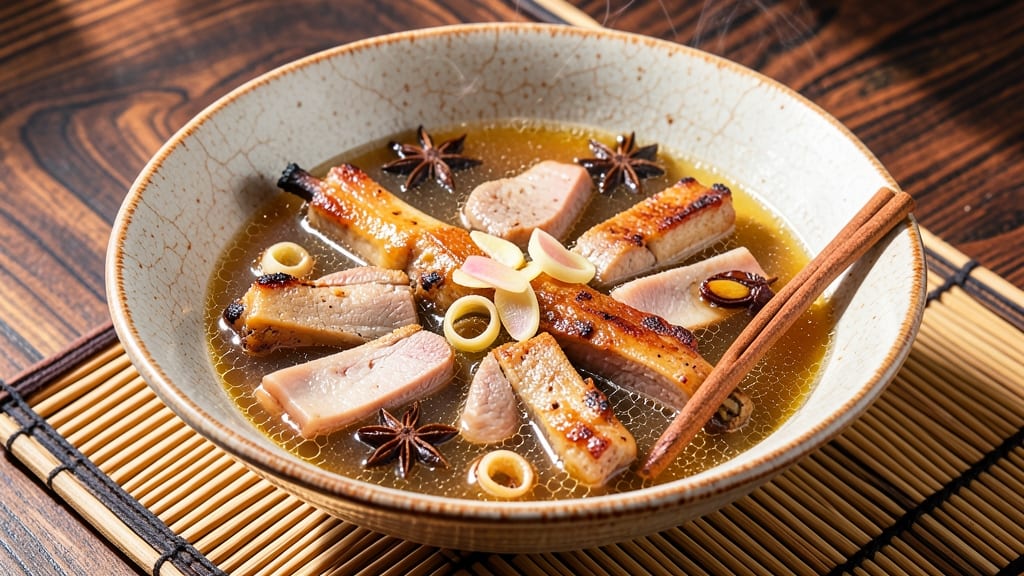
This Chinese pork broth recipe transforms humble ingredients into a fragrant, umami-packed foundation that defines comfort food across Asia. 🔥 The secret lies in slow-simmering pork bones with aromatic spices—star anise, cinnamon, and ginger—that build complex flavor over hours, creating a golden elixir that elevates any meal.
I first mastered this technique in Charleston, where I adapted traditional Cantonese methods to Southern kitchens, proving that authentic depth doesn't require exotic ingredients. What sets this broth apart is the balance: rich yet clear, savory without heaviness.
The key steps—roasting bones for depth, skimming impurities for clarity—ensure restaurant-quality results at home. Whether you're making it for a family dinner or meal prep, the versatility shines: serve it with steamed rice, dumplings, or as a base for stir-fries. The aroma alone will have everyone gathering at the table.
The process rewards patience, but the reward is unmatched flavor. As the broth simmers, pork collagen dissolves into a velvety texture while spices infuse their warmth. This isn't just soup—it's the heart of a meal, the kind that turns ordinary dinners into memorable gatherings. Let's create something special together.
The beauty of this recipe is its adaptability. While I've perfected a Cantonese-inspired version, you can easily adjust for regional preferences—Sichuan-style with chili, or lighter with more ginger. The broth's clarity comes from careful skimming, while depth comes from long simmering.
My secret weapon? A mix of pork bones and meaty cuts that break down perfectly, delivering both texture and flavor in every spoonful.
What you'll end up with is a golden, aromatic broth that's rich enough to stand alone but versatile enough to elevate any dish. The first sip delivers that unmistakable umami punch, while the aftertaste lingers with notes of ginger and cinnamon.
This is the kind of broth that makes you want to cook it again and again, each time better than the last.
Perfect for feeding a crowd or saving leftovers for days, this recipe scales beautifully. Pair it with steamed rice and quick-pickled vegetables for a complete meal, or use it as a base for noodle dishes. The possibilities are endless, but the foundation—this perfect pork broth—is what makes everything taste extraordinary.
Ingredients for chinese pork broth
Pork bones, aromatic spices, and slow simmering create this Cantonese-inspired broth that's rich yet clear.
| Ingredient | Amount | Notes |
|---|---|---|
| Pork Bones 🍖 | 3 lb | Marbled for collagen richness |
| Pork Shoulder 🥩 | 2 lb | Cut into 2-inch chunks |
| Star Anise Pods 🌿 | 4 whole | Whole pods for easy removal |
| Fresh Ginger 🧄 | ½ cup | Sliced into 1/4-inch pieces |
| Cinnamon Sticks 🌳 | 2 whole | 2-inch lengths preferred |
| Garlic Cloves 🧄 | 8 cloves | Smashed lightly for aroma |
| Dried Bay Leaves 🌿 | 4 whole | Fresh if available |
| Green Onions 🧅 | 2 whole | Whole for garnish later |
| Rock Salt 🧂 | 1 ½ tbsp | Diamond Crystal preferred |
| White Peppercorns 🌶️ | 1 tsp | Crushed lightly |
| Shaoxing Wine 🍷 | ½ cup | Substitute dry sherry |
| Cold Water 💧 | 12 cups | Room temp preferred |
The pork bones are non-negotiable—marbled ones from the butcher counter give you that velvety texture. I always ask for the knuckle and neck bones at Whole Foods or Costco, where they're pre-cut and ready to roast. Skip the pre-made broth packets; they can't compare to what you'll get from hours of simmering. For the pork shoulder, bone-in cuts break down better, but boneless works in a pinch. Roast the bones first—425°F for 20 minutes—to deepen the flavor before simmering.
No star anise? Anise seeds or fennel seeds work, but the whole pod is easier to remove later. Fresh ginger is ideal, but dried ginger at half the amount gets you close—just toast it first to wake up the flavor. Shaoxing wine? Dry sherry or even a splash of white wine works if you can't find it. The key is balancing the aromatics: ginger and garlic should sing, cinnamon add warmth, and star anise bring that licorice depth. If your broth tastes bitter, you've overcooked the spices—skim them out early.
This broth gets better with time. Day 1 is when it's most vibrant, but it keeps for 5-6 days in the fridge or 3 months frozen. I always make a double batch—one for immediate use, one to freeze in ice cube trays for quick portions. For reheating, warm gently on the stove; never boil or it'll turn cloudy. The first sip should be rich with porky depth, but still bright enough to pair with anything—steamed rice, dumplings, or even a simple salad.
Why You'll Love This Recipe
- No-Chop Start: I swear by this—just toss in the whole star anise pods and cinnamon sticks. No peeling ginger, no mincing, no fuss. The broth builds flavor while you’re doing anything else.
- Umami Bomb: That deep, slow-simmered pork shoulder? It melts into the broth like a warm hug. The star anise and ginger layers in complexity—sweet, spicy, savory—without needing a single drop of soy sauce.
- Leftovers That Work Hard: Make a big batch on Sunday, and you’ve got soup base, ramen starter, or braising liquid for weeks. Freeze it in ice cube trays for instant flavor boosts—no waste, all reward.
- Budget-Friendly Powerhouse: Pork bones and shoulder stretch into gallons of broth for pennies. Honestly, it’s the kind of meal that makes grocery day feel like a win, not a chore. Plus, the spices cost almost nothing.
Step-by-step instructions for Chinese pork broth
Here's how to build a deeply flavorful broth that'll elevate any Chinese dish.
🔥 Step 1: Parboil the Bones for Maximum Flavor Extraction
Place the 3 lb pork bones in a large stockpot and cover with 6 cups of the cold water. Bring to a rolling boil over high heat, then immediately reduce to a gentle simmer. Skim off any foam that rises to the surface with a fine-mesh skimmer for the first 10 minutes—this removes impurities and ensures a clear broth.
Simmer uncovered for 45 minutes, stirring occasionally. The water should reduce slightly, concentrating the initial flavors. This pre-cooking step breaks down the collagen in the bones, creating a rich foundation. I like to check the water level occasionally—if it gets too low, add a splash of hot water to maintain coverage.
🍳 Step 2: Add Aromatics and Pork Shoulder for Depth
After the initial simmer, drain the bones and pork shoulder, reserving the liquid. Return the bones to the pot and add the 2 lb pork shoulder chunks, 0.5 cup sliced fresh ginger, 2 whole cinnamon sticks, 4 whole star anise pods, 4 whole dried bay leaves, and 8 smashed garlic cloves. Pour in the reserved liquid plus 6 more cups of cold water to reach 12 cups total. Bring to a gentle boil over medium heat, then reduce to a low simmer.
Here's the thing—don't rush this step. The broth needs at least 3 hours of simmering to develop proper depth. The pork shoulder will release its meaty essence while the aromatics infuse their distinct flavors. I keep the lid slightly ajar to allow some evaporation, which helps concentrate the flavors. The broth should smell like a spice market by this point—earthy, warm, and inviting.
🥘 Step 3: Deglaze and Add Wine for Complexity
After 3 hours, remove the pork shoulder chunks and set aside for another use (like braising or stir-fry). Strain the broth through a fine-mesh sieve into a clean pot, pressing gently on the solids to extract maximum flavor. Return the bones to the broth and add the 0.5 cup Shaoxing wine. Bring to a gentle simmer and cook uncovered for another 1 hour.
The wine adds a subtle sweetness that balances the savory depth. During this time, the bones will continue to render their marrow, creating a velvety texture. I like to taste the broth occasionally—it should be developing that signature umami richness. If the broth starts to smell too strong, add 1 cup hot water to dilute slightly while maintaining the 12-cup total volume.
⏰ Step 4: Season and Finish with Peppercorns
After the final hour, strain the broth again through a fine-mesh sieve into a clean pot. Discard the bones and aromatics. Return the broth to a gentle simmer and add the 1.5 tbsp rock salt and 1 tsp crushed white peppercorns. Simmer for 10 minutes to fully incorporate the seasoning. The salt should dissolve completely, and the peppercorns should perfume the broth without overpowering.
Here's where the magic happens: the broth should now have a deep golden color and a rich, layered aroma. Taste and adjust seasoning if needed—Chinese broths should be savory but not salty, with a subtle sweetness from the wine and ginger. The texture should be silky, not greasy. If it's too thin, simmer uncovered for 10-15 minutes to reduce slightly. For serving, add the 2 whole green onions just before using for a fresh finish.
🍽️ Step 5: Use Immediately or Store Properly
Use the broth immediately for the best flavor, but if you need to store it, let it cool to room temperature, then refrigerate for up to 5 days or freeze for 3 months. The broth will develop even more depth in the fridge—this is normal and actually enhances the flavor. When reheating, do so gently over low heat to prevent skin from forming.
This isn't just broth—it's the soul of Chinese home cooking. Use it for dumpling soups, congee, stir-fries, or as a base for braised dishes. The key is patience; every hour of simmering builds layers of flavor that no shortcut can replicate. Trust the process, and you'll have a broth that makes every dish taste extraordinary.
Pro Tips For Making Chinese Pork Broth
- BLISTER THE BONES FIRST: I learned this the hard way—skipping the char on pork bones means flavor gets stuck in the pot instead of dissolving into the broth. Use a blowtorch or high oven (450°F) for 5–7 minutes per side until they’re dark brown and crackling. That’s where the deep, meaty sweetness comes from.
- PEEL GINGER THICK: Thin slices of ginger burn fast and turn bitter. Instead, peel a 2-inch knob, then slice it thick—about ½-inch chunks—so it infuses without turning to mush. Toss in whole at the start, then fish out the softest pieces after 2 hours.
- DON’T BOIL THE SHOULDER: Pork shoulder needs a slow, steady simmer (180–190°F) to render fat and collagen, not a rolling boil that turns the broth cloudy. If it bubbles hard, lower the heat or add cold water—you’re not making tea, you’re melting meat.
- CRUSH STAR ANISE GENTLY: Whole star anise pods stay intact but release flavor poorly. Instead, give each one a light tap with a wooden spoon or rolling pin—just enough to crack the surface. This lets the aroma seep in without turning the broth bitter (yes, even if you’re impatient like me).
Troubleshooting your chinese pork broth
Cloudy Broth Fix
If your broth looks murky instead of golden, you likely skimmed too aggressively or didn't strain properly. I've found that using a fine-mesh sieve (not cheesecloth) captures tiny particles while keeping the broth clear.
For extra clarity, add 1 tbsp cornstarch mixed with 2 tbsp cold water at the end, simmer for 5 minutes, then strain again. This works like a natural clarifier without altering flavor. 🌟
Overpowering Spice Taste
Too much star anise or cinnamon can make your broth taste like a spice shop rather than pork. The fix? Remove all aromatics after 2 hours of simmering and add fresh ones for the final 30 minutes.
For star anise specifically, use 2 pods max—any more and the licorice flavor dominates. If you've already overdone it, add 1 extra cup of water and simmer uncovered for 15 minutes to dilute.
Weak Flavor Development
Rushing the simmer time is the #1 reason for bland broth. The minimum for proper flavor extraction is 4 hours total, but I recommend 5-6 hours for restaurant-quality depth.
If your broth tastes flat, return the bones to the pot with 1 extra cup of water, simmer uncovered for another hour, then strain. The prolonged cooking will pull out more collagen and marrow for richness.
Greasy or Oily Surface
Excess fat floating on top means you didn't skim enough during the initial 10-minute boil. Use a fat separator funnel or let the broth cool slightly, then spoon off the hardened fat from the surface.
For future batches, skim every 30 minutes during the first hour. A 1-inch layer of fat is normal, but if it's 2 inches+, reduce simmer time slightly next batch to prevent over-rendering.
Meat Stuck to Bones
When pork shoulder clings stubbornly to bones, it's usually because the meat wasn't pre-cooked enough. Before adding to the broth, parboil the meat separately for 10 minutes, then shock in ice water to stop cooking.
This makes it easier to remove. For stubborn pieces, use tongs to pull rather than a spoon, which can tear the meat. Save the meat for stir-fries or dumplings—it'll be perfectly cooked.
Storage Cloudiness
Refrigerated broth often develops a skin or cloudiness from starches and proteins. To prevent this, cool the broth quickly by dividing it into shallow containers and placing them in an ice bath. For reheating, warm over low heat and stir frequently.
If cloudiness appears, simmer gently for 5 minutes—it should clarify. For long-term storage, freeze in ice cube trays for portion control, then transfer to bags.
Nutrition facts
Frequently asked questions
Can I substitute chicken or beef bones for pork?
Pork bones are ideal for their rich, collagen-heavy flavor, but you can use chicken or beef bones in a pinch. For chicken, add 1 extra hour of simmering time to extract collagen, while beef bones require 6-8 hours for maximum depth. The flavor profile will shift—chicken becomes lighter, beef more robust. For a hybrid approach, use half pork and half beef bones to balance richness.
How do I make this broth vegetarian?
Replace pork with shiitake mushrooms (for umami) and mushroom stems (for body). Add 1 tbsp soy sauce and 1 tsp miso paste for depth, plus extra ginger and garlic. Simmer 4-5 hours to develop flavor. The texture won't be as velvety, but it'll still be aromatic and savory.
Why does my broth smell amazing but taste weak?
This usually means the aromatics overpowered the pork flavor. The fix: reduce simmer time to 3 hours next batch and use half the star anise. For immediate results, strain the broth again through a cheesecloth-lined sieve to remove excess spice particles. Add 1 tbsp fish sauce or soy sauce to boost umami—just 1/2 tsp at a time to avoid saltiness.
What's the best way to use leftover pork from the broth?
Shred the cooked pork and use it in dumpling fillings, stir-fries, or fried rice. For extra flavor, toss with 1 tsp Shaoxing wine and 1/2 tsp five-spice powder. The meat will be tender but still hold its shape—perfect for char siu-style dishes. Store leftovers in the fridge for 3 days or freeze for 2 months.
Can I make this broth in an Instant Pot?
Yes! Use the High Pressure setting for 90 minutes after parboiling the bones. Add aromatics in a steamer basket to prevent burning. The pressure cooker cuts simmer time by 50%, but the flavor will be slightly less developed. For best results, finish with 30 minutes on the stove to deepen the aroma. Watch for foam buildup—release pressure carefully.