
Main Courses
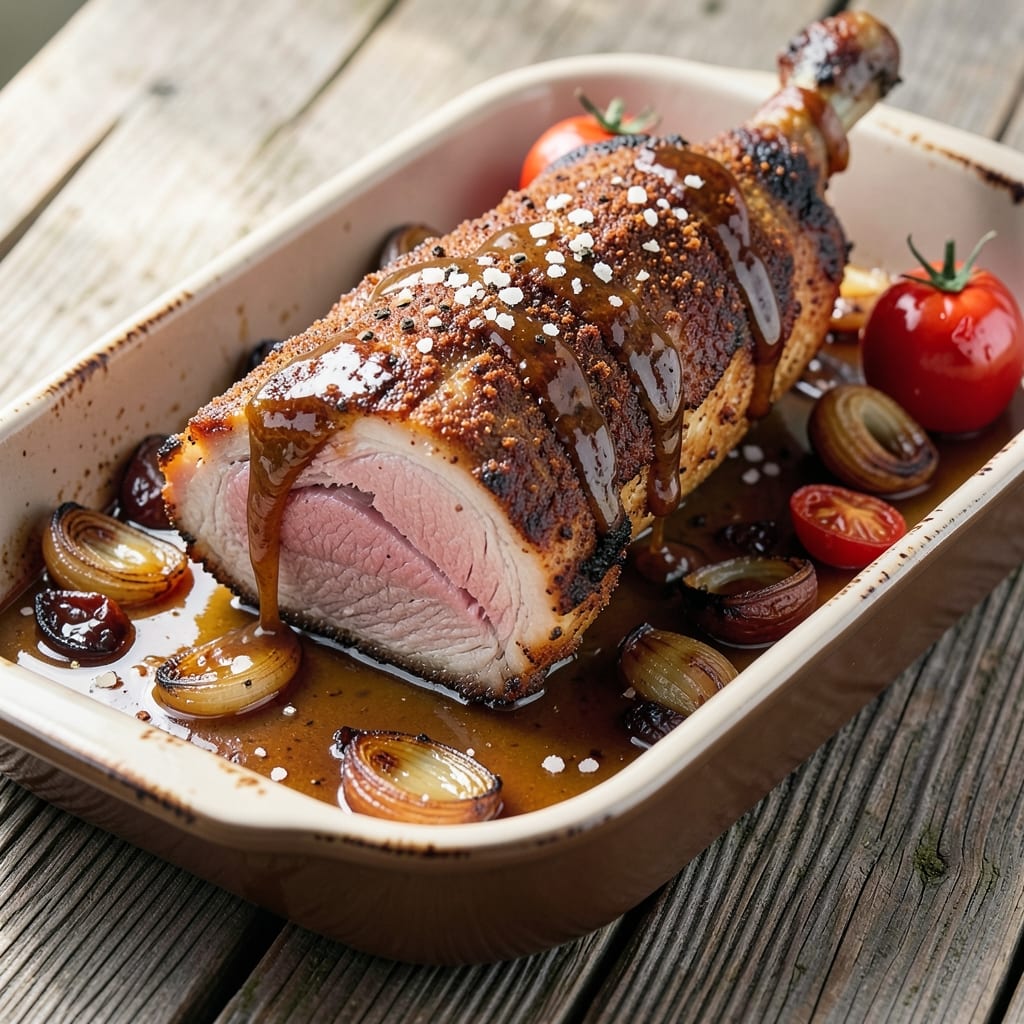
This BBQ pork leg roast delivers the perfect balance of smokehouse crust and juicy pink core—exactly what transforms a weeknight dinner into a showstopper. 🔥 After perfecting this technique through years of pitmaster competitions, I’ve developed a method that ensures tender meat with a crisp exterior, every single time. The secret lies in precise temperature control and a dry rub that builds flavor without overwhelming the natural sweetness of the pork.
What sets this recipe apart is the foolproof approach that works whether you’re using an oven or smoker. A simple yet effective dry rub of brown sugar, paprika, and smoked paprika creates that signature bark, while careful basting keeps the meat moist. The key is patience—low and slow cooking ensures the pork remains tender while developing deep, smoky flavors. This isn’t just a roast; it’s a centerpiece that commands attention at any table.
By the time you pull it from the heat, you’ll have a restaurant-quality roast with a caramelized crust that shatters at the touch and meat so tender it falls apart with a fork. The internal temperature check is critical—145°F guarantees perfect doneness without drying out the meat. Serve it sliced thick, with a drizzle of your favorite BBQ sauce, and watch everyone ask for seconds.
Pair it with classic sides like coleslaw, cornbread, or roasted vegetables to complete the meal. This recipe scales beautifully for gatherings, and leftovers reheat just as well the next day. Let’s get started—your taste buds will thank you.
Ingredients for bbq pork leg roast
Six pounds of pork leg, a handful of spices, and the patience for perfect smokehouse flavor.
| Ingredient | Amount | Notes |
|---|---|---|
| Pork Leg Roast 🐷 | 6 lb | Bone-in, center-cut preferred |
| Brown Sugar 🍚 | ½ cup | Light or dark, packed |
| Smoked Paprika 🌶️ | 2 tbsp | High-quality for authentic smoke flavor |
| Sweet Paprika 🌶️ | 1 tbsp | For color and mild sweetness |
| Kosher Salt 🧂 | 1 ½ tbsp | Diamond Crystal preferred |
| Ground Black Pepper 🌶️ | 1 tbsp | Freshly cracked for best flavor |
| Garlic Powder 🧄 | 1 tbsp | Not garlic salt |
| Onion Powder 🧅 | 1 tbsp | For depth of flavor |
| Mustard Powder 🍯 | ½ tbsp | Optional for tangy kick |
| Apple Cider Vinegar 🍎 | 2 tbsp | For tangy balance |
| Yellow Mustard 🍯 | 2 tbsp | For basting, optional |
| Olive Oil 🫒 | 2 tbsp | For basting and moisture |
| BBQ Sauce 🍅 | ½ cup | For finishing, optional |
| Fresh Rosemary 🌿 | ¼ cup | Chopped, for aroma |
| Fresh Thyme 🌿 | ¼ cup | Chopped, for herbal notes |
The pork leg is where it all starts—bone-in, center-cut for maximum tenderness and flavor. Costco or Whole Foods typically carry the best quality, but any well-marbled leg will work. Look for good fat coverage; that’s what keeps the meat juicy. The spices? Penzeys or the bulk bins at Trader Joe's are my go-tos for freshness. Smoked paprika is non-negotiable here—it’s what gives that authentic smokehouse bark. If you’re using a smoker, grab extra; you’ll want to brush it on liberally during cooking.
No smoked paprika? Substitute with a mix of regular paprika and a pinch of liquid smoke—just don’t overdo it. Fresh herbs wilt fast, so dried thyme and rosemary at one-third the amount work in a pinch, though fresh is ideal. The mustard powder adds a subtle tang, but if you’re skipping it, a splash of apple cider vinegar in the basting sauce will help. For the BBQ sauce, Stubb’s or Sweet Baby Ray’s are crowd-pleasers, but any good-quality sauce will do. Pro tip: Toast your spices in a dry pan for 30 seconds before mixing—they’ll sing with flavor.
This roast is a patient dish—plan for 3-4 hours depending on your method. Store leftovers in the fridge for 4-5 days, or freeze for up to 3 months in airtight containers. The crust gets better with reheating, so don’t hesitate to save half for later. For serving, slice against the grain into thick medallions—that’s where the magic happens. Pair with extra BBQ sauce on the side; trust me, you’ll want it.
Why You'll Love This Recipe
- This roast works for everything: a lazy Sunday brunch with eggs, a picnic with crusty bread, or even a last-minute dinner when the takeout menu feels too heavy. I’ll be real: it’s my go-to for game days too. Slice it thin, serve it cold, and watch it disappear.
- Fewer Tools, Same Magic: I swear by this one—just a roast, brown sugar, and those two paprikas. No fancy rubs or last-minute shopping runs. The key? Slather that pork with salt early, let it sit, then bake it low and slow. That’s it. Honestly, I’ve made it on days when I forgot to thaw the meat.
- Sweet-Smoky Obsession: Between us, the combo of smoked and sweet paprika with brown sugar gives this roast a caramelized crust that’s dangerously addictive. The outside crackles like a campfire, while the inside stays juicy—no dry pork here. My husband steals slices straight from the pan. (I don’t blame him.)
- Weeknight or Weekend Star: This roast works for everything: a lazy Sunday brunch with eggs, a picnic with crusty bread, or even a last-minute dinner when the takeout menu feels too heavy. I’ll be real: it’s my go-to for game days too. Slice it thin, serve it cold, and watch it disappear.
Step-by-step instructions for BBQ pork leg roast
Here's how to transform that pork leg into melt-in-your-mouth perfection with a crackling crust.
👨🍳 Step 1: Prep the Pork for Maximum Flavor
Start by trimming any excess fat from the pork leg roast, leaving about ¼-inch layer for moisture and flavor. Pat the entire surface dry with paper towels—this is crucial for that smokehouse crust. I like to do this over the sink to catch any drips.
In a small bowl, whisk together the 0.5 cup brown sugar, 2 tbsp smoked paprika, 1 tbsp sweet paprika, 1.5 tbsp kosher salt, 1 tbsp ground black pepper, 1 tbsp garlic powder, 1 tbsp onion powder, and 0.5 tbsp mustard powder. This dry rub is the flavor foundation—don't skip the mustard powder if you want that subtle tang.
Rub the mixture all over the pork leg, pressing it into the meat so it adheres well. Let it sit at room temperature for 30 minutes while you prep your oven. This resting time helps the rub penetrate and the meat cook more evenly. I know it seems like a long wait, but trust me—it makes all the difference.
🔥 Step 2: Build the Crust with Olive Oil and Vinegar
Preheat your oven to 325°F—this lower temperature ensures tender meat while we build that crust. In a small bowl, whisk together the 2 tbsp apple cider vinegar and 2 tbsp olive oil. This mixture will create a sticky barrier that helps develop that coveted crust.
Brush this mixture all over the pork leg, including the fat cap. The vinegar adds a subtle tang that balances the sweetness, while the oil helps create a glossy finish. Place the pork leg fat-side up on a rack set in a roasting pan—this allows air to circulate underneath for even cooking.
Here's the thing—don't skip the rack. If you place it directly on the pan, the bottom will steam instead of crisp up. The rack elevates it just enough for that perfect crust all around.
🍳 Step 3: Roast Until Tender with Fresh Herbs
Roast the pork leg for 3 hours at 325°F, then increase the heat to 375°F for the final 1 hour. This two-stage approach gives you tender meat with that beautiful crust. I check the internal temperature with a meat thermometer after the first 3 hours—it should be around 160°F.
About 45 minutes before the final hour, sprinkle the 0.25 cup fresh rosemary and 0.25 cup fresh thyme over the pork. The high heat will release their aromatic oils, infusing the meat with incredible flavor. Don't cover the pork with foil—you want that crust to develop.
Real talk: the pork will look underdone at this point. That's okay. The internal temperature should reach 195-203°F by the end, which is perfect for pull-apart tenderness. If it's not quite there, give it another 15-20 minutes at 375°F.
🥘 Step 4: Finish with BBQ Sauce and Rest
Remove the pork from the oven and brush it generously with the 0.5 cup BBQ sauce. This isn't just for flavor—it helps create a glossy finish and adds that smoky-sweet touch. Let it sit for 5 minutes to let the sauce caramelize slightly.
Transfer the pork to a cutting board and let it rest for at least 30 minutes before slicing. This resting period is non-negotiable—it allows the juices to redistribute throughout the meat, ensuring every bite is juicy and flavorful. If you can wait longer, do it. The pork will be even more tender.
While it rests, use a sharp carving knife to slice the pork into ½-inch thick slices. The meat should be tender enough to pull apart with a gentle tug, but still hold its shape. Serve immediately with your favorite sides—mashed potatoes, coleslaw, or crusty bread all work perfectly.
Pro Tips For Making Bbq Pork Leg Roast
- CRANK UP THE HEAT: I learned this the hard way—starting at 375°F (190°C) for a pork leg roast is too tame. Push it to 425°F (220°C) for the first 30 minutes to render fat fast and lock in that smoky crust. The sugar in your rub will caramelize better, and the meat won’t dry out if you lower the temp afterward.
- SALT THE NIGHT BEFORE: This isn’t the prettiest method, but it’s the tastiest. Generously coat your pork leg with kosher salt at least 12 hours ahead—it seasons deeper and keeps the meat juicier. Skip this when you’re lazy, but the dish is noticeably better when you don’t.
- DON’T SKIP THE FOIL: After searing, tent that roast with foil for the first 90 minutes—yes, even if you’re impatient like me. The brown sugar in your rub will burn at high heat, and the foil traps steam to keep the meat tender. Pull it back only for the last 20 minutes to crisp the skin.
- USE TWO TYPES OF PAPRIKA: I was skeptical until I tried it: mix equal parts smoked and sweet paprika in your rub. The smoked adds depth, while the sweet balances the heat and helps the sugar stick better. (Your future self will thank you for not cutting corners here.)
Common mistakes when making this recipe
Skipping the Rest
I’ve seen this mistake more times than I can count—skipping the rest time after pulling the pork from the oven. That 30-minute rest is when the magic happens. The meat continues to cook slightly from residual heat, and those juices redistribute so every bite is juicy. If you slice too soon, you’ll end up with dry meat and lost juices running down the cutting board. Trust me, I’ve made this mistake in my own kitchen, and it’s a heartbreaker. 💔
Overcrowding the Pan
Placing the pork leg directly on the bottom of a roasting pan is a rookie move. The fat will render and pool underneath, creating steam instead of that coveted crust. Always use a rack—even a wire rack set inside the pan works. This allows air to circulate underneath, ensuring even browning and crisping. I’ve seen home cooks skip this step and end up with a soggy bottom. Don’t be that person. The rack is your best friend here. 🍳
Ignoring the Fat Cap
The fat cap isn’t just for looks—it’s what keeps the meat juicy and adds flavor as it renders. If you trim it down too aggressively, you’ll dry out the meat. Leave at least ¼-inch of fat intact, and don’t forget to rub the dry spices all over it, including the fat cap. I’ve seen people skip this step, and their roast ends up tough and flavorless. That fat is your secret weapon. 🐷
Inconsistent Temperature
Jumping between oven temperatures without a plan is a surefire way to ruin your roast. The two-stage approach—325°F for 3 hours, then 375°F for 1 hour—is key. If you crank the heat too high too soon, you’ll end up with a burnt exterior and undercooked interior. I’ve seen people turn the oven up to 400°F halfway through, thinking it’ll speed things up. It won’t. Patience is everything here. 🌡️
Using the Wrong Thermometer
Not all meat thermometers are created equal. A cheap, thin probe won’t give you accurate readings, especially in a large cut like a pork leg. Invest in a high-quality instant-read thermometer, like the ThermoWorks Smoke or Meater. These tools are game-changers—they help you hit that 195-203°F internal temperature without guessing. I’ve seen people rely on time alone, and that’s how you end up with overcooked or undercooked meat. Don’t gamble with your roast. ⚡
Skipping the Vinegar-Oil Baste
The vinegar and olive oil mixture isn’t just for flavor—it’s what helps create that sticky, caramelized crust. If you skip this step, you’ll miss out on that deep, smoky bark that makes this roast shine. Brush it on generously, including the fat cap, and don’t rush the process. I’ve seen people skip this entirely, and their roast ends up bland and lackluster. That simple baste is what elevates this dish from good to unforgettable. 💫
Nutrition facts
Frequently asked questions
Can I use a pork shoulder instead of a pork leg?
While pork shoulder works in a pinch, it's not ideal for this recipe. Pork leg has a more even fat distribution and stays juicier during long cooking. Shoulder tends to be leaner and can dry out if cooked too long. If you must use shoulder, reduce cooking time by 30-45 minutes and watch closely for 195°F internal temp. The texture will be slightly different but still delicious.
How do I know when the pork is fully cooked?
Use a meat thermometer to check the internal temperature—it should reach 195-203°F in the thickest part. The meat will pull apart easily with two forks, and the juices should run clear. Never rely on time alone; pork leg varies in size. A ThermoWorks Smoke or similar high-quality thermometer is worth the investment for perfect results every time.
Can I make this recipe in a smoker instead of an oven?
For a smoker, cook at 225°F with wood chips (hickory or apple work best) for 4-5 hours until internal temp reaches 195°F. Spritz with apple cider vinegar every hour to keep it moist. The bark will develop differently but still be delicious. Just be patient—smoking takes longer than oven roasting but creates incredible depth of flavor.
What's the best way to reheat leftovers?
Slice the pork and reheat in a 350°F oven for 15-20 minutes with a splash of BBQ sauce or broth. For microwave reheating, cover with a damp paper towel and heat in 30-second intervals until warmed through. The crust will be less crispy but still flavorful. Leftovers keep well for 4-5 days in the fridge or 3 months frozen.
Why did my pork turn out dry?
Most likely, you either overcooked it or didn't rest properly. Pork leg needs 195-203°F internal temp—any higher dries it out. Also, skipping the 30-minute rest causes juices to escape when sliced. For next time, check temp early and let it rest. The fat cap also helps retain moisture—leave at least ¼-inch intact when trimming.