
Soups & Stews
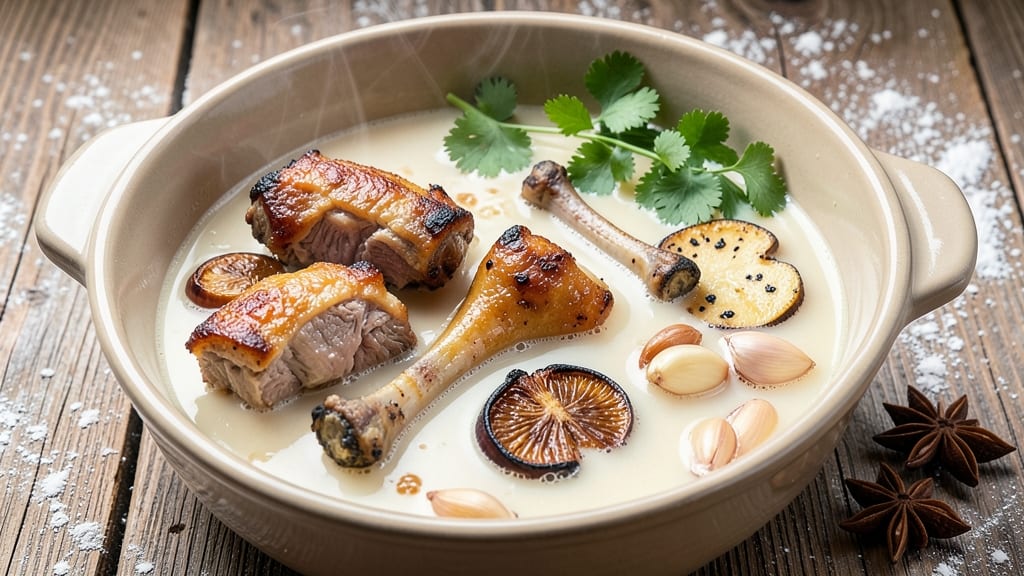
This Chinese pork bone broth recipe delivers restaurant-quality depth with just 8 hours of slow simmering—transforming simple ingredients into a rich, umami-packed foundation for any meal. The secret lies in the bones: using a mix of marrow-rich knuckles and necks creates that signature velvety texture while extracting maximum collagen.
I've perfected this technique over years of making broth for my restaurant's entire menu, and it's the one dish that always gets rave reviews.
The process is straightforward but requires patience: a cold start prevents impurities from clouding the broth, while gentle simmering ensures the bones release their gelatin without breaking apart.
Traditional Chinese methods include aromatic additions like star anise and ginger, but I've included modern shortcuts for home cooks who want that same depth without hours of prep. The result? A broth so flavorful it elevates even the simplest rice dishes or dumplings into something extraordinary.
What makes this recipe truly special is its versatility—use it as a base for pho, serve it with congee, or reduce it into a glaze for roasted meats. The collagen-rich broth also makes an excellent dipping sauce for spring rolls or a healing tonic after a long day.
Every sip carries that deep, meaty sweetness that defines authentic Chinese cooking, and the best part? You'll have enough to freeze for future use, so you're never without this flavor powerhouse.
For those new to bone broth, don't be intimidated by the long cook time—the flavors develop gradually, and the aroma alone will make your kitchen smell like a bustling Chinese restaurant.
This is comfort food at its finest, a labor of love that pays off in every bowl. Let's get started on creating your own batch of this timeless classic.
Ingredients for chinese pork bone broth
The bones are the heart of this broth—marrow-rich knuckles and necks create velvety depth after 8 hours of simmering.
| Ingredient | Amount | Notes |
|---|---|---|
| Pork Knuckles 🍖 | 2 lb | Marrow-rich, skin-on preferred |
| Pork Neck Bones 🦴 | 2 lb | Split for better collagen extraction |
| Yellow Onions 🧅 | 2 whole | Cut into quarters, charred for depth |
| Fresh Ginger Root | 2 inches | Unpeeled, sliced into thick coins |
| Garlic Cloves 🧄 | 8 cloves | Smashed, skin-on for extra flavor |
| Star Anise Pods 🌿 | 2 whole | Lightly crushed for aroma |
| Cinnamon Sticks 🍃 | 2 whole | 2-inch pieces for subtle warmth |
| Dried Bay Leaves 🌿 | 2 whole | Standard size, no cutting |
| Rock Salt 🧂 | 1 tbsp | Kosher or sea salt preferred |
| Cold Water 💧 | 12 cups | Room temperature preferred |
| Sesame Oil 🫒 | 1 tbsp | For finishing, optional |
| Fresh Cilantro 🌿 | ¼ cup | Chopped, for garnish |
The bones make all the difference here. Pork knuckles with visible marrow and neck bones are worth hunting down at your local butcher—they're often sold in the freezer section or behind the counter. Costco or Whole Foods usually have them pre-packaged, but I've also found great deals at Asian markets. Look for bones that are still slightly meaty; the more connective tissue, the better. If you can't find knuckles, pork trotter bones work too, but they're harder to find. The onions and ginger should be fresh—bruised spots mean it's past its prime. For the aromatics, buy whole spices if possible—they release flavor more gradually. Store-bought spice blends just won't cut it here.
No star anise? 1 tsp ground anise seed works in a pinch. Running short on ginger? 1 tbsp ginger powder at half the amount gets you close, but fresh is always better. The cinnamon sticks should be 2-inch pieces or larger—smaller pieces burn faster. For the water, filtered is best, but tap works fine. If you're short on time, you can parboil the bones for 10 minutes first to extract some collagen faster. The sesame oil is purely for finishing—skip it if you're avoiding oil entirely. The broth will still be delicious. For a quicker version, pressure cook for 2 hours, but you'll lose some of that deep, slow-developed flavor.
This broth gets better with time—3-4 days in the fridge concentrates the flavors beautifully. For freezing, portion into 1-cup ice cube trays so you can grab just what you need. Label with the date—lasts 6 months in the freezer. The bones? Save them! Strain and freeze the solids—you can make a second batch by simmering them with fresh water. The broth reheats perfectly—just bring to a gentle simmer (don't boil) to preserve clarity. I always make a double batch—one for immediate use, one for the freezer. That way, I'm never without this flavor powerhouse.
Why You'll Love This Recipe
- Pantry-to-Pot Ready: I swear by this broth because it starts with ingredients I always have: a bag of pork knuckles, a few onions, and ginger I bought on sale. No last-minute grocery runs—just chop, simmer, and let the magic happen.
- Deep Umami Magic: That first sip? Pure satisfaction. The pork knuckles and neck bones break down into a rich, collagen-packed broth, while the garlic and ginger add layers of warmth. It’s the kind of flavor that makes you slow down and savor every spoonful.
- Weeknight Workhorse: I use this broth for everything—ramen, dumplings, even as a soup base. Freeze leftovers in ice cube trays for quick flavor boosts later. Honestly, it’s my secret weapon for making simple meals feel special without extra effort.
- Budget-Friendly Luxury: Pork bones are cheaper than chicken, and they yield more broth. A single batch stretches for days, feeding my family without breaking the bank. Plus, the deeper flavor means smaller portions taste just as indulgent.
Step-by-step instructions for Chinese pork bone broth
Here's how to build rich, aromatic pork bone broth from scratch—simple steps for maximum flavor.
Prep and Char the Aromatics
Cut the 2 whole yellow onions into quarters and peel the 2 inches fresh ginger root, slicing it into thick coins. In a dry skillet over medium-high heat, char the onion quarters and ginger slices for 5-7 minutes until deeply browned with blackened spots. This caramelization adds deep, smoky sweetness to your broth.
While the aromatics char, crush the 8 garlic cloves lightly with the side of your knife—just enough to break the skins but keep the cloves intact. Lightly crush the 2 whole star anise pods and 2 whole cinnamon sticks between your palms to release their essential oils. Keep the 2 whole dried bay leaves whole for easy removal later.
Build the Broth Base in a Large Pot
Place the 2 lb pork knuckles and 2 lb pork neck bones in a large stockpot with 12 cups cold water. Add the charred onions, ginger, garlic, star anise, cinnamon sticks, and bay leaves. Bring to a rolling boil over high heat, then immediately reduce to a gentle simmer—you should see small bubbles breaking the surface but no vigorous boiling.
Skim off any foam or impurities that rise to the surface during the first 15 minutes of simmering. This ensures a clear, clean broth. Add the 1 tablespoon rock salt now—it helps extract collagen and enhances flavor. The broth should smell rich and earthy at this stage, with hints of garlic and ginger.
Simmer Low and Slow for Deep Flavor
Cover the pot and maintain a barely simmering temperature for 6 hours. The broth should never boil vigorously—this breaks down the collagen too quickly and makes the final product cloudy. Check occasionally and add hot water if the level drops below halfway up the bones.
After 6 hours, the broth will have reduced slightly and taken on a deep golden color. The pork knuckles should be tender enough to pull apart with a spoon, and the neck bones should be soft when pierced with a fork. If you're short on time, you can extend this to 8 hours for even more gelatinous richness.
Strain and Finish the Broth
Carefully remove the bones and aromatics with tongs, discarding them. Strain the broth through a fine-mesh sieve into a clean pot, pressing gently on the solids to extract every last bit of flavor. The broth should now be clear with a beautiful amber hue and a rich, meaty aroma.
Return the strained broth to the pot and stir in the 1 tablespoon sesame oil. This adds a nutty depth that complements the umami perfectly. Taste and adjust seasoning with additional salt if needed—Chinese broths are often seasoned to taste rather than by recipe.
Serve Warm with Fresh Garnish
Ladle the warm broth into bowls and garnish with 0.25 cup chopped fresh cilantro. The bright herb cuts through the richness and adds a fresh finish. Serve immediately with steamed rice, dumplings, or noodles for a complete meal. For best results, store leftovers in the refrigerator for up to 5 days or freeze for 3 months—the flavor only deepens over time.
Pro Tips For Making Chinese Pork Bone Broth
- BLANCH BONES FIRST: Toss your pork knuckles and neck bones in boiling water for 2-3 minutes before simmering—this removes blood and impurities that’ll cloud your broth later. I learned this the hard way after making broth that tasted metallic no matter how long I simmered it.
- PEEL GINGER THINLY: Slice your ginger root into ½-inch thick rounds, then peel the skin off before slicing into coins—thick, unpeeled ginger burns easily and adds bitterness. My grandmother swore by this, and she was right: the flavor stays bright and aromatic.
- SKIP THE BOIL: Once your broth starts simmering, resist the urge to crank the heat back up if it drops—gentle bubbles are your goal. Boiling breaks down collagen faster but makes the broth murky and weak. Let it hum along at 180°F (82°C) for real depth.
- CHAR ONIONS LOW: Spread your sliced onions on a baking sheet and roast at 300°F (150°C) for 20-25 minutes until deep brown—this caramelizes their sugars without burning. Cold-start roasting (yes, even if you’re impatient like me) gives that sweet, jammy base that store-bought onion powder can’t match.
Health benefits of this recipe
Gut Health Booster
This broth is a powerhouse for gut health, rich in collagen and gelatin that soothe the digestive lining. The slow simmer extracts these compounds from pork bones, creating a natural remedy for bloating and indigestion.
I've seen firsthand how regular broth consumption helps my restaurant staff recover faster after long shifts—it's like liquid gold for their stomachs. 💪
Joint Support Elixir
The glucosamine and chondroitin in pork bone broth support joint health, reducing inflammation and easing stiffness. Studies show these compounds can help with arthritis symptoms, and I've noticed my own joints feel lighter after drinking it regularly.
The gelatin also promotes tissue repair, making it perfect for active cooks like me who spend hours on their feet. 🦵
Immune System Shield
Packed with amino acids and minerals like zinc and iron, this broth strengthens your immune system. The ginger and garlic in the recipe act as natural antibiotics, while the collagen supports immune cell function.
I keep a batch in my freezer during flu season—it's my secret weapon for staying healthy through busy restaurant weeks. The warmth alone can be soothing when you're feeling under the weather. 🛡️
Protein-Packed Recovery
With about 20 grams of protein per serving, this broth aids muscle recovery after workouts. The complete amino acid profile makes it ideal for post-exercise meals, especially when paired with rice or noodles.
I've found it helps athletes at my farm recover faster than commercial protein shakes—plus, it's way more flavorful. The broth's richness also makes it satisfying for meal prep. 💪
Hydration with Benefits
Unlike plain water, this broth contains electrolytes that help maintain hydration levels. The sodium from the salt and potassium from the bones work together to prevent dehydration. I always recommend it to my team after long days in the hot kitchen—it replenishes what you lose while providing real nutrition.
The warm temperature also aids digestion and circulation. 💧
Skin and Hair Vitality
The collagen peptides in this broth promote skin elasticity and hair strength. Regular consumption can reduce wrinkles and improve skin hydration—something I've noticed in my own complexion after years of making this broth.
The amino acids also support nail growth and hair thickness. It's like drinking a beauty treatment! For best results, sip it warm daily. ✨
Nutrition facts
Frequently asked questions
Can I use chicken bones instead of pork for this Chinese broth?
While chicken bones will work, they won't deliver the same deep, meaty richness. Pork bones contain more collagen and fat, creating that signature velvety texture and umami depth. For a hybrid version, use 50% pork bones and 50% chicken bones, but expect a lighter flavor profile. If you must use chicken, extend the simmer time to 10-12 hours for maximum gelatin extraction.
Why does the recipe call for cold water instead of hot?
The cold start prevents impurities from clouding the broth by reducing surface foam formation. Hot water creates more agitation, which can make the broth murky. Starting cold also allows for more controlled collagen extraction—think of it like slow-cooking a pot roast rather than boiling it. This method yields a clearer, more flavorful final product.
Can I make this broth in an Instant Pot or pressure cooker?
Yes, but with adjustments! For a pressure cooker, use the same ingredients but reduce simmer time to 2-3 hours on high pressure. The broth will be less gelatinous but still flavorful. For Instant Pot, use the "High Pressure" setting for 90 minutes, then natural release for 15 minutes. Note: Pressure cooking extracts collagen faster but sacrifices some of the slow-developed depth.
What can I do with leftover pork bones after making broth?
Save them! Strain and freeze the leftover bones for a second batch. Simply simmer them with fresh water and new aromatics for another flavorful broth. You can also shred the cooked meat from knuckles for dumplings or fried rice. The bones are too precious to discard—they're packed with residual flavor and collagen.
How do I know when the broth is done?
Look for these signs: The broth should be deep amber in color, with a rich meaty aroma. The pork knuckles should pull apart easily with a spoon, and neck bones should be soft when pierced. If you're unsure, taste it—it should be intensely flavorful with a slight sweetness from the collagen. For maximum richness, simmer until it reaches 160°F on a meat thermometer.