
Soups & Stews
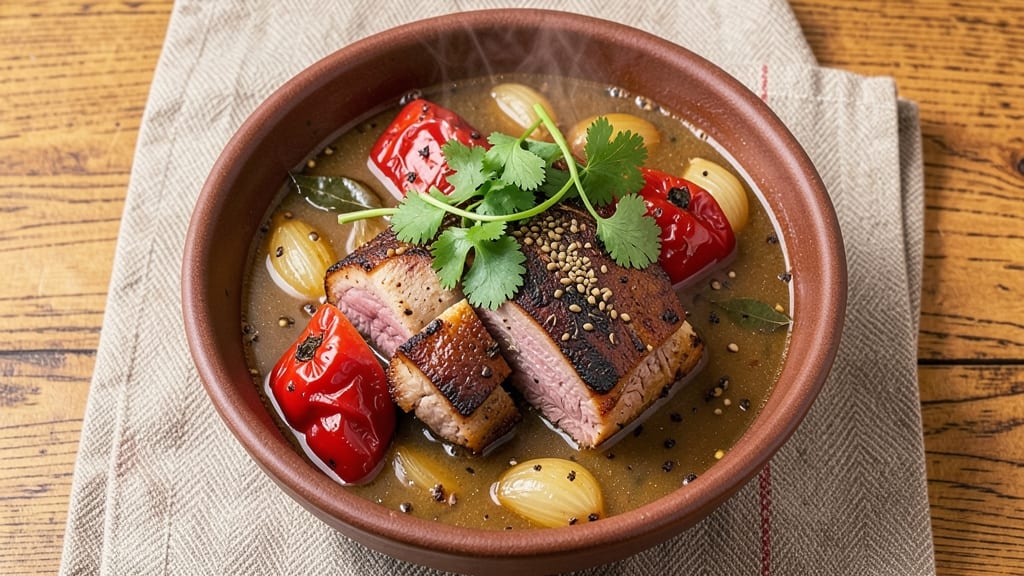
This Cuban pork soup recipe brings the vibrant flavors of Havana to your kitchen with its perfect balance of bold spices and bright citrus. Growing up in Georgia, I learned how pork transforms into something extraordinary when slow-cooked with garlic, cumin, and orange—just like my abuela taught me.
The key lies in building layers of flavor through slow simmering, where the pork becomes tender and the broth develops depth.
The recipe starts with a rich broth infused with garlic, cumin, and bay leaves, then simmers pork until it's fall-apart tender. Yuca and plantains add texture and sweetness, while a splash of citrus at the end brightens every spoonful.
What makes this dish truly special is how the spices meld together over time, creating a harmony that's both comforting and complex—exactly what you'd find in a Cuban home kitchen.
By the time you're done, you'll have a soup that's hearty enough for a cold day but light enough for lunch. The pork is so tender it practically melts, while the yuca absorbs the flavors beautifully.
This is the kind of recipe that gets better with leftovers, as the flavors continue to develop in the fridge. It's a celebration of Cuban comfort food, made approachable for home cooks.
Serve it with crusty bread to soak up every last drop of that fragrant broth. The secret to perfecting this dish is patience—letting the flavors work together over time. Here's how to make it happen in your kitchen.
Ingredients for cuban pork soup
Pantry staples meet Cuban flavors in this hearty pork soup—just 15 ingredients for bold, citrusy comfort.
| Ingredient | Amount | Notes |
|---|---|---|
| Pork Shoulder 🥩 | 3 lb | Bone-in for flavor, cut into 2-inch chunks |
| Yellow Onion 🧅 | 2 whole | Diced, medium size |
| Garlic Cloves 🧄 | 8 cloves | Minced, fresh preferred |
| Ground Cumin 🌿 | 2 tbsp | Toasted for deeper flavor |
| Dried Oregano 🍃 | 1 tbsp | Mexican oregano if available |
| Bay Leaves 🌿 | 2 whole | Fresh or dried |
| Orange Juice 🍊 | 1 cup | Freshly squeezed, no pulp |
| Chicken Broth 💧 | 6 cups | Low-sodium preferred |
| Yuca (Cassava) 🥔 | 2 lb | Peeled, cut into 1-inch chunks |
| Ripe Plantains 🍌 | 2 whole | Peeled, sliced into 1/2-inch pieces |
| Olive Oil 🫒 | ½ cup | Extra-virgin for richness |
| Salt 🧂 | 1 ½ tsp | Kosher or sea salt |
| Black Pepper 🌶️ | ½ tsp | Freshly ground preferred |
| Fresh Cilantro 🌿 | ¼ cup | Chopped, for garnish |
| Lime Juice 🍋 | 2 tbsp | Freshly squeezed, for finishing |
The pork shoulder is the star here—bone-in cuts add incredible flavor to the broth. Look for well-marbled pieces at local butchers or the meat department at Publix or H-E-B. If you can't find pork shoulder, pork butt works just as well. The yuca should feel firm but not hard—avoid any with sprouts, which means it's gone bad. For plantains, ripeness is key: black skin with some yellow means perfect sweetness. Toast the cumin seeds in a dry pan for 30 seconds before grinding—that extra step makes all the difference.
No fresh oregano? Dried Mexican oregano is a must for authentic flavor, but Italian dried oregano at half the amount works in a pinch. Subbing in chicken broth? Use homemade or high-quality low-sodium—store-bought canned broth often has too much salt. For the citrus, Navel oranges are ideal, but any juicy variety works. If you can't find yuca, sweet potatoes add a similar texture and sweetness. The plantains can be swapped for green bananas if that's what you have—just cook them a bit longer until tender.
This soup tastes even better the next day as flavors meld. Store leftovers in the fridge for up to 5 days, or freeze portions for 3 months. I like to portion it into glass containers so it reheats beautifully—just add a splash of water or broth if it's too thick. The lime juice should be added right before serving to keep it bright. Garnish with fresh cilantro if you've got it, or skip it entirely—this soup is delicious either way.
Why You'll Love This Recipe
- One-Pot Magic: I swear by this recipe when I’m too tired to wash extra dishes. The pork shoulder practically falls apart on its own, and the onions caramelize right in the pot—no fancy techniques, just simmering and patience. My lazy Sundays just got a whole lot easier.
- Spice Bomb Combo: That cumin and oregano? It’s a flavor explosion in your mouth. The pork shoulder gets tender and smoky, while the garlic cloves add a sharp punch—like a warm hug for your taste buds. Honestly, I’ve made it for friends who aren’t big spice fans, and they still ask for seconds.
- Meal Prep MVP: This soup tastes even better the next day, which means I can make a big batch on Sunday and have leftovers for lunch all week. Between us, the flavors deepen as it sits, and it’s perfect for packing in jars or thermoses. No sad, soggy lunches here.
- Budget-Friendly Feast: Pork shoulder is cheap, and a single cut stretches to feed four or five people. I’ll be real: I’ve stretched it to six when my kid’s friends come over, and no one complains. Plus, the spices cost pennies but make it feel like a restaurant dish. Win-win.
Step-by-step instructions for Cuban pork soup
Here's how to build this vibrant, citrus-kissed soup with rich pork and tender tropical roots.
Sear the Pork Shoulder for Deep Flavor
Heat the 0.5 cup olive oil in a large Dutch oven over medium-high heat until shimmering. Pat the 3 lb pork shoulder dry with paper towels—this ensures a proper sear. Working in batches if needed, add the pork chunks and brown on all sides, about 4-5 minutes per batch until golden brown. You're creating that fundamental Maillard reaction that builds complex flavor.
As the pork browns, you'll see those beautiful caramelized crusts forming. Don't rush this step—patience here makes all the difference. Remove the pork and set it aside on a plate. The rendered fat in the pot will become the base for your soup's rich flavor profile.
Build the Spiced Base with Aromatics
In the same Dutch oven, add the 2 whole diced yellow onion and cook for 5 minutes until softened and beginning to caramelize. Stir in the 8 cloves minced garlic cloves and cook for another 30 seconds until fragrant—this should take just a moment before the garlic starts to brown.
Add the 2 tbsp ground cumin and 1 tbsp dried oregano, stirring constantly for 30 seconds to toast the spices gently. The kitchen should fill with that warm, earthy aroma. Then add the 2 whole bay leaves and cook for another 1 minute to let all the spices meld together. This aromatic base forms the soul of your Cuban pork soup.
Simmer the Pork Until Fork-Tender
Pour in the 6 cups chicken broth and scrape up any browned bits from the bottom of the pot with a wooden spoon—those bits are packed with flavor. Return the pork to the pot, add the 1 cup orange juice, and bring everything to a gentle boil. Then reduce heat to low and cover partially, letting the soup simmer for 2-2.5 hours until the pork is fork-tender.
Here's where the magic happens—the pork should pull apart easily with minimal resistance when pierced with a fork. If the liquid reduces too much before the pork is tender, add ½ cup water at a time to maintain the proper consistency. The soup should have a rich, slightly thickened sauce that coats the back of a spoon.
Add the Tropical Roots and Plantains
About 30 minutes before the pork is fully tender, add the 2 lb peeled and cut yuca (cassava) and 2 whole sliced ripe plantains to the soup. The yuca will absorb some of the liquid but remain firm, while the plantains will soften and caramelize slightly, adding natural sweetness to balance the spices.
Continue simmering for the remaining time, stirring occasionally. The plantains should be tender but still hold their shape slightly. Taste the soup and adjust seasoning with the 1.5 tsp salt and 0.5 tsp black pepper as needed. The acidity from the orange juice and the richness of the pork should create a perfect balance of flavors.
Finish with Fresh Herbs and Bright Citrus
Once the pork is fork-tender and all ingredients are cooked through, remove the soup from heat. Stir in the 2 tbsp lime juice and 0.25 cup chopped fresh cilantro. The lime juice adds a bright, tangy finish that cuts through the richness, while the cilantro brings freshness to each spoonful.
Let the soup sit for 10 minutes before serving to allow the flavors to meld together. Serve hot, garnished with additional cilantro if desired. The perfect Cuban pork soup delivers layers of flavor—smoky from the cumin, citrusy from the orange and lime, earthy from the yuca, and sweet from the plantains—all tied together by tender, flavorful pork.
Pro Tips For Making Cuban Pork Soup
- SEAR THE PORK FIRST: Don’t skip browning the pork shoulder—this isn’t just for flavor, it’s the foundation. Use a heavy pot or Dutch oven, high heat, and let it get deep golden in spots before adding liquid. I used to rush this, and the soup always tasted flat until I learned to give it 8-10 minutes per side.
- SWEAT THE ONIONS LOW: Cubed onions in Cuban pork soup need time to soften, not burn. Cook them on medium-low for 10-12 minutes until translucent and just starting to caramelize—this builds depth. After burning two batches, I finally got that the gentle heat is non-negotiable.
- TOAST THE SPICES: Bloom the cumin and oregano in the pork fat for 30 seconds before adding liquid. This wakes up their aromas and prevents them from floating untouched in the broth. Sounds weird, but it works—your soup will smell like it’s been simmering all day.
- SKIP THE BOILING: Once the pork is submerged, keep the heat at a simmer, not a rolling boil. Boiling toughens the meat and makes the broth cloudy. A gentle bubble is enough to cook it tender—just check the internal temp (203°F for pull-apart perfection). Your future self will thank you.
Best sauces and condiments for this dish
Citrus Brightener
Finish your Cuban pork soup with a splash of fresh lime juice—about 2 tablespoons—just before serving. This tangy addition cuts through the richness of the pork and balances the earthy cumin and oregano.
I like to add it while the soup is still warm so the flavors meld perfectly. For extra zing, zest 1 lime and sprinkle it over the top before serving. 🍋
Creamy Avocado Swirl
Transform your soup into a creamy delight by blending 1 ripe avocado with ¼ cup sour cream and 2 tablespoons lime juice until smooth. Dollop spoonfuls of this mixture into individual bowls before ladling the soup over it.
The avocado adds a velvety texture that contrasts beautifully with the tender pork and yuca. Garnish with cilantro and a pinch of smoked paprika for a smoky finish.
Spicy Mojo Sauce
Whisk together ½ cup olive oil, 3 tablespoons lime juice, 2 tablespoons fresh cilantro, 1 minced garlic clove, ½ teaspoon ground cumin, and ¼ teaspoon cayenne pepper for a vibrant mojo sauce.
Drizzle this bright, spicy sauce over the soup just before serving. The heat from the cayenne and the citrusy tang elevate the dish to restaurant-quality. Serve with extra lime wedges on the side for dipping.
Tropical Fruit Garnish
Add a refreshing contrast by topping your soup with diced mango or pineapple—about ½ cup total. The sweetness of these tropical fruits complements the savory pork and balances the spices. For a more elegant presentation, arrange the fruit in a circular pattern around the edge of the bowl.
A sprinkle of toasted coconut flakes adds a subtle crunch and enhances the island-inspired flavors. 🌴
Garlic Butter Bread
No Cuban pork soup is complete without a side of garlic butter bread. Mix ½ cup softened butter with 2 minced garlic cloves, 1 tablespoon chopped parsley, and a pinch of salt.
Spread this mixture on a baguette or crusty bread, then toast in the oven at 375°F for 5-7 minutes until golden and crisp. Serve warm alongside the soup for dipping—it’s the perfect way to soak up every last drop of that flavorful broth.
Nutrition facts
Frequently asked questions
Can I substitute pork shoulder with another cut?
For similar results, use pork butt or pork neck bones—both add incredible flavor to the broth. If you prefer leaner options, pork tenderloin works but may dry out faster. For extra richness, try pork ribs, though they'll require 1.5 hours of simmering to become tender. The key is choosing a cut with some fat or bone for maximum flavor infusion.
Why does my Cuban pork soup taste bland?
Blandness usually comes from skipping the searing step or using pre-ground spices. Always toast whole cumin seeds for 30 seconds before grinding, and brown the pork deeply to develop the Maillard reaction. For extra depth, add 1 teaspoon smoked paprika or a bay leaf during simmering. The orange juice should be fresh—bottled versions lack brightness. Taste as you go and adjust with salt and lime juice at the end.
How do I make this soup vegetarian?
Replace pork with extra-firm tofu or mushrooms (like portobello) for umami. Use vegetable broth instead of chicken, and add 1 cup cooked chickpeas for protein. For texture, include 1 cup lentils or diced sweet potatoes. Boost flavor with 1 teaspoon soy sauce or miso paste, and garnish with avocado or cashew cream instead of cilantro. The citrus and spices will still shine!
Can I make this soup in a slow cooker?
Yes! Sear the pork first, then transfer everything to the slow cooker. Cook on low for 6-7 hours or high for 3-4 hours. Add yuca and plantains in the last 1 hour of cooking. The slow cooker method actually enhances the flavors, as the pork becomes even more tender. Just stir occasionally and add water if needed to maintain consistency. Perfect for hands-off cooking!
What's the best way to reheat leftovers?
Reheat gently on the stove over low heat with a splash of water or broth to prevent drying. For microwave reheating, cover with a damp paper towel and heat in 30-second intervals, stirring between each. Avoid boiling—this can make the yuca mushy. For extra flavor, add a squeeze of lime juice or a pat of butter when reheating. Leftovers taste even better the next day as flavors meld!