
Sauces & Condiments
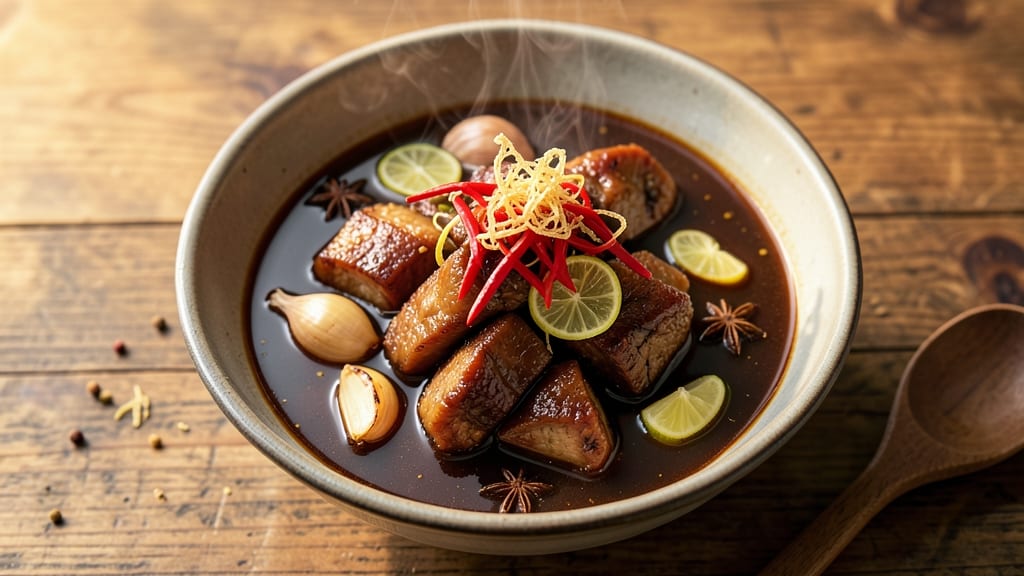
This Chinese pork stew recipe with soy sauce transforms humble ingredients into a symphony of deep umami and tender meat—just like my grandmother used to make back in Georgia.
The secret lies in slow-braising pork shoulder until it falls apart, while soy sauce and star anise build layers of complexity that make every bite unforgettable. I’ve perfected this technique over years of cooking for crowds at The Smoky Pig, where pork is king.
The magic happens in the braising: pork shoulder simmers low and slow until tender, absorbing the rich flavors of garlic, ginger, and soy sauce. Unlike quick stir-fries, this dish rewards patience with melt-in-your-mouth texture and a sauce that thickens into a glossy, savory glaze.
No pressure cooker? No problem—this method works just as well on the stovetop or in the oven.
What you’ll end up with is a one-pot wonder that’s hearty enough for a family dinner but elegant enough for company. The pork stays juicy, the aromatics infuse the broth with warmth, and the soy sauce ties everything together with its signature depth.
Serve it over steamed rice or with crusty bread to soak up every last drop of that flavorful sauce.
This isn’t just another pork stew—it’s a dish that carries the soul of Southern comfort food with a touch of Chinese sophistication. Whether you’re feeding a crowd or treating yourself to a cozy weeknight meal, this recipe delivers restaurant-quality results with minimal fuss. Let’s get cooking!
Ingredients for chinese pork stew recipe soy sauce
Sixteen ingredients, one unforgettable pot of umami-rich pork stew that carries Southern comfort with Chinese sophistication.
| Ingredient | Amount | Notes |
|---|---|---|
| Pork Shoulder 🍖 | 3 lb | Bone-in for best flavor |
| Light Soy Sauce 🥫 | ½ cup | Kikkoman preferred |
| Dark Soy Sauce 🥫 | 2 tbsp | For color and depth |
| Garlic Cloves 🧄 | 6 cloves | Minced for even distribution |
| Fresh Ginger 🌿 | ½ cup | Grated, peel removed |
| Star Anise Pods 🌟 | 2 whole | Crushed lightly |
| Cinnamon Sticks 🌿 | 2 whole | For aromatic depth |
| Bay Leaves 🌿 | 2 whole | Fresh preferred |
| Carrots 🥕 | 3 whole | Cut into chunks |
| Onions 🧅 | 2 whole | Cut into wedges |
| Water 💧 | 4 cups | For braising liquid |
| Sesame Oil 🫒 | 1 tbsp | For finishing |
| Cornstarch 🌾 | 1 tbsp | For thickening sauce |
| Salt 🧂 | 1 ½ tsp | Adjust to taste |
| Black Pepper 🌶️ | ½ tsp | Freshly ground |
The pork shoulder is the heart of this dish—bone-in cuts from Whole Foods or your butcher yield the deepest flavor. Look for well-marbled pieces with a vibrant pink hue; Costco often carries pre-cut pork shoulders perfect for this. Star anise and cinnamon sticks might be hiding in the spice aisle or international section—Penzeys carries them in bulk, but any Asian market will have them too. Fresh ginger and garlic are non-negotiable for authentic flavor, so grab them from the produce section where they’re most likely to be freshest. The soy sauces? Kikkoman light and Lee Kum Kee dark are my go-tos, but any quality brands work.
No star anise? Anise seeds or fennel seeds at half the amount will work in a pinch, though the flavor won’t be identical. Running low on ginger? Powdered ginger at one-third the amount gets you close, but fresh is ideal. The carrots and onions can be swapped for celery and mushrooms if you prefer, though the sweetness of carrots balances the pork beautifully. For the sesame oil, toasted sesame oil adds nutty depth—skip the regular kind, which is too mild. The cornstarch is just for thickening the sauce at the end; if you’re watching carbs, you can skip it entirely and let the sauce reduce naturally, though it’ll be slightly thinner.
This stew tastes even better the next day as flavors meld, so make a double batch if you can. Store in an airtight container in the fridge for up to 5 days, or freeze portions for 3 months. The sauce thickens as it cools, so you can always add a splash of water to loosen it up when reheating. For serving, I like to toast crusty sourdough to soak up every last drop of that glossy, umami-packed sauce. The pork will be so tender it’ll fall apart with just a fork—perfect for serving over steamed jasmine rice or noodles.
Why You'll Love This Recipe
- One-Pot Magic: I swear by this for nights when I’m too tired to scrub pots. Toss everything—pork, soy sauces, garlic, ginger—into one pot, and let it simmer. No chopping boards, no extra dishes, just hands-off flavor.
- Umami Bomb: That combo of light and dark soy sauce? It’s where the magic happens. The dark sauce caramelizes into a glossy glaze, while the light keeps it bright and savory. My husband licks the spoon mid-stir.
- Lunchbox Hero: Make a big batch on Sunday, and you’ve got flavor-packed lunches for the week. The pork gets even more tender the next day, and it reheats beautifully—no sad, dry leftovers here.
- Budget Stretch: Pork shoulder is affordable, and this recipe feeds four for under $15. The soy sauces add depth without breaking the bank, and the aromatics (garlic and ginger) make it feel like a splurge. My wallet thanks me every time.
Step-by-step instructions for Chinese pork stew with soy sauce
This method delivers melt-in-your-mouth pork with deep umami flavor and aromatic spices.
Prepare the Pork Shoulder and Aromatics
Cut the 3 lb pork shoulder into 2-inch chunks and pat dry with paper towels. This helps the soy sauce penetrate better and creates a more flavorful crust. In a small bowl, combine the 6 cloves minced garlic cloves, ½ cup grated fresh ginger, 1.5 tsp salt, and ½ tsp black pepper. Rub this mixture evenly over the pork pieces, pressing it into the meat so it sticks.
For the aromatics, peel the 3 whole carrots and cut them into 2-inch chunks. Peel and cut the 2 whole onions into wedges. Lightly crush the 2 whole star anise pods and 2 whole cinnamon sticks with the flat side of a knife to release their essential oils. Keep the 2 whole bay leaves whole—they'll infuse flavor without overpowering the dish.
Sear the Pork for Depth of Flavor
Heat a large Dutch oven over medium-high heat until hot. Add the pork in a single layer, leaving space between pieces. Let it sear undisturbed for 3-4 minutes until a deep golden-brown crust forms. This step is crucial—it locks in juices and builds flavor. Once browned, carefully flip the pork and repeat on all sides until evenly browned. Remove the pork and set it aside.
In the same pot, add the carrots and onions in a single layer. Cook for 5 minutes, stirring occasionally, until they begin to soften and caramelize slightly. This step enhances their natural sweetness and adds another layer of flavor to the stew.
Build the Aromatic Base
Add the crushed star anise pods, cinnamon sticks, and bay leaves to the pot. Pour in the 4 cups water and bring to a boiling point. Once boiling, reduce heat to low and return the pork to the pot. The liquid should just cover the pork—if not, add a splash more water.
Stir in the ½ cup light soy sauce and 2 tbsp dark soy sauce. The dark soy sauce will give the stew its signature rich color and depth of flavor. Let the stew simmer uncovered for 1 hour, skimming off any foam that rises to the surface. This helps clarify the broth and ensures a clean, flavorful base.
Tenderize the Pork and Thicken the Sauce
After 1 hour, check the pork for tenderness. It should be fork-tender—easily pierced with a fork but still holding its shape. If not, continue simmering for another 30-60 minutes, covered this time to prevent evaporation. The longer it cooks, the more tender and flavorful it becomes.
In a small bowl, whisk together the 1 tbsp cornstarch with 2 tablespoons of the stew liquid to form a slurry. Slowly pour this mixture into the pot while stirring continuously. Bring the stew back to a gentle simmer and cook for 3-5 minutes until the sauce thickens to your desired consistency. The sauce should coat the back of a spoon but remain smooth and glossy.
Finish and Serve
Remove the star anise pods, cinnamon sticks, and bay leaves from the stew. Stir in the 1 tbsp sesame oil and taste for seasoning. Adjust with additional light soy sauce if needed—you want a balance of salty, sweet, and umami flavors. The stew should be rich but not overpowering.
Serve the pork stew hot, ladled over steamed jasmine rice or noodles. The aroma alone will draw everyone to the table, and each bite delivers tender pork infused with layers of soy sauce, ginger, and aromatic spices. For extra flavor, drizzle a little more sesame oil over the top before serving.
Pro Tips For Making Chinese Pork Stew Recipe Soy Sauce
- Brown the Pork First: Don’t skip the sear—cut the pork shoulder into 2-inch chunks, then hit a screaming-hot wok or pot with 1 tablespoon of oil per side until deep golden. I used to rush this, and the stew always tasted flat; the Maillard reaction on the meat is what builds that rich, caramelized depth before the soy sauce even hits.
- Toast the Ginger: Peel and slice the ginger into ¼-inch coins, then dry-toast them in the same pot for 30 seconds until fragrant—you’ll smell it. This removes the raw bite and lets the aroma blend better with the garlic and pork. (Yes, even if you’re impatient like me, wait for the scent.)
- Balance the Soy Sauces: Use twice as much light soy sauce as dark (e.g., 3 tablespoons light to 1.5 dark) and add the dark last—it’s thicker and burns easily. I learned this the hard way when my first batch turned bitter; the dark soy needs to mingle gently, not scorch.
- Simmer Low and Slow: After adding broth (or water + a splash of Shaoxing wine), reduce heat to a barely simmer—tiny bubbles, not a rolling boil. Cover and cook for 45 minutes, stirring once. I was skeptical until I tried it: low heat keeps the pork tender, not tough, and lets the soy sauce meld instead of evaporating.
Storing and reheating your chinese pork stew recipe soy sauce
Refrigerator Storage
Let your pork stew cool to room temperature for no more than 2 hours before transferring it to airtight containers—I swear by glass Pyrex with snap-on lids for maximum freshness.
Store it in the fridge at 40°F or below for up to 5 days, though I find the flavors deepen overnight as the spices meld. The sauce thickens slightly when chilled, so stir in 1-2 tablespoons of water when reheating if it seems too concentrated. 💫
Freezer Storage
For longer storage, divide the stew into quart-sized freezer bags (I use Stasher bags for easy reheating) and freeze for up to 3 months. Leave ½-inch headspace to prevent expansion cracks, and label with the date.
When ready to eat, thaw overnight in the fridge—never microwave directly from frozen, as it can make the pork mushy. The texture remains surprisingly tender even after freezing.
Stovetop Reheating
My preferred method is stovetop reheating, which preserves the stew’s texture beautifully. Transfer the desired portion to a heavy-bottomed pot (I love my Lodge Dutch oven) and heat over medium-low heat for 10-15 minutes, stirring occasionally.
Add 2-3 tablespoons of water or pork broth if the sauce seems too thick. Taste and adjust seasoning—you might need an extra dash of light soy sauce to restore balance. 🔥
Microwave Reheating
For quick meals, microwave individual portions in a microwave-safe bowl covered with a damp paper towel. Heat on 50% power for 2-3 minutes, stir, then continue in 30-second intervals until reaching 165°F.
The sauce may separate slightly, so stir vigorously before serving. If the stew looks dry, add a splash of water or broth to restore its glossy texture.
Oven Reheating
For a hands-off approach, transfer the stew to an oven-safe dish, cover with foil, and heat at 325°F for 20-25 minutes. The gentle heat ensures even warming without overcooking the pork.
This method is ideal for reheating large batches—just check the internal temperature of the pork to confirm it’s 165°F before serving. The aromatics will fill your kitchen with that irresistible umami scent. 🌟
Sauce Rescue Tips
If your reheated stew has separated, whisk in 1 teaspoon of cornstarch mixed with 1 tablespoon of water and simmer for 2 minutes to restore its velvety consistency. For extra depth, finish with a drizzle of sesame oil or a sprinkle of toasted sesame seeds.
The sauce should coat the back of a spoon but remain smooth—never force it to thicken, as that can make it grainy. A little patience goes a long way! ⚡
Nutrition facts
Frequently asked questions
Can I substitute pork shoulder with another cut?
For pork loin, reduce cooking time to 1.5-2 hours since it’s leaner. Pork belly works beautifully—it renders fat that adds richness to the sauce, but trim excess to avoid greasiness. Pork ribs (like baby back) also work well, though they’ll need 2.5-3 hours of simmering to become tender. Just ensure your cut is 2-inch chunks for even cooking.
Why does my stew taste too salty?
This usually happens when using only light soy sauce (which is saltier) or adding extra salt during cooking. To fix it, stir in 1-2 tablespoons of water or broth and simmer for 5 minutes—this dilutes the saltiness without thinning the sauce. For prevention, taste the soy sauce mixture before adding it to the pot and adjust with a pinch of sugar or a splash of water if needed.
Can I make this in an Instant Pot?
Yes! Sear the pork and aromatics first, then add all ingredients except cornstarch. Pressure cook on high for 45 minutes, then quick-release. Thicken the sauce on the stovetop with cornstarch slurry. The Instant Pot version cooks 50% faster but may need an extra 15 minutes of natural release to ensure tenderness. The sauce will be slightly thinner—simmer uncovered for 5 minutes to reduce if desired.
What if I don’t have dark soy sauce?
No problem! Use 1 extra tablespoon of light soy sauce plus 1 teaspoon of molasses or brown sugar for color and depth. The dish will still taste rich, though the sauce won’t have the same glossy sheen. For extra umami, add ½ teaspoon of MSG—it’s optional but enhances the savory notes beautifully.
How do I know when the pork is fully tender?
The pork is done when it falls apart easily with a fork but still holds together slightly. Insert a fork into the thickest piece—if it pierces cleanly with minimal resistance, it’s ready. For pork shoulder, this typically takes 2-2.5 hours; for leaner cuts like loin, check at 1.5 hours. Overcooking can make the meat dry, so resist the urge to rush it!