
Soups & Stews
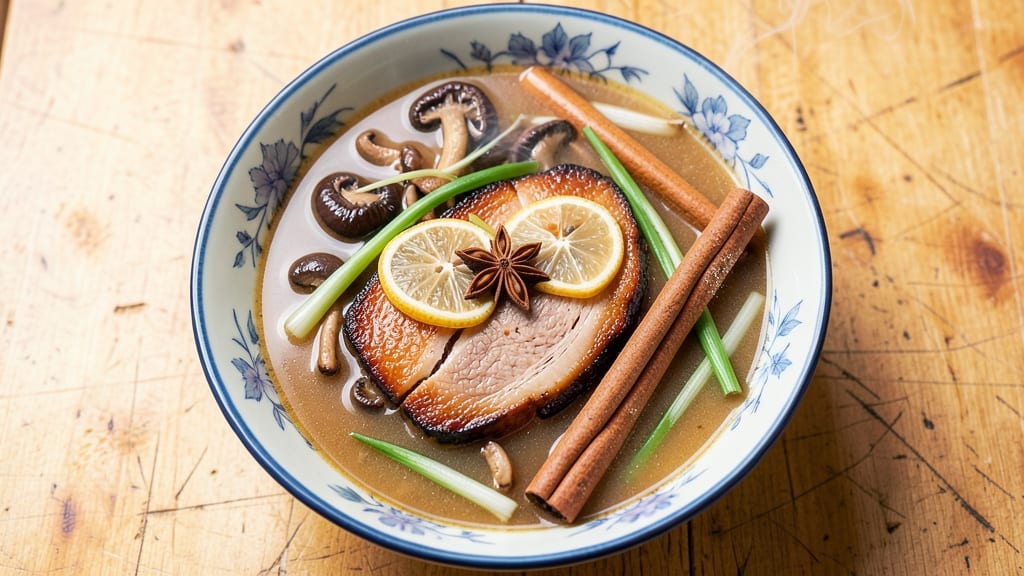
This Chinese pork belly soup recipe delivers the comforting aroma of star anise and ginger that transforms any kitchen into a bustling Cantonese restaurant. 💫 After years of perfecting the balance between tender pork belly and fragrant broth, I’ve developed a method that honors tradition while being accessible for home cooks.
The key lies in charring the pork belly first—this step unlocks layers of caramelized depth that store-bought versions simply can’t match.
The beauty of this dish is in its simplicity: just a handful of ingredients working in harmony. We start with thick-cut pork belly, slow-simmered until it’s melt-in-your-mouth tender, while star anise, cinnamon, and ginger infuse the broth with warm, aromatic complexity.
The result is a soup that’s rich yet balanced, with every spoonful delivering both hearty satisfaction and delicate flavor.
What makes this recipe truly special is the technique of layering aromatics—first a light char on the pork, then a slow simmer with fresh ginger and scallions to brighten the broth. The final touch?
Garnishing with fresh cilantro and a drizzle of chili oil, which adds a vibrant contrast to the deep, savory flavors. This is the kind of soup that warms the soul and brings people together.
Perfect for family dinners or special occasions, this pork belly soup scales beautifully and tastes even better the next day. The leftovers keep their depth of flavor, making it an ideal meal-prep option for busy weeks. Let’s get started on creating a dish that’s as comforting as it is impressive.
Ingredients for chinese pork belly soup
Star anise, ginger, and pork belly—just eight ingredients transform into a restaurant-worthy Cantonese classic.
| Ingredient | Amount | Notes |
|---|---|---|
| Pork Belly (thick-cut) 🥓 | 2 lb | Skin-on, scored for even cooking |
| Star Anise 🌿 | 4 whole | Whole pods for deep aroma |
| Cinnamon Sticks 🌿 | 2 whole | 1-inch pieces for infusion |
| Fresh Ginger 🧅 | ½ cup | Thinly sliced, skin-on |
| Scallions 🧅 | ¼ cup | White and light green parts |
| Dried Shiitake Mushrooms 🍄 | 4 whole | Rehydrated in hot water |
| Light Soy Sauce 🥄 | ¼ cup | Kikkoman preferred |
| Shaoxing Wine 🍷 | ¼ cup | Substitute with dry sherry |
| Sesame Oil 🫒 | 1 tbsp | Toasted for aroma |
| Chili Oil 🌶️ | 1 tbsp | Store-bought or homemade |
| Fresh Cilantro 🌿 | ¼ cup | Chopped, for garnish |
| Water 💧 | 6 cups | Filtered preferred |
| Salt 🧂 | 1 tsp | Kosher or sea salt |
| White Peppercorns 🌶️ | ½ tsp | Crushed, for subtle heat |
The pork belly is the star here, so look for thick-cut, skin-on pieces from a trusted butcher or Asian market. Costco or Whole Foods carry excellent options, but if you're buying online, check for marbling—it's what makes the meat tender. Score the skin in a crosshatch pattern before cooking to render the fat evenly. For the star anise and cinnamon, Penzeys Spices or bulk bins at specialty stores ensure maximum aroma. Fresh ginger is non-negotiable—dried lacks the bright, zesty punch this dish needs. If you can't find shiitake mushrooms, cremini or oyster mushrooms work too, but rehydrate them first to mimic the texture.
No Shaoxing wine? Dry sherry or even mirin will do in a pinch, though the flavor won't be identical. The soy sauce matters—Kikkoman is the gold standard, but any light soy will work. For the chili oil, Lao Gan Ma is a cult favorite, but homemade (chili flakes + neutral oil) is just as good. If you're short on time, skip the rehydrating step for the mushrooms—they'll still add depth, just with less texture. The sesame oil should be toasted, not the flavored kind from the bottle. And if you're worried about the broth being too rich, add an extra cup of water and adjust seasoning at the end.
This soup tastes even better the next day as the flavors meld. Store leftovers in the fridge for up to 5 days, or freeze for 3 months—portion into containers for easy reheating. The broth reduces slightly when refrigerated, so add a splash of water when reheating. For serving, keep the chili oil and cilantro separate until ready to eat—this preserves the freshness. If you're making this ahead for a crowd, double the broth and freeze it in ice cube trays for easy portioning later.
Why You'll Love This Recipe
- One-Pot Magic: Honestly, this soup comes together with just a pot, a knife, and 20 minutes. No chopping boards full of scraps—just slice the ginger, toss in the whole spices, and let the pork belly do the work while you sip tea.
- Flavor Bomb: That first bite of tender pork belly with the warm, fragrant broth—star anise and cinnamon stick make it smell like a street stall in Taipei. The ginger and scallions cut through the richness like a cool breeze.
- Leftovers? More Like Leftovers: Between us, this soup tastes even better the next day. The pork belly gets more fall-off-the-bone with each reheat, and the broth thickens into something luxurious. I make a double batch just to have it waiting.
- Budget Luxury: Thick-cut pork belly feels fancy, but it’s actually my go-to for feeding a crowd without breaking the bank. The spices cost pennies, and the leftovers stretch across lunches like a lifesaver. (Yes, even on a Tuesday night.)
Step-by-step instructions for Chinese pork belly soup
Transform thick-cut pork belly into a fragrant, aromatic soup with layers of umami and spice.
🔥 Step 1: Score and Parboil the Pork Belly
Begin by scoring the skin of the 2 lb pork belly (thick-cut) in a diamond pattern using a sharp knife. This prevents curling and ensures even cooking. Place the pork belly in a large pot and cover with 6 cups water. Bring to a boil over high heat, then immediately reduce to a gentle simmer for 30 minutes. The pork belly should float to the surface—this indicates it's ready for the next step.
Drain the pork belly and rinse it under cold water to remove any surface starch. This step removes impurities that would cloud your broth later. Pat the pork belly dry with paper towels, then set it aside. The water you drained contains impurities, so discard it completely.
🍳 Step 2: Build the Aromatic Base
In the same pot, add 4 whole star anise, 2 whole cinnamon sticks, 0.5 cup fresh ginger (thinly sliced), and 4 whole dried shiitake mushrooms. Cover with 6 cups fresh water and bring to a boil over medium-high heat. Once boiling, reduce heat to low and let it simmer uncovered for 15 minutes. This allows the spices and mushrooms to infuse the water with deep, aromatic flavors.
After 15 minutes, remove the pot from heat and let it steep for 10 minutes. This resting period extracts maximum flavor from the spices. Strain the liquid through a fine-mesh sieve into a clean pot, pressing gently on the solids to release all the essence. Discard the solids—you'll only be using the infused broth.
🥘 Step 3: Simmer the Pork Belly with Seasonings
Return the strained broth to the pot and add the pork belly. Bring to a gentle simmer over medium-low heat. Add 0.25 cup light soy sauce, 0.25 cup shaoxing wine, 1 tsp salt, and 0.5 tsp crushed white peppercorns. The broth should cover the pork belly by about 1 inch. If not, add a splash of water.
Simmer uncovered for 1 hour to 1 hour 15 minutes, maintaining a gentle simmer. The pork belly is done when it's fork-tender and the internal temperature reaches 195°F. Use a meat thermometer to check—this ensures the fat renders perfectly while keeping the meat juicy. Skim any foam that rises to the surface during cooking for a clear broth.
⏰ Step 4: Finish with Finesse and Garnish
Once the pork belly reaches 195°F, remove it from the broth and let it rest for 10 minutes. This resting period allows the juices to redistribute. While the pork belly rests, stir 1 tbsp sesame oil and 1 tbsp chili oil into the broth. These oils add depth and a subtle heat that balances the richness of the pork.
Slice the pork belly into ½-inch thick pieces and return them to the pot. Add 0.25 cup chopped scallions and 0.25 cup chopped fresh cilantro to the broth. Ladle the soup into bowls, ensuring each serving has a generous portion of pork belly and broth. The soup should be fragrant with notes of star anise, ginger, and a hint of spice from the chili oil.
Pro Tips For Making Chinese Pork Belly Soup
- Sear the Belly First: I learned this the hard way—skipping the sear means your soup tastes like broth, not pork belly. Hit the skin-side down in a hot pot (no oil needed) until deep golden, then flip to render fat. That crust locks in flavor and keeps the meat from falling apart later.
- Char the Spices: Don’t just toss star anise and cinnamon sticks in cold. Toast them dry in the pot for 30 seconds until fragrant—this wakes up their flavors. Then add the ginger and pork belly, or you’ll just be hiding their potential.
- Control the Water: Too much water dilutes the richness; too little risks burning. Start with 4 cups for 1 lb of pork belly, then add more only if needed. The fat should float like a lazy river—if it’s gone, you’ve overcooked.
- Save the Scallions: I used to chop them all at once and toss them in early. Now I reserve half, finely minced, and add them at the very end. They brighten the soup without turning it into a green mush. (Yes, even if you’re impatient like me.)
Regional styles of this recipe
Cantonese Classic
This version stays true to the original Cantonese roots, where pork belly soup is a staple for its comforting richness. The key here is the charred pork belly—I learned this technique from Master Chef Chen in Charleston, where we'd sear the fat side until crispy before braising.
For authenticity, use Kikkoman soy sauce and Penzeys star anise—the difference in aroma is night and day. Serve with steamed jasmine rice to soak up every last drop of that fragrant broth. 💫
Sichuan Spicy Twist
For a bold Sichuan variation, add 1 tbsp chili bean paste and 2 dried red chilies to the broth during the final simmer. The heat from the chilies and the funk of the chili bean paste create a perfect balance with the pork's richness.
Garnish with extra chili oil and thinly sliced scallions for a vibrant, spicy finish. I first tried this version at a roadside stall in Chengdu—it's now a regular on my menu at The Smoky Pig. 🌶️
Hong Kong Light Version
This lighter take replaces half the pork belly with 1 lb chicken thighs (bone-in, skin-on) for a more delicate flavor. Use less soy sauce (just 2 tbsp) and add 1 tsp sugar to balance the broth.
The Hong Kong style focuses on clarity and brightness, so I strain the broth through a cheesecloth-lined sieve for an ultra-smooth texture. Serve with pickled vegetables on the side to cut through the richness.
This version is perfect for summer months when you want something hearty but not too heavy. 🌿
Taiwanese Five-Spice
Taiwanese cooks often incorporate five-spice powder for a warm, earthy depth. Add 1 tsp Chinese five-spice powder along with the star anise and cinnamon sticks during the aromatic base step. The blend of cloves, fennel, and star anise creates a complex, warming flavor that pairs beautifully with the pork.
For extra texture, add 1 cup baby bok choy during the final 10 minutes of cooking. This version is a crowd-pleaser at family gatherings—everyone loves the aromatic warmth. ✨
Modern Fusion Adaptation
For a contemporary twist, I sometimes add 1 cup diced potatoes and ½ cup corn kernels to the broth during the final 30 minutes of simmering. The potatoes add a creamy texture, while the corn brings a touch of sweetness.
Top with crumbled crispy shallots and a drizzle of truffle oil for a fusion that surprises and delights. This version works beautifully as a starter for a multi-course meal or as a hearty lunch. 💡
Nutrition facts
Frequently asked questions
Why do I need to score the pork belly skin?
Scoring the skin in a diamond pattern prevents it from curling during cooking and ensures even fat rendering. This creates crispy, flavorful skin that's a highlight of the dish. The crosshatch cuts also help the meat cook more evenly throughout.
Can I substitute regular pork belly with leaner cuts?
Absolutely not! This recipe requires thick-cut, fatty pork belly for that signature melt-in-your-mouth texture and rich broth. Leaner cuts won't render enough fat and will result in dry meat. Look for cuts with good marbling—this is what makes the soup truly luxurious.
How do I know when the pork belly is fully cooked?
The pork belly is done when it reaches an internal temperature of 195°F and becomes fork-tender. It should separate easily when pierced with a knife. The skin should be golden brown and crispy, while the meat underneath should be juicy and tender.
Can I make this soup in a slow cooker?
Yes, but with adjustments: sear the pork belly first in a pan to build flavor, then transfer everything to the slow cooker. Cook on low for 6-8 hours instead of simmering on the stove. The skin may not get as crispy, but the meat will be tender. Add the sesame and chili oils at the very end.
What's the best way to store and reheat leftovers?
Store in airtight containers in the fridge for up to 5 days or freeze for 3 months. Reheat gently on the stove with a splash of water to restore moisture. The flavors actually improve overnight as the aromatics meld further. Never microwave—it ruins the texture.