
Sauces & Condiments
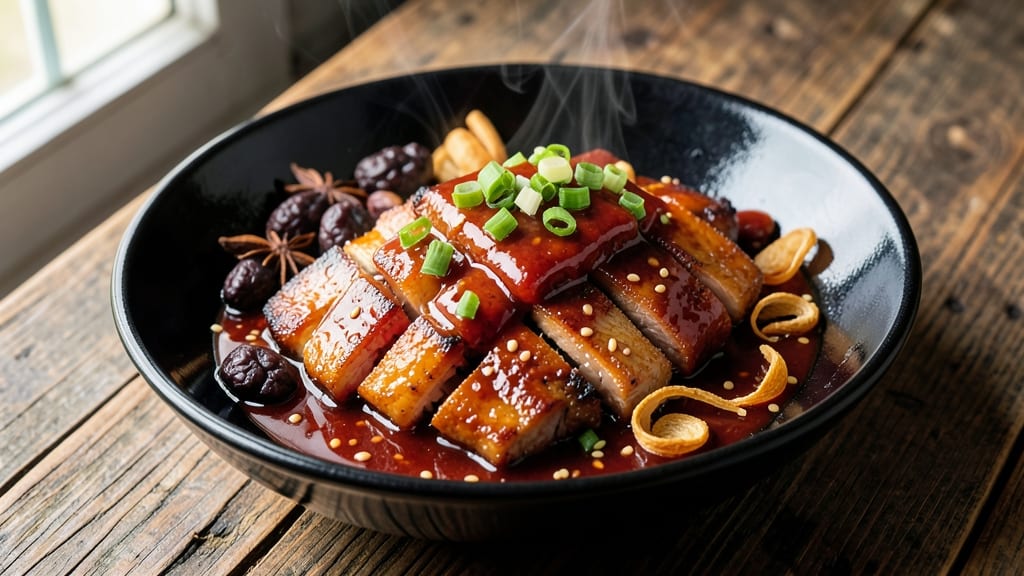
This Chinese BBQ pork sauce recipe delivers the deep umami richness and warm star anise heat that elevate every dish it touches. The secret lies in fermented bean paste and five-spice powder, which create layers of complexity that store-bought versions simply can't match.
What makes this sauce truly special is its versatility—it glazes pork to perfection, marinates meats with intense flavor, or even doubles as a dipping sauce for dumplings and spring rolls.
The sauce begins with a sweet-savory base of soy sauce, hoisin, and brown sugar, then builds depth through slow simmering with star anise, cinnamon, and cloves.
Unlike many recipes that rely on vinegar for tang, this version balances sweetness with natural umami from fermented ingredients, resulting in a glossy, sticky finish that clings beautifully to proteins. The key technique is reducing the sauce until it coats the back of a spoon—this ensures maximum flavor impact.
What you'll end up with is a glossy, aromatic sauce that transforms simple pork into restaurant-quality BBQ. The star anise adds a subtle warmth that lingers, while the five-spice powder brings earthy complexity. This isn't just a sauce—it's the foundation for dishes that taste like they've been simmering all day.
The best part? It keeps well in the refrigerator for up to two weeks, so you can make a big batch and use it throughout the week.
Perfect for glazing roasted pork belly, basting ribs, or drizzling over stir-fried dishes, this sauce adapts effortlessly to both traditional and modern recipes. Once you try homemade, store-bought versions will never measure up again. Let's get started on creating this flavor-packed essential for your kitchen.
Ingredients for chinese bbq pork sauce
Nine ingredients, one sauce that turns pork into restaurant-quality BBQ magic.
| Ingredient | Amount | Notes |
|---|---|---|
| Fermented Black Bean Paste 🫘 | ½ cup | Store-bought or homemade (fermented for depth) |
| Light Soy Sauce 🥢 | ½ cup | High-quality, low-sodium preferred |
| Hoisin Sauce 🍶 | ½ cup | Thick, authentic variety |
| Brown Sugar 🍯 | ½ cup | Packed, light brown preferred |
| Star Anise Pods 🌟 | 2 whole | Whole, not ground |
| Cinnamon Sticks 🌿 | 2 whole | 1-inch pieces, not powder |
| Cloves 🌶️ | 4 whole | Whole, not ground |
| Five-Spice Powder 🌶️ | 1 tbsp | Authentic Chinese blend |
| Garlic Cloves 🧄 | 4 cloves | Peeled, smashed |
| Ginger Root 🌿 | 1 tbsp | Fresh, grated |
| Sesame Oil 🫒 | 1 tbsp | Toasted, for aroma |
| Water 💧 | ½ cup | Room temperature |
The fermented black bean paste is non-negotiable—it's where the deep umami magic happens. Look for it in the Asian aisle at Trader Joe's or H Mart, where they stock authentic brands like Lee Kum Kee. If you can't find it, ferment black soybeans yourself for 3-5 days. The soy sauce and hoisin should be thick and glossy, not watery. For the spices, whole star anise and cloves add layers of warmth that ground spices can't match—toast them lightly in a dry pan first to deepen their aroma. The five-spice powder? Penzeys or Spicewalla have the best blends for this purpose.
No hoisin? Substitute with 2 tbsp soy sauce plus 1 tbsp molasses. Running low on star anise? Swap for 1 tsp anise seeds or ½ tsp ground anise, but it won't be the same. Fresh ginger is ideal, but dried works at half the amount if you're in a pinch. The sesame oil is for aroma—don't skip it, but add it at the end. For a quicker version, reduce the water by half and add 1 tbsp rice vinegar for tang, though traditionalists will argue the fermented ingredients handle the acidity better. The brown sugar can be swapped for coconut sugar or muscovado for deeper caramel notes.
This sauce gets better with time—let it sit for at least 30 minutes after simmering so the flavors meld. Store in a sealed jar in the fridge for up to 2 weeks, or freeze for 3 months. I like to portion it into ice cube trays for easy thawing—perfect for glazing pork belly or basting ribs. The sauce thickens as it cools, so warm it gently with a splash of water if it gets too stiff. Trust me, the first time you use this on store-bought pork chops, you'll never go back.
Why You'll Love This Recipe
- Pantry Magic: I swear by this sauce—no fresh herbs, no fancy prep. Just open the jar of fermented black bean paste (that deep, funky umami bomb) and toss it with soy sauce and hoisin. The star anise? You crush it whole and steep it like tea—no measuring, no mess.
- Sweet-Savory Balance: That caramelized brown sugar and hoisin combo? It’s the kind of flavor that makes you pause mid-bite. The fermented black bean paste adds this mysterious, slightly salty depth, while the star anise lingers like a whisper of spice. Honestly, it’s the kind of sauce that turns plain pork into something you’d order at a restaurant.
- Leftover Hero: Make a double batch—this sauce keeps for weeks in the fridge. Drizzle it over rice bowls, toss it with noodles, or even slather it on grilled chicken. Between us, I’ve had it cold on sandwiches (yes, really) and it still tastes like a victory.
- Budget Flex: You’re not spending a fortune here. A little black bean paste goes a long way, and the rest? Basic pantry staples. I’ve made this for under $5 and fed four people—plus, the leftovers stretch across lunches without breaking the bank. Practical? Absolutely. Delicious? Even more so.
Step-by-step instructions for Chinese BBQ pork sauce
Here's how to build a rich, aromatic sauce that balances sweet, salty, and spiced complexity.
Bloom the Spices in Sesame Oil
Heat a small saucepan over medium-low heat and add the 1 tablespoon sesame oil. Once the oil shimmers but doesn't smoke, add the 2 whole star anise pods, 2 whole cinnamon sticks, 4 whole cloves, and 1 tablespoon five-spice powder. Stir gently to coat the spices in the oil.
Let the spices bloom for 3-4 minutes until fragrant and slightly toasted. You'll smell deep, earthy notes of star anise and warm cinnamon—this is the aromatic foundation of your sauce. Be careful not to let the spices burn; they should be golden but not dark. Remove from heat immediately after blooming.
Add Aromatics and Brown Sugar
Return the pan to medium heat and add the 4 smashed garlic cloves and 1 tablespoon grated ginger root. Sauté for 1-2 minutes until the garlic turns golden and the ginger loses its raw bite. Add the 0.5 cup packed brown sugar and stir to dissolve completely, coating the spices and aromatics.
Let the mixture cook for another 2 minutes until the sugar begins to caramelize slightly at the edges. This step develops the sauce's deep, molasses-like sweetness that balances the umami later. If the sugar starts to burn, reduce the heat to low and stir constantly.
Combine Wet Ingredients
Pour in the 0.5 cup light soy sauce, 0.5 cup hoisin sauce, and 0.5 cup fermented black bean paste. Stir vigorously to combine everything into a smooth mixture. The sauce should thicken slightly as the starches in the hoisin and black bean paste activate.
Bring the mixture to a gentle simmer over medium heat. Let it cook uncovered for 5-6 minutes, stirring occasionally, until it reduces by about 20% and becomes glossy. You're looking for a sauce that coats the back of a spoon but isn't syrupy—it should still have a pourable consistency.
Finish with Water and Strain
Add the 0.5 cup room-temperature water all at once and stir well. The sauce should immediately become thinner as the water incorporates. Return to a simmer and cook for 3-4 minutes until slightly thickened again. This final step ensures the sauce has the right balance of richness and fluidity for glazing.
Remove from heat and let the sauce sit for 2 minutes. Then, strain it through a fine-mesh sieve into a clean bowl, pressing gently on the solids with a spoon to extract maximum flavor. Discard the strained spices and aromatics. The finished sauce should be deep red-brown with a glossy sheen and a complex aroma of star anise, ginger, and fermented umami.
Pro Tips For Making Chinese Bbq Pork Sauce
- Bloom the Star Anise: Toss the whole pod into the pot with your aromatics, but don’t just toss it in cold—let it sit for 30 seconds while you heat the oil. This gives the anise time to release its flavor before it burns, which is how you get that subtle, warm licorice note instead of bitter smoke.
- Toast the Black Bean Paste: When you add the fermented black bean paste, let it sizzle for 30 seconds in the hot oil before adding any liquid. I learned this the hard way—skipping this step makes the sauce taste raw and underdeveloped. (Yes, even if you’re impatient like me.)
- Simmer Slow and Steady: Once the sauce starts thickening, drop the heat to a bare simmer and let it cook uncovered for 10–15 minutes. Rushing this step makes the sugar burn and the hoisin sauce split. Trust me, the extra time guarantees a glossy, balanced finish.
- Strain for Smoothness: If you’re serving this sauce over rice or noodles, strain it through a fine-mesh sieve after cooking to remove the star anise and any grit from the black bean paste. It’s not always necessary, but it makes a real difference when you’re going for that restaurant-quality texture.
Essential equipment for perfect results
Saucepan Essentials
Start with a 3-quart heavy-bottomed saucepan—I recommend All-Clad or Le Creuset for even heat distribution. These pans prevent scorching while allowing you to build layers of flavor through slow reduction.
A wide-mouth measuring cup (like OXO Good Grips) helps with precise liquid additions, and a silicone spatula ensures you scrape every last bit of caramelized goodness from the pan. 🔥
Straining Tools
For the final straining step, a fine-mesh sieve with a heatproof bowl underneath is essential. I use a Heston Blumenthal-designed strainer from Le Creuset—it’s sturdy enough to handle hot liquids and has a wide rim to prevent spills.
A wooden spoon works best for pressing solids while keeping your fingers safe from the sauce’s heat.
Spice Toasting Setup
Toasting whole spices in sesame oil requires a small saucepan with sloped sides (like a Wüsthof saucepan) to prevent spills. Keep a small bowl of ice water nearby—it’s perfect for quickly cooling any accidental oil splatters.
A spice grinder (like Penzeys’ mortar and pestle) comes in handy if you want to grind toasted spices into powder for future recipes.
Storage Containers
Store your finished sauce in glass jars with airtight lids—Ball mason jars are my go-to for both short-term fridge storage and long-term freezing. For portion control, silicone ice cube trays work brilliantly.
Label each container with the date (this sauce keeps for 2 weeks refrigerated or 3 months frozen). A fine-mist spray bottle with water helps thin stiffened sauce when reheating. ✨
Heat Control Tools
Precision is key when reducing this sauce, so a digital thermometer (like Thermoworks Smoke) helps monitor temperature—aim for 200-210°F during reduction. A kitchen torch can add dramatic caramelization to the sauce’s surface before serving, while tongs make it easy to transfer hot spices without burning yourself.
Keep a small bowl of cold water nearby to refresh your hands between tasks.
Optional Upgrades
For extra convenience, a slow cooker (like Instant Pot’s 6-quart model) lets you simmer the sauce hands-off for 2-3 hours on low. A high-quality immersion blender (like Ninja) can help emulsify the sauce if you prefer a smoother texture.
For presentation, a fine-mist spray bottle with water lets you create a glossy sheen on finished dishes with ease. 💫
Nutrition facts
Frequently asked questions
Can I make this sauce without hoisin?
Yes! For a quick substitute, mix 2 tablespoons soy sauce with 1 tablespoon molasses or dark corn syrup to mimic hoisin's thickness and sweetness. The sauce will be slightly less complex but still delicious. For authenticity, try fermenting black soybeans for 3-5 days to create a homemade version.
How do I adjust the sweetness level?
Start with the full 0.5 cup brown sugar and taste as you go. For less sweetness, reduce by 1-2 tablespoons and add 1 teaspoon rice vinegar for balance. If you prefer more caramel notes, increase the sugar by 1-2 tablespoons and simmer longer to deepen the flavor.
Can I use this sauce on non-pork proteins?
This sauce works beautifully on chicken, duck, or even tofu. For chicken, reduce the cooking time by 10-15 minutes to prevent overcooking. For seafood like shrimp or scallops, use only 1 tablespoon of the sauce and cook for 2-3 minutes max to avoid overpowering delicate flavors.
Why does my sauce look too thin?
If your sauce is too thin, simmer it uncovered for an additional 5-10 minutes to reduce further. For a quicker fix, mix 1 teaspoon cornstarch with 1 tablespoon water, stir into the sauce, and cook for 2 minutes until thickened. Avoid adding too much water during simmering—this sauce should coat the back of a spoon but remain pourable.
How can I make this sauce spicier?
Add ½ teaspoon chili flakes or 1 teaspoon gochujang (Korean chili paste) during the final simmer. For heat with depth, toast 1 teaspoon Sichuan peppercorns in the sesame oil with the other spices. Remember, whole spices like chiles or peppercorns can be removed after straining if you prefer less texture.