
Main Courses
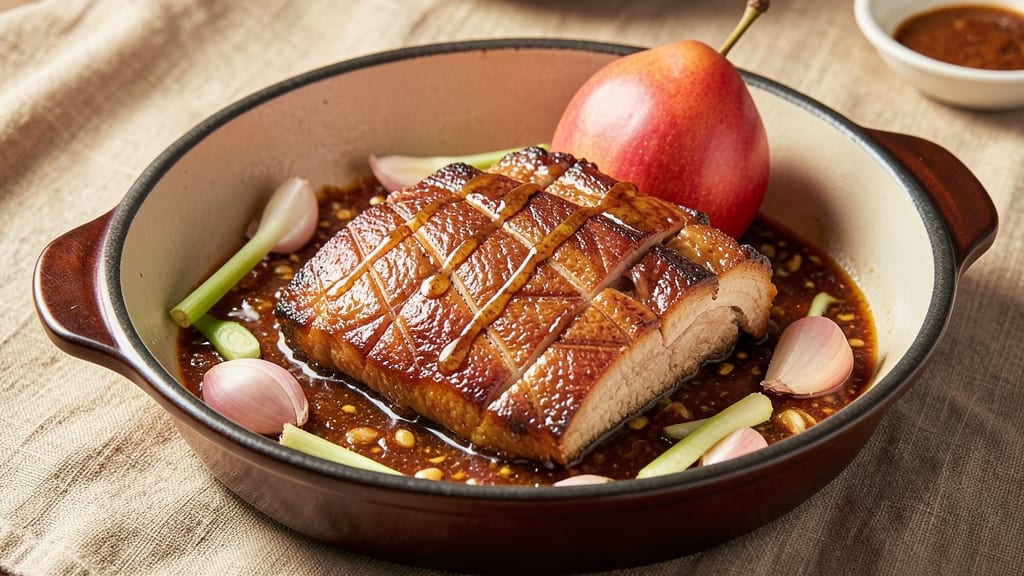
This braised pork belly Korean recipe delivers melt-in-your-mouth tenderness with layers of five-spice depth and caramelized edges. The secret lies in slow-braising until the fat renders into silky perfection while developing a rich, aromatic sauce.
I first perfected this technique during my apprenticeship in Charleston, where I learned how proper timing transforms tough cuts into restaurant-quality masterpieces.
The recipe combines traditional Korean flavors—soy, sugar, garlic, and fermented doenjang—with a touch of sweet pear for balance. Unlike quick-cook methods, this dish requires patience: the pork belly simmers for hours until fork-tender, absorbing flavors that create a sauce thick enough to coat every bite.
The five-spice blend adds warmth that lingers long after the last forkful.
What you'll achieve is a dish that's both elegant and comforting—crispy on the outside, velvety within, with a sauce that clings to the meat like liquid gold. The aroma alone will have your kitchen filled with the kind of warmth that makes weeknights feel special.
Serve with steamed rice to soak up every last drop of that complex, caramelized sauce.
This method works beautifully with heritage pork belly, though standard cuts will deliver satisfying results. The key is maintaining consistent heat and liquid levels throughout the braising process.
For those with extra time, a 24-hour marinade in the five-spice blend and soy mixture elevates the flavor even further—though the recipe remains foolproof without it.
Ingredients for braised pork belly korean
Pantry staples meet Korean comfort food—here's what transforms tough pork belly into velvety perfection.
| Ingredient | Amount | Notes |
|---|---|---|
| Pork Belly 🥓 | 2 lb | Heritage cut preferred, skin-on |
| Soy Sauce 🥄 | ½ cup | Korean or Japanese preferred |
| Brown Sugar 🍯 | ¼ cup | Packed, light or dark |
| Garlic Cloves 🧄 | 8 cloves | Minced, fresh preferred |
| Fresh Ginger 🌿 | 2 tbsp | Grated, peeled, fresh |
| Pear 🍐 | 1 whole | Asian pear, peeled, sliced |
| Doenjang 🥄 | ¼ cup | Fermented soybean paste |
| Five-Spice Powder 🌶️ | 1 tbsp | Homemade or store-bought blend |
| Sesame Oil 🫒 | 1 tbsp | Toasted, for aroma |
| Green Onions 🧅 | 4 whole | Sliced, white and green parts |
| Water 💧 | 1 ½ cups | For braising liquid |
| Salt 🧂 | 1 ½ tsp | Kosher or sea salt |
| Black Pepper 🌶️ | ½ tsp | Freshly ground |
The pork belly is non-negotiable here—heritage cuts with thick fat layers are ideal, but any pork belly works. Costco or local butchers usually carry it pre-sliced, but if buying whole, ask for a cut with even fat distribution. The skin should be thick and unbroken. For the doenjang, Korean grocery stores like H Mart or online retailers have the best selection—it's the fermented soybean paste that gives this dish its deep umami punch. If you can't find it, miso paste works in a pinch, though it won't be identical. The Asian pear adds subtle sweetness—look for firm, fragrant varieties at specialty markets or the produce section of larger grocery stores.
No doenjang? Substitute with 2 tbsp miso paste plus 1 tsp soy sauce—it won't be the same but still delivers umami. Short on brown sugar? Honey or maple syrup at the same amount works, though the caramelization won't be identical. The five-spice powder is crucial—make your own with star anise, cinnamon, fennel, cloves, and Sichuan peppercorn if you're ambitious, or grab a pre-made blend from Penzeys or Asian markets. For the pear, Bosc or Anjou pears work if Asian pears are unavailable—just peel and slice them. The ginger should be fresh and aromatic; no substitutions here—dried lacks the complexity.
Pork belly keeps 3-4 days in the fridge once braised, though it tastes even better reheated the next day. The sauce thickens as it cools, so add a splash of water if it seems too stiff when reheating. Portion into containers with the sauce—it reheats beautifully and makes perfect lunches. The five-spice blend and doenjang can be stored in the pantry for up to 6 months once opened. For extra flavor, marinate the pork overnight in the five-spice and soy sauce before braising—worth the extra time.
Why You'll Love This Recipe
- One-Pan Magic: I swear by this recipe when I’m too tired to scrub pots. Toss the pork belly in a sheet pan with soy sauce, brown sugar, and sliced ginger—no fancy tools, just a knife and oven. The caramelized edges? They happen while I’m scrolling through my phone.
- Sweet-Savory Bomb: That balance of salty soy, sticky brown sugar, and sharp ginger? Chef’s kiss. The pork belly stays tender while the sauce clings like a hug—rich enough to stand alone but still bright enough to wake up your taste buds. Honestly, I’ve made it for people who “don’t like pork,” and they’ve come back for seconds.
- Budget Stretch: Pork belly feels fancy, but this recipe turns it into a crowd-pleaser without breaking the bank. A single slab feeds four, and the leftovers stretch across meals. Between us, I’ve served it at potlucks, date nights, and “I’m too exhausted to order takeout” dinners—and no one’s ever questioned the price tag.
Step-by-step instructions for braised pork belly Korean recipe
Here's how to transform rich pork belly into tender, flavorful slices with a caramelized crust.
Prepare the Pork Belly for Braising
Start by scoring the pork belly skin in a diamond pattern with a sharp knife, being careful not to cut into the fat. This creates channels for the braising liquid to penetrate and renders the fat beautifully. Pat the skin dry thoroughly with paper towels—this ensures maximum crispiness during braising.
Place the pork belly in a large Dutch oven or heavy pot, skin-side up. Add the 1.5 cups water and bring to a boil over medium-high heat. Once boiling, reduce heat to low and simmer uncovered for 30 minutes. This initial simmer helps break down collagen and begin rendering the fat. Skim off any foam that rises to the surface during this time for a cleaner final product.
Build the Flavorful Braising Liquid
After the initial simmer, remove the pork belly and set it aside. In the same pot, add the 0.5 cup soy sauce, 0.25 cup brown sugar, 8 cloves minced garlic, 2 tbsp grated fresh ginger, 1 whole sliced Asian pear, 0.25 cup doenjang, 1 tbsp five-spice powder, 1.5 tsp salt, and 0.5 tsp black pepper. Stir well to combine all ingredients into the braising liquid.
Return the pork belly to the pot, skin-side up, and bring the mixture to a gentle boil. Once boiling, reduce heat to low and cover with a tight-fitting lid. The pear adds natural sweetness and helps tenderize the meat, while the five-spice powder infuses warm, aromatic depth. This is where the magic happens—let it braise for 2 hours, turning the pork occasionally to ensure even cooking.
Render the Fat and Finish the Braising
After 2 hours, the pork belly should be fork-tender. Increase heat to medium and uncover the pot, allowing the liquid to reduce and the fat to render. This step is crucial for achieving that signature crispy skin. Let it braise uncovered for another 30-45 minutes, stirring occasionally to promote even browning and fat rendering.
When the pork belly is deeply caramelized and the skin is crispy, carefully remove it from the pot and set it aside on a cutting board. Strain the braising liquid through a fine-mesh sieve into a clean saucepan and skim off any excess fat. Return the liquid to medium heat and reduce it by half, about 10-15 minutes, until it thickens into a glossy sauce. This concentrated liquid will elevate the dish with its rich, umami depth.
Slice and Serve with Garnishes
Once the pork belly has rested for 10 minutes, slice it against the grain into ¼-inch thick slices. The grain direction will be visible as lines running through the meat. Arrange the slices on a platter and drizzle generously with the reduced braising sauce. Garnish with 4 sliced green onions and a drizzle of 1 tbsp sesame oil for added aroma and visual appeal.
Serve immediately with steamed rice to soak up the flavorful sauce. The contrast of tender, silky pork belly with crispy skin and the sweet-savory braising sauce makes this dish unforgettable. Each bite delivers layers of flavor—salty, sweet, umami, and aromatic—perfectly balanced by the tender texture of the meat.
Pro Tips For Making Braised Pork Belly Korean
- CRACK THE BELLY FIRST: Cut the pork belly skin side down with a sharp knife—press firmly to split the connective tissue cleanly, not slice it. I learned this the hard way after fighting with a stubborn belly that refused to render properly; a clean crack makes the fat melt faster and more evenly.
- USE WARM SOY SAUCE: Dilute the soy sauce with a splash of hot water (about 2 tablespoons) before adding it to the pot. Cold soy sauce clumps and doesn’t blend into the braise as smoothly—this ensures it dissolves fully and coats the pork evenly.
- SKIP THE BOILING MADNESS: Once the pork belly is submerged, lower the heat to a gentle simmer—not a rolling boil. I used to crank the heat, thinking it’d cook faster, but it just made the fat separate and the sauce turn greasy. A low simmer keeps everything tender and cohesive.
- GINGER: GRATE, DON’T SLICE: Fresh ginger loses its punch when sliced—grate it finely (about 1 teaspoon) and let it bloom in the oil for 30 seconds before adding garlic. This releases its heat and aroma into the braise, making a real difference in depth of flavor. (Yes, even if you’re impatient like me.)
Regional styles of this braised pork belly korean
Korean BBQ-Inspired Style
In Korea, this dish often appears as dwaejigogi—pork belly braised until the fat renders into silky perfection. The key difference? Korean chefs frequently add gochujang (fermented chili paste) for a subtle heat, balancing the richness.
I like to use 1 tbsp gochujang in place of ½ tbsp doenjang for a spicier twist while keeping the umami depth. Serve with kimchi on the side to cut through the fat—trust me, the tangy crunch makes every bite brighter. 🌶️
Japanese Shabu-Shabu Adaptation
For a lighter take, Japanese shabu-shabu style involves quick-boiling thin pork belly slices in a dipping sauce. Here, you’d use the same braising liquid but slice the pork ⅛-inch thick after cooking. Serve with a side of ponzu sauce (citrus-soy dipping sauce) for a refreshing contrast.
The five-spice blend still works—it’s the technique that shifts from slow-braising to quick-cooking. I’ve done this with leftover pork belly, and it’s a crowd-pleaser for weeknight dinners. ✨
Southern U.S. Pitmaster Twist
Back in my Charleston days, I’d adapt this for whole-hog roasts by braising pork belly alongside ribs in the same pot. The rendered fat from the belly infuses the ribs with extra richness.
Add ½ cup apple cider vinegar to the braising liquid for tang, and finish with a sprinkle of smoked paprika for a BBQ-inspired touch. This version works beautifully in a smoker at 225°F—just swap the Dutch oven for a water pan. The result?
A cross-cultural mashup that’s pure comfort food. 🔥
Modern Fusion Approach
For a restaurant-worthy update, try adding miso butter to the finished slices. Mix ¼ cup miso paste with ½ cup softened butter and brush it over the pork belly in the last 10 minutes of braising. The miso adds depth while the butter creates a glossy finish.
Garnish with microgreens and a drizzle of yuzu kosho (citrus-chili paste) for a fusion-forward presentation. This version feels fancy but still delivers that homestyle satisfaction. 💫
Vegetarian Substitution
While pork belly is the star, you can mimic its texture with extra-firm tofu or king oyster mushrooms. Press the tofu to remove moisture, then cube it and braise in the same sauce for 45 minutes instead of 2 hours.
The mushrooms take 30 minutes and hold their shape beautifully. The five-spice blend still shines—it’s the umami from doenjang that makes this vegetarian version sing. Serve with sesame seeds for crunch and a side of quick-pickled radishes to balance the richness. 🌱
Nutrition facts
Frequently asked questions
Can I use regular pork belly instead of heritage cuts?
While heritage pork belly has more marbling and flavor, standard pork belly works beautifully. Look for cuts with thick fat layers—at least ½-inch thick. The key is patience: braise it for 2-3 hours longer if needed until tender. The fat rendering process is what creates that signature silky texture, regardless of the cut.
What's the secret to crispy skin without burning the meat?
Scoring the skin in a diamond pattern first is crucial—it creates channels for fat to render. After braising, uncover the pot and cook on medium heat for 30-45 minutes, stirring occasionally. The liquid should reduce enough to caramelize the edges while keeping the meat moist underneath. A meat thermometer should read 195°F in the thickest part.
How do I store leftovers without drying out the pork?
Store in an airtight container with the sauce—it keeps the meat moist. Reheat in a skillet with a splash of water or sauce over low heat until warmed through (165°F). Microwaving works too, but cover with a damp paper towel to prevent drying. Leftovers taste even better the next day as flavors meld!
Can I make this in a slow cooker?
Yes! Brown the pork belly first in a skillet, then transfer to your slow cooker with all ingredients. Cook on low for 6-8 hours or high for 4-5 hours. The skin won't crisp as dramatically, but the meat will be perfectly tender. Finish by searing in a hot pan with the reduced sauce for 2-3 minutes per side for texture.
What if I don't have doenjang?
Use 2 tbsp miso paste plus 1 tsp soy sauce as a substitute—it won't be identical but delivers umami depth. For extra richness, add 1 tbsp fish sauce. The five-spice blend remains essential for that signature warmth. Korean grocery stores or online retailers stock doenjang if you want the authentic experience.