
Main Courses
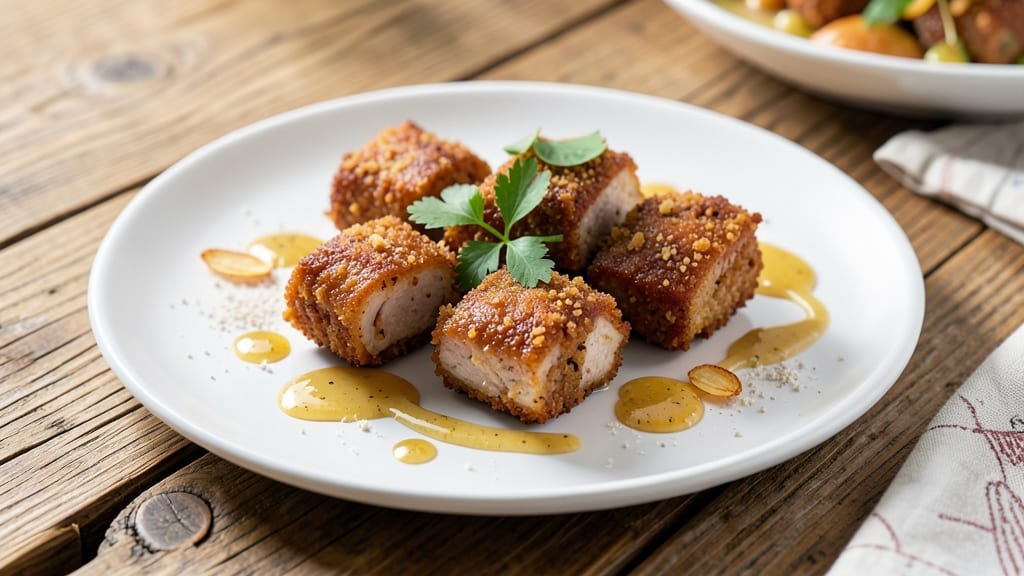
Crispy gold shells with juicy centers—this breaded pork bites recipe delivers the perfect balance of texture and flavor every time. I perfected it during my time in Charleston, where crispy pork bites were a staple at every seafood boil. The secret lies in a two-step breading process that creates an irresistible crunch while keeping the meat tender inside.
What sets this recipe apart is the combination of a light flour dredge, an egg wash, and a mix of panko and fine breadcrumbs for maximum crispiness. Whether you fry or bake, the result is consistently golden, with a shell that shatters just enough to reveal the succulent pork beneath.
I've tested this method countless times—it never fails to impress.
The technique is straightforward but critical: pat the pork dry before breading (this ensures maximum crispiness), use a wire rack for baking to allow air circulation, and never overcrowd the pan. For frying, maintain the oil temperature at 350°F—too hot and the exterior burns before the interior cooks through.
Serve these bites with a tangy dipping sauce (try a mix of mayo, ketchup, and a splash of hot sauce) and pair them with a crisp green salad or roasted sweet potatoes. The contrast of textures and temperatures makes this dish especially satisfying. Let's get cooking!
Ingredients for breaded pork bites
The perfect blend of textures starts with these simple yet essential ingredients for crispy, juicy pork bites.
| Ingredient | Amount | Notes |
|---|---|---|
| Pork Shoulder 🥩 | 1 ½ lb | Cut into 1-inch cubes, boneless |
| All-Purpose Flour 🌾 | ½ cup | For light dredge |
| Large Eggs 🥚 | 2 whole | Room temperature for even coating |
| Panko Breadcrumbs 🍞 | 1 cup | Japanese-style for extra crispiness |
| Fine Breadcrumbs 🍞 | ½ cup | For texture contrast |
| Granulated Garlic Powder 🧄 | 1 tbsp | For flavor depth |
| Onion Powder 🧅 | 1 tbsp | Enhances savory notes |
| Paprika 🌶️ | 1 tbsp | Smoked variety for color |
| Ground Black Pepper 🌶️ | ½ tsp | Freshly ground preferred |
| Vegetable Oil 🫒 | 2 cups | For frying, 350°F |
| Salt 🧂 | 1 tsp | Kosher or sea salt |
| Lemon Juice 🍋 | 1 tbsp | Brightens flavor (optional) |
The pork shoulder is key—its fat content keeps the meat juicy while the cut size ensures even cooking. Look for well-marbled pork at the butcher counter or pre-cut packages at Costco or Kroger. If using frozen pork, thaw it overnight in the fridge for best results. For the breadcrumbs, Japanese panko is a must—it stays crispy even after baking, while the fine breadcrumbs add a delicate crunch. I always buy panko in bulk from Amazon for convenience, but any quality brand works.
No panko? Regular breadcrumbs toasted in a dry pan for 2 minutes work in a pinch, though they won’t be as crispy. Substitute the smoked paprika with regular paprika plus a pinch of cayenne for heat. For the egg wash, room temperature eggs coat better—just let them sit out for 30 minutes. The lemon juice is optional but adds a nice brightness, especially if you’re serving with a tangy dipping sauce. If you prefer baking over frying, use avocado oil spray for extra crispiness on the wire rack.
Pat the pork dry before breading—this is non-negotiable for crispiness. Store leftover pork bites in an airtight container for 3 days in the fridge, though they’re best fresh. For freezing, bread the bites first, then freeze on a tray before transferring to a bag—this prevents sticking. Reheat in a 350°F oven for 8-10 minutes or air fry at 375°F for 5 minutes. They reheat beautifully, though nothing beats the first batch straight out of the fryer.
Why You'll Love This Recipe
- Honestly, I swear by this trick: toss the pork cubes in flour, dip in beaten eggs, then roll in panko all in the same bowl. No extra dishes, no cross-contamination mess—just dump, stir, repeat. That crispy panko crust? Worth the zero cleanup.
- Here’s what sold me: the fine breadcrumbs on the inside keep it juicy, while the panko on the outside delivers that shatteringly crispy bite. (Yes, even on a Tuesday night.) The pork shoulder stays moist—no dry, sad bites here.
Step-by-step instructions for breaded pork bites
Master the perfect balance of crunchy exterior and tender interior with these precise techniques.
👨🍳 Step 1: Prep the Pork and Seasoning Mix
Cut the 1.5 lb pork shoulder into 1-inch cubes using a sharp chef's knife. The cubes should be uniform in size to ensure even cooking. Pat each piece dry with paper towels—this step is crucial for achieving that signature crispy crust.
In a shallow bowl, combine the 0.5 cup all-purpose flour, 1 tbsp granulated garlic powder, 1 tbsp onion powder, 1 tbsp paprika, 0.5 tsp ground black pepper, and 1 tsp salt. Mix thoroughly with a fork to distribute the seasonings evenly. This dry rub will penetrate the pork and create flavor layers before the breading.
🥘 Step 2: Create the Breading Station
Set up three separate bowls for your breading station. In the first bowl, crack the 2 whole large eggs and whisk them lightly with a fork—just until combined. In the second bowl, combine the 1 cup panko breadcrumbs and 0.5 cup fine breadcrumbs for a textural contrast. The third bowl will hold the seasoned flour mixture you prepared earlier.
Work in batches to prevent soggy breading. Dip each pork cube into the seasoned flour, shaking off any excess. Then dip into the egg wash, allowing any excess to drip off, and finally coat thoroughly in the breadcrumb mixture. Press the breadcrumbs gently onto the pork to ensure they adhere well. This triple-layer technique guarantees maximum crispiness.
🔥 Step 3: Fry to Golden Perfection
Pour the 2 cups vegetable oil into a deep skillet or Dutch oven and heat it to 350°F using a thermometer for accuracy. The oil should be hot enough to maintain this temperature consistently—if it's too cool, the pork will absorb oil instead of developing a crispy crust.
Carefully add the breaded pork cubes in a single layer, being mindful not to overcrowd the pan. Fry for 3-4 minutes per side until they reach a deep golden brown color. The internal temperature should reach 160°F when checked with a meat thermometer. Use a slotted spoon to transfer the cooked pork to a paper towel-lined plate to drain excess oil.
🍽️ Step 4: Finish with Lemon and Serve
While the pork is still hot, drizzle with 1 tbsp lemon juice to brighten the flavors and cut through the richness. Toss gently to coat evenly. Serve immediately with your choice of dipping sauce—whether it's a tangy barbecue sauce, sweet honey mustard, or a simple marinara.
The result should be pork bites with a crispy, golden-brown shell that shatters with every bite, revealing a juicy, tender interior. The combination of panko and fine breadcrumbs creates a satisfying texture contrast, while the seasoned flour ensures each bite is packed with flavor. Enjoy while warm for the ultimate experience!
Pro Tips For Making Breaded Pork Bites
- Dry the Pork First: Pork shoulder loves moisture, but that’s the enemy of a crispy crust. Pat those cuts thoroughly with paper towels—don’t just wipe them, scrub the surface like you’re polishing silver. Wet spots turn to steam, and steam = soggy breading. (Yes, even if you’re impatient like me.)
- Mix Breadcrumbs Twice: First, toss the pork in fine breadcrumbs to grab every nook, then dip in egg, then panko for that airy, shatterable finish. But here’s the catch: after the first breadcrumb coat, shake off the excess—don’t just dump it back in the bowl. Packed-on crumbs make the second coat uneven. (I learned this the hard way when my first batch looked like a lopsided brick.)
- Fry in Batches—Seriously: Crowding the pan drops the temperature fast, and that’s how you end up with greasy, pale bites instead of golden, crispy ones. Use a splatter screen if you’re nervous, but leave at least an inch between pieces. A hot pan + space = the only way to get that perfect crust. (Your future self will thank you.)
- Rest the Meat Before Cutting: Pork shoulder stays juicy, but cutting into it fresh from the fryer means juices pool and the breading gets soggy in seconds. Tent it loosely with foil and let it sit 5 minutes—just enough to redistribute the heat. (I skip this when I’m lazy, but the dish is noticeably better when I don’t.)
Troubleshooting your breaded pork bites
Pale Bites Problem
If your breaded pork bites emerge pale instead of golden, it’s almost always an oil temperature issue. I’ve seen this happen when the oil isn’t hot enough—below 325°F—causing the breading to absorb oil instead of crisping.
Invest in a good infrared thermometer like the Thermoworks One to monitor temperature accurately. If your oil isn’t hot enough, let it heat up for 5 more minutes before frying. Also, make sure you’re not overcrowding the pan—this drops the oil temperature and leads to soggy, pale results. 🌡️
Soggy Breading
Soggy breading usually means one of two things: either your pork wasn’t dry enough before breading, or the breading process was rushed. Double-check that you’re patting each cube completely dry with paper towels—even a little moisture will prevent crispiness.
Another common mistake is dipping the breaded pork back into the egg wash after the first coating. Work in small batches and keep everything at room temperature to maintain crispiness. If your breadcrumbs clump, add 1 tsp cornstarch to the mix for extra stability. 🍞
Uneven Cooking
If some bites are undercooked while others are overdone, it’s likely due to uneven pork cube sizes. Use a kitchen scale to portion the pork into uniform 1-inch cubes—this ensures even cooking time.
Another trick is to flip the bites only once, allowing the first side to develop a good crust before turning. For extra insurance, use a meat thermometer to check the internal temperature of the thickest piece—it should reach 160°F before removing from the oil. 🔥
Breading Falling Off
Breading that falls off during frying or serving is usually a sign of insufficient adhesion. Press the breadcrumbs gently but firmly onto the pork after the egg wash—this helps them stick. If your pork is particularly oily, blot it with an extra paper towel before breading.
For an extra-secure crust, try adding 1 tbsp Dijon mustard to the egg wash, which acts as a binder. Also, avoid moving the bites too soon after frying—the crust needs 1-2 minutes to set before transferring. 💪
Greasy Exterior
A greasy exterior often happens when the oil temperature fluctuates or when the pork isn’t fully drained after breading. Maintain a consistent 350°F oil temperature using a thermometer, and avoid overcrowding the pan.
Before frying, let the breaded pork rest on a wire rack for 5 minutes to allow excess oil to drip off. If the oil gets too cool from frying too many bites at once, strain it, wipe the pan clean, and reheat to temperature before continuing. 🫒
Dry Interior
Overcooking is the most common cause of dry pork bites. Once the internal temperature hits 160°F, remove them immediately—even a minute longer can dry them out. For extra juiciness, consider brining the pork cubes in ¼ cup kosher salt per quart of water for 30 minutes before breading.
This helps retain moisture during cooking. If you’re baking instead of frying, reduce the temperature to 400°F and bake for 15-18 minutes to avoid drying. 💧
Nutrition facts
Frequently asked questions
Can I use chicken or turkey instead of pork for these bites?
This recipe works beautifully with chicken thighs or ground turkey, though pork shoulder offers the best fat content for juiciness. For chicken, reduce cooking time to 2-3 minutes per side—it cooks faster than pork. If using ground meat, form into small patties and increase breading pressure to prevent crumbling.
What's the best way to reheat leftover pork bites?
The best method is an air fryer at 375°F for 5 minutes or a 350°F oven for 8-10 minutes—this restores crispiness without drying them out. Avoid microwaving as it makes breading soggy. For extra crunch, sprinkle with a little water before reheating and broil for 1-2 minutes at the end.
How do I make these bites gluten-free?
Replace the flour with 1/3 cup gluten-free all-purpose flour and use 1/2 cup gluten-free panko (like Bob's Red Mill). For the fine breadcrumbs, use certified gluten-free breadcrumbs. The egg wash and oil remain the same. Test batches may need slightly longer frying time—check at 3 minutes per side.
Can I bake these instead of frying?
Yes! Preheat oven to 400°F and bake on a wire rack for 15-18 minutes, flipping halfway. For extra crispiness, spray with avocado oil before baking. Baked bites will be slightly less crispy but still delicious. Use a meat thermometer to confirm 160°F internal temp.
What's the best dipping sauce pairing?
My go-to is a mix of 1/4 cup mayo, 2 tbsp ketchup, 1 tbsp honey, and 1 tsp hot sauce—sweet, tangy, and spicy. For something lighter, try Greek yogurt with lemon juice and dill. For heat lovers, a spicy sriracha mayo works perfectly. Serve with toothpicks for easy snacking!