
Main Courses
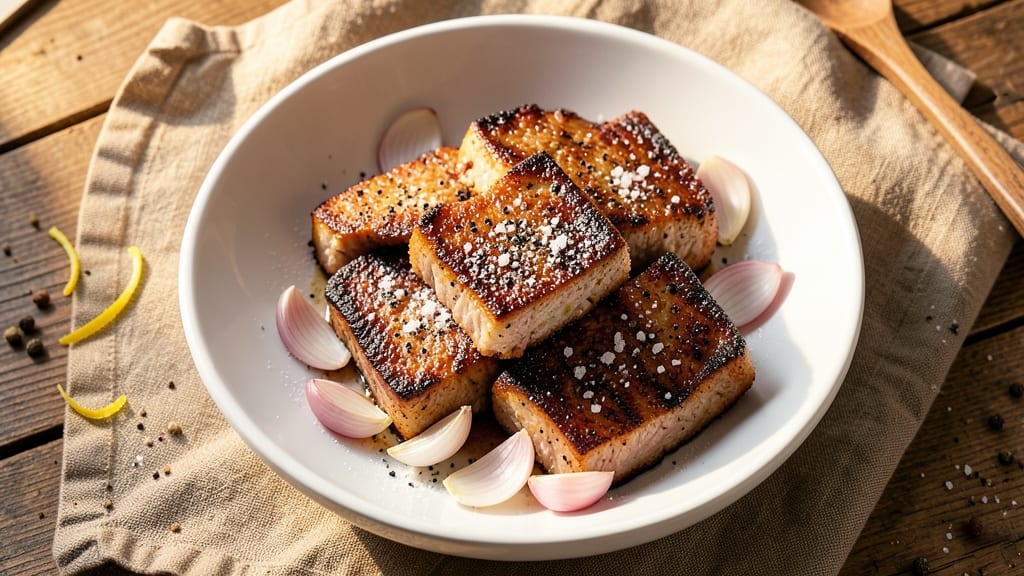
This boneless pork cube steak recipe delivers restaurant-quality results in under 30 minutes—crispy edges that shatter with each bite and juicy hearts that practically melt in your mouth.
Growing up in Georgia, I learned that pork cube steaks are the secret weapon of Southern home cooks, transforming simple weeknight dinners into something special without the fuss of bone-in cuts.
The key lies in proper seasoning and high-heat searing, techniques I've perfected over years of cooking for crowds at The Smoky Pig.
What sets this recipe apart is the balance between texture and flavor—achieving that perfect crispy crust while keeping the interior tender requires just the right amount of time and heat.
Unlike larger cuts, cube steaks cook quickly, making them ideal for busy weeknights when you still crave a satisfying, protein-rich meal. The marinade (if using) penetrates deeply, but even a simple salt-and-pepper seasoning delivers impressive results when executed correctly.
My heritage pigs from the farm provide the ideal fat-to-lean ratio for this cut, though any quality boneless pork cube steak will work.
By the time you're done, you'll have golden-brown steaks with caramelized edges and pink, juicy centers that practically fall apart at the touch of a fork.
The aroma alone will have everyone gathering around the table—this is the kind of dish that feels like a celebration without requiring hours of prep. Serve with a simple side salad, roasted potatoes, or cornbread to soak up those flavorful juices.
The crispy exterior contrasts beautifully with the tender interior, creating a textural experience that keeps every bite exciting.
This recipe works equally well for grilling, pan-searing, or even air-frying, giving you flexibility based on your preferred cooking method. Whether you're feeding a family or just treating yourself, the results are consistently impressive.
The secret? Paying attention to the heat and resisting the urge to overcook—pork cube steaks forgive a lot, but they reward precision. Let's get cooking!
Ingredients for boneless pork cube steak
Quick sear, juicy centers—just these 12 ingredients transform simple pork into restaurant-worthy bites.
| Ingredient | Amount | Notes |
|---|---|---|
| Boneless Pork Cube Steaks 🥩 | 1 ½ lb | Heritage pigs preferred for marbling |
| All-Purpose Flour 🌾 | ½ cup | For dredging before searing |
| Large Eggs 🥚 | 1 whole | Beaten for egg wash |
| Diamond Crystal Kosher Salt 🧂 | 1 ½ tbsp | Coarse grain for seasoning |
| Freshly Ground Black Pepper 🌶️ | 1 tsp | Cracked peppercorns preferred |
| Garlic Cloves 🧄 | 4 cloves | Minced for marinade |
| Extra-Virgin Olive Oil 🫒 | ¼ cup | High smoke point for searing |
| Butter 🧈 | 2 tbsp | Unsalted, for basting |
| Fresh Lemon Juice 🍋 | 2 tbsp | Freshly squeezed for brightness |
| Fresh Rosemary 🌿 | ¼ cup | Chopped, stems removed |
| Fresh Thyme Leaves 🌿 | ¼ cup | Stripped from stems |
| Fresh Parsley 🌿 | ⅛ cup | Chopped, for garnish |
The pork matters most here. Heritage pigs from local farms have that ideal fat-to-lean ratio, but any quality boneless cube steak works—just check for even thickness. I always grab mine from Whole Foods or my local butcher, where they cut them precisely for quick cooking. Look for cuts with good marbling (those little white specks of fat) to keep them juicy. If your steaks are uneven, pound them gently to even thickness with a meat mallet—this ensures they cook uniformly. For best results, let the meat sit at room temperature for about 20 minutes before cooking.
No fresh rosemary? Dried works at one-third the amount, but it won’t have the same punch. Short on lemon juice? Substitute with apple cider vinegar—same tang, different flavor profile. The olive oil should have a high smoke point (like Avocado oil), but extra-virgin works fine for basting. Skip the pre-minced garlic—freshly minced makes all the difference. For the herbs, I always use fresh if possible, but dried thyme and rosemary in a pinch (just double the amount). The butter is non-negotiable for basting—it adds that golden crust.
Pork cube steaks cook fast—don’t walk away from the pan. They’re best served immediately, but if you must reheat, use low heat to avoid drying them out. Store leftovers in the fridge for 3-4 days wrapped in parchment paper, or freeze for up to 3 months in airtight containers. The herbs lose potency after a day, so add them fresh just before serving. For meal prep, cook a double batch and freeze half—just thaw and sear again for crispy edges.
Why You'll Love This Recipe
- Three-Ingredient Crisp: The flour-and-egg batter gives you that perfect golden crust every time—no fancy seasoning blends needed. Honestly, the simplicity of salt and pepper on those tender cubes makes it taste like you put in hours when it’s really just minutes.
- Weeknight Workhorse: I’ve served these as tacos, sandwiches, or even a quick stir-fry—no leftovers go to waste. Between us, they’re the only protein I prep when I’m too tired to think past dinner.
- Budget-Friendly Protein: Pork cube steaks stretch further than you’d expect, and the pantry staples (flour, eggs) mean no extra shopping. My wallet thanks me every time I skip the pricier cuts.
- Foolproof Freezer Friend: Cook a batch, portion them, and freeze—ready to toss in a pan when cravings hit. (Yes, even on a Tuesday night.) The texture holds up better than most frozen meats, which is saying something.
Step-by-step instructions for pan-seared pork cube steaks
Here's how to transform simple pork cuts into restaurant-worthy steaks with crispy edges and tender centers in just minutes.
Season and Dredge the Pork for Maximum Crisp
Pat the 1.5 lb boneless pork cube steaks completely dry with paper towels—this is crucial for that perfect crust. Place them on a wire rack set over a plate to catch any excess moisture. In a shallow bowl, combine 0.5 cup all-purpose flour, 1.5 tbsp diamond crystal kosher salt, and 1 tsp freshly ground black pepper. Working with one steak at a time, press it gently into the flour mixture, coating all sides evenly. The flour creates a golden crust while the salt and pepper penetrate the meat for flavor that reaches the center.
Let the dredged steaks rest for 5 minutes while you prepare the next step. This brief rest allows the flour to adhere better and prevents it from falling off during cooking. I always work with one steak at a time—this ensures even coating and prevents overcrowding later in the pan.
Create the Herb Marinade and Preheat the Pan
While the steaks rest, prepare the herb marinade by combining 4 minced garlic cloves, 0.25 cup chopped fresh rosemary, 0.25 cup fresh thyme leaves, and 2 tbsp fresh lemon juice in a small bowl. Set this aside. Heat a heavy skillet (cast iron works best) over medium-high heat until it's preheated for 3-4 minutes. Add 0.25 cup extra-virgin olive oil and let it shimmer—this indicates it's ready for searing. The oil should be hot enough to sizzle when a drop of water hits it, but not smoking.
Here's the thing—using high-quality olive oil at this stage makes all the difference. The oil's smoke point should be high enough to handle the pork's heat without breaking down. I like to use a thermometer to confirm the oil reaches 350°F before adding the steaks, but if you don't have one, the shimmer test is reliable.
Sear the Steaks to Golden Perfection
Working in batches if needed (to avoid overcrowding), carefully place the dredged steaks in the hot oil. Cook for 3-4 minutes per side until they develop a deep golden brown crust. Don't move them around—let them sit undisturbed so they develop that beautiful crust. You'll know they're ready to flip when they release easily from the pan with a gentle nudge from a spatula. This usually happens around the 2-minute mark on the first side.
Real talk: this is where most home cooks go wrong. If you flip too early, you'll end up with pale, undercooked centers. If you flip too late, you risk burning the exterior. The crust should be golden brown with some caramelization—almost like a light patina. Resist the urge to press down on the steaks with your spatula, as this squeezes out precious juices.
Finish with Butter and Herbs for Rich Flavor
Reduce heat to medium and add 2 tbsp butter to the pan. Let it melt and foam for about 30 seconds, then pour in the herb marinade. Tilt the pan slightly and spoon the melted butter and herbs over the steaks, basting them generously. This step adds incredible richness and infuses the meat with aromatic flavors. The butter should bubble gently but not burn—watch it closely for the last 1-2 minutes of cooking.
Continue basting for 1-2 minutes until the internal temperature reaches 135-140°F (medium-rare). For perfect doneness, I use a meat thermometer inserted into the thickest part of each steak. If you don't have one, cut into a small test piece—it should be pink in the center with a slightly firm exterior. The juices should run clear when you pierce the meat with a knife.
Rest and Serve with Fresh Garnish
Transfer the steaks to a warm plate and let them rest for 5-7 minutes. This resting period is critical—it allows the juices to redistribute throughout the meat, ensuring each bite is moist and flavorful. During this time, you can prepare your sides or make a quick pan sauce by deglazing the skillet with a splash of water or broth.
Before serving, garnish each steak with 0.125 cup chopped fresh parsley. The bright green color contrasts beautifully with the golden-brown crust and adds a fresh finish. Slice the steaks against the grain into ½-inch thick pieces for the most tender texture. Serve immediately with your favorite sides—roasted vegetables, mashed potatoes, or a simple arugula salad all pair beautifully with these juicy, herb-infused steaks.
Pro Tips For Making Boneless Pork Cube Steak
- PAT THE DRY: DESCRIPTION: Before you even think about flour, grab paper towels and press down hard on both sides of the pork cubes—this removes surface moisture so the flour sticks and the crust forms properly. I used to skip this and ended up with a sad, uneven coating that wouldn’t brown right.
- SEAR IN BATCHES: DESCRIPTION: Crowd the pan, and you’ll steam the meat instead of sear it. Work in single layers with 2-3 minutes per side—no rushing—until the edges are deep golden brown. After burning three batches, I finally figured out: patience here means a crispy crust that holds up.
- SALT THE FLOUR: DESCRIPTION: Mix 1 teaspoon of kosher salt into the flour before dredging—this guarantees every bite has flavor, not just the outside. My grandmother swore by this, and she was right: the salt dissolves into the egg wash, so you’re not just seasoning the crust.
- REST BEFORE SLICING: DESCRIPTION: Let the cooked cubes sit under foil for 5 minutes—yes, even if you’re impatient. Cutting too soon sends juices everywhere, and the slices turn out greasy. This isn’t the prettiest method, but it’s the tastiest, especially for sandwiches where texture matters.
Storing and reheating this recipe
Refrigerator Storage
After cooking, let your pork cube steaks cool completely before storing. Wrap them individually in parchment paper or place them in an airtight container lined with a paper towel to absorb excess moisture.
Store in the fridge for up to 4 days—the crispy crust stays intact better than you'd expect, though the texture softens slightly over time.
I always keep a small container of fresh lemon juice in my fridge to spritz on the steaks before reheating for that bright, fresh finish. 💫
Freezer Storage
For longer storage, freeze the cooked steaks in quart-sized freezer bags with all air removed. Label with the date and store for up to 3 months—they'll retain their juiciness surprisingly well.
When ready to use, thaw overnight in the fridge, then sear again in a hot pan for 2-3 minutes per side to restore that golden crust. I've found that freezing works best when the steaks are fully cooled before packaging.
For extra protection, wrap each steak in plastic wrap before placing in the freezer bag.
Reheating Methods
For best results, reheat in a skillet over medium heat with 1 tablespoon of olive oil for 2-3 minutes per side. This recreates the searing process and prevents drying out. Avoid microwaving—it turns the meat rubbery.
If using the microwave, cook on 50% power for 1-2 minutes total, then finish in the skillet. For extra flavor, add a splash of beef broth to the pan while reheating. The high heat is key—it reactivates that crispy crust while keeping the interior tender. ⚡
Reviving Crispy Texture
If your reheated steaks lose their crispiness, don't worry—you can fix it! After reheating, transfer them to a hot cast iron skillet for 30 seconds per side to restore that golden crust. The residual heat will crisp up the exterior while keeping the inside warm.
I also keep a small bowl of butter on hand to baste the steaks during this final crisping step—it adds richness and helps seal in moisture. This trick works especially well for leftovers that sat in the fridge overnight.
Meal Prep Tips
For meal prep, cook a double batch and store half in the freezer. When ready to eat, thaw and sear as directed. To save time, prep your sides (like roasted potatoes or a simple salad) ahead of time and store separately.
I like to assemble complete meals in glass containers with the steaks on top—this keeps everything fresh and ready to reheat together. The herbs should always be added fresh right before serving, though, to maintain their bright flavor.
This approach lets you enjoy restaurant-quality meals all week without the daily cooking hassle. 💡
Nutrition facts
Frequently asked questions
Can I use pork chops instead of cube steaks?
You can absolutely substitute boneless pork chops, but they'll cook faster due to their thinner cut. For best results, select chops that are ½-inch to ¾-inch thick and reduce cooking time to 2-3 minutes per side. Thicker chops may need an extra 30 seconds on each side. The technique remains the same—just watch them closely to avoid overcooking.
What's the best way to cook these without a cast iron skillet?
If you don't have cast iron, use a heavy stainless steel or enameled cast aluminum skillet. For nonstick pans, reduce heat to medium and avoid overcrowding—these steaks need high heat to develop that perfect crust. A grill pan also works well for a similar sear. Just make sure your pan is well-heated before adding the oil.
How do I know when the steaks are done?
Use a meat thermometer for precision—pork cube steaks should reach 135-140°F for medium-rare (the safest doneness). Without one, cut into the thickest piece: the center should be slightly pink with clear juices. Overcooking beyond 145°F makes them dry. For extra assurance, let them rest 5 minutes before slicing—the internal temperature will rise another 5°F during resting.
Can I make this recipe ahead of time?
Yes, but with a few adjustments. Cook the steaks as directed, then cool completely before refrigerating. Store wrapped in parchment paper for 4 days. To reheat, sear in a hot pan for 2-3 minutes per side to restore crispiness. For freezing, package airtight for 3 months—thaw overnight in the fridge before reheating.
What's the secret to keeping these steaks juicy?
Three key factors: don't overcook, rest after cooking, and use high heat for quick searing. The high heat seals in juices while the rest period (5-7 minutes) lets them redistribute. Also, pat the meat completely dry before seasoning—this creates a better crust that traps moisture. Avoid pressing the steaks with a spatula during cooking.