
Soups & Stews
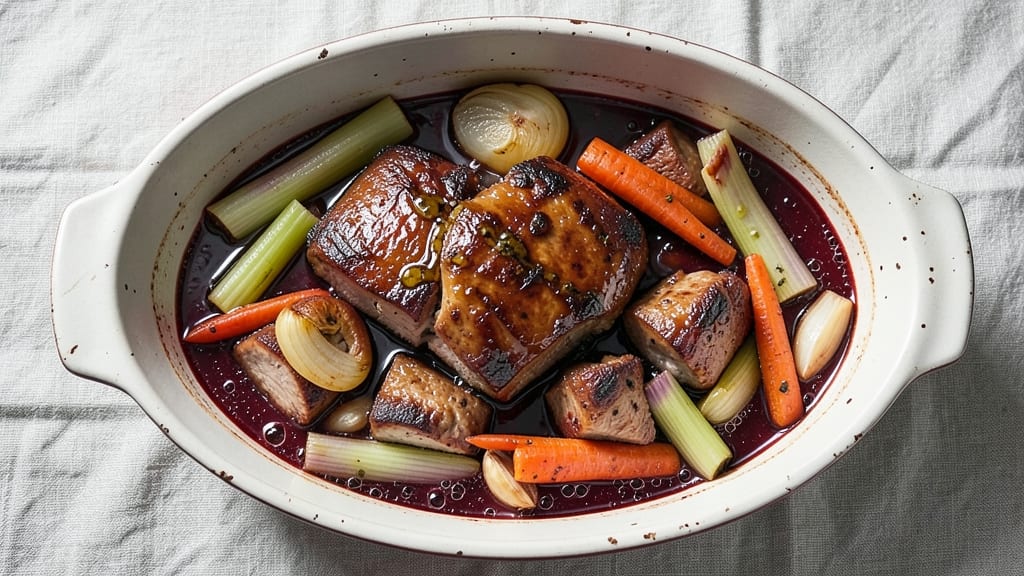
This braised pork stew recipe transforms tough cuts into melt-in-your-mouth tenderness through the magic of slow cooking. 🔥 As someone who's spent years perfecting pork braises—from my CIA training to running a high-volume BBQ kitchen—I know the secrets to achieving that deep, caramelized flavor that makes every bite irresistible.
The key lies in proper searing, aromatic layers, and patience, but don't worry: this method delivers restaurant-quality results with techniques you can master at home.
What sets this recipe apart is the balance of traditional methods and modern adaptability. We'll use a Dutch oven for that classic braising experience, but I'll show you how to adapt it for Instant Pot or slow cooker if you're short on time.
The secret weapon? A rich blend of aromatics—carrots, onions, celery—that build flavor as they simmer, while red wine and tomatoes add depth that transforms simple pork into something extraordinary. This isn't just stew; it's comfort food elevated to an art form.
The result is a dish so rich and flavorful it practically serves itself—golden-brown pork that falls apart at the touch of a fork, swimming in a sauce thick with caramelized bits and aromatic vegetables.
The texture is what makes it special: tender yet substantial pork with just enough resistance to hold its shape, all coated in a sauce that clings perfectly. This is the kind of meal that gets better with each passing day, as the flavors deepen and meld together.
Serve it with crusty bread to soak up every last drop of that precious braising liquid, or pair it with roasted root vegetables for a complete meal. The beauty of this recipe is its versatility—it works as a hearty weeknight dinner or a showstopping centerpiece for gatherings.
Let's get started on creating pork so tender it practically melts in your mouth.
Ingredients for braised pork stew
Six aromatic ingredients transform tough pork into melt-in-your-mouth perfection through slow simmered magic.
| Ingredient | Amount | Notes |
|---|---|---|
| Pork Shoulder (Boston Butt) 🥩 | 3 lb | Cut into 2-inch chunks, bone-in preferred |
| Yellow Onions 🧅 | 2 whole | Large, cut into 1-inch chunks |
| Carrots 🥕 | 4 whole | Medium, peeled, cut into 2-inch chunks |
| Celery Stalks 🧄 | 4 whole | Cut into 2-inch pieces |
| Garlic Cloves 🧄 | 6 cloves | Peeled, smashed |
| Dry Red Wine 🍷 | 1 ½ cups | Bold variety like Cabernet Sauvignon |
| Tomato Paste 🍅 | ½ cup | Smooth, not chunky |
| Beef Broth 💧 | 3 cups | Low-sodium preferred |
| Olive Oil 🫒 | ¼ cup | Extra-virgin for richness |
| Fresh Thyme 🌿 | 2 tbsp | Leaves only, chopped |
| Fresh Rosemary 🌿 | 1 tbsp | Needles only, chopped |
| Bay Leaves 🌿 | 2 whole | Dried, standard size |
| Salt 🧂 | 1 ½ tsp | Kosher or sea salt |
| Black Peppercorns 🌶️ | 1 tsp | Freshly cracked |
| All-Purpose Flour 🌾 | 1 tbsp | For thickening sauce |
The pork shoulder is the star—bone-in cuts stay juicier, but boneless works too. Look for well-marbled meat at Whole Foods or your butcher counter (they'll often cut it for you). If you're using a frozen pork shoulder, thaw it in the fridge overnight—never microwave. The aromatics—onions, carrots, celery—are non-negotiable. I call this the 'holy trinity' of braising: chop them evenly so they cook at the same rate. For wine, any bold red works—Cabernet Sauvignon or Merlot from the Trader Joe's wine section is perfect.
No red wine? Substitute beef broth with 1 tbsp balsamic vinegar—it adds depth without alcohol. Fresh herbs make all the difference, but dried thyme at half the amount works in a pinch. The tomato paste can be the squeeze-tube kind from Trader Joe's—it's convenient and keeps for months. If you're short on time, swap the Dutch oven for an Instant Pot (use the 'high pressure' setting for 45 minutes). For extra richness, add 1 tbsp Worcestershire sauce—it's umami magic.
This stew tastes even better the next day as flavors meld. Store in an airtight container in the fridge for up to 5 days or freeze for 3 months. I like to portion it into individual containers so I can grab a meal anytime. The sauce thickens as it cools—if it's too thin after reheating, mix 1 tbsp flour with 2 tbsp cold water and stir it in. Leftovers reheat beautifully in a skillet with a splash of broth or water.
Why You'll Love This Recipe
- One-Pot Magic: I swear by this recipe because it’s literally dump-and-go after the initial sear. Slice the onions, chop the carrots and celery (mirepoix, if you’re fancy), toss them in with the pork, and let the slow cooker or Dutch oven do the heavy lifting. No fancy techniques—just time and patience.
- Deep Umami Bomb: That pork shoulder? It melts into perfection—tender, juicy, falling-apart edges with a crust that’s crisp enough to make you pause mid-bite. The onions caramelize right in the pot, and the garlic? Oh, it’s there in the best way—warm, aromatic, and lingering like a hug from your favorite chef.
- Leftovers That Beg for More: Between us, this stew only gets better the next day. The flavors marry overnight, and reheating it is so easy—just a splash of water or broth, a few minutes on the stove, and suddenly you’ve got dinner for lunch. My freezer’s always stocked with portions because I can’t resist making extra.
- Budget-Friendly Crowd-Pleaser: Pork shoulder is cheap, but it feels like a splurge. You get so much meat from one cut, and the veggies stretch into multiple servings without breaking the bank. Plus, it’s the kind of dish that makes people sigh happily—whether it’s feeding the family or impressing guests who think you’re a pro. (No one needs to know it’s foolproof.)
Step-by-step instructions for braised pork stew
Here's how to build rich, deep flavors through slow cooking—every step matters.
🔥 Step 1: Sear the Pork Shoulder for Maximum Flavor
Heat the 0.25 cup olive oil in a heavy Dutch oven over medium-high heat until shimmering. Pat the 3 lb pork shoulder dry with paper towels—this ensures a proper sear. Working in batches if needed, add the pork chunks and cook undisturbed for 4-5 minutes per side until deep golden brown.
Don't rush this step. The caramelized crust locks in juices and forms the flavor base. If your pan gets crowded, work in two batches. Once browned, remove the pork and set aside on a plate.
👨🍳 Step 2: Build the Aromatic Vegetable Base
In the same Dutch oven, add the 2 whole yellow onions, 4 whole carrots, and 4 whole celery stalks (all cut as specified). Cook for 8-10 minutes, stirring occasionally, until the vegetables begin to soften and release their natural sugars.
Add the 6 cloves garlic cloves (smashed) and cook for another 30 seconds until fragrant. This step develops the stew's foundational flavors. Here's the thing—don't let the garlic burn, or you'll get bitter notes instead of sweet aroma.
🍳 Step 3: Deglaze with Wine and Add Liquids
Pour in the 1.5 cups dry red wine, scraping up all those browned bits from the bottom of the pot with a wooden spoon. Let it simmer for 3-4 minutes until reduced by half. This deglazing step captures all that meaty flavor.
Stir in the 0.5 cup tomato paste, 3 cups beef broth, 2 whole bay leaves, 2 tbsp fresh thyme, 1 tbsp fresh rosemary, 1.5 tsp salt, and 1 tsp black peppercorns. Return the pork to the pot, making sure it's mostly submerged in the liquid.
⏰ Step 4: Braise Until Fork-Tender
Bring the stew to a gentle simmer, then reduce heat to low and cover partially with a lid. Let it cook for 2.5-3 hours—this is where the magic happens. The pork will gradually break down into tender, melt-in-your-mouth pieces.
Check occasionally and add ½ cup hot water if the liquid reduces too much. You're aiming for a sauce that coats the back of a spoon. Real talk: if you peek too often, you'll lose heat and extend cooking time, so resist the urge!
🥘 Step 5: Thicken and Finish
Once the pork is fork-tender, remove it from the pot and set aside. In a small bowl, whisk together the 1 tbsp all-purpose flour with 2 tablespoons of the stew's cooking liquid to create a slurry. Stir this back into the pot and simmer for 5-7 minutes until the sauce thickens slightly.
Return the pork to the pot and stir gently to coat everything in the sauce. Taste and adjust seasoning if needed—this is your chance to perfect the balance. Serve immediately with crusty bread to soak up every last bit of that rich, flavorful sauce.
Pro Tips For Making Braised Pork Stew
- Sear the Pork Hard: I learned this the hard way—skipping the deep sear means flavor stuck in the pan instead of the meat. Use a heavy pot (Dutch oven if you have one) and let the pork shoulder sit undisturbed for 4-5 minutes per side until it’s dark brown, almost black in spots. That crust locks in moisture and builds depth.
- Cut Onions Like a Pro: Don’t dice those yellow onions—slice them into ¼-inch thick half-moons. They’ll soften faster and blend into the stew without leaving chunks, while still adding that sweet, caramelized base. (Yes, even if you’re impatient like me.)
- Deglaze with Beer or Wine: After searing, don’t just splash in water—use a splash of dark beer (like stout) or dry red wine to scrape up those browned bits. It adds richness and cuts through the fat without thinning the stew. Skip this, and you’re missing out on half the flavor.
- Check Doneness with a Fork: The pork’s internal temp should hit 203°F (95°C) for tender pull-apart texture, but don’t trust the thermometer alone. Slide a fork in—if it glides through like butter, it’s done. If not, give it another 20-30 minutes low and slow. (Your future self will thank you.)
Flavor customization for braised pork stew
Spicy Carolina Heat
For a kick that reminds me of my time in Charleston, add 1 tbsp hot sauce (like Crystal Hot Sauce) and 1 tsp cayenne pepper with the tomato paste.
I also toss in 2 slices of andouille sausage (about ¼ cup diced) during the sear—this adds smoky depth and a little extra spice. Serve with cooling pickled jalapeños on the side to balance the heat. 🌶️
Sweet & Smoky BBQ Twist
Swap the red wine for 1 cup BBQ sauce (I love Sweet Baby Ray's Original) and add 2 tbsp brown sugar with the tomato paste. This version has a sticky, tangy-sweet profile that's perfect for game day.
I finish it with a sprinkle of smoked paprika and serve it over mashed potatoes instead of bread. The contrast of creamy mash and rich stew is unbeatable.
Herb-Forward Mediterranean
Brighten the stew with 1 tbsp dried oregano, 1 tsp ground coriander, and zest of 1 lemon (added with the herbs). Use white wine instead of red and add ½ cup chopped sun-dried tomatoes during the braise.
Garnish with fresh parsley and serve with crusty focaccia for dipping. This version feels lighter but still packed with flavor—perfect for summer suppers.
Creamy Mushroom Upgrade
For a luxurious touch, stir in 1 cup sliced cremini mushrooms with the vegetables and add ½ cup heavy cream (or coconut milk for a lighter option) during the final 10 minutes of cooking.
A pinch of nutmeg elevates the sauce to a near-restaurant quality. I pair this with garlic bread and a simple arugula salad to cut through the richness.
Crispy Potato Addition
Add 2 cups diced Yukon Gold potatoes with the carrots and celery. Their starch helps thicken the sauce naturally, and they become tender without falling apart. For extra texture, sprinkle 1 tbsp smoked sea salt on top before serving.
This version feels heartier and is perfect for feeding a crowd—everyone loves the crispy edges on the potatoes. 🥔
Slow-Cooker Adaptation
For hands-off cooking, transfer everything to a 6-quart slow cooker after searing and deglazing. Cook on low for 8 hours or high for 5 hours. The slow cooker version actually benefits from the extra time—flavors meld beautifully.
I add 1 extra cup of broth to account for evaporation. This is my go-to for busy weeks when I need a crowd-pleaser with minimal effort. ⏰
Nutrition facts
Frequently asked questions
Can I use pork chops instead of pork shoulder for this stew?
Pork chops won't work for this braising method—they cook too quickly and won't develop that melt-in-your-mouth tenderness. Stick with pork shoulder (Boston butt) or pork loin for best results. If you're set on chops, try pan-searing them separately and serving alongside the stew.
What's the secret to getting rich, flavorful sauce?
The sauce magic comes from three things: browning the meat (don't skip this!), deglazing with wine to capture fond, and simmering low and slow to develop depth. The longer it cooks, the more the flavors meld—aim for at least 2.5 hours minimum for that restaurant-quality sauce.
Can I make this stew in an Instant Pot?
Sear the pork first, then transfer everything to the Instant Pot. Use high pressure for 45 minutes after adding all ingredients. Quick release the pressure, then thicken the sauce on the stovetop with your flour slurry. The pressure method works surprisingly well for tender pork.
Why does my stew turn out watery?
Watery stew usually means one of two things: either you didn't reduce the liquid enough during cooking, or you added too much broth initially. For best results, aim for a sauce that coats the back of a spoon. If it's too thin after cooking, simmer uncovered for 10-15 minutes to reduce it further.
How can I make this stew ahead of time?
This stew actually tastes better the next day! Store it in an airtight container in the fridge for up to 5 days or freeze for 3 months. The flavors deepen as it sits. When reheating, add a splash of broth or water to prevent the sauce from thickening too much.