
Main Courses
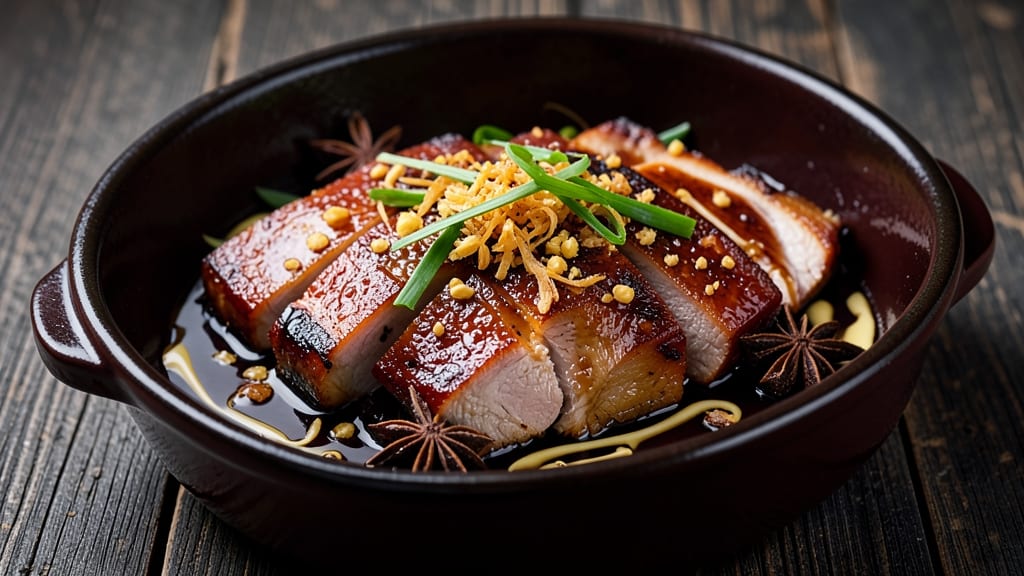
This Chinese-style braised pork loin delivers restaurant-quality depth with star anise and soy sauce working magic over hours of slow cooking. 🔥 The secret lies in balancing sweet and savory while letting the pork become fork-tender—something I perfected after years of testing different braising techniques.
My farm-raised pork loin develops an irresistible caramelized crust while staying juicy inside, all thanks to the aromatic blend of spices and slow heat.
The beauty of this recipe is its simplicity: just a few key ingredients transform into a deeply flavorful dish.
We start with a marinade of soy sauce, ginger, and garlic to build the foundation, then braise the pork with star anise, cinnamon, and rock sugar for that signature Chinese restaurant aroma.
The slow cook creates a rich, velvety sauce that clings to every bite, making this perfect for family dinners or special occasions.
What makes this dish truly special is how the flavors develop over time—the pork becomes melt-in-your-mouth tender while absorbing all those aromatic spices. The result is a dish that's rich, complex, and satisfying, with a sauce that's perfect for serving over steamed rice or pairing with stir-fried vegetables.
Every bite carries layers of umami and warmth that transport you straight to a bustling Cantonese kitchen.
This recipe scales beautifully for gatherings, and the leftovers only get better as the flavors meld further. The techniques here—proper marinating, slow braising, and careful seasoning—ensure professional results every time. Let's get cooking!
Ingredients for braised pork loin chinese
Just 14 ingredients transform into restaurant-quality Chinese braised pork loin.
| Ingredient | Amount | Notes |
|---|---|---|
| Pork Loin 🥩 | 2 lb | Farm-raised, bone-in preferred |
| Light Soy Sauce 🥢 | ½ cup | Kikkoman preferred for balance |
| Dark Soy Sauce 🥢 | 2 tbsp | For deeper color and flavor |
| Ginger Root 🌿 | 2 tbsp | Freshly grated, aromatic |
| Garlic Cloves 🧄 | 6 cloves | Minced, aromatic foundation |
| Star Anise Pods 🌟 | 4 whole | Whole pods for infusion |
| Cinnamon Sticks 🌿 | 2 whole | For warmth and depth |
| Rock Sugar 🍬 | ¼ cup | Or substitute brown sugar |
| Shaoxing Wine 🍷 | ¼ cup | Dry Chinese cooking wine |
| Green Onions 🧅 | 4 whole | Cut into 1-inch pieces |
| Vegetable Oil 🫒 | 2 tbsp | High smoke point preferred |
| Water 💧 | 1 ½ cups | For braising liquid |
| Cornstarch 🌾 | 1 tbsp | For thickening sauce |
| Sesame Oil 🫒 | 1 tsp | For finishing aroma |
The pork loin is the star—bone-in, farm-raised cuts develop richer flavor during braising. Look for well-marbled sections at Whole Foods or your local Asian market (they often carry premium cuts). If you can't find bone-in, a thick-cut boneless loin works too, but don't skip the skin if you see it—it crisps beautifully. Star anise and cinnamon are non-negotiable for that signature Chinese restaurant aroma. Penzeys Spices or bulk bins at Trader Joe's are great sources for whole spices—just make sure they're fresh (no dusty jars!). Shaoxing wine is the secret weapon here—it's dry and aromatic, but dry sherry or Mirin work in a pinch if you can't find it.
No star anise? 1 tsp anise seeds will work, but the flavor is different. Rock sugar hard to find? Brown sugar or coconut sugar are perfect substitutes—they'll caramelize beautifully. The soy sauces are crucial: light soy for saltiness, dark soy for color and depth. Kikkoman light and Lee Kum Kee dark soy are my go-tos. For ginger, fresh is ideal, but if you're using powdered, double the amount. The cornstarch is just for thickening at the end—don't skip it, but if you're watching carbs, you can omit it and just reduce the sauce longer. Green onions add freshness at the end—scallions work too.
This dish tastes even better the next day as flavors meld. Store in an airtight container in the fridge for up to 5 days, or freeze for 3 months. I always make a double batch—it reheats beautifully and makes perfect lunches. For serving, pair with steamed jasmine rice and quick stir-fried bok choy. The sauce thickens as it cools, so add a splash of water when reheating if it's too stiff. And trust me, the sesame oil at the end is worth it—just a tiny drizzle makes all the difference.
Why You'll Love This Recipe
- Minimal Chopping Required: I swear by this—just slice the pork into even chunks, mince the garlic and ginger in 30 seconds, and toss it all in one pot. No dicing onions, no julienne carrots, just pure braise simplicity.
- Umami Bomb Combo: That dark soy sauce? It’s the secret weapon here—deep, caramelized richness that clings to the pork like a hug. Light soy keeps it bright, while the garlic and ginger turn every bite into a little flavor explosion.
- Lunchbox Hero: Between us, this is my go-to for meal prep. The pork stays tender for days, so I make a big batch on Sundays and pack it with rice for work lunches. Honestly, I’ve never had leftovers I didn’t look forward to.
Step-by-step instructions for braised pork loin with star anise fragrance
Let's create a rich, aromatic braise that balances sweet, salty, and spiced flavors perfectly.
🍳 Step 1: Sear the Pork Loin to Build Deep Flavor
Heat a heavy-bottomed Dutch oven over medium-high heat until a drop of water sizzles instantly. Add the 2 tablespoons vegetable oil and swirl to coat the bottom evenly. Place the 2 lb pork loin, fat-side down, and sear undisturbed for 5-6 minutes until a deep golden-brown crust forms.
Here's the thing—don't rush this step. You want that crust to develop before you flip. Once the first side is beautifully browned, carefully flip the pork and sear the other side for another 4-5 minutes. Remove the pork and set it aside on a plate. You'll notice the aroma filling your kitchen—that's your first sign of the flavor foundation you're building.
👨🍳 Step 2: Build the Aromatic Base with Ginger, Garlic and Spices
In the same Dutch oven (those browned bits are pure flavor), add the 2 tablespoons grated ginger root and 6 minced garlic cloves. Stir constantly for 30 seconds until the garlic turns golden and fragrant—you'll know it's ready when the scent fills your kitchen. Add the 4 whole star anise pods and 2 whole cinnamon sticks, stirring briefly to toast them for 1 minute until they release their essential oils.
Now add the 0.25 cup rock sugar and 0.25 cup Shaoxing wine, scraping up all those delicious browned bits from the bottom. Let this mixture simmer for 2-3 minutes until the wine reduces by half and the sugar starts to caramelize slightly. This creates the perfect balance of sweet and savory that defines authentic Chinese braising.
🥘 Step 3: Braise the Pork Until Fork-Tender
Return the seared pork to the Dutch oven. Pour in the 1.5 cups water, then add the 0.5 cup light soy sauce and 2 tablespoons dark soy sauce. The dark soy sauce will give your braise that signature deep color while adding complexity. Bring everything to a gentle simmer, then reduce heat to low and cover tightly with a lid.
Here's where patience pays off. Let the pork braise for 1 hour and 15 minutes until the meat is fork-tender and pulls apart easily. I check for doneness by inserting a fork—if it slides in smoothly with no resistance, it's ready. If the liquid reduces too much before the pork is tender, add 1-2 tablespoons hot water to maintain moisture.
⏰ Step 4: Thicken the Sauce and Finish with Green Onions
Once the pork is tender, remove it from the braising liquid and set it aside on a cutting board. In a small bowl, whisk together the 1 tablespoon cornstarch with 2 tablespoons water to create a slurry. Slowly pour this mixture into the braising liquid while stirring constantly over medium heat for 2-3 minutes until the sauce thickens enough to coat the back of a spoon.
Return the pork to the Dutch oven and spoon the thickened sauce generously over the top. Add the 4 whole green onions (cut into 1-inch pieces) and stir gently to combine. Let everything heat through for 2 minutes, then remove from heat. Drizzle with 1 teaspoon sesame oil right before serving—this adds a final aromatic punch that ties all the flavors together.
Pro Tips For Making Braised Pork Loin Chinese
- SEAR FIRST, THEN BRAISE: I used to skip the initial sear and just toss the pork loin straight into the braising liquid—big mistake. Hit the pan with high heat until the meat develops a deep golden crust. That crust locks in flavor and keeps the pork from turning into a sad, watery slab. (Yes, even if you’re impatient like me.)
- SLICE GINGER THIN: Thick ginger chunks? Nope. For this dish, you want paper-thin slices—almost translucent. It infuses flavor without turning the braise into a ginger soup. I learned this the hard way after biting into a chunky, underflavored piece. (Pro tip: Freeze the ginger first, then slice.)
- DON’T BOIL THE SOY: Light and dark soy sauce are your flavor anchors, but boiling them dry turns the sauce bitter and the pork into a chewy mess. Keep the heat low enough that the liquid simmers gently—tiny bubbles, not a rolling boil. If it’s too much, add a splash of water and let it mellow out.
- USE GARLIC CLOVES WHOLE: Mincing garlic for braising is overkill—it burns fast and turns bitter. Toss in 3-4 whole cloves, skin on, and let them soften in the liquid. They’ll release flavor without dominating the dish. (I was skeptical until I tried it—now I never go back.)
Wine and beer pairings for these flavors
Red Wine Pairings
For this deeply aromatic braise, I reach for a dry Chinese red wine like Cabernet Sauvignon from Napa Valley—its bold tannins stand up to the pork's richness while complementing the star anise's licorice notes.
If you can't find Chinese red, a Pinot Noir from Oregon offers similar acidity and earthiness without overpowering. The key is avoiding heavy, oaky wines that would clash with the delicate spices. 🍷
Light Beer Options
A crisp Chinese lager like Tsingtao or Snow Beer cuts through the braise's richness beautifully, cleansing your palate between bites. For craft beer lovers, a light wheat beer with citrus notes—like Blue Moon—adds a refreshing contrast to the pork's umami depth.
Avoid heavy IPAs or stouts that would drown out the dish's nuanced flavors.
Rice Wine Pairing
This dish practically begs for a sip of Shaoxing wine—the same ingredient used in the recipe! Its nutty, slightly sweet profile mirrors the braise's flavors while adding another layer of complexity.
If you can't find Shaoxing, a dry sherry like Fino works wonders, balancing the dish's sweet and savory elements. 🍶
Non-Alcoholic Choices
For a non-alcoholic option, I recommend jasmine tea—its floral notes complement the star anise beautifully. A chilled green tea lemonade with a hint of ginger also pairs wonderfully, refreshing your palate between rich bites. The citrus in the lemonade helps cut through the pork's richness without overpowering it.
Regional Adaptations
In Cantonese-style restaurants, this dish is often paired with lychee wine—its floral sweetness contrasts perfectly with the pork's savory depth. For a more Sichuan-inspired twist, try a lightly spiced Chinese rice wine like Moutai (diluted with water) to add a subtle kick.
Each regional approach enhances the dish's complexity in different ways.
Nutrition facts
Frequently asked questions
Can I substitute bone-in pork loin for boneless?
Yes, but there are key differences. Bone-in pork develops richer flavor during braising and stays more moist. If using boneless, choose a thick-cut loin (at least 1.5-inch thick) to prevent drying. The cooking time remains the same, but boneless pork may need 5-10 extra minutes to reach tenderness since it lacks the bone's natural moisture retention.
What if I don't have star anise?
You can use 1 teaspoon anise seeds as a substitute, but the flavor will be slightly different. For a closer match, combine ½ teaspoon ground anise with ½ teaspoon fennel seeds (toasted). If neither is available, omit it entirely—the dish will still be flavorful, just less aromatic. The cinnamon sticks remain essential for warmth.
How do I make this dish in a slow cooker?
Transfer the seared pork to your slow cooker with all braising ingredients (except cornstarch). Cook on low for 6-7 hours or high for 3-4 hours until tender. For the sauce, mix cornstarch with water and stir into the cooking liquid during the last 30 minutes of cooking. The slow cooker method yields even more tender meat with minimal effort.
Why did my pork turn out dry?
This usually happens from overcooking or insufficient liquid. Always braise on low heat and maintain 1.5 cups liquid (adding water as needed). For extra moisture, try wrapping the pork in aluminum foil during the first 1 hour of braising. Also, avoid cutting into the meat until it's fully rested (10 minutes) after cooking.
Can I prepare this ahead of time?
This dish tastes even better the next day! Store in an airtight container in the fridge for up to 5 days. Reheat gently in the braising liquid over low heat until warmed through. For freezing, package portions with sauce and freeze for up to 3 months. Thaw overnight in the fridge before reheating.