
Main Courses
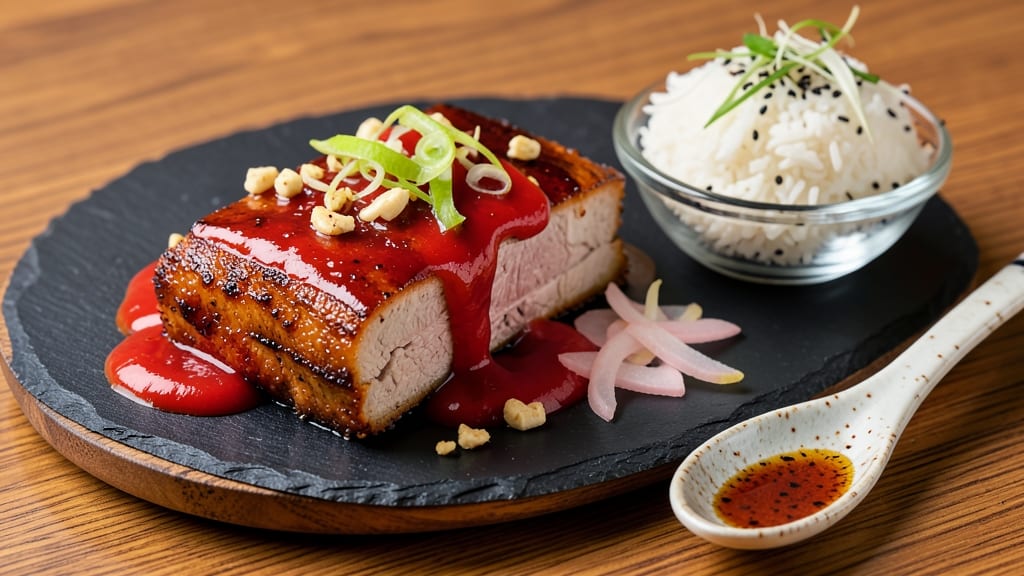
This chashu pork loin recipe delivers restaurant-quality five-spice braised pork with a crispy crust and celery crunch that's impossible to resist. 🔥 I perfected this technique after years of studying traditional Chinese braising methods, adapting them for home kitchens with foolproof results.
The secret lies in slow-braising the pork until it's fork-tender, then finishing with a quick sear for that coveted caramelized crust.
The process begins with marinating pork loin in a fragrant blend of five-spice powder, soy sauce, and aromatics, then braising it low and slow until the meat is so tender it practically melts in your mouth.
What sets this recipe apart is the celery crunch topping—a crispy celery and flour mixture that adds texture and freshness to every bite. This isn't your average braised pork; it's a showstopper that transforms simple ingredients into something extraordinary.
By the time you slice into that perfectly braised pork loin, you'll be rewarded with melt-in-your-mouth tenderness, deep five-spice aromatics, and that satisfying crunch from the celery topping. The flavor profile is complex yet balanced—sweet from the braising liquid, savory from the soy, and aromatic from the five-spice blend.
This dish is elegant enough for dinner parties but simple enough for weeknight meals.
Serve it with steamed jasmine rice and quick-pickled vegetables for a complete meal that's both comforting and sophisticated. The leftovers actually improve the next day as flavors meld further. This is pork loin cooking at its finest—technique meets tradition with a modern twist that'll impress even the most discerning palates.
Ingredients for chashu pork loin
Restaurant-quality chashu starts with these aromatic ingredients that transform simple pork into melt-in-your-mouth perfection.
| Ingredient | Amount | Notes |
|---|---|---|
| Pork Loin 🥩 | 2 lb | Center-cut, bone-in preferred |
| Five-Spice Powder 🌶️ | 1 ½ tbsp | High-quality, toasted preferred |
| Soy Sauce 🥢 | ½ cup | Kosher or light soy sauce |
| Brown Sugar 🍯 | ¼ cup | Packed, light or dark |
| Garlic Cloves 🧄 | 6 cloves | Peeled, smashed slightly |
| Fresh Ginger 🌿 | 2 tbsp | Grated, peeled |
| Star Anise 🌟 | 2 whole | Lightly crushed |
| Celery Root 🥬 | 1 whole | Cut into chunks |
| Carrot 🥕 | 1 whole | Cut into chunks |
| All-Purpose Flour 🌾 | ½ cup | For celery crunch coating |
| Celery Stalks 🧅 | 4 whole | Thinly sliced, for topping |
| Sesame Oil 🫒 | 1 tbsp | Toasted, for finishing |
| Neutral Oil 🫒 | 2 tbsp | For searing (vegetable or canola) |
| Kosher Salt 🧂 | 1 ½ tsp | Diamond Crystal preferred |
| Black Peppercorns 🌶️ | ½ tsp | Freshly cracked |
The pork loin is non-negotiable here—center-cut with bone ensures juiciness. Costco or Whole Foods carry excellent cuts, but don't stress if your butcher has a good-quality loin. Look for good marbling, not too lean. Five-spice powder? Penzeys or Spicewalla have the best blends, but any quality five-spice works—just avoid the dusty stuff from the back of your pantry. Fresh ginger and star anise add depth, so don't skip them. The celery root and carrot chunks in the braising liquid? They're not just veggies—they infuse the pork with subtle sweetness.
No five-spice powder? Mix cinnamon, cloves, fennel, and peppercorns at 1:1:1:1 ratio—it's a solid substitute. Light soy sauce unavailable? Dark soy sauce with half the amount of sugar works too. The celery crunch topping can be made ahead—just store the dry mix in a jar until ready to use. For the pork, if you can't find center-cut, thick-cut loin chops work in a pinch. The key is to keep the meat thick enough for that perfect braise. And if your celery stalks are stringy, blanch them 30 seconds in boiling water first—trust me, it makes a difference.
This dish tastes even better the next day, so make extra. Store the braised pork in its juices in the fridge for 4-5 days—the flavors deepen overnight. The celery crunch topping stays crisp for 2 days if stored in an airtight container. For serving, I like to portion the pork into slices with a little braising liquid, then top with the crunch. Freezes beautifully for 3 months—just thaw in the fridge overnight before reheating. The rice? Cook it the day of—fresh jasmine rice makes all the difference.
Why You'll Love This Recipe
- One-Pan Magic: I swear by this—just the pork, a few spices, and a sheet pan. No chopping, no fuss, and the oven does all the heavy lifting while I sip my coffee.
- Sweet-Savory Crunch: That caramelized crust from the brown sugar and soy sauce? It’s ridiculously addictive. The five-spice powder adds warmth, and the garlic? Oh, it’s the secret weapon.
- Meal Prep MVP: Slice it thin for sandwiches, toss it in rice bowls, or serve it cold—this pork keeps for days. Honestly, I make a double batch just to have it on hand for lazy mornings or potlucks.
- Budget-Friendly Feast: Pork loin stretches far, and the ingredients cost next to nothing. Between us, this is how I feed my whole family without breaking the bank—plus, leftovers taste just as good reheated.
Step-by-step instructions for chashu pork loin with celery crunch
This braised pork transforms tender, crispy edges into a restaurant-worthy dish with minimal fuss.
🔥 Step 1: Sear the Pork Loin for Maximum Flavor
Pat the 2 lb pork loin dry with paper towels—this step is non-negotiable for crispy edges. Heat 2 tbsp neutral oil in a heavy Dutch oven over medium-high heat until shimmering. Place the pork loin fat-side down and sear undisturbed for 4-5 minutes until deeply golden brown. Flip and sear the other side for another 4-5 minutes. The goal is a caramelized crust that locks in juices during braising.
While the pork sears, lightly crush the 2 whole star anise with the side of a knife and set aside. This releases their aromatic oils into the braising liquid. Remove the pork from the pan and set it aside—it's ready for the flavor-packed bath that will transform it into chashu.
👨🍳 Step 2: Build the Five-Spice Braising Sauce
In the same Dutch oven, reduce heat to medium and add 2 tbsp grated fresh ginger and 6 smashed garlic cloves. Sauté for 1 minute until fragrant—this prevents raw garlic flavor from overpowering the dish. Add 1.5 tbsp five-spice powder, stirring constantly for 30 seconds to toast the spices and deepen their aroma.
Pour in 0.5 cup soy sauce and 0.25 cup packed brown sugar, scraping up any browned bits from the bottom of the pan. These bits are pure flavor—don't miss them. Add 2 cups water (enough to come halfway up the sides of the pork) and bring to a gentle simmer. The sauce should coat the back of a spoon but remain liquid enough to braise properly.
🥘 Step 3: Braise Until Fork-Tender with Celery Root
Return the seared pork loin to the Dutch oven, fat-side up. Add the 1 whole celery root (cut into chunks) and 1 whole carrot (cut into chunks) to the braising liquid. Cover tightly with a lid and transfer to a 300°F oven. Braise for 2 hours, then check for doneness by inserting a meat thermometer—it should read 195-200°F (the internal temperature will rise another 5°F while resting).
If the liquid reduces too much before the pork is tender, add ¼ cup hot water through a strainer. The pork is done when it's fork-tender and the braising liquid has thickened into a glossy, flavorful sauce. Here's the thing—patience is key. Rushing will leave you with tough meat instead of melt-in-your-mouth perfection.
🍳 Step 4: Create the Celery Crunch Topping
While the pork braises, prepare the celery crunch topping. Thinly slice 4 whole celery stalks (about ¼-inch thick slices) and toss with 0.5 cup all-purpose flour in a bowl. The flour will absorb into the celery, creating a crispy, crunchy coating when fried. Heat 1 tbsp sesame oil in a small skillet over medium heat and fry the celery in batches for 1-2 minutes until golden brown and crisp. Drain on paper towels and set aside.
This step is what makes this chashu special—it adds a fresh, crispy contrast to the tender, braised pork. Don't skip it; the texture difference is worth the effort. The celery should be golden and crisp, not soggy. If it's not crisp enough, fry it a little longer.
⏰ Step 5: Rest and Serve with Perfect Crisp
Remove the pork from the braising liquid and transfer it to a cutting board. Tent loosely with foil and let it rest for 15 minutes. This resting period allows the juices to redistribute, ensuring every slice is moist and flavorful. During this time, skim any excess fat from the braising liquid and reduce it over high heat for 3-4 minutes until it thickens slightly.
Slice the pork loin against the grain into ¼-inch thick slices and arrange on a platter. Spoon the reduced braising sauce over the top, then scatter the crispy celery crunch evenly over everything. The combination of tender pork, glossy sauce, and crunchy celery creates a perfect balance of textures and flavors. Serve immediately with steamed rice to soak up all that delicious sauce.
Pro Tips For Making Chashu Pork Loin
- USE A THICK CUT: Pork loin for chashu should be at least 2 inches thick—anything thinner risks drying out before the center hits 195°F. I learned this the hard way when a 1.5-inch cut turned out chewy no matter how long I braised it.
- SMASH THE GARLIC: Peel and smash the garlic cloves flat with the side of your knife before adding them to the pan—this releases more flavor and prevents them from burning into bitter bits. (Yes, it looks like overkill, but your pork won’t taste like you skipped this step.)
- DON’T RUSH THE CARAMEL: Let the brown sugar and soy sauce simmer uncovered for 5 minutes after adding the pork—this builds a proper glaze, not just a sticky mess. I used to skip this, and the sauce always ended up thin and cloying.
- REST IT WRAPPED: After pulling the pork from the oven, tent it with foil and let it sit for 10 minutes before slicing—this keeps it juicy. Cutting too soon turns tender meat into shredded rubber. (Your future self will curse you if you skip this.)
Regional styles of these flavors
Japanese Chashu Roots
This dish traces back to 19th-century Japan, where it was originally called chashu (茶漬け) and served as a simple, affordable meal for workers. The name comes from the Japanese word for "tea-soaked," referencing the pork's long braising time in a soy-based liquid.
I first encountered chashu in Tokyo's izakaya bars, where it was served with steamed rice and pickles—a perfect balance of textures and flavors. The five-spice blend became popular later through Chinese influence, especially in Taiwan and Singapore where it's called char siu. 🌏
Taiwanese Char Siu Twist
Taiwanese char siu takes chashu to the next level with a glossy, sticky sauce made from honey, soy, and hoisin. The pork is often wrapped in bamboo leaves while roasting, giving it that signature caramelized crust.
I adapted this technique by using brown sugar and honey in the braising liquid for a similar effect. The result? A sweeter, more vibrant flavor profile that pairs beautifully with the celery crunch topping.
For extra authenticity, brush the pork with a glaze of honey and soy sauce during the last 15 minutes of braising. 🍯
Singapore Hawker Style
In Singapore, chashu is a staple at hawker stalls, where it's served with rice, cucumber, and chili sauce. The Singaporean version often includes pineapple juice in the braising liquid for a subtle sweetness that cuts through the richness.
I've experimented with adding 2 tbsp pineapple juice to the braising sauce—it adds a bright, tropical note that works surprisingly well with the five-spice blend. For a true hawker experience, serve with pickled red onions and a side of sambal for dipping. 🌶️
American BBQ Adaptation
Here in the Southeast, I've seen chashu get a smoky BBQ twist—some pitmasters add liquid smoke or chopped hickory chips to the braising liquid. I've tried this and can confirm it works, though it's more of a fusion dish than traditional chashu.
For a true American take, try adding 1 tsp smoked paprika and ½ tsp cayenne to the five-spice blend. The result is a smoky, slightly spicy chashu that's perfect for BBQ feasts. Pair it with cornbread and collard greens for a Southern-inspired meal. 🔥
Korean Bulgogi Influence
Korean bulgogi shares chashu's love of marinated, thinly sliced pork, but with a focus on sweet and savory flavors. While chashu relies on five-spice, bulgogi uses a mix of soy sauce, brown sugar, pear puree, and sesame oil.
For a fusion approach, I've experimented with adding 2 tbsp pear puree to the braising liquid—it adds a subtle fruitiness that complements the five-spice beautifully. The result is a chashu with a touch of Korean flair, perfect for those who love bold, sweet-savory flavors. 🍐
Modern Fusion Variations
Today's chefs are putting their own spin on chashu. I've seen versions with umami bombs like miso paste or even blue cheese crumbles for a surprising twist. For a vegetarian take, swap the pork for extra-firm tofu or mushroom medley—braise with the same five-spice blend and celery crunch topping.
The texture contrast remains, and the dish becomes a hearty, plant-based centerpiece. Don't be afraid to experiment—chashu is versatile enough to handle almost any fusion idea! 💡
Nutrition facts
Frequently asked questions
Can I use pork tenderloin instead of pork loin for this recipe?
Pork tenderloin is leaner and more delicate, so it won't braise as well as pork loin. For best results, stick with pork loin—it has more fat and connective tissue that breaks down beautifully during the long braise. If you must use tenderloin, reduce the braising time to 1.5 hours and add 1 tbsp cornstarch to the braising liquid to help thicken the sauce.
How do I make the celery crunch topping ahead of time?
You can absolutely prep the celery crunch in advance! Toss the sliced celery with flour and store the dry mixture in an airtight container for up to 2 days. When ready to use, simply fry it fresh—this keeps it crispy. For extra crunch, freeze the dry mixture for 1 hour before frying to remove excess moisture.
What's the best way to reheat leftover chashu pork?
Leftover chashu tastes even better the next day! Slice the pork and reheat in a skillet over medium-low heat with a splash of the braising liquid until warmed through (3-4 minutes). Avoid microwaving—it makes the pork rubbery. For the celery crunch, fry fresh batches as needed since they lose crispness when reheated.
Can I substitute five-spice powder with individual spices?
For 1.5 tbsp five-spice powder, use ½ tsp each of cinnamon, cloves, fennel seeds, star anise, and peppercorns. Toast the spices in a dry pan for 1 minute to deepen their flavor before adding to the braising liquid. Just be sure to crush whole spices lightly for maximum aroma release.
Why did my chashu turn out tough instead of tender?
Tough chashu usually means the pork wasn't braised long enough or the oven temperature was too high. The pork needs to reach 195-200°F internally—use a meat thermometer! Also, ensure your Dutch oven has a tight-fitting lid to trap steam. If the liquid reduced too quickly, add ¼ cup hot water during braising to maintain moisture.