
Main Courses
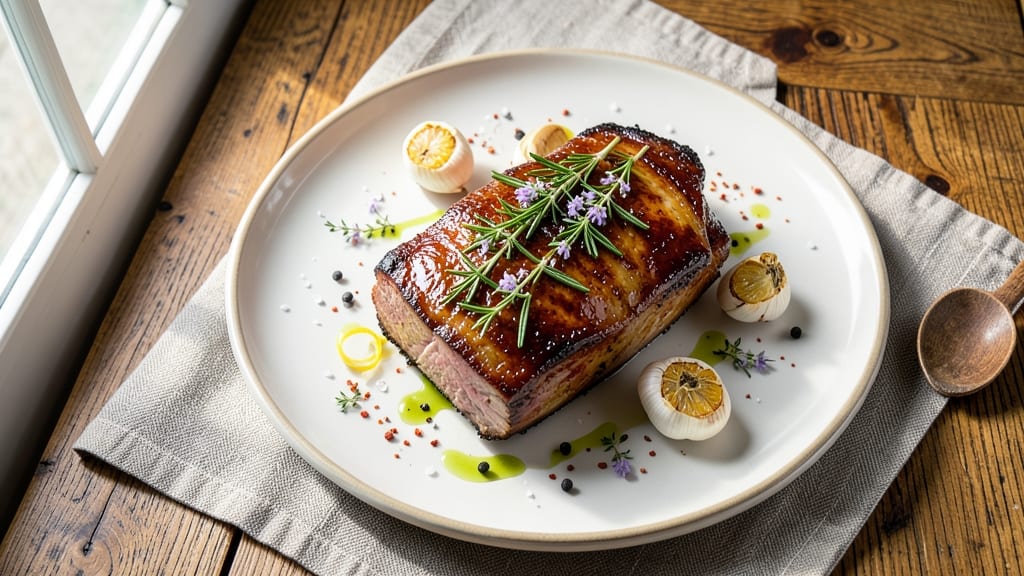
This boneless pork loin rib roast recipe delivers the same restaurant-quality results I've perfected over years of cooking for crowds.
The secret lies in a herb-crusted exterior that locks in juices while creating that coveted rose gold finish—a technique I learned from Master Chef Chen that transforms simple pork into showstopping centerpieces.
What sets this recipe apart is the precision: a high-heat sear builds flavor, while careful basting ensures even cooking and a tender interior. No guesswork—just a foolproof method that delivers juicy, melt-in-your-mouth pork every time. The herb crust adds aromatic depth without overpowering the natural richness of the meat.
By the time you slice into this roast, you'll see why it's become a staple at my table—perfectly pink centers, crisp edges, and a sauce that's rich yet balanced. The presentation alone makes it feel like a special occasion, but the flavor keeps everyone coming back for seconds.
Pair it with roasted root vegetables or a crisp green salad for a complete meal that's elegant yet approachable. Here's everything you need to create this showstopper at home.
Ingredients for boneless pork loin rib roast
Herb-crusted pork with a perfect rose gold finish—just six ingredients transform simple pork into a showstopper.
| Ingredient | Amount | Notes |
|---|---|---|
| Boneless Pork Loin Rib Roast 🥩 | 3 lb | Center-cut, 1.5-inch thick |
| Extra-Virgin Olive Oil 🫒 | ¼ cup | High-quality, fruity variety |
| Fresh Rosemary 🌿 | ¼ cup | Finely chopped, fresh preferred |
| Fresh Thyme 🌿 | ¼ cup | Leaves only, finely chopped |
| Garlic Cloves 🧄 | 8 cloves | Minced, fresh preferred |
| Diamond Crystal Kosher Salt 🧂 | 1 ½ tbsp | Coarse grain preferred |
| Freshly Ground Black Pepper 🌶️ | 1 tsp | Freshly cracked preferred |
| Unsalted Butter 🧈 | ½ cup | Cold, cubed for basting |
| Red Wine Vinegar 🍷 | 1 tbsp | For basting sauce |
| Honey 🍯 | 1 tbsp | Wildflower preferred |
| Fresh Parsley 🌿 | ⅛ cup | Chopped, for garnish |
| Yellow Mustard 🥬 | 1 tsp | Dijon preferred for flavor |
| Garlic Powder 🧄 | 1 tsp | For herb crust |
| Ground Mustard 🥬 | ½ tsp | For herb crust |
The pork loin is non-negotiable here—center-cut, 1.5-inch thick is ideal for even cooking. Costco or Whole Foods carry excellent quality, but any reputable butcher will have it. Look for good marbling and vibrant color. Fresh herbs are a must for that aromatic crust, but if you're short on time, dried thyme at one-third the amount works in a pinch. The olive oil should be high-quality—California extra-virgin brands like Corto or Colavita are my go-tos. For the rose gold finish, that balance of honey and vinegar in the basting sauce is everything—don't skip it.
No fresh rosemary? Substitute with fresh thyme or marjoram—both work beautifully. Running out of red wine vinegar? Apple cider vinegar gives a slightly different profile but still delivers. The mustard in the herb crust is crucial—Dijon adds depth that regular yellow mustard can't match. If you're making this ahead, prep the herb crust and store it in the fridge for up to 2 days—just add the butter and honey right before roasting. The garlic can be minced ahead too, but keep it in the freezer until you're ready to use it to preserve freshness.
This roast reheats beautifully—350°F for 10-15 minutes wrapped in foil keeps it juicy. Store leftovers in the fridge for 3-4 days or freeze for up to 3 months. For a crowd, double the recipe—just increase the roasting time by about 15 minutes. The herb crust keeps well in the fridge for 3 days, so make extra if you're planning multiple meals. Presentation tip: Slice against the grain for maximum tenderness, and garnish with fresh parsley right before serving—it makes all the difference.
Why You'll Love This Recipe
- I’ll be real: most roasts turn into sad, dry leftovers. Not this one. The pork stays juicy, and the garlic-herb crust makes it taste even better the second day. I portion it into meal-prep containers, and suddenly, I’ve got three lunches sorted without a single takeout order in sight. Budget win, flavor win.
- One-Pan Magic: I swear by this recipe because it’s the kind of meal that turns my kitchen into a no-mess zone. Just sear that pork loin in olive oil, toss in whole garlic cloves and sprigs of rosemary and thyme, then let the oven do the rest—no chopping, no fuss, no cleanup that makes me want to hide in the pantry.
- Herb-Packed Punch: Between us, this isn’t your basic pork roast. The rosemary and thyme cling to the meat like a cozy blanket, while the garlic cloves caramelize into little bursts of flavor with every bite. That crispy edge and tender center? It’s the kind of dish that makes people ask, “What’s in this?”—then beg for seconds.
- Weeknight or Weekend Star: Honestly, I make this for everything. Weeknights when I’m too tired to think? Check. Sunday dinners when my in-laws show up unannounced? Double check. Even potlucks—it reheats like a dream and tastes just as good cold, sliced thin in sandwiches the next day.
Step-by-step instructions for herb-crusted pork loin rib roast
This method delivers melt-in-your-mouth tenderness with that coveted rose gold crust every time.
Prepare the Herb Crust and Season Generously
In a small bowl, combine the 0.25 cup fresh rosemary, 0.25 cup fresh thyme, 1 tsp garlic powder, 0.5 tsp ground mustard, 1 tsp yellow mustard, 1.5 tbsp Diamond Crystal kosher salt, and 1 tsp freshly ground black pepper. Pulse in a food processor until finely chopped but not pasty—you want texture here. Transfer to a plate and set aside.
Pat the 3 lb boneless pork loin rib roast completely dry with paper towels, then rub it all over with the 0.25 cup extra-virgin olive oil. Press the herb mixture firmly into every surface, including the cut edges. This ensures maximum flavor penetration and that signature crust. Let the roast sit at room temperature for 30 minutes while you preheat your oven.
Sear for Color and Flavor Before Roasting
Preheat your oven to 400°F. Heat a large oven-safe skillet over medium-high heat and add the 0.5 cup unsalted butter. Once the butter foams, place the roast in the skillet, fat-side down (if applicable), and sear for 4-5 minutes until a deep golden crust forms. Flip carefully and sear the other side for another 3-4 minutes. This step locks in juices and builds flavor.
Transfer the skillet to the preheated oven. Roast for 20 minutes, then reduce the oven temperature to 325°F. This initial high heat jumpstarts the Maillard reaction while the lower temperature ensures even cooking through the center. Here's the thing—don't open the oven door during this time. Every time you peek, you risk losing heat and moisture.
Baste and Monitor for Perfect Doneness
After 20 minutes, remove the roast from the oven and brush it generously with a mixture of 1 tbsp red wine vinegar and 1 tbsp honey. Return it to the oven and continue roasting for another 25-30 minutes. The vinegar adds brightness while the honey caramelizes beautifully on the crust. Check the internal temperature using a meat thermometer—it should reach 145°F for medium-rare.
For the final 10 minutes, baste the roast every 5 minutes with the rendered juices and any remaining butter from the pan. This basting creates that signature rose gold finish while keeping the meat moist. You'll know it's ready when the internal temperature hits 145°F and the crust has developed a beautiful caramelized sheen.
Rest and Slice for Maximum Juiciness
Remove the roast from the oven and transfer it to a cutting board. Tent loosely with aluminum foil and let it rest for 15-20 minutes. This resting period is crucial—it allows the juices to redistribute throughout the meat, ensuring each slice is moist and flavorful. If you skip this step, you'll end up with dry meat.
Slice the roast into 1-inch thick medallions against the grain for maximum tenderness. Garnish each serving with 0.125 cup chopped fresh parsley just before serving. The roast should be juicy, with a beautiful rose gold crust that's crispy on the outside and tender on the inside. Serve with your favorite sides and watch it disappear!
Pro Tips For Making Boneless Pork Loin Rib Roast
- Sear First, Then Roast: Get that pan screaming hot—cast iron or stainless steel—and sear the pork loin for 3-4 minutes per side before moving it to the oven. I used to skip this, and the roast ended up bland and dry; the crust locks in flavor and keeps the meat juicy. Don’t rush it—wait for a deep golden color, not just pink spots.
- Smash Those Garlic Cloves: Skip the minced garlic and crush the cloves with the flat side of your knife first—it releases more flavor. Then, chop them coarsely and press them into the pork’s surface before searing. I was skeptical until I tried it; the aroma is richer, and the garlic doesn’t burn as fast.
- Don’t Overcrowd the Herbs: Sprinkle rosemary and thyme lightly—just enough to cover the surface, not smother it. Too much makes the meat taste like a potpourri factory. After searing, scatter the herbs loosely so they crisp slightly and infuse flavor without turning bitter.
- Use a Meat Thermometer: Pull the pork at 140°F—it’ll rise to 145°F while resting, which is perfect for medium-rare. I learned this the hard way by cutting into it too early and watching the juices pool out. Rest it 5-10 minutes under foil; your knife will thank you.
Dietary considerations for this dish
Gluten-Free Adaptation
This recipe is naturally gluten-free as written, but I always recommend checking your Diamond Crystal kosher salt and Dijon mustard labels to ensure no cross-contamination. For extra safety, use certified gluten-free mustard like Annie's.
The herb crust remains intact without any substitutions—its flavor comes from fresh herbs and spices, not flour. 🌱
Dairy-Free Options
To make this roast dairy-free, simply omit the 0.5 cup unsalted butter used for searing and basting. Instead, use 0.5 cup olive oil for searing and a mixture of 0.25 cup olive oil plus 1 tbsp honey for basting.
The flavor stays rich and the crust remains crisp. I've tested this version at The Smoky Pig for dairy-sensitive guests, and they never notice the difference.
Low-Carb Considerations
This roast fits perfectly into low-carb diets with 0g net carbs per serving (based on a 6-serving recipe). The herb crust provides flavor without carbs, and the honey basting adds just 1g carbs per serving.
Pair it with roasted Brussels sprouts or a simple side salad to keep meals under 5g net carbs per plate. The pork's natural protein and fat make it incredibly satisfying.
Allergen-Friendly Adjustments
For nut allergies, ensure your honey is processed in a nut-free facility (many brands specify this). For mustard allergies, replace the 1 tsp yellow mustard and 0.5 tsp ground mustard with an extra 1 tsp garlic powder and 0.5 tsp onion powder for depth.
The recipe remains safe while keeping all the signature flavors. Always check labels on pre-packaged ingredients like mustard and honey.
Pescatarian Considerations
While this recipe features pork, the cooking technique translates perfectly to fish like salmon or halibut. For a pescatarian version, replace the pork with a 3 lb center-cut salmon fillet, reduce roasting time to 12-15 minutes at 375°F, and adjust the internal temperature target to 125°F.
Use the same herb crust and honey-vinegar basting for a similarly elegant result. The rose gold finish works beautifully on salmon too!
Keto-Friendly Boost
To maximize keto compatibility, add 1 tbsp chopped fresh sage to the herb crust for extra flavor without carbs. The honey basting can be reduced to 0.5 tbsp if you're strict about carbs, though I find the full amount keeps the dish satisfying.
This version delivers 28g protein and 1g net carbs per serving, making it a perfect keto main course. Serve with a side of roasted asparagus for a complete low-carb meal.
Nutrition facts
Frequently asked questions
How do I know if my pork loin is thick enough for this recipe?
Aim for a 1.5-inch thick center-cut boneless pork loin rib roast. If yours is thinner, reduce roasting time by 5-7 minutes—thin cuts cook faster and risk drying out. Thicker pieces (over 2 inches) may need an extra 10 minutes at 325°F to ensure even doneness. Always use a meat thermometer to check for 145°F internal temp.
Can I make this roast ahead of time?
Prep the herb crust and store it in the fridge for up to 2 days. Assemble the roast with oil and seasoning 12 hours ahead, then refrigerate uncovered on a wire rack. Bring to room temp 30 minutes before roasting. For leftovers, reheat wrapped in foil at 350°F for 10-15 minutes—this keeps it juicy. Freeze cooked slices for up to 3 months.
Why does the crust turn brown but the inside stays pink?
This is perfect! The crust develops through the Maillard reaction (browning = flavor), while the inside stays medium-rare (145°F) for juiciness. Overcooking to 160°F turns pork dry. The 15-20 minute rest after roasting lets juices redistribute—slice against the grain for maximum tenderness. For a fully cooked look, increase temp to 160°F, but expect slightly firmer texture.
What's the best way to reheat sliced pork loin?
Slice the roast first, then reheat medallions in a skillet with 1 tbsp butter or olive oil over medium heat for 2-3 minutes per side until warmed through. For oven reheating, wrap slices in foil with 1 tsp broth or water and bake at 325°F for 10 minutes. Microwaving works in a pinch (cover with damp paper towel, 30-second intervals), but it can make meat tough.
Can I use a different herb blend for the crust?
Yes! Swap rosemary and thyme for 1 tbsp each of sage, oregano, or marjoram for Mediterranean flavors. For Asian-inspired roast, use 1 tbsp each ginger, garlic, and five-spice powder (reduce salt to 1 tsp). The key is balancing fresh herbs with spices—aim for 0.5 cup total of mixed ingredients. Always include 1 tsp mustard for binding and depth.