
Main Courses
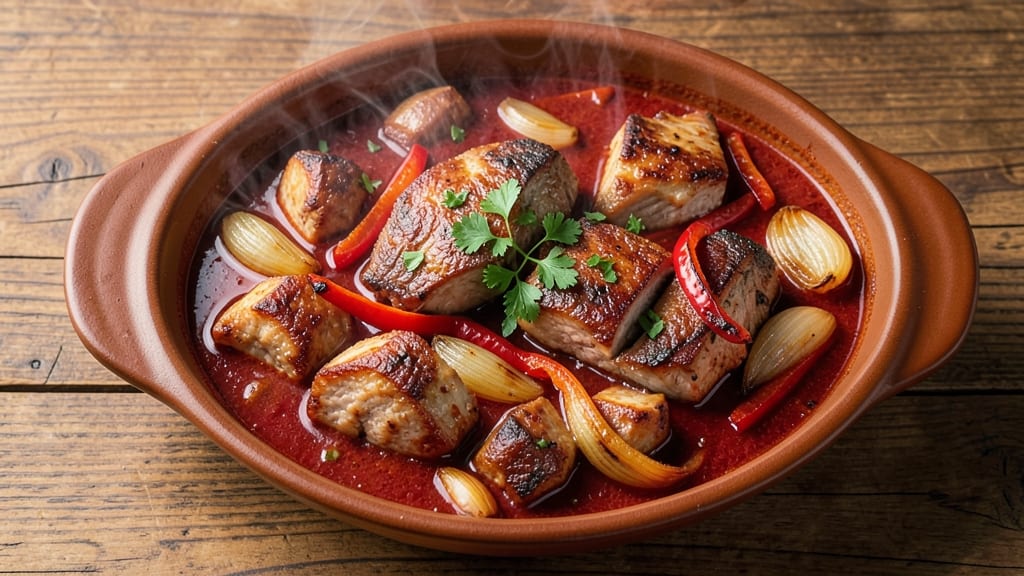
This Hungarian-style pork paprikash brings the rich, comforting flavors of Central Europe to your dinner table with tender pork, smoky paprika, and velvety sour cream.
Standing on a step stool in my grandmother’s kitchen in Sicily, I first learned how spices transform simple ingredients into something extraordinary—this recipe does just that. The slow-braised pork develops deep, caramelized flavors while the paprika-infused sauce creates layers of warmth and complexity.
The secret to authentic paprikash lies in the technique: searing the pork first for depth, then simmering it low and slow with onions, bell peppers, and tomatoes until everything melts into a rich, hearty sauce.
The sour cream adds a tangy finish that balances the smoky paprika, making every bite unforgettable. This dish is perfect for feeding a crowd or enjoying a cozy family meal—just like the ones I grew up with.
What makes this recipe special is its versatility. Serve it with fluffy egg noodles or crusty bread to soak up every last drop of that luscious sauce. The flavors only get better as they sit, so it’s ideal for meal prep or a make-ahead dinner.
Whether you're recreating a traditional Hungarian feast or simply craving a comforting, restaurant-quality dish, this paprikash delivers.
Ready to master this classic? The step-by-step instructions will guide you through each stage—from browning the pork to balancing the sauce—so you end up with a dish that tastes like it’s been simmering all day. Let’s get cooking!
Ingredients for pork paprikash
Pantry staples meet authentic Hungarian flavors—just a handful of quality ingredients for this restaurant-quality paprikash.
| Ingredient | Amount | Notes |
|---|---|---|
| Pork Shoulder 🥩 | 2 ½ lb | Cut into 1.5-inch cubes, bone-in preferred |
| Sweet Hungarian Paprika 🌶️ | 3 tbsp | Essential for authentic flavor |
| Yellow Onion 🧅 | 2 whole | Medium size, sliced into half-moons |
| Red Bell Pepper 🍅 | 1 whole | Medium size, sliced into strips |
| Garlic Cloves 🧄 | 4 cloves | Peeled and lightly crushed |
| Canned Tomato Sauce 🍅 | 1 ½ cups | San Marzano preferred, no sugar added |
| Sour Cream 🥛 | ½ cup | Full-fat for best texture |
| Unsalted Butter 🧈 | 2 tbsp | For searing pork, high smoke point |
| All-Purpose Flour 🌾 | 2 tbsp | For dredging pork cubes |
| Fresh Thyme 🌿 | ¼ cup | Leaves only, chopped fine |
| Bay Leaves 🍃 | 2 whole | Fresh if possible, dried works |
| Salt 🧂 | 1 ½ tsp | Diamond Crystal kosher preferred |
| Black Pepper 🌶️ | ½ tsp | Freshly cracked for best flavor |
| Vegetable Oil 🫒 | ¼ cup | For deglazing, high smoke point |
| Egg Noodles 🍝 | 12 oz | Fresh or dried, fluffy preferred |
The pork shoulder is non-negotiable here—it stays tender through the long braise while developing deep flavor. Butcher shops or Costco usually have it pre-cut into cubes, but if you're buying a whole roast, ask for it to be portioned yourself. Look for good marbling and avoid anything with a grayish tint (that's old meat). The Hungarian paprika makes all the difference—Penzeys or Kalustyan's sell it online if your local store doesn't carry it. Smoked paprika won't give you that same sweet, earthy depth. For the onions, yellow or sweet onions work best—they caramelize beautifully without turning bitter.
No Hungarian paprika? Sweet paprika plus a pinch of smoked paprika gets you close, but it won't be authentic. Short on time? Paprika paste from a tube works in a pinch (like the kind at Trader Joe's), but you'll need about half the amount. The tomato sauce can be fresh or canned—just avoid anything with added sugar or salt. Fresh thyme is ideal, but dried works at one-third the amount. For the sour cream, full-fat is a must—low-fat versions won't give you that velvety texture. The egg noodles? Fresh is best, but good dried noodles (like Barilla) work too—just cook them al dente and toss with a little extra sauce.
This dish tastes even better the next day, so make extra—it reheats beautifully. Store leftovers in the fridge for 4-5 days, covered with a splash of water to keep the sauce from drying out. For freezing, portion into containers with some sauce on top (it prevents a skin from forming). Thaw overnight in the fridge and reheat gently on the stove. The flavors meld beautifully over time, so it's perfect for meal prep. Serve with crusty bread to soak up every last drop of that luscious sauce.
Why You'll Love This Recipe
- I’ll be real: this tastes even better the next day. The flavors meld into something deeper, and the sauce clings to the noodles like they’re best friends. Cover those leftovers with a splash of water, and you’ve got a 4-day meal solution without the stress of cooking every night.
- One-Pot Magic: No last-minute cleanup chaos here. You’re using one Dutch oven for searing the pork, building the paprika sauce, and even tossing in the noodles—just toss everything together at the end. Trust me, the only mess you’ll have is the kind you can’t resist licking off your spatula.
- Crispy-Creamy Perfection: The secret? That golden flour crust on the pork cubes, paired with the velvety finish from the full-fat sour cream. It’s like each bite has a little surprise—crunchy edges, tender meat, and a sauce so rich it’ll make you question why you ever ate plain pasta before.
- Leftovers That Outshine the Original: I’ll be real: this tastes even better the next day. The flavors meld into something deeper, and the sauce clings to the noodles like they’re best friends. Cover those leftovers with a splash of water, and you’ve got a 4-day meal solution without the stress of cooking every night.
Step-by-step instructions for Hungarian-style pork paprikash
Here's the method that delivers tender pork cubes in a rich, velvety paprika sauce—simple steps, big flavor.
Prepare the Pork and Build the Flour Slurry
Cut the 2½ lb pork shoulder into 1½-inch cubes, keeping some bone-in pieces for extra flavor. In a large bowl, combine the 2 tbsp all-purpose flour, 1½ tsp salt, and ½ tsp black pepper. Add the pork cubes and toss until evenly coated—the flour will create a golden crust during searing.
Let the seasoned pork sit at room temperature for 15 minutes while you prep the vegetables. This ensures even cooking. Here's the thing—don't skip this step. Cold pork releases moisture unevenly, which can steam instead of sear.
Sear the Pork and Sauté the Vegetables
Heat ¼ cup vegetable oil in a large Dutch oven over medium-high heat until shimmering. Working in batches to avoid crowding, add the pork cubes and cook for 3-4 minutes per side until deep golden brown. Remove and set aside—these crispy edges will form the flavor base for your sauce.
In the same pot, reduce heat to medium and add 2 tbsp unsalted butter. Toss in the 2 yellow onions and 1 red bell pepper, sliced, cooking for 5 minutes until softened. Add the 4 garlic cloves and ¼ cup fresh thyme, stirring for 30 seconds until fragrant. This aromatic foundation is where the magic begins.
Deglaze and Simmer the Paprika Sauce
Sprinkle the 3 tbsp sweet Hungarian paprika over the vegetables and stir vigorously for 1 minute to toast the spices—this releases their full flavor potential. Immediately pour in the 1½ cups canned tomato sauce and scrape up any browned bits from the bottom of the pot with a wooden spoon.
Return the pork to the pot, add 2 bay leaves, and pour in 1 cup water. Bring to a simmer, then reduce heat to low, cover, and let cook for 1 hour 15 minutes until the pork is fork-tender. The sauce should thicken slightly, but don't worry if it looks loose—it'll come together beautifully with the sour cream later.
Finish with Sour Cream and Noodles
Stir in the ½ cup sour cream and simmer for 5 minutes on low heat—just until the sauce thickens to a velvety consistency. Taste and adjust seasoning if needed. Meanwhile, cook the 12 oz egg noodles according to package directions until al dente. Drain and set aside.
Real talk: The sour cream should be folded in gently at the end. Adding it too early can cause the sauce to curdle from the acidity. The noodles should be tossed directly in the pan with the pork mixture, absorbing all that rich paprika sauce.
Serve Immediately with Fresh Herbs
Transfer the pork and sauce to a serving platter and top with the cooked egg noodles. Garnish with additional fresh thyme leaves for brightness. Serve family-style with crusty bread to soak up every last drop of that luxurious sauce.
Each bite should deliver tender pork with a crispy edge, balanced by the creamy paprika sauce. The egg noodles should be perfectly coated, and the flavors should sing with that authentic Hungarian warmth. Leftovers? Even better the next day—if there are any!
Pro Tips For Making Pork Paprikash
- Skip the Crowding: I learned this the hard way—when you toss all those 1.5-inch pork cubes in at once, they’ll steam instead of sear. Work in batches, even if it feels like extra effort. The golden crust on each piece is what carries the paprika flavor through the whole dish.
- Toast That Paprika: That 1-minute stir after adding the 3 tbsp sweet Hungarian paprika isn’t just for show—it’s where the spices wake up. Let it bloom over medium heat, or you’ll end up with a dull, underdeveloped sauce. (Yes, even if it smells crazy strong at first.)
- Deglaze Aggressively: The browned bits stuck to your Dutch oven? Those are flavor gold. Scrape every last one with a wooden spoon when you pour in the 1.5 cups tomato sauce. I used to rush this, and the sauce always tasted flat—like I’d missed half the magic.
- Water Splash for Leftovers: Covering leftovers with a splash of water isn’t just a suggestion—it’s the difference between a dried-out sauce and one that’s still velvety after 4 days. Just a tablespoon or two, tossed in before sealing the container. Trust me, your future self will thank you.
Dietary considerations for pork paprikash
Gluten-Free Adaptation
If you're watching gluten, swap the egg noodles for gluten-free egg noodles like those from Barilla or Jovial. I always keep a stash of these in my pantry—they cook just like regular noodles but without the gluten.
For extra authenticity, serve with roasted potatoes or cauliflower rice instead of bread. The paprikash sauce itself is naturally gluten-free, so the flavor remains intact. 🍽️
Dairy-Free Option
Skip the sour cream entirely and use coconut cream or cashew cream as a dairy-free substitute. Blend ½ cup soaked cashews with ¼ cup water until smooth—it mimics the creamy texture beautifully.
For a tangy touch, add 1 tbsp lemon juice and a pinch of salt. The paprika's smoky depth will still shine through!
Lower-Sodium Adjustments
Hungarian paprikash can be surprisingly salty, so reduce the 1.5 tsp salt to 1 tsp and skip adding extra during cooking. Instead, boost flavor with 1 extra bay leaf and ½ tsp smoked paprika for depth.
Taste as you go—this dish forgives overcooking but not over-salting. I always taste with my Nonna’s wooden spoon!
Vegetarian Substitute
For a vegetarian version, replace the pork with chestnut mushrooms or extra-firm tofu pressed and cubed. Sear the mushrooms in the same oil as the pork, then proceed with the recipe.
If using tofu, marinate it in 1 tbsp soy sauce and 1 tbsp paprika for 30 minutes first. The sauce will still be rich and satisfying!
Kid-Friendly Tweaks
Mild the heat by reducing the paprika to 2 tbsp and omitting the sour cream until serving—mix it in at the table. Add ½ cup cooked carrots or zucchini for extra veggies.
Kids often love the creamy sauce, so let them dip their noodles in it like a fun game. Trust me, they won’t miss the spice!
Nutrition facts
Frequently asked questions
Why does the recipe call for bone-in pork shoulder?
The bone-in pieces add incredible depth of flavor to the dish! The marrow and connective tissue slowly release their richness into the paprika sauce during the long simmer. Plus, it keeps the pork extra juicy—just don't forget to remove any large bones before serving.
Can I make this dish ahead of time?
Absolutely—this paprikash tastes even better the next day! Let it cool slightly, then store it in an airtight container with a splash of water to keep the sauce from drying out. Reheat gently on the stove and stir in a little extra water if needed. The flavors meld beautifully over time.
What happens if I add the sour cream too early?
The sauce may curdle from the acidity in the sour cream! Always wait until the very end—just before serving—to stir in the sour cream and let it simmer for 5 minutes to thicken properly. This ensures that creamy, velvety texture we all love.
How do I adjust the heat level if I'm sensitive to spice?
Start with 2 tbsp Hungarian paprika instead of 3 tbsp and skip the sour cream until serving—mix it in at the table. You can also add a pinch of sugar to balance the heat. The dish will still be rich and flavorful without being too spicy.