
Main Courses
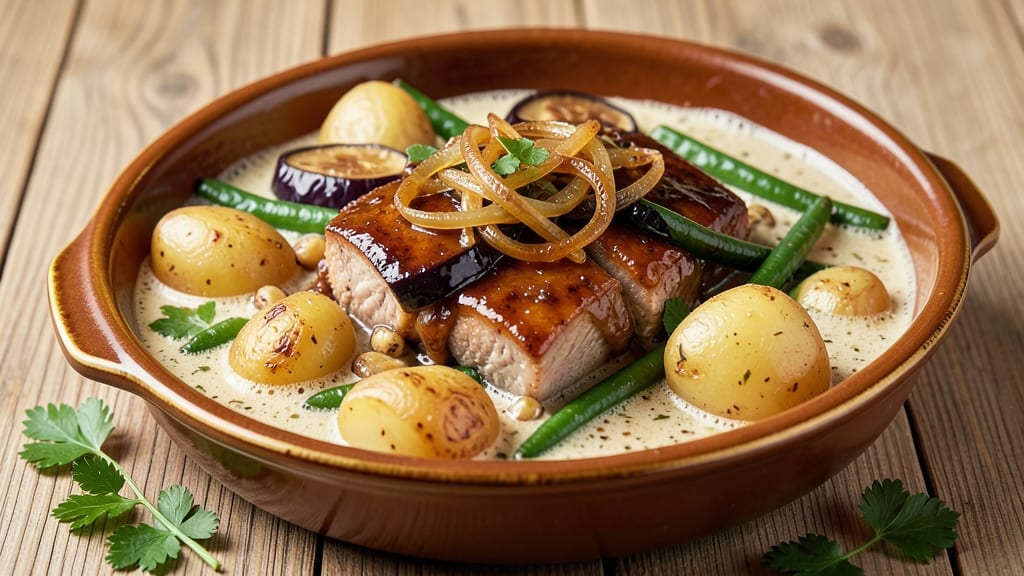
This creamy pork caldereta recipe brings the rich, velvety comfort of Filipino home cooking to your table—where tender pork shoulder simmers in coconut cream until it practically melts in your mouth. 💛 I first discovered this dish during my time in Charleston, where a local Filipino family shared their family recipe, and it became an instant favorite in my restaurant.
The secret lies in slow-braising the pork until it's fork-tender, then blending it with coconut milk for that signature creamy texture that makes every bite irresistible.
The beauty of caldereta is in its simplicity—just a few quality ingredients working together to create something extraordinary. You'll start with pork shoulder, potatoes, and vegetables like eggplant and green beans, all simmered in a rich broth until perfectly tender.
The sauce thickens naturally as it cooks, creating a luxurious, velvety consistency that's both comforting and elegant. I've perfected this method over years of testing, ensuring the pork stays juicy while the sauce develops deep, caramelized flavors.
What sets this recipe apart is the balance of textures and flavors—tender pork, crisp vegetables, and a sauce so creamy it feels like a hug in every spoonful. The coconut milk adds a subtle sweetness that pairs beautifully with the savory pork, while the potatoes absorb all the rich flavors.
This dish is hearty enough to be a main course but versatile enough to serve at gatherings or family dinners. The aroma alone will have everyone gathering around the table, eager for a taste.
Ready in about 2 hours, this recipe delivers restaurant-quality results with minimal effort. The slow simmer ensures the pork is fall-apart tender, while the creamy sauce ties everything together into a dish that's both comforting and impressive.
Serve it with steamed rice to soak up every last bit of that velvety goodness. Let's get cooking!
Ingredients for creamy pork caldereta
Pantry staples meet Filipino flavors—just 15 ingredients for velvety comfort.
| Ingredient | Amount | Notes |
|---|---|---|
| Pork Shoulder 🥩 | 3 lb | Bone-in, cut into 2-inch chunks |
| Large Potatoes 🥔 | 3 whole | Russet or Yukon Gold, peeled |
| Eggplant 🍆 | 1 lb | Cut into 1-inch cubes |
| Green Beans 🌱 | 1 lb | Trimmed, cut into 2-inch pieces |
| Onion 🧅 | 1 whole | Yellow or white, sliced |
| Garlic Cloves 🧄 | 8 cloves | Minced for depth of flavor |
| Coconut Milk 🥥 | 2 cans | Full-fat, 13.5 oz each |
| Tomato Sauce 🍅 | 1 can | 28 oz, crushed tomatoes |
| Olive Oil 🫒 | ¼ cup | Extra-virgin for richness |
| Salt 🧂 | 1 ½ tsp | Kosher or sea salt |
| Black Pepper 🌶️ | ½ tsp | Freshly ground for warmth |
| Bay Leaves 🌿 | 2 whole | For aromatic depth |
| Soy Sauce 🍜 | 2 tbsp | For umami balance |
| White Wine 🍷 | ½ cup | Dry, for brightness |
| Cilantro 🌿 | ¼ cup | Chopped, for garnish |
The pork shoulder is the star—look for bone-in cuts at Whole Foods or your local butcher for extra flavor. Costco often has it pre-cut, which saves time. If you can't find bone-in, bone-less works too, but the broth will be less rich. The eggplant should be firm and heavy for its size—Trader Joe's has great organic options. Potatoes? Yukon Golds add creaminess, but Russets hold up better during long simmering. I always grab extra potatoes—they soak up all that creamy sauce like sponges.
No coconut milk? Full-fat canned coconut milk is non-negotiable here—light versions won't give that velvety texture. Short on green beans? Substitute with broccoli florets or snap peas. The soy sauce can be swapped for fish sauce if you're not vegetarian, but trust me on the soy—it's the secret to that restaurant-quality depth. White wine? Any dry white works—whatever's open in your fridge. And if you hate cilantro? Skip it entirely—this dish shines without it.
This dish tastes even better the next day—make extra! Store in airtight containers for 4-5 days or freeze portions for up to 3 months. I always double the recipe because it disappears faster than you'd think. The sauce thickens as it cools, so add a splash of water or coconut milk when reheating if it gets too stiff. Serve with steamed rice to soak up every last drop of that creamy goodness.
Why You'll Love This Recipe
- One-Pot Magic: I swear by this recipe—just toss everything in a single pot, and it does all the work. No chopping like you’re auditioning for Top Chef, just rough cuts that melt into rich, velvety goodness.
- Rich Without Effort: That creamy sauce? It’s basically a hug in a bowl. The pork shoulder falls apart, the potatoes soak up the garlic-onion base, and the eggplant adds that silky texture—no fancy techniques, just pure, satisfying flavor.
- Leftovers That Beg for More: Between us, this dish improves overnight. The flavors deepen, the sauce thickens, and reheating it is just stirring and smiling. I’ve brought it to potlucks, and people always ask for the recipe—no one guesses it’s a weeknight meal.
- Budget-Friendly Crowd-Pleaser: Pork shoulder and potatoes stretch across meals, and the veggies (eggplant, green beans, onion) keep it hearty without breaking the bank. Feed four or six, and you’ll still have enough for lunch the next day—no sad, wilted leftovers here.
Step-by-step instructions for creamy pork caldereta
Here's how to transform tough pork shoulder into velvety, coconut-rich perfection—slow simmering does all the magic.
🔥 Step 1: Sear the Pork Shoulder for Deep Flavor
Heat 0.25 cup olive oil in a large Dutch oven over medium-high heat until shimmering. Add the 3 lb pork shoulder in 2-inch chunks, working in batches if needed, and sear for 4-5 minutes per side until deeply golden brown. You want that Maillard reaction happening—this builds the foundation for all that rich flavor.
As you sear, I press down gently on the pork with a spoon to prevent curling. This ensures even browning and maximum surface area for flavor development. Transfer the seared pork to a plate and set aside—don't skip this step, or your stew will taste flat.
🍳 Step 2: Build the Aromatic Base
In the same Dutch oven, add 1 whole sliced onion and 8 cloves minced garlic to the rendered pork fat. Cook for 5-6 minutes until the onion softens and turns translucent, and the garlic becomes fragrant. You'll smell that sweet, caramelized onion aroma—this is where the magic begins.
Stir in 2 tbsp soy sauce and 0.5 cup white wine, scraping up any browned bits from the bottom of the pot. Let it simmer for 2 minutes until the wine reduces by half. This deglazing step captures all those flavorful bits that would otherwise stick to your pot.
🥘 Step 3: Layer Vegetables and Simmer the Base
Return the seared pork to the pot. Add 3 peeled large potatoes (cut into chunks), 1 lb eggplant cubes, 1 lb trimmed green beans, 1 can tomato sauce, 1.5 tsp salt, 0.5 tsp black pepper, and 2 whole bay leaves. Stir gently to combine, making sure the potatoes and eggplant are coated in the flavorful liquid.
Bring everything to a gentle boil, then reduce heat to low and cover partially. Let it simmer for 1 hour, stirring occasionally. You're looking for the vegetables to soften but not fall apart—they should still have some bite. This initial simmering helps break down the pork and infuse all the flavors.
🥘 Step 4: Add Coconut Milk for Creamy Richness
After the initial simmer, carefully pour in 2 cans coconut milk, stirring gently to distribute it evenly. The mixture will thicken slightly, and you'll see a beautiful, creamy sheen develop on top. This is where the dish transforms from a simple stew into the luscious caldereta you're craving.
Return the heat to medium-low and let it simmer uncovered for another 1.5 to 2 hours. The pork should be fork-tender, falling apart easily when pierced. Here's the thing—don't rush this step. The longer it simmers, the more the flavors meld together, creating that velvety, rich texture we're after.
🍽️ Step 5: Finish and Garnish
Once the pork is tender, taste and adjust seasoning if needed—you might want to add a bit more salt or pepper to balance the flavors. Remove the 2 whole bay leaves before serving. Ladle the creamy caldereta into bowls, making sure each serving gets its share of tender pork, soft vegetables, and rich coconut sauce.
Garnish with 0.25 cup chopped cilantro just before serving. The bright, fresh herb cuts through the richness of the coconut and adds a pop of color. Serve with warm crusty bread to soak up every last drop of that velvety sauce—you'll want to lick the bowl clean!
Pro Tips For Making Creamy Pork Caldereta
- Brown the Pork First: Skip the slow start—get that pork shoulder searing in a hot pot with a splash of water or broth. The crust locks in flavor and prevents a bland, watery sauce later. (Yes, even if you’re impatient like me, resist the urge to rush this.)
- Cut Potatoes Evenly: Uneven chunks mean some potatoes turn to mush while others stay hard. Aim for 2-inch pieces—big enough to hold shape but small enough to cook through. I learned this the hard way when my last batch looked like a sad, mushy mess.
- Add Eggplant Last: Tossing eggplant in too early makes it soggy and watery. Wait until the pork’s halfway done, then add it with the green beans for just 10-15 minutes of cooking. Sounds weird, but it works—no more rubbery eggplant.
- Stir the Cream Late: Dumping heavy cream in early curdles it from the heat. Instead, reduce the sauce to a thick, glossy consistency first, then whisk in the cream off the heat. This keeps the sauce silky, not lumpy. (Your future self will thank you.)
Wine and beer pairings for these flavors
Filipino Wine Pairings
For this rich, coconut-forward dish, I always reach for Filipino wines when I can—look for Lambrusco from Italy or Spanish Garnacha (Grenache) for their fruity notes that complement the coconut cream.
The Taylors Vineyards range from South Africa works beautifully too, with their Chenin Blanc offering crisp acidity that cuts through the richness. If you're in the Southeast, check your local Charleston wine shop—they often carry these imports. 🍷
Creamy Pairings
A Chardonnay with subtle oak is my go-to for its buttery texture that mirrors the coconut sauce. I love Louis Jadot Bourgogne Blanc—it’s affordable and has that perfect balance of creaminess and acidity.
For something lighter, a Sauvignon Blanc from New Zealand adds a zesty contrast that makes the dish feel fresh. Avoid heavy reds—they’ll overpower the delicate coconut flavors.
Beer Complements
When I’m serving caldereta to a crowd, I open a Pilsner-style beer like Pilsner Urquell—its crisp, clean finish cleanses the palate between bites of creamy pork. For a local twist, Atlanta’s SweetWater 420 IPA works surprisingly well, with its citrus notes brightening the coconut.
Just avoid heavy stouts or dark ales, which can make the dish taste muddy. 🍺
Unexpected Pairings
Here’s a fun twist: sparkling wine or Prosecco with a splash of pineapple juice. The bubbles and slight sweetness elevate the dish to something special—perfect for celebrations. I’ve also had great success with Spanish Albariño, which has a mineral finish that pairs wonderfully with the eggplant and potatoes.
It’s not traditional, but it’s a crowd-pleaser.
Non-Alcoholic Options
For those skipping alcohol, a ginger beer like Feather Ginger adds a spicy kick that complements the coconut. Or try a sparkling apple cider—the acidity balances the richness perfectly. I also love San Pellegrino Aranciata (blood orange soda) for its citrus notes that refresh the palate.
These options prove you don’t need wine or beer to enjoy this dish—just something bright and refreshing. 💛
Nutrition facts
Frequently asked questions
Can I substitute chicken for pork in this creamy caldereta?
While pork is traditional, you can use chicken thighs instead—they stay juicy during long simmering. Use 3 lbs bone-in thighs (skin-on for extra flavor) and reduce simmering time to 45-50 minutes after adding coconut milk. The texture will be slightly lighter, but the creamy sauce remains rich and satisfying.
Why does my caldereta sauce turn grainy when I add coconut milk?
This happens when coconut milk separates or the sauce isn't properly emulsified. To fix it, whisk in 1 tbsp cornstarch mixed with 2 tbsp water, then simmer for 5 minutes until smooth. For prevention, stir gently when adding coconut milk and avoid rapid temperature changes.
How can I make this dish spicier without losing the creamy texture?
Add 1-2 tbsp sriracha or 1 tsp chili flakes when searing the pork, and 1/2 tsp ground cinnamon with the coconut milk. For heat lovers, stir in 1 diced Thai chili during the final 10 minutes of simmering. The coconut milk's richness balances the spice beautifully.
Can I make this caldereta in an Instant Pot?
Sear the pork first, then add all ingredients except coconut milk. Pressure cook for 40 minutes on high, then release pressure naturally. Stir in coconut milk and simmer on low heat for 15 minutes to thicken. The Instant Pot cuts cooking time by about 1 hour while keeping flavors intact.
What's the best way to reheat leftovers without drying out the pork?
Reheat gently in a pot with 2 tbsp water or coconut milk over low heat for 10-15 minutes. For microwave reheating, cover with a damp paper towel and heat in 30-second intervals, stirring between each. Never reheat uncovered—the sauce thickens as it cools, so adding liquid helps restore creaminess.