
Main Courses
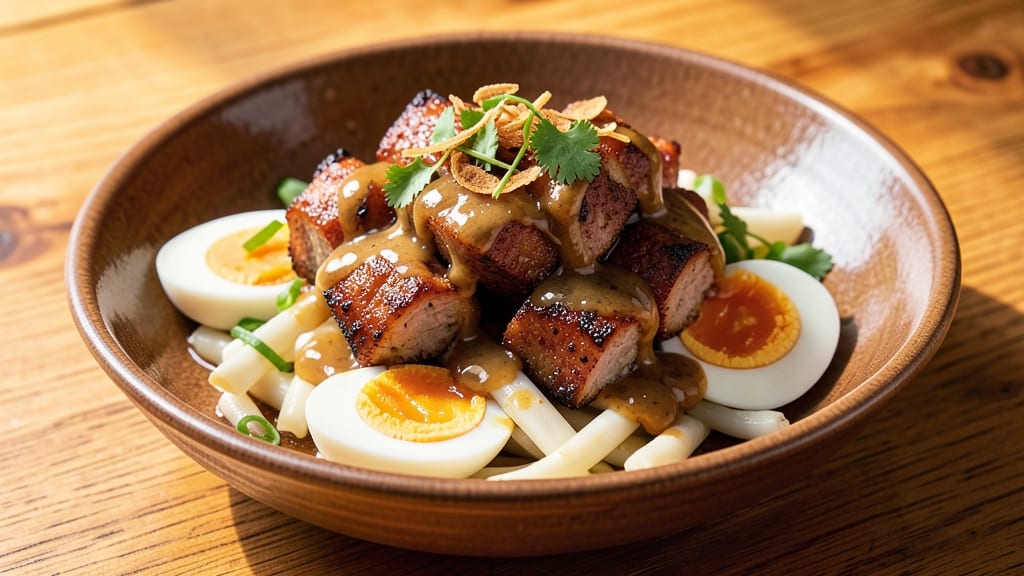
This crispy pork kare kare recipe from Mama Sita delivers the golden, shatteringly crisp pork and rich peanut sauce that makes Filipino comfort food legendary. I first tasted it in my grandmother's kitchen, where she'd deep-fry the pork until it crackled like autumn leaves—never once burning the sauce.
The secret lies in frying the pork twice: once for crispiness, then again to restore moisture before simmering in that velvety peanut stew.
The sauce itself is where the magic happens—a perfect balance of smooth peanut butter, tangy vinegar, and just enough sweetness to complement the savory pork.
Mama Sita always insisted on using unsweetened peanut butter (none of that jarred nonsense) and simmering it low and slow until it thickens into a glossy, clingy sauce that coats every bite. The vegetables—eggplant, string beans, and cabbage—absorb all that flavor while staying tender-crisp, never mushy.
What makes this recipe truly special is how it transforms simple ingredients into something restaurant-worthy.
The pork emerges from the fryer golden and crisp, the sauce clings to every forkful like it was made just for you, and the aroma alone will have your whole house gathering around the table.
Serve it with steamed rice, a side of atchara (pickled papaya), and a sprinkle of bagoong (fermented shrimp paste) for that authentic Filipino touch.
This isn't just a recipe—it's a taste of home, a celebration of Filipino flavors, and proof that you don't need fancy ingredients to create something extraordinary. Let's get cooking, because once you try this, you'll never go back to store-bought again.
Ingredients for crispy pork kare kare recipe mama sita
Golden pork, creamy peanut sauce, and tender vegetables—Mama Sita's secrets for crispy perfection.
| Ingredient | Amount | Notes |
|---|---|---|
| Pork Shoulder 🥩 | 2 lb | Cut into 2-inch chunks, bone-in preferred |
| Unsweetened Peanut Butter 🥜 | 1 cup | Natural, no added sugar or oil |
| Coconut Milk 🥥 | 1 can | 13.5 oz can, full-fat preferred |
| Coconut Cream 🥥 | ½ cup | Thick part from coconut milk can |
| White Vinegar 🍶 | ¼ cup | For tangy balance |
| Garlic Cloves 🧄 | 6 cloves | Minced for sauce depth |
| Ginger Root 🌿 | 1 inch | Fresh, grated finely |
| Yellow Onion 🧅 | 1 whole | Medium size, diced |
| Medium Tomatoes 🍅 | 2 whole | Ripe, quartered |
| Eggplant 🍆 | 1 lb | Cut into 1-inch cubes |
| String Beans 🌱 | 1 lb | Trimmed, cut into 2-inch pieces |
| Green Cabbage 🥬 | ½ head | Shredded, core removed |
| Vegetable Oil 🫒 | 4 cups | For deep frying |
| Salt 🧂 | 1 ½ tsp | Diamond Crystal preferred |
| Black Pepper 🌶️ | ½ tsp | Freshly ground |
| Sugar 🍚 | 1 tbsp | White granulated |
The pork is everything here. Pork shoulder with the bone gives that rich flavor—avoid lean cuts like tenderloin, which won't crisp properly. Look for well-marbled pieces at Filipino grocery stores or the meat department's butcher counter. If you can't find pork shoulder, pork belly works beautifully too, but trim the excess fat first. The key is cutting it into even 2-inch chunks—this ensures crispiness without burning. For the peanut butter, Smucker's Natural or store-brand unsweetened is perfect, but never the sweetened kind. The sauce won't balance right with added sugar.
No unsweetened peanut butter? Natural peanut butter with no added sugar is your next best bet—just make sure it's still oil-free for proper thickening. Running short on coconut milk? Coconut cream from the thick part of a can works in a pinch, but you'll need to add extra water to thin it out. For the vegetables, eggplant and string beans are non-negotiable—they absorb the sauce beautifully. If you can't find string beans, green beans work too, but trim them extra carefully. The tomatoes? Roma tomatoes have more flavor, but regular beefsteak tomatoes will do. Fresh ginger is ideal, but ground ginger at half the amount gets you close if you're in a hurry. Skip the pre-minced garlic—freshly minced garlic makes all the difference in this dish.
The pork stays crispy for about 20 minutes after frying—work fast when assembling the dish. Store leftovers in the fridge for up to 3 days, but the sauce thickens as it cools, so reheat with a splash of water. For freezing, portion the sauce separately from the pork—it reheats better on its own. The vegetables? Freeze them raw in the sauce mixture (without pork) for up to 3 months. When you're ready to serve, just thaw and reheat with fresh pork. Pro tip: Double the sauce—it's always better the next day.
Why You'll Love This Recipe
- One-Pan Magic: I swear by this recipe when I’m too tired to scrub pots—just sear that pork shoulder, toss it in the sauce, and let it bubble. The peanut butter and coconut milk thicken into a glossy blanket while the pork gets crispy edges without flipping it a million times.
- Peanut Butter Power: Honestly, the peanut butter isn’t just flavor—it’s the star. That rich, toasty depth cuts through the pork’s richness, and the vinegar? Tiny splash, huge punch to brighten everything. It’s the kind of taste that makes you go back for seconds before you even finish your first bowl.
- Leftover Luxury: Between us, this dish begs to be made extra. The sauce thickens beautifully when reheated, and the pork stays tender even after three days. I freeze portions all the time—just thaw and simmer, and it’s like you’re eating fresh. (My college kid’s favorite, by the way.)
- Budget Crowd-Pleaser: Pork shoulder is cheap, and a little goes a long way when you stretch it with coconut milk and peanut butter. Plus, it’s the kind of dish that disappears at gatherings—no one walks away hungry, and no one asks for takeout. Win-win.
Step-by-step instructions for crispy pork kare kare
Here's how to transform simple ingredients into Mama Sita's signature crispy pork dish.
Deep-Fry the Pork Shoulder for Maximum Crisp
Cut the 2 lb pork shoulder into 2-inch chunks, keeping them bone-in for better texture. In a deep pot, heat 4 cups vegetable oil to 350°F using a deep-fry thermometer. Test the temperature by dropping in a small piece of pork - it should sizzle vigorously and float immediately.
Working in batches to avoid overcrowding, fry the pork for 8-10 minutes until golden brown and the internal temperature reaches 160°F. The pork should be crispy on the outside while still tender inside. Transfer to a paper towel-lined plate to drain excess oil. This initial frying creates the signature crispy texture that sets this dish apart.
Prepare the Vegetable Medley for Perfect Texture
In the same oil (still at 350°F), fry the 1 lb eggplant cubes for 4-5 minutes until golden and tender. Remove and set aside. In the same oil, fry the 1 lb string beans for 3-4 minutes until bright green and slightly crisp. Finally, fry the 0.5 head green cabbage shreds for 2-3 minutes until just wilted but still vibrant.
For the 2 whole medium tomatoes, quarter them and set aside for the sauce. Dice the 1 whole yellow onion and mince the 6 cloves garlic. Grate the 1-inch ginger root finely - you want it smooth for the sauce. The vegetables should be cooked separately to maintain their individual textures in the final dish.
Create the Signature Peanut Sauce
In a large pot, combine the 1 can coconut milk, 0.5 cup coconut cream, 0.25 cup white vinegar, 1 tbsp sugar, 1.5 tsp salt, and 0.5 tsp black pepper. Bring to a gentle simmer over medium heat for 5 minutes until slightly thickened. This forms the creamy base that balances the rich peanut flavor.
In a separate pan, toast the 1 cup unsweetened peanut butter with the diced onion, minced garlic, and grated ginger over low heat for 3-4 minutes until fragrant. Whisk this mixture into the coconut sauce until smooth. The peanut butter should dissolve completely, creating a velvety texture that's the heart of this dish.
Assemble and Simmer for Perfect Balance
Return all fried pork to the sauce pot along with the fried vegetables. Add the quartered tomatoes and simmer together over low heat for 15-20 minutes, stirring occasionally. The sauce should coat all ingredients evenly, creating a harmonious blend of textures and flavors.
Taste and adjust seasoning - you might need a bit more salt or vinegar to balance the sweetness. The dish should have a perfect balance of crispy pork, tender vegetables, and rich peanut sauce. The tomatoes will break down slightly, adding natural acidity that cuts through the richness.
Serve with Traditional Accompaniments
Transfer the kare kare to a serving platter and let it rest for 5 minutes before serving. The dish should be steaming hot with crispy pork pieces peeking through the creamy sauce. Serve with steamed rice to soak up the delicious sauce and bagoong (shrimp paste) on the side for that authentic Filipino touch.
Each bite should deliver the perfect combination of textures - crispy pork, tender vegetables, and the rich, nutty peanut sauce. The vinegar adds a bright tang that cuts through the richness, while the coconut milk keeps everything creamy. This is where Mama Sita's magic comes to life in every spoonful.
Pro Tips For Making Crispy Pork Kare Kare Recipe Mama Sita
- CRISP THE PORK FIRST: Skip the slow braise for crispy pork—sear the shoulder in a screaming-hot pan until the edges turn mahogany brown before simmering. I learned this the hard way: undercooked pork turns mushy in the peanut sauce, no matter how long you simmer later.
- WHISK THE PEANUT SAUCE: Don’t just stir—whisk the peanut butter, coconut milk, and vinegar until it’s silky smooth before adding it to the pot. Lumps ruin the texture, and scraping them out mid-cook is a nightmare. (Yes, even if you’re impatient like me.)
- CONTROL THE COCONUT LAYERS: Add coconut cream last—after the sauce has thickened but before serving—to keep the sauce glossy, not greasy. I used to dump it all in early, and the dish always ended up too heavy. Trust the process.
- SAVE THE VINEGAR FOR FINISHING: Toss the pork in vinegar after it’s cooked, not during—just a splash to brighten the peanut sauce. Adding it earlier makes the pork taste sour before it even hits the pan. (Your future self will notice the difference.)
Essential equipment for this recipe
Deep-Fry Essentials
For the crispy pork, you'll need a deep pot with at least 4-quart capacity—I use my All-Clad stainless steel Dutch oven (it handles high heat beautifully). A deep-fry thermometer is non-negotiable—Mama Sita swore by the Thermoworks Smoke, and I've never looked back.
The oil should reach 350°F—any lower and the pork won't crisp properly. 🔥
Peanut Sauce Tools
Your sauce needs a heavy-bottomed saucepan to prevent burning—my Calphalon nonstick has been my workhorse for years. A wooden spoon is essential for stirring the peanut butter mixture (metal can scorch it).
For blending, I use an immersion blender (like the Ninja MagiMix) to avoid lumps, but a hand mixer works too if you're gentle. Pro tip: Keep a small bowl of ice water nearby to immediately cool any sauce splatters.
Vegetable Prep Gear
Sharp knives are mandatory—my Wüsthof 8-inch chef's knife makes quick work of the eggplant and cabbage. A mandoline (like the OXO Good Grips) speeds up cabbage shredding, but a box grater works in a pinch.
For the string beans, a vegetable peeler helps remove strings efficiently. Mama Sita always used a colander to drain fried veggies immediately—never let them sit in oil longer than necessary.
Sauce Thickening Help
If your sauce gets too thin, a wire whisk (like the OXO Good Grips) helps thicken it naturally by creating air pockets. For extra insurance, keep a small saucepan of water on hand to thin the sauce gradually if needed.
A fine-mesh strainer comes in handy if you prefer a smoother sauce—just strain out any large tomato chunks after simmering. I also keep a spoonful of cornstarch slurry (1 tbsp cornstarch + 1 tbsp water) nearby as a last-resort thickener.
Serving Presentation
A large ceramic platter (like my Corelle stoneware) keeps the dish warm while showcasing the crispy pork and vibrant veggies. For serving, I use small individual bowls for bagoong and atchara—Mama Sita always said presentation matters as much as taste.
A tongs (like the Mercer Culinary) helps serve without breaking the crispy pork. Don't forget a rice server—long-handled ones are best for scooping steamed rice without spills. 💫
Nutrition facts
Frequently asked questions
Why does Mama Sita's recipe call for frying the pork twice?
The double-fry is the secret to that signature crispy-yet-tender texture! First frying creates the perfect golden crust, but pork loses moisture quickly. The second fry (after simmering) restores juiciness while maintaining crispiness. Mama Sita always said "pork should sing when you bite it"—that's the magic of this two-step process.
Can I substitute regular peanut butter for the unsweetened version?
Not ideal, but you can adjust! Use the same amount of regular peanut butter and reduce the sugar by 1 teaspoon to balance sweetness. The sauce will be slightly sweeter, but still delicious. For best results, stick with unsweetened—it lets the natural peanut flavor shine without competing with added sugar.
How do I keep the pork crispy when serving?
Serve immediately after simmering for maximum crispiness! If you must prepare ahead, fry the pork fresh before serving. The sauce thickens as it cools, so reheat with a splash of water or coconut milk. For leftovers, store pork and sauce separately—reheat the sauce first, then add pork to crisp again in a hot pan.
What's the best way to make this vegetarian?
Swap pork for extra-firm tofu or mushrooms (like portobello). Press tofu to remove moisture, then cube and pan-fry until crispy. For mushrooms, slice thickly and sauté until golden. The sauce and vegetables will still shine—just reduce simmering time by 5 minutes since plant-based proteins cook faster.
Can I make this in an Instant Pot?
Not recommended for the crispy pork! The Instant Pot can't replicate the deep-frying texture. For the sauce and vegetables, you could make a version by sautéing everything first, then pressure cooking on high for 3 minutes with natural release. The pork would be tender but not crispy—best served as a different dish alongside.