
Main Courses
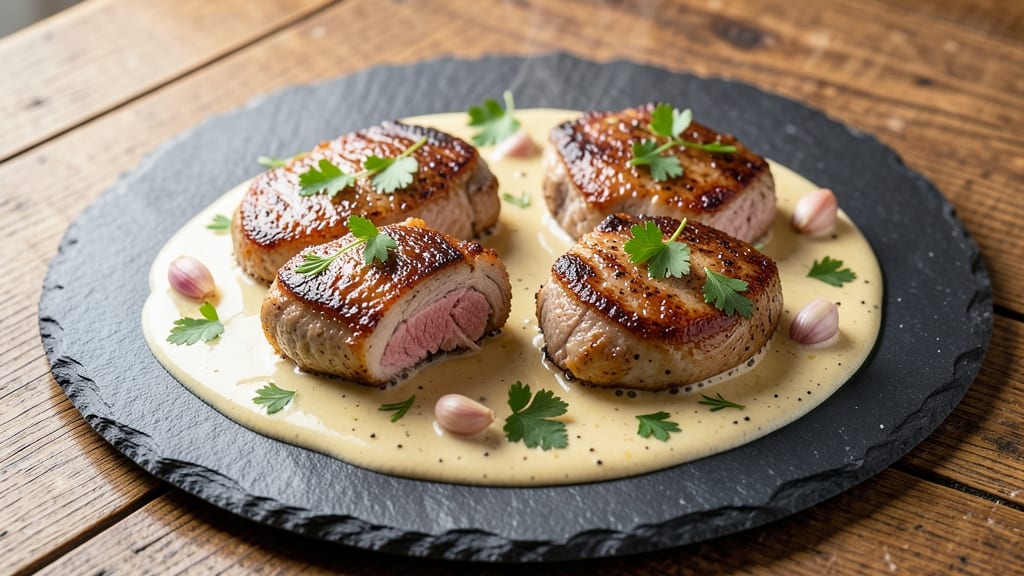
This creamy butter pork chop recipe transforms a simple weeknight dinner into a restaurant-worthy meal with just a few key techniques. The secret lies in searing the chops to a golden crust while keeping the interior tender, then finishing with a velvety garlic-parsley butter sauce that coats every bite.
I've perfected this method over years of cooking for crowds, and it never fails to impress—even skeptical guests.
The process starts with bone-in chops for maximum flavor, seared in a hot cast iron skillet until the edges are crisp and the internal temperature reaches 145°F. While the chops rest, the pan sauce comes together in minutes using just butter, garlic, parsley, and a splash of white wine for brightness.
This isn't just any butter sauce—it's rich, aromatic, and perfectly balanced between savory and fresh.
What you'll end up with is pork chops so tender they practically melt in your mouth, topped with a glossy, creamy sauce that clings beautifully. The sauce's texture is the real star here—smooth yet not overly heavy, with just enough acidity from the wine to cut through the richness.
Serve with roasted garlic potatoes or sautéed green beans to complete the meal.
This recipe delivers restaurant-quality results without requiring fancy equipment or hours in the kitchen. The technique is straightforward, but the flavor impact is undeniable—every bite feels special. Perfect for date nights, family dinners, or when you want to elevate a simple protein into something extraordinary.
Ingredients for creamy butter pork chop
The perfect balance of richness and freshness starts with these simple yet essential ingredients.
| Ingredient | Amount | Notes |
|---|---|---|
| Bone-In Pork Chops 🥩 | 4 whole | 1-inch thick, center-cut preferred |
| Unsalted Butter 🧈 | ½ cup | Cold, cut into 1-inch cubes |
| Fresh Parsley 🌿 | ¼ cup | Finely chopped, flat-leaf preferred |
| Garlic Cloves 🧄 | 4 cloves | Minced, fresh for best flavor |
| Dry White Wine 🍷 | ¼ cup | Sauvignon Blanc or Pinot Grigio |
| All-Purpose Flour 🌾 | 1 tbsp | For dredging, light coating |
| Kosher Salt 🧂 | 1 ½ tsp | Diamond Crystal preferred |
| Ground Black Pepper 🌶️ | ½ tsp | Freshly ground for best flavor |
| Heavy Cream 🥛 | ¼ cup | Full-fat for creaminess |
| Vegetable Oil 🫒 | 1 tbsp | For searing, high smoke point |
| Fresh Thyme Leaves 🌿 | 1 tsp | Optional, for sauce depth |
| Lemon Juice 🍋 | 1 tbsp | Freshly squeezed, for brightness |
The bone-in pork chops make all the difference here—look for center-cut, 1-inch thick pieces at your butcher or grocery store's meat counter. Costco or Whole Foods often have excellent quality. If you can't find bone-in, use bone-in ribs or pork loin chops instead. The butter is non-negotiable—unsalted, cold cubes create the best crust, and Land O'Lakes or Plugrá are reliable brands. Fresh parsley and garlic are worth the extra few bucks—they elevate the sauce from good to extraordinary.
No white wine? Dry chicken broth with a splash of lemon juice works in a pinch, though the wine adds that essential acidity. The flour should be lightly coated—don't dredge too heavily or the chops will be dry. For extra depth, add a pinch of smoked paprika to the flour. If you're short on heavy cream, half-and-half works at double the amount. The thyme is optional but adds a sophisticated touch—Trader Joe's sells excellent dried thyme if you're out of fresh. Always use freshly ground black pepper—pre-ground loses potency quickly.
Keep the butter cold until searing—wrap in parchment and freeze for 10 minutes if needed. The chops rest best on a wire rack over a plate to catch any juices. This sauce reheats beautifully—simply warm with a splash of cream or water to thin. Store leftovers in the fridge for up to 4 days, covered with plastic wrap pressed directly on the sauce to prevent skin. For longer storage, freeze the chops and sauce separately for up to 3 months—reheat gently over low heat.
Why You'll Love This Recipe
- Here’s what sold me: the butter bastes into a golden, velvety sauce while the chops stay juicy. The wine cuts through the richness, and that crispy garlic-parsley finish? It’s the kind of flavor that makes you pause mid-bite.
- I’ll be real: pork chops can dry out. Not these. The butter keeps them tender, so reheating them the next day is just a quick sizzle. (Yes, even on a Tuesday night.) Plus, the sauce clings to everything—perfect for sandwiches or a lazy breakfast.
Step-by-step instructions for creamy butter pork chops
Master this technique and you'll transform simple pork chops into restaurant-quality centerpieces with velvety sauce.
Season and Sear the Pork Chops
Pat the 4 whole Bone-In Pork Chops completely dry with paper towels—this ensures maximum crispiness. Place them on a cutting board and season both sides generously with 1.5 teaspoons Kosher Salt and 0.5 teaspoon Ground Black Pepper. Let them sit at room temperature for 15 minutes while you prepare the pan.
Heat 1 tablespoon Vegetable Oil in a large skillet over medium-high heat until shimmering. Add the pork chops and cook for 3-4 minutes per side until they develop a deep golden-brown crust. Don't move them during this time—this creates the flavorful crust that holds the sauce. The chops are ready when they release easily from the pan and register 145°F internally.
Build the Butter and Wine Sauce
Immediately after removing the pork chops, reduce heat to medium and add 0.5 cup Unsalted Butter cut into cubes. Let it melt completely, about 2 minutes, while scraping up any browned bits from the bottom of the pan—this adds incredible depth of flavor.
Add the 4 cloves minced Garlic Cloves and 1 teaspoon Fresh Thyme Leaves, cooking for 30 seconds until fragrant. Pour in the 0.25 cup Dry White Wine and let it simmer for 1-2 minutes until reduced by half. The sauce should coat the back of a spoon with a glossy sheen.
Create the Creamy Finish
Sprinkle 1 tablespoon All-Purpose Flour over the sauce and whisk vigorously for 30 seconds to remove any lumps. Slowly pour in the 0.25 cup Heavy Cream while continuing to whisk. Let the sauce simmer gently for 2-3 minutes until it thickens to a velvety consistency—it should coat the back of a spoon smoothly.
Return the pork chops to the skillet and spoon the sauce generously over them. Let everything simmer together for 1 minute to heat through. The sauce should cling beautifully to the meat without being overly thick.
Garnish and Serve Immediately
Remove the pork chops from the skillet and transfer them to a warm serving platter. Strain the sauce through a fine-mesh sieve to remove any thyme stems if desired, then return it to the skillet. Stir in 1 tablespoon Lemon Juice and 0.25 cup Fresh Parsley for brightness and freshness.
Slice the pork chops on the bias if preferred, then drizzle the creamy sauce generously over each serving. The sauce should be rich, velvety, and perfectly balanced with the bright lemon and fresh herbs. Serve immediately with roasted vegetables or mashed potatoes for an elegant weeknight dinner.
Pro Tips For Making Creamy Butter Pork Chop
- SEAR THE CHOPS FIRST: Bone-in pork chops need that golden crust to hold up under the creamy sauce, so don’t skip the initial sear—get your pan screaming hot (medium-high heat) and let them develop color for 3-4 minutes per side before touching them with wine or butter. I used to rush this, and the sauce would just slide off instead of clinging like it should.
- SWEAT GARLIC LOW AND SLOW: After removing the chops, reduce heat to actual low and cook the garlic in butter until it’s just fragrant—not browned, not crispy, just perfuming the pan. Browned garlic turns bitter and ruins the delicate balance of the creamy wine sauce. (Yes, even if you’re impatient like me.)
- DEGLAZE WITH WINE IMMEDIATELY: As soon as the chops hit the plate, pour in that white wine right into the hot pan—don’t let it pool in a separate cup. The residual heat will help it reduce faster, and you’ll get deeper flavor from the caramelized bits stuck to the bottom. Skipping this step means a thinner, flatter sauce.
- STIR IN COLD BUTTER AT THE END: Once the wine reduces to a syrupy glaze, take the pan off heat, add cold butter cubes, and whisk like you’re trying to win an arm-wrestling match. The cold butter emulsifies instantly, creating a velvety sauce instead of a greasy one. (I learned this the hard way—hot butter = separation city.)
Troubleshooting great creamy butter pork chop
Overcooked Pork Chops
If your pork chops feel tough or dry, they’ve likely cooked past 145°F internal temperature. The secret is patience—bone-in chops need 3-4 minutes per side on medium-high heat with a 145°F internal temp (measured with a meat thermometer).
I use a Thermoworks Smoke thermometer for precision. Let them rest 5 minutes before slicing to redistribute juices. 💡
Sauce Too Thin
A runny sauce usually means the flour wasn’t cooked long enough or the cream wasn’t reduced properly. After whisking in the 1 tbsp flour, simmer the sauce for 2-3 minutes until it coats the back of a spoon.
If it’s still too thin, mix 1 tsp cornstarch with 1 tbsp cold water and stir in. For extra richness, add 1 tbsp cold butter at the end. 🥄
Sauce Too Thick
If your sauce is glue-like, you’ve likely over-reduced it or used too much flour. Thin it with 1 tbsp warm heavy cream or white wine while whisking. For a smoother texture, strain through a fine-mesh sieve before serving.
I’ve found that 1 tbsp flour per ½ cup cream is the perfect ratio for velvety consistency. ✨
Pale, Bland Sauce
A lackluster sauce often means underdeveloped fond (browned bits) or insufficient acidity. Always scrape up the fond after searing the chops—it’s packed with flavor. For brightness, add 1 tbsp lemon juice or a splash of white wine vinegar at the end.
Fresh herbs like parsley or thyme add freshness too. 🌿
Chops Stick to Pan
If your chops cling to the skillet, your pan isn’t hot enough or the chops are too wet. Pat them completely dry with paper towels before seasoning, and ensure your skillet is smoking hot before adding oil.
A cast iron skillet is ideal—it retains heat better than nonstick. Let the chops sit for 15 minutes at room temp before cooking for even searing. 🔥
Butter Burns
Butter burns when it overheats—keep the pan on medium heat while melting it. If it starts to brown too quickly, remove from heat and let it melt slowly. For extra insurance, melt the butter off the heat first, then return the pan to low.
I like to melt ½ the butter first, then add the chops to the pan with the remaining butter. 🧈
Nutrition facts
Frequently asked questions
Can I use boneless pork chops for this recipe?
Yes, but bone-in chops are preferred for their superior flavor and moisture retention. If using boneless, reduce cooking time to 2-3 minutes per side—they cook faster without the bone's insulating effect. For best results, look for chops that are 1-inch thick to ensure even cooking.
What's the best way to reheat leftovers?
Reheat pork chops gently in a skillet over low heat with a splash of cream or water to thin the sauce. Cover the pan for 2-3 minutes to prevent drying. Never microwave—it makes the sauce watery and the meat rubbery. For extra richness, add a pat of butter to the pan while reheating.
Can I substitute heavy cream with something lighter?
You can use half-and-half at double the amount (0.5 cup instead of 0.25 cup), but the sauce will be slightly less creamy. For a dairy-free option, try coconut cream, though the flavor will differ. The key is to reduce the sauce properly—whisk in the substitute and simmer until it coats the back of a spoon.
How do I make this recipe ahead of time?
Prepare the chops and sauce separately up to 1 day ahead. Store the cooked chops in the fridge, covered with plastic wrap, and refrigerate the sauce separately. Reheat the chops in a skillet, then warm the sauce on the stove with a splash of cream. For longer storage, freeze the chops for up to 3 months—thaw overnight in the fridge before reheating.
What's the secret to the perfect crust?
The golden crust comes from three things: dry chops (pat them thoroughly), hot pan (medium-high heat until oil shimmers), and don't move them during the first 2 minutes per side. The crust forms from the Maillard reaction—this is why bone-in chops work best, as the bone helps conduct heat evenly.