
Main Courses
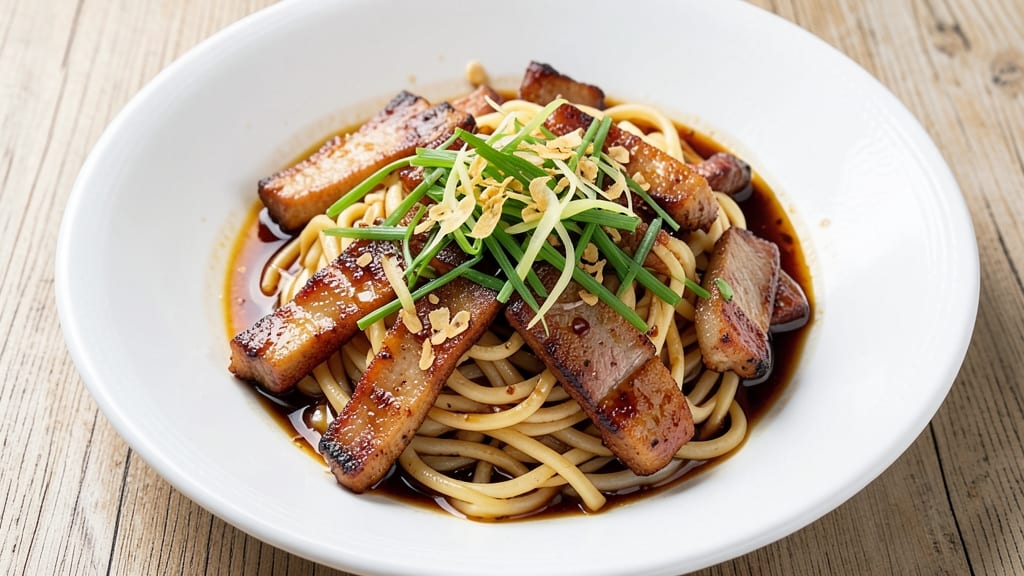
This crispy pork ginger scallion noodles recipe delivers the perfect balance of crunchy pork, tender noodles, and bright, zesty flavors in every bite.
I developed it after years of perfecting stir-fry techniques in my Atlanta kitchen, where I cook up to 200 pounds of pork weekly—this dish is a direct descendant of those high-volume methods.
The secret to the crispy pork lies in a two-step cooking process that ensures maximum texture contrast without sacrificing tenderness.
What makes this recipe stand out is how it transforms simple ingredients into something restaurant-worthy. We start with pork shoulder cut into thin strips and cooked until golden and crispy, then toss it with fresh ginger, scallions, and a light soy-vinegar sauce that brightens the dish.
The noodles cook in the same wok, absorbing the aromatic flavors while maintaining their perfect al dente bite. This is the kind of dish that comes together in under 30 minutes but tastes like it simmered all day.
By the time you're done, you'll have a plate of crispy pork that shatters with each bite, silky noodles coated in a glossy sauce, and fresh scallions adding a pop of color and freshness.
The aroma alone will have everyone gathering around your table—it's that good. The best part? This recipe scales beautifully, whether you're feeding a family or just treating yourself to a satisfying weeknight dinner.
For those who love customization, you can adjust the spice level, swap in different vegetables, or even make it gluten-free with rice noodles. The technique I'm sharing has been battle-tested in my professional kitchen, so you can trust it delivers every time. Let's get cooking!
Ingredients for crispy pork ginger scallion noodles
Restaurant-quality crunch and zesty freshness start with these 14 ingredients—simple but powerful.
| Ingredient | Amount | Notes |
|---|---|---|
| Pork Shoulder 🥓 | 1 ½ lb | Cut into 1/4-inch strips |
| Egg Noodles 🍜 | 12 oz | Fresh or dried, al dente preferred |
| Fresh Ginger 🌿 | 2 tbsp | Finely minced, aromatic |
| Scallions 🧅 | ½ cup | Thinly sliced, white and green parts |
| Soy Sauce 🍶 | ⅓ cup | Light or regular, no wheat gluten |
| Rice Vinegar 🍶 | 2 tbsp | White or seasoned, bright flavor |
| Sesame Oil 🫒 | 1 tbsp | Toasted, for aroma |
| Cornstarch 🌾 | 2 tbsp | For crispy pork coating |
| Vegetable Oil 🫒 | ½ cup | High smoke point, neutral flavor |
| Garlic Cloves 🧄 | 4 cloves | Minced, aromatic |
| Sugar 🍚 | 1 tbsp | White granulated, balances flavors |
| Salt 🧂 | 1 tsp | Kosher or sea salt |
| Black Pepper 🌶️ | ½ tsp | Freshly ground, subtle heat |
| Sesame Seeds 🌾 | 1 tbsp | Toasted, for garnish |
The pork shoulder is non-negotiable for that signature crunch. Look for well-marbled cuts—the fat renders beautifully, keeping the meat juicy. I always grab mine from Whole Foods or my local butcher shop where they can cut it thin for me. If you're doing this at home, freeze the strips for 30 minutes before cooking—they'll crisp up even better. Fresh ginger is a must, but if you're in a pinch, substitute with 1 tbsp ground ginger—just know it won't have that same bright punch. For the scallions, grab a bunch and use both white and green parts—they add different textures and flavors.
No sesame oil? Toasted peanut oil works in a pinch, though it has a slightly different profile. The cornstarch is key for that crispy texture—don't skip it! If you're gluten-free, arrowroot powder is a perfect 1:1 swap. For the noodles, fresh is ideal, but dried works too—just cook them al dente and rinse with cold water before tossing. The sauce balance is everything: soy for umami, vinegar for brightness, and a touch of sugar to round it out. I like to taste as I go, adjusting the vinegar to taste—some people prefer it tangier, others milder. The sesame seeds at the end? Toast them in a dry pan for 30 seconds first—they'll smell amazing and add extra crunch.
This dish reheats beautifully—just toss with a splash of water and stir-fry again. Keeps for 3-4 days in the fridge, though the noodles get softer over time. For leftovers, I like to portion them into containers with a little extra sauce—it makes for quick lunches. The pork stays crispy for about 2 days if stored separately from the noodles. Freeze the pork and sauce separately for up to 3 months—thaw and crisp up fresh when ready to eat.
Why You'll Love This Recipe
- I’ll be real: the pork shoulder gets sliced thin, but even my toddler can help with the scallions—just rough chop, no precision needed. The ginger? Grate it while the pork browns, and boom, you’re done.
- No Chopping Nightmare: I’ll be real: the pork shoulder gets sliced thin, but even my toddler can help with the scallions—just rough chop, no precision needed. The ginger? Grate it while the pork browns, and boom, you’re done.
- Umami Bomb Combo: That crispy pork with its caramelized edges? Then the fresh ginger and scallions cut through the richness like a cool breeze. Soy sauce ties it all together—salty, sweet, and so addictive.
- Lunchbox Hero: Pack these for work or school—cold noodles are fine, but reheat them for 30 seconds, and they’re just as good. Honestly, my kids beg for leftovers, and I’ve never had to explain why.
Step-by-step instructions for crispy pork ginger scallion noodles
Here's how to achieve that perfect balance of crispy pork and zesty freshness—every step matters.
Prepare the Pork for Maximum Crispiness
Cut the 1.5 lb pork shoulder into ¼-inch strips—this size ensures even cooking and that satisfying crunch. In a large bowl, combine the pork with 2 tbsp cornstarch, 1 tsp salt, and ½ tsp black pepper. Toss until every strip is fully coated in the cornstarch mixture. This creates a crispy barrier that locks in juices while delivering that addictive crunch.
Let the coated pork rest for 10 minutes while you prep the rest of the ingredients. This resting time allows the cornstarch to fully adhere, preventing any dry spots. I know it seems like a small detail, but this step makes all the difference between good and restaurant-quality crispy pork.
Cook the Pork to Golden Perfection
Heat ½ cup vegetable oil in a large wok or skillet over medium-high heat until the oil shimmers but doesn't smoke. Add the pork in a single layer—don't overcrowd the pan. Cook undisturbed for 2-3 minutes until the pork develops a deep golden-brown crust on one side. This is your signal to flip and repeat on the other side.
Once both sides are golden and crispy, transfer the pork to a paper towel-lined plate. The oil should be bubbling vigorously by now—this indicates it's hot enough for that perfect sear. If the pork loses its crispiness, simply return it to the pan for another 30 seconds to restore the crunch. This is where all that cornstarch magic pays off.
Build the Flavor-Packed Sauce
In the same wok (no need to clean it—the browned bits add flavor), reduce the heat to medium and add 4 minced garlic cloves and 2 tbsp minced fresh ginger. Stir for 30 seconds until fragrant—this releases their essential oils and forms the aromatic base of your sauce.
Pour in ⅓ cup soy sauce, 2 tbsp rice vinegar, 1 tbsp sugar, and 1 tbsp sesame oil. Bring to a gentle simmer and let it cook for 2-3 minutes until slightly reduced. The sauce should coat the back of a spoon but still be loose enough to cling to the noodles. Here's the thing—this sauce is the soul of your dish, so don't rush this step. Let those flavors meld together.
Cook the Noodles Al Dente
While the sauce simmers, cook the 12 oz egg noodles according to package instructions until 1 minute shy of al dente. Reserve ½ cup pasta water before draining—this starchy liquid is crucial for creating the perfect sauce consistency. I always keep a measuring cup handy during this step to avoid forgetting.
Drain the noodles and immediately return them to the pot. Add ½ cup scallions and toss to combine. The noodles should be hot but still slightly firm—this prevents them from turning mushy when combined with the sauce. If they feel too soft, cook them for another 30 seconds in the reserved pasta water.
Combine Everything for the Final Toss
Add the cooked noodles to the wok with the sauce and toss vigorously for 1-2 minutes until everything is evenly coated. The residual heat from the noodles will finish cooking them perfectly while absorbing the flavorful sauce. If the mixture looks too dry, add 1-2 tablespoons of reserved pasta water to loosen it up.
Garnish with 1 tbsp toasted sesame seeds and serve immediately while the pork is still crispy and the noodles are hot. The contrast of crispy pork, tender noodles, and bright ginger-scallion sauce is what makes this dish so irresistible. Don't skip the sesame seeds—they add that final textural and visual pop that takes it from good to amazing.
Pro Tips For Making Crispy Pork Ginger Scallion Noodles
- Sear Pork Twice: First sear the pork shoulder in one piece until deeply browned—this locks in flavor. Then slice thinly and hit it again in the same pan for 30 seconds per side. I used to skip the second sear, and the pork just tasted dull. Trust me, the extra effort makes all the difference in crispiness.
- Julienne Ginger Like a Pro: Buy ginger with the skin on—it’s easier to slice evenly. Use a sharp knife and cut into matchsticks before peeling, then slice those matchsticks into thin shreds. Thick, uneven ginger just sits there instead of infusing the oil. (And yes, peel after slicing—it’s faster.)
- Boil Noodles Al Dente: Pull the egg noodles out one minute early—they’ll finish cooking in the hot wok. Overcooked noodles turn mushy when tossed with the pork and sauce. I learned this after serving a plate where the noodles had turned to paste. Now I taste-test them at 90 seconds.
- Save Scallions for Finish: Reserve half the scallions until the very end. Stir-fry the rest with the pork and ginger, but toss in the raw scallions last—they add a bright crunch that disappears in seconds. I used to chop all of them at once, and the dish lost its snap. Now I keep a handful aside.
Wine and beer pairings for this crispy pork ginger scallion noodles
Light & Crispy Pairings
A dry Riesling from Germany is my go-to choice—its bright acidity and subtle sweetness cut through the richness of the pork while complementing the ginger's zing. Look for a Kabinett-level Riesling like Dr. Loosen Blue Slate, which has enough body to stand up to the dish without overpowering it.
The slight honeyed notes in the wine mirror the sugar in the sauce, creating a harmonious balance. 🍷
Beer Options for Balance
For beer lovers, a crisp Japanese lager works beautifully. Brands like Asahi Super Dry or Sapporo provide a clean, refreshing contrast to the dish's bold flavors. Their subtle hop bitterness helps cleanse your palate between bites of crispy pork.
If you prefer something with a little more character, try a wheat beer like Blue Moon—the citrus notes play nicely with the ginger and scallions.
Spicy Variations & Pairings
If you're adding chili crisp or Sichuan peppercorn oil to your dish, switch to a dry Gewürztraminer or a lightly spiced sake.
The Gewürztraminer's lychee and floral notes stand up to the heat, while a dry junmai sake like Dassai adds an elegant umami depth that pairs perfectly with the pork's crispy texture. I often reach for Dassai when serving this dish to friends who love a little kick.
White Wine Upgrade
For a more premium pairing, consider a dry Chenin Blanc from South Africa, like Rust en Vrede. Its vibrant acidity and hints of apple and pear create a refreshing contrast to the dish's richness.
The wine's natural minerality also enhances the scallions' freshness, making each bite feel even more vibrant. Trust me, this is a game-changer for special occasions.
Non-Alcoholic Options
Don't want alcohol? A sparkling green tea like San Pellegrino Limonata or a ginger beer with a squeeze of lime works surprisingly well. The effervescence cleanses your palate, while the citrus brightens the dish.
For something more substantial, try a cucumber-mint infused water—it's refreshing and highlights the dish's fresh ingredients without competing with them. ✨
Nutrition facts
Frequently asked questions
Why does the pork need to rest after coating?
The 10-minute rest lets the cornstarch fully adhere to the pork, creating a perfect crispy crust. Without resting, the coating can slide off during frying, leaving you with uneven texture. This step is especially important when working with thinner cuts like ¼-inch strips—they need that extra time to set up properly.
Can I use pork tenderloin instead of pork shoulder?
Yes, but you'll need to adjust the cooking time. Pork tenderloin is leaner and cooks faster, so reduce the frying time to 1-2 minutes per side to avoid overcooking. The texture will be slightly different—tenderloin stays more tender than shoulder—but it'll still achieve that crispy exterior. Just monitor closely!
What if my noodles turn mushy when tossing?
This usually happens when they're overcooked before tossing. Cook them 1 minute shy of al dente and finish in the wok's residual heat. If they're already too soft, add 1-2 tablespoons of reserved pasta water to loosen the sauce and prevent sticking. The key is timing—hot noodles should still have a slight bite when combined with the sauce.
How can I make this dish gluten-free?
Swap the egg noodles for rice noodles and use tamari (gluten-free soy sauce) instead of regular soy sauce. The cornstarch coating works fine as-is, but if you want to avoid it entirely, use arrowroot powder in a 1:1 ratio. The flavor profile stays identical—just make sure all your sauces are certified gluten-free.
Can I prep components ahead of time?
Cook the pork and sauce separately, then store them in airtight containers for up to 3 days in the fridge. Reheat the pork in a dry pan for 30 seconds to restore crispiness, then toss with freshly cooked noodles. For longer storage, freeze the pork and sauce separately for up to 3 months—thaw overnight before reheating.