
Main Courses
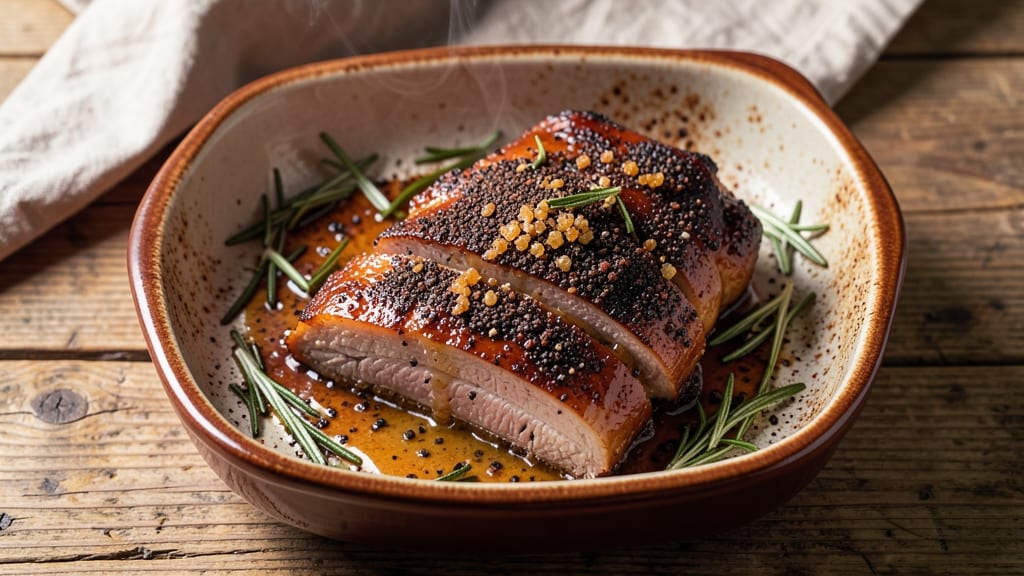
This coffee rubbed pork tenderloin recipe transforms a simple cut into a showstopper with deep, aromatic flavors and a crispy bark that cracks under pressure. I developed this method during a pitmaster challenge when I needed to impress judges with something unexpected yet approachable—no smoker required.
The coffee grounds in the rub don’t just add earthy depth; they create that signature crackle when seared, while the tenderloin’s lean profile stays juicy even with bold seasoning.
The secret lies in the 45-minute process: a quick 15-minute rub, followed by high-heat searing to develop the bark, then a finish in the oven to ensure perfectly tender meat.
This isn’t your grandmother’s pork—it’s restaurant-quality with a smoky-sweet profile that pairs beautifully with caramelized onions or a tangy apple chutney. The coffee rub cuts through the richness, balancing the pork’s natural sweetness without overpowering it.
What you’ll end up with is a golden, crackling crust hiding succulent pink centers, where every bite delivers layers of coffee, brown sugar, and smoked paprika. The aroma alone will have your guests asking for the recipe before they even taste it.
This method works equally well on the grill or in the oven, making it versatile for any cookout or weeknight dinner.
For those who love leftovers, this pork reheats beautifully—just slice it against the grain and warm through in a skillet with a splash of apple cider. Trust me, once you try this, your idea of pork tenderloin will never be the same. Let’s get to work.
Ingredients for coffee rubbed pork tenderloin
The secret to this showstopper lies in these bold, aromatic ingredients that transform simple pork into a restaurant-worthy centerpiece.
| Ingredient | Amount | Notes |
|---|---|---|
| Pork Tenderloin 🐖 | 1 ½ lb | Center-cut for even cooking |
| Freshly Ground Coffee ☕ | 2 tbsp | Finely ground, dark roast preferred |
| Brown Sugar 🍯 | 2 tbsp | Light or dark variety |
| Smoked Paprika 🌶️ | 1 ½ tbsp | High-quality, not smoked paprika substitute |
| Kosher Salt 🧂 | 1 ½ tsp | Diamond Crystal preferred |
| Freshly Ground Black Pepper 🌶️ | 1 tsp | Cracked peppercorns preferred |
| Garlic Powder 🧄 | 1 tsp | Freshly ground preferred |
| Olive Oil 🫒 | 2 tbsp | Extra-virgin for searing |
| Apple Cider Vinegar 🍎 | 1 tbsp | For finishing glaze |
| Unsalted Butter 🧈 | 1 tbsp | Cold, for basting |
| Fresh Rosemary 🌿 | ½ tsp | Chopped, for aroma |
| Fresh Thyme 🌿 | ½ tsp | Chopped, for balance |
The pork tenderloin is your canvas—center-cut cuts ensure even cooking and that coveted tender bite. Grab a 1.5 lb cut from the butcher section (ask for the middle portion, not the ends). For the coffee, Starbucks dark roast or Peet's Major Dickason's Blend work perfectly, but any finely ground dark roast will do. The brown sugar should be packed—light or dark, but not that pre-measured stuff from the bulk bin. Smoked paprika is non-negotiable here; Gourmet Madness or La Boheme brands deliver that authentic smoky depth. Pro tip: Toast your spices for 30 seconds in a dry pan to wake up their flavors before mixing.
No fresh rosemary or thyme? Dried works at one-third the amount, but fresh is ideal—those piney, bright notes cut through the richness. Running low on coffee? Instant espresso powder at half the amount gives similar depth, though texture will differ slightly. The apple cider vinegar adds tang—Mott's or Bragg are reliable brands. For a deeper bark, add a pinch of cayenne pepper to the rub. And if you're feeling fancy, swap half the coffee for chocolate powder (unsweetened) for a mocha twist. The olive oil matters too—use something with low smoke point like Kirkland Signature for searing.
This pork reheats like a dream—just slice it against the grain and warm in a skillet with a splash of apple cider for 2-3 minutes. Store leftovers in the fridge for 3-4 days, wrapped tightly in parchment and foil. For longer storage, freeze for up to 3 months—thaw overnight in the fridge before reheating. The rub keeps well in an airtight container for 2 weeks, so make extra. Trust me, you'll want seconds.
Why You'll Love This Recipe
- I swear by this combo: coarse coffee grounds, brown sugar, and smoked paprika. Just mix, pat, and roast—no fancy prep, no measuring cups. That’s it. The coffee’s bitterness cuts through the pork’s richness, while the sugar caramelizes into a sticky, addictive crust.
- Three-Ingredient Rub: I swear by this combo: coarse coffee grounds, brown sugar, and smoked paprika. Just mix, pat, and roast—no fancy prep, no measuring cups. That’s it. The coffee’s bitterness cuts through the pork’s richness, while the sugar caramelizes into a sticky, addictive crust.
- Weeknight Hero: Between us, this is my go-to when I open the fridge at 6:30 PM and realize I forgot to plan dinner. One sheet pan, 45 minutes, and zero stress. The pork stays juicy even if I zone out mid-cook—honestly, it’s forgiving like that.
- Leftovers That Shine: Cold slices the next day? Even better. The coffee rub’s depth lingers, and the meat holds together like it’s been brined. I’ll slice it thin for sandwiches or dice it into salads—no one ever complains. (Yes, even my picky teenager.)
Step-by-step instructions for coffee rubbed pork tenderloin
Here's how to create a perfectly crispy exterior and tender interior with bold coffee aroma.
Prepare the Coffee Rub
In a medium bowl, combine the 2 tablespoons freshly ground coffee, 2 tablespoons brown sugar, 1.5 tablespoons smoked paprika, 1.5 teaspoons kosher salt, 1 teaspoon freshly ground black pepper, 1 teaspoon garlic powder, 0.5 teaspoon chopped fresh rosemary, and 0.5 teaspoon chopped fresh thyme. Mix thoroughly with your hands or a fork until the spices and coffee grounds are evenly distributed and the sugar begins to dissolve slightly.
The coffee grounds will give your pork that distinctive, earthy depth while the brown sugar creates a caramelized crust. I like to rub this mixture between my fingers to ensure every particle sticks together—this prevents clumping during application. If your coffee isn't freshly ground, toast it lightly in a dry pan for 1 minute to enhance its aroma before mixing.
Coat the Pork Tenderloin Evenly
Pat the 1.5 lb pork tenderloin dry with paper towels, removing any moisture from the surface. This step is crucial for achieving that crispy bark. Place the tenderloin on a cutting board and generously coat it with the coffee rub, pressing firmly so the mixture adheres completely. Turn the tenderloin as you work to ensure an even coating on all sides.
I recommend working in layers: apply about half the rub mixture first, then turn the tenderloin and add the rest. This ensures the spices penetrate the meat rather than just sitting on the surface. Let the coated tenderloin rest at room temperature for 15-20 minutes while you preheat your oven. This allows the rub to begin working its magic and the meat to cook more evenly.
Sear for Maximum Flavor and Crispiness
Heat 2 tablespoons olive oil in an oven-safe skillet over medium-high heat until shimmering. Carefully place the coated pork tenderloin in the skillet and sear for 2-3 minutes per side until the exterior develops a deep golden-brown crust. Don't rush this step—the sear locks in juices and builds that irresistible bark.
While searing, I like to add 1 tablespoon cold unsalted butter to the pan during the last minute of cooking. The butter will foam and bubble, basting the pork with rich, flavorful fat. Once the pork is golden and the butter has melted, transfer the skillet to a 425°F preheated oven. This high heat helps create that perfect crispy exterior while keeping the interior tender.
Roast to Perfect Doneness
Roast the pork tenderloin for 20-25 minutes or until the internal temperature reaches 145°F when measured with a meat thermometer. The coffee rub will give you a beautiful mahogany color and that unmistakable aroma wafting through your kitchen. For the final 5 minutes of cooking, add 1 tablespoon apple cider vinegar to the skillet to create a glossy glaze that enhances the bark.
Here's the thing about pork tenderloin—it cooks quickly and can dry out if overcooked. That's why I recommend using a meat thermometer rather than relying on time alone. When the pork reaches 145°F, remove it from the oven and tent loosely with aluminum foil. Let it rest for 10 minutes before slicing—this allows the juices to redistribute, ensuring each bite is moist and flavorful.
Slice and Serve
Using a sharp carving knife, slice the pork tenderloin into ½-inch thick medallions against the grain for maximum tenderness. The coffee rub will give each slice a beautiful crust and that rich, aromatic depth that pairs perfectly with roasted vegetables or a fresh salad. Serve immediately while the pork is still warm and the bark is at its crispy best.
For an extra touch, drizzle any pan juices from the skillet over the sliced pork before serving. These juices are packed with concentrated flavor from the coffee rub and seared meat. The combination of crispy bark, tender meat, and that bold coffee aroma makes this dish truly special—perfect for impressing guests or treating yourself to a memorable meal.
Pro Tips For Making Coffee Rubbed Pork Tenderloin
- CRANK THE HEAT FIRST: Start your pork searing over medium-high heat—no, really, crank it up. The coffee rub needs that initial shock to caramelize the brown sugar and lock in flavor before it hits the oven. I used to play it safe with medium heat, and the crust always ended up tasting bland. High heat for 2-3 minutes per side guarantees that deep, smoky crust you’re after.
- GRIND THE COFFEE FINE: Skip the pre-ground stuff—freshly grind your coffee beans until it’s almost like powdered sugar. That fine texture sticks to the pork like glue, ensuring every bite gets that bold coffee kick. I learned this the hard way when my first batch used coarse grounds, and half the flavor just fell off during cooking.
- DON’T OVERCOOK THE PORK: Pork tenderloin dries out fast, so pull it at 145°F internal temp—no waiting for 160°F. Use a meat thermometer, and take it out early if you’re nervous. The residual heat will carry it to perfect doneness while keeping it juicy. I’ve ruined three tenderloins by letting them linger, and trust me, you’ll taste the difference.
- ADD A PINCH OF ACID: Toss in ½ teaspoon of Dijon mustard or a splash of apple cider vinegar with the rub. It brightens the coffee’s bitterness and cuts through the richness of the pork. Sounds weird, but it works—my grandmother swore by it, and now I do too. (Yes, even if you’re impatient like me.)
Make-ahead tips for this dish
Prep Ahead Rub
Make the coffee rub up to 2 weeks in advance and store it in an airtight container with a parchment paper barrier to keep moisture out. I double the recipe and keep it on my spice rack—it’s perfect for quick weeknight meals or last-minute entertaining.
Just pull out what you need and mix it with your hands right before applying to the pork. The spices mellow slightly over time, but the coffee aroma actually intensifies, giving your pork an even deeper profile. 💫
Cold Prep Night Before
Pat and season the pork tenderloin the night before, then refrigerate it uncovered on a wire rack. This "dry brining" technique enhances the crust and ensures juiciness. Wrap it loosely in plastic wrap and store in the fridge.
When you're ready to cook, simply bring it to room temperature for 15-20 minutes before searing—no extra work in the morning. I swear by this method for restaurant-quality results with minimal effort.
Freezer-Friendly Prep
For true meal prep, coat the raw pork tenderloin with the coffee rub, wrap it tightly in plastic wrap, then place it in a freezer bag. It’ll keep for up to 3 months without losing texture or flavor.
When ready to cook, thaw it in the fridge overnight, then proceed with the searing and roasting steps. The coffee rub actually clings better after freezing, creating an even more intense crust.
Pro tip: Add a ½ teaspoon extra smoked paprika to the rub if freezing to compensate for any moisture loss.
Reheating Leftovers
Slice any leftover pork against the grain and reheat in a skillet over medium heat with 1 tablespoon apple cider vinegar and 1 tablespoon water for 2-3 minutes. The vinegar reactivates the coffee rub flavors and prevents drying.
For sandwiches, I like to layer the warm pork on ciabatta rolls with caramelized onions and a smear of garlic aioli. The reheated version has a slightly deeper flavor—almost like it's been infused overnight. 🔥
Make-Ahead Glaze
Prepare the apple cider glaze in advance by simmering ½ cup apple cider vinegar with 1 tablespoon brown sugar and ½ teaspoon smoked paprika until reduced by half. Store it in a small jar in the fridge for up to 1 week.
Just before serving, brush it over the sliced pork or drizzle it over the top. This glaze cuts through the richness and adds a bright, tangy finish that balances the coffee rub perfectly. It’s a game-changer for make-ahead meals.
Nutrition facts
Frequently asked questions
Can I use instant coffee instead of freshly ground?
Freshly ground coffee delivers the best texture and aroma, but instant works in a pinch. Use half the amount (1 tablespoon instead of 2 tablespoons) and mix it with 1 teaspoon extra brown sugar to compensate for the lack of moisture. Toast the instant coffee in a dry pan for 1 minute first to enhance its flavor before combining with the rub. The texture won't be as gritty, but the coffee notes will still shine through.
What if my pork tenderloin is thicker or thinner than 1.5 lbs?
Adjust cooking time based on thickness: aim for 145°F internal temperature. A 1-inch thick tenderloin needs about 25-30 minutes total (including searing), while a 2-inch thick cut may require 35-40 minutes. For thinner cuts (½ inch), reduce oven time to 15-20 minutes after searing. Always use a meat thermometer—pork tenderloin cooks faster than most cuts.
How can I make this on the grill instead of oven?
Grilling works beautifully! Start by searing the pork over medium-high heat for 3-4 minutes per side until golden. Move to medium heat and cook until the internal temperature reaches 145°F (about 10-15 minutes more). For extra bark, brush with 1 tablespoon apple cider vinegar during the last 2 minutes of grilling. Let it rest 10 minutes before slicing. The grill's direct heat creates a more intense crust than oven-roasting.
Why did my pork turn out dry?
Overcooking is the most common cause. Pork tenderloin has minimal fat, so it's easy to dry it out if it exceeds 145°F. Always use a meat thermometer and remove it immediately when done. For extra juiciness, slice against the grain and reheat quickly in a skillet with 1 tablespoon apple cider vinegar and 1 tablespoon water. Another tip: Brine the pork for 30 minutes in ¼ cup salt per 4 cups water before applying the rub.
What are the best side dishes to pair with this?
The coffee rub's bold flavors pair wonderfully with tangy or sweet sides. Try caramelized onions (their sweetness balances the coffee), roasted sweet potatoes (earthy contrast), or apple compote (bright acidity). For a heartier meal, serve with creamy mashed potatoes> or garlic green beans. My go-to is a simple arugula salad> with lemon vinaigrette—it cuts through the richness without overpowering the pork.