
Sauces & Condiments
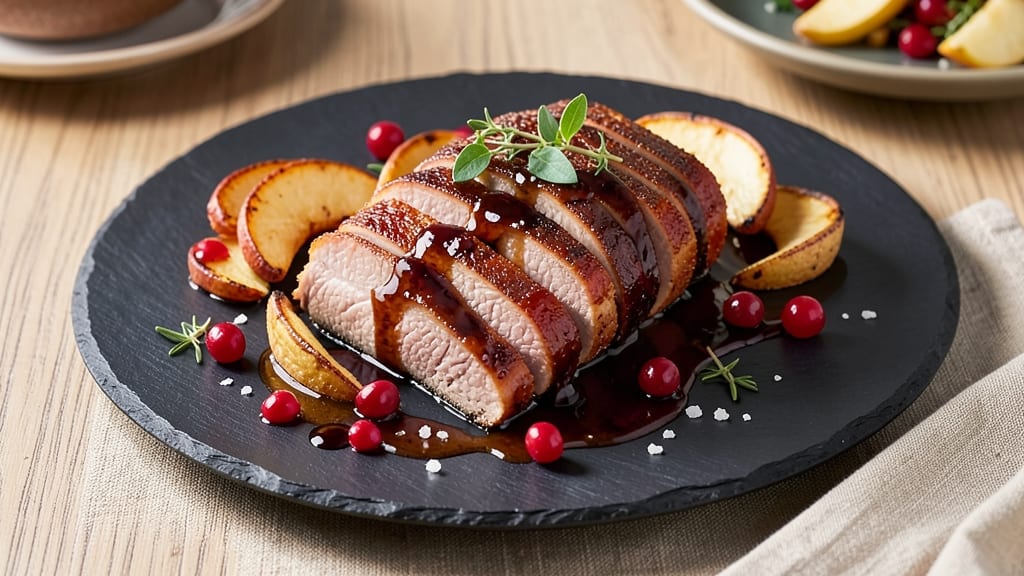
This Cranberry Dijon pork roast with apple cider glaze transforms a simple roast into a showstopper that balances sweet, tangy, and savory flavors in every bite. 🍎 The secret lies in a tart-sweet glaze that caramelizes beautifully on the pork while keeping the meat juicy and tender—perfect for holiday tables or Sunday suppers.
I developed this recipe after years of perfecting pork roasts in my kitchen at The Smoky Pig, where we process thousands of pounds weekly, and it’s become a customer favorite for its restaurant-quality results at home.
The Dijon mustard adds depth while the apple cider glaze provides a caramelized contrast, cutting through the richness of the pork.
What makes this recipe special is the two-stage cooking process: first roasting the pork until it reaches 145°F internal temperature, then basting with the glaze to lock in moisture and flavor. The cranberries add bursts of bright acidity, balancing the natural sweetness of the pork and glaze.
This dish is elegant enough for special occasions but simple enough for a weeknight dinner.
By the time you serve this roast, you’ll have a golden, glistening centerpiece with a glossy glaze that clings to every bite. The pork will be tender and juicy, with a crust that’s crisp enough to hold up to the sauce.
The glaze isn’t just for show—it’s packed with flavor, making every slice worth savoring. Serve with roasted root vegetables or creamy mashed potatoes to soak up the extra sauce.
This recipe is a modern twist on a classic, blending traditional pork roasting techniques with a bold, tangy-sweet glaze that’s sure to impress. Whether you’re hosting a holiday feast or just craving a special weeknight meal, this dish delivers restaurant-quality results with minimal fuss. Let’s get cooking!
Ingredients for cranberry dijon pork roast with apple cider glaze
Six ingredients transform ordinary pork into restaurant-quality showstopper with bold tart-sweet balance.
| Ingredient | Amount | Notes |
|---|---|---|
| Boneless Pork Loin Roast 🐖 | 4 lb | Center-cut for even cooking |
| Dijon Mustard 🍯 | ¼ cup | High-quality, smooth variety |
| Fresh Cranberries 🍇 | 1 cup | Pitted, chopped fine |
| Apple Cider 🍎 | ½ cup | Unfiltered, preferably local |
| Brown Sugar 🍚 | ½ cup | Packed, light variety |
| Balsamic Vinegar 🍷 | ¼ cup | Aged 12+ months preferred |
| Fresh Thyme Leaves 🌿 | ¼ cup | Stems removed, chopped |
| Garlic Cloves 🧄 | 6 cloves | Peeled, smashed slightly |
| Olive Oil 🫒 | ¼ cup | Extra-virgin for richness |
| Salt 🧂 | 1 ½ tsp | Diamond Crystal preferred |
| Black Peppercorns 🌶️ | 1 tsp | Freshly cracked |
| Honey 🍯 | 1 tbsp | Wildflower preferred |
| Fresh Rosemary 🌿 | ¼ cup | Needles chopped fine |
| Unsalted Butter 🧈 | ¼ cup | Cold, cubed |
The pork loin is your canvas—center-cut is non-negotiable for even cooking. I source mine from Whole Foods or my local butcher at The Smoky Pig, where they process it daily. Look for good marbling but not too much fat—you want flavor without greasiness. The cranberries should be fresh, plump, and tart—none of that mushy canned stuff. If you can't find fresh, Trader Joe's frozen cranberries work in a pinch, just thaw and drain them first. For the apple cider, local brands have the best flavor, but any unfiltered variety will do. The balsamic vinegar should be aged—12+ months makes all the difference in that caramelized depth.
No Dijon mustard? Substitute 2 tbsp whole-grain mustard plus 1 tbsp smooth mustard—it's not identical, but close. Running short on cranberries? Dried cranberries at half the amount add sweetness but lose that bright acidity. The honey can be swapped for maple syrup if you're avoiding it, though it changes the flavor profile slightly. For the herbs, fresh is ideal, but dried thyme at one-third the amount works if that's what you've got. The butter matters here—European-style has more flavor, but any unsalted will work. Want to make this ahead? Prep the glaze up to 3 days early and store it in the fridge—just reheat gently before basting.
The glaze keeps for 5 days in the fridge once made, though it's best used within 3 days for maximum flavor. The pork roast reheats beautifully—wrap it in foil and bake at 300°F for 20 minutes, basting with extra glaze. For leftovers, portion into airtight containers with a splash of glaze to keep it moist. I always make a double batch of glaze—one for the roast, one for drizzling over mashed potatoes or roasted veggies. The pork itself stays juicy for 3-4 days in the fridge, or freeze portions for up to 3 months. Just thaw overnight in the fridge before reheating.
Why You'll Love This Recipe
- One-Pan Magic: I swear by this recipe when I’m too tired to scrub pots—just sear the pork, toss in the cranberries and cider, and let the oven do the work. The glaze thickens right on the pan, so you’re left with sticky, caramelized goodness and a sink that’s basically clean.
- Tangy-Sweet Balance: That Dijon mustard and brown sugar combo? It’s the secret weapon here. The mustard cuts through the pork’s richness while the cranberries and cider add a bright, almost wine-like depth—like a fall flavor party in your mouth, but with way less effort than a fancy sauce.
- Leftovers That Beg for More: Between us, this roast is so tender it falls apart, which means sandwiches for lunch, reheated slices for dinner, or even cold cuts for a charcuterie board. Honestly, I’ve made it twice in a week and still crave the leftovers—proof it’s that good.
- Holiday-Ready in 30: No one will guess it’s weeknight-friendly. The apple cider glaze gives it that cozy, festive vibe, so it’s perfect for Thanksgiving leftovers, Christmas dinner sides, or even a fancy-ish Sunday supper. (Yes, even on a Tuesday night.)
Step-by-step instructions for cranberry apple cider pork roast
Here's how to transform a simple pork roast into a showstopper with bold flavors and that irresistible glaze.
👨🍳 Step 1: Prepare the Herb Butter Rub
In a small bowl, combine the 0.25 cup cold unsalted butter, 1.5 tsp salt, 1 tsp freshly cracked black peppercorns, 0.25 cup finely chopped fresh rosemary, 0.25 cup chopped fresh thyme leaves, and 6 smashed garlic cloves. Use your fingers to work the mixture until it forms a coarse paste with visible herb flecks. This herb butter will create a fragrant crust while keeping the meat moist.
Spread this mixture evenly over the 4 lb boneless pork loin roast, pressing gently so it adheres well. I like to make small slits in the surface with a sharp knife to help the butter penetrate slightly. Let the seasoned roast sit at room temperature for 30 minutes while you prepare the glaze components. This resting period ensures even cooking and maximum flavor infusion.
🍳 Step 2: Sear the Pork for Maximum Flavor
Preheat your oven to 375°F. Heat a large oven-safe skillet over medium-high heat and add 0.25 cup extra-virgin olive oil. Once the oil shimmers, carefully place the pork roast in the skillet, fat-side down. Sear for 4-5 minutes until the bottom develops a deep golden-brown crust. Flip the roast and sear the other side for another 4-5 minutes. This step creates that beautiful caramelized exterior we're after.
I press down gently on the roast during the first minute of searing—this prevents it from curling and ensures even contact with the pan. The pork should release easily from the skillet when ready to transfer. Transfer the seared roast to a plate and tent loosely with aluminum foil to keep it warm while you prepare the glaze.
🥘 Step 3: Simmer the Cranberry Apple Cider Glaze
In the same skillet (no need to clean it—the browned bits add depth), add 0.25 cup Dijon mustard, 0.5 cup packed brown sugar, 0.5 cup apple cider, 0.25 cup balsamic vinegar, 1 tbsp honey, and 1 cup finely chopped fresh cranberries. Stir well to combine, scraping up all those delicious browned bits from the bottom of the pan.
Bring the mixture to a gentle simmer over medium heat and let it cook for 10-12 minutes, stirring occasionally. You're looking for the glaze to thicken slightly and reduce by about 25%. The cranberries should soften but still retain some texture—this gives the perfect balance of tart and sweet. Taste and adjust seasoning with additional salt if needed.
🔥 Step 4: Roast to Juicy Perfection
Return the seared pork roast to the skillet with the glaze. Spoon the glaze evenly over the top of the pork, making sure it coats all sides. Transfer the skillet to the preheated 375°F oven and roast for 45-55 minutes, or until the internal temperature reaches 145°F when measured with a meat thermometer in the thickest part of the roast.
For the last 10 minutes of cooking, increase the oven temperature to 400°F to help caramelize the glaze and create that beautiful glossy finish. The pork is done when it's fork-tender and the glaze has thickened to a syrupy consistency. Let the roast rest for 15 minutes before slicing—this resting period allows the juices to redistribute throughout the meat.
🍽️ Step 5: Slice and Serve with Glazed Elegance
Once rested, slice the pork roast into ½-inch thick medallions against the grain for maximum tenderness. Arrange the slices on a warm serving platter and spoon any remaining glaze from the skillet over the top. The glaze should be thick enough to cling beautifully to each slice while still being spoonable.
Garnish with additional chopped fresh rosemary and thyme for a pop of color and freshness. Serve immediately with roasted vegetables or a simple green salad. Each bite delivers perfectly balanced flavors—juicy pork, tangy cranberries, sweet apple cider, and that rich herb butter crust that ties everything together.
Pro Tips For Making Cranberry Dijon Pork Roast With Apple Cider Glaze
- SEAR THE LOIN FIRST: The pork needs that golden crust before the slow cook, so don’t skip searing—just 3-4 minutes per side in a screaming-hot pan with a little oil. I used to rush this and wondered why my glaze never stuck properly; the crust is what makes the sauce cling.
- USE FROZEN CRANBERRIES: Fresh cranberries are great, but frozen ones save time and burst just as nicely when simmered—just toss them in the glaze without thawing. My grandmother swore by this, and she was right: they release more juice for that jammy texture without the mess of pitting.
- SIMMER THE GLaze LOW: The glaze burns faster than you think, so keep the heat at a gentle simmer (not a boil) once the cranberries are added. I learned this the hard way—after charring three batches, I finally figured out that patience here guarantees a glossy finish, not a sad, lumpy sauce.
- BRUSH THE PORK TWICE: Don’t just glaze it once—brush the Dijon-mustard mix on the pork before roasting, then again halfway through. This isn’t the prettiest method, but it’s the tastiest: the first layer caramelizes, the second keeps it moist. (Yes, even if you’re impatient like me.)
Troubleshooting great cranberry dijon pork roast with apple cider glaze
Glaze Too Thin?
If your glaze ends up too runny after simmering, don't panic—just return it to medium heat and cook uncovered for an extra 5-7 minutes, stirring occasionally. The sugar will continue to caramelize, thickening the glaze naturally.
For an instant fix, mix 1 tsp cornstarch with 1 tbsp cold water, stir into the glaze, and simmer for 2 minutes
I've found that using light brown sugar instead of dark gives a slightly lighter glaze, while dark brown sugar creates a deeper, more caramelized finish. If you're short on time, reduce the apple cider by 2 tbsp before adding other ingredients—less liquid means faster thickening. 🥄
Pork Drying Out?
The most common cause of dry pork is overcooking or skipping the rest period. Always use a meat thermometer—the pork is done at 145°F internal temperature, not when it looks "done."
If your pork starts looking dry before reaching temperature, tent it with foil and reduce the oven temp to 325°F for the final 15 minutes to slow cooking.
I swear by the reverse sear method for pork: Roast at 300°F until it reaches 135°F (about 45 minutes for a 4 lb roast), then sear in a hot skillet.
This keeps the center juicy while creating a perfect crust. For extra moisture, brush the pork with 2 tbsp apple cider every 15 minutes during roasting. 💧
Glaze Too Tart?
The balance between sweet and tart can be tricky—too much balsamic vinegar or cranberry makes the glaze overly acidic. If your glaze tastes too sharp, stir in 1 tsp honey or 1 tsp brown sugar to sweeten it.
For a smoother flavor, simmer the glaze for an additional 3-5 minutes to let the acidity mellow.
My trick? Taste as you go! Simmer the glaze without the pork first, then adjust the sweetness before adding the meat. If you've already cooked the pork, serve it with a side of honey butter or apple compote to balance the tartness.
The cranberries should soften but still pop with brightness—if they're mushy, reduce simmering time next batch. 🍇
Uneven Cooking?
Uneven cooking usually means your pork wasn't at room temperature when searing, or the oven wasn't properly calibrated. Always let the pork sit at room temp for 30 minutes before cooking—this ensures even heat penetration.
For extra insurance, place the roast on a wire rack over a baking sheet before roasting to allow air circulation.
If one side cooks faster, rotate the roast 90 degrees (not 180) every 15 minutes to promote even browning. I use a digital thermometer with two probes—one in the thickest part of the meat, one in the oven—to monitor both temperature and doneness.
If your oven runs hot, reduce the temp by 25°F and add 5-10 minutes to cooking time. 🌡️
Nutrition facts
Frequently asked questions
Can I use frozen cranberries instead of fresh?
Frozen cranberries work perfectly—just thaw and drain them first. For best texture, chop them finely before adding to the glaze. The flavor will be slightly less bright than fresh, but they'll still add that essential tartness to balance the sweetness. If using, reduce the simmering time by 2-3 minutes to prevent them from turning mushy.
How do I adjust this recipe for a larger crowd?
For every additional 2 pounds of pork, double all ingredients except the herb butter—just increase the butter by 2 tbsp and keep the proportions the same. The glaze can be made in batches and combined before basting. Use a larger oven-safe skillet or roasting pan, and increase oven time by 10-15 minutes, checking with a meat thermometer.
What's the best way to reheat leftovers?
Slice the pork and store it in an airtight container with a splash of extra glaze to keep it moist. To reheat, place slices on a baking sheet and warm in a 300°F oven for 15-20 minutes, basting with extra glaze halfway through. For quick reheating, use a skillet over medium heat for 3-4 minutes per side, adding a little apple cider to deglaze.
Can I make the glaze ahead of time?
Yes! The glaze keeps well in the fridge for up to 5 days—just reheat gently before using. For best flavor, use it within 3 days. Store it in a sealed container, and when reheating, warm it over low heat or in the microwave (30-second intervals) until just warmed through. The texture will be slightly thicker when cold but will return to perfect consistency when reheated.
What's the best way to serve this pork roast?
This dish shines with classic sides like creamy mashed potatoes, roasted root vegetables, or a simple green salad. For extra flair, drizzle extra glaze over the potatoes or serve with crusty bread to soak up the sauce. The pork's rich flavor pairs beautifully with apple-based desserts like caramel apples or spiced apple cake for a complete fall-inspired menu.