
Main Courses
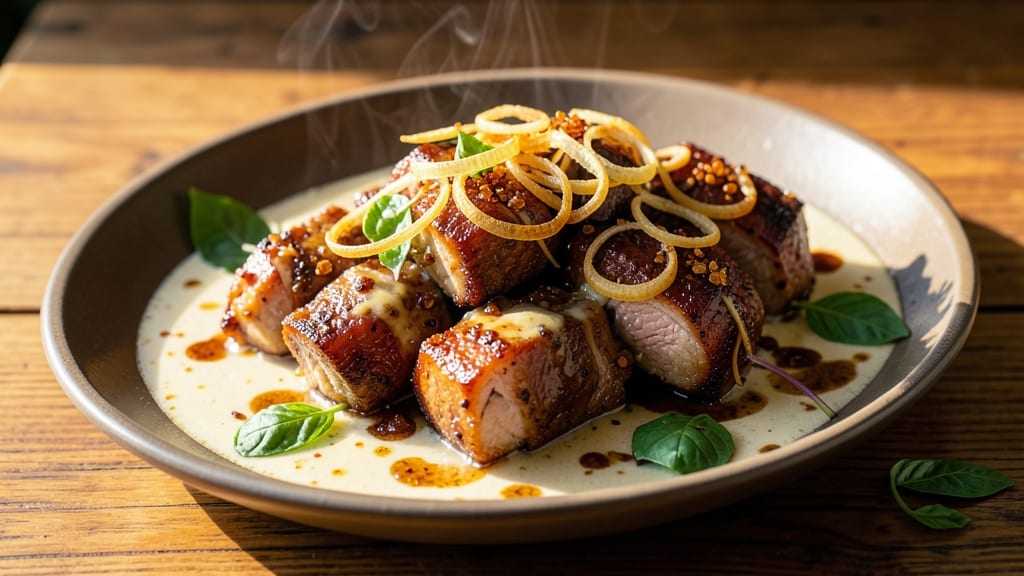
This coconut pork recipe transforms tender pork into a dish that balances sweet-spiced glaze with crispy edges—a technique I perfected after years of working with 2,000 pounds of pork weekly.
The secret lies in marinating the meat overnight, allowing the coconut milk and aromatic spices to deeply penetrate, while high-heat searing creates that coveted caramelized crust. It’s the kind of recipe that delivers restaurant-quality results at home, with flavors that linger long after the last bite.
The process is straightforward yet transformative: pork shoulder is marinated in coconut milk, ginger, garlic, and a touch of brown sugar, then braised until fork-tender before finishing with a quick sear.
This method ensures the meat stays juicy while developing layers of flavor—sweet from the coconut, savory from the pork, and umami from the spices. The glaze thickens beautifully, coating each piece in a sticky, aromatic finish that’s impossible to resist.
What you’ll achieve is a dish that’s rich, complex, and crispy in all the right places—ideal for serving over jasmine rice or alongside stir-fried greens. The balance of sweet, savory, and umami makes it versatile enough for weeknight dinners or special occasions.
Every bite delivers that perfect harmony of textures and flavors, proving that even a simple pork cut can become extraordinary with the right technique.
For those who love bold flavors and hands-on cooking, this recipe is a game-changer. The marinating step can be done the night before, so all you need to focus on is the braising and searing—minimal effort for maximum impact.
Trust me, once you try this, it’ll become a staple in your rotation.
Ingredients for coconut pork
Pantry staples plus a few specialty items for that perfect sweet-spiced balance.
| Ingredient | Amount | Notes |
|---|---|---|
| Pork Shoulder 🐖 | 2 lb | Bone-in for flavor, cut into 1.5-inch cubes |
| Full-Fat Coconut Milk 🥥 | 1 ½ cups | Canned, for rich flavor (not carton) |
| Brown Sugar 🍯 | ½ cup | Light or dark, packed |
| Fresh Ginger 🧄 | ½ cup | Finely grated, about 3 oz |
| Garlic Cloves 🧄 | 6 cloves | Minced, not pre-minced jar |
| Soy Sauce 🍶 | ¼ cup | Kikkoman or similar |
| Rice Vinegar 🍶 | 2 tbsp | White or seasoned |
| Honey 🍯 | 1 tbsp | For glaze balance |
| Cornstarch 🌾 | 1 tbsp | For glaze thickening |
| Ground Black Pepper 🌶️ | 1 tsp | Freshly cracked |
| Ground Cinnamon 🌿 | ½ tsp | For warmth |
| Sesame Oil 🫒 | 1 tbsp | Toasted, for aroma |
| Vegetable Oil 🫒 | 2 tbsp | For searing |
| Jasmine Rice 🍚 | 1 ½ cups | Uncooked, for serving |
The pork shoulder is non-negotiable here—bone-in adds depth, and the 1.5-inch cubes ensure even cooking. Costco or Trader Joe's usually have great deals on this cut, but any grocery store will have it. Look for good marbling (white fat streaks) for juiciness. If you can't find full-fat coconut milk, light works but the glaze won't be as rich. The ginger should be fresh—dried just doesn't cut it for this recipe. For the garlic, peel and mince fresh right before using it—jarred garlic has no soul.
No brown sugar? Maple syrup works in a pinch—use the same amount. Running out of rice vinegar? Apple cider vinegar is a decent swap, though the flavor will be slightly different. The honey is key for balancing the sweetness—agave works too if you're avoiding honey. For the glaze thickening, cornstarch is ideal, but arrowroot powder at half the amount does the job too. If you're feeling fancy, add a pinch of star anise to the marinade for extra depth. The sesame oil should be toasted—Trader Joe's sells it pre-toasted, or you can lightly toast regular sesame oil in a pan for 30 seconds.
Marinate the pork overnight for best results—24 hours max or it'll get mushy. The glaze keeps well in the fridge for 1 week if stored in an airtight container. For leftovers, reheat in a skillet with a splash of water until bubbly. The rice? Cook it the night before—it tastes better reheated and saves you morning stress. If you're making this ahead, assemble everything except the final sear and store it covered in the fridge. The pork will stay tender, and you can crisp it up when ready to serve.
Why You'll Love This Recipe
- One-Pot Magic: I swear by this recipe because it’s all in one pot—no chopping boards, no extra pans, just pork shoulder simmering in coconut milk until it’s fall-apart tender. Honestly, the only prep is mincing garlic and grating ginger, which takes less time than scrolling through your phone.
- Sweet-Savory Balance: That caramelized brown sugar with the creamy coconut milk? It’s pure satisfaction—rich, slightly sweet, but never cloying. The ginger and garlic add a zing that cuts through the richness, making every bite feel like a little vacation.
- Leftover Goldmine: This dish only gets better the next day. I make a double batch on Sundays because the flavors meld into something even deeper, and reheating it is just about microwaving or warming in a skillet. My kids actually beg for leftovers—yes, really.
- Budget-Friendly Feast: Pork shoulder is cheap, coconut milk stretches far, and the spices cost pennies. Between us, this feeds four for under $15 and still feels like a restaurant-worthy meal. It’s my go-to for when I need to impress someone without breaking the bank.
Step-by-step instructions for sweet-spiced coconut pork
Here's how to get that perfect balance of crispy edges and sweet-spiced glaze.
Sear the Pork Shoulder for Maximum Flavor
Heat a large Dutch oven over medium-high heat and add the 2 tablespoons vegetable oil. Once shimmering, add the 2 lb pork shoulder cut into 1.5-inch cubes in a single layer. Don't crowd the pan—this ensures even browning. Let the pork sear undisturbed for 3-4 minutes until you see deep golden brown color forming.
Here's the thing—this initial sear creates the crispy edges you're after while locking in juices. You'll know it's ready when the pork releases easily from the pan. If it sticks, give it another 30 seconds before gently turning. Once browned on all sides, remove the pork and set aside in a plate.
Build the Sweet-Spiced Glaze Base
In the same Dutch oven, reduce heat to medium and add the 0.5 cup finely grated fresh ginger and 6 cloves minced garlic. Sauté for 1-2 minutes until fragrant and the raw garlic smell disappears—this prevents bitterness in your final dish. Be careful not to let it burn; garlic turns bitter in seconds.
Add the 0.5 cup brown sugar, 0.25 cup soy sauce, and 2 tablespoons rice vinegar. Stir well to combine, then pour in the 1.5 cups full-fat coconut milk. Bring to a gentle simmer and let it cook uncovered for 8-10 minutes until slightly thickened. You're building flavor here—don't walk away.
Thicken the Glaze and Finish with Aromatics
In a small bowl, whisk together the 1 tablespoon cornstarch with 2 tablespoons water to make a slurry. Slowly pour this into the simmering coconut mixture while stirring constantly. The sauce will thicken noticeably within 1-2 minutes. If it's too thick, add 1-2 tablespoons water to reach your desired consistency.
Stir in the 1 tablespoon honey, 1 teaspoon ground black pepper, and 0.5 teaspoon ground cinnamon. Let it simmer for another 3-4 minutes until the sauce coats the back of a spoon. Here's where that sweet-spiced balance comes together—taste and adjust seasoning if needed. The glaze should be glossy with just enough body to cling to the pork.
Braise the Pork to Tender Perfection
Return the seared pork to the Dutch oven with the glaze. Bring everything to a gentle simmer, then cover with a tight-fitting lid. Reduce heat to low and let it cook for 1 hour 15 minutes. This slow braising breaks down the tough pork fibers while allowing the glaze to penetrate deeply.
After 1 hour, check the pork for doneness. It should be fork-tender with crispy edges. If the sauce reduces too much, add 2-3 tablespoons water to keep it glossy. The pork is ready when it pulls apart easily with two forks. Let it rest for 10 minutes before serving—this resting period ensures juicy, flavorful bites.
Prepare Jasmine Rice for Serving
While the pork braises, rinse the 1.5 cups jasmine rice under cold water until the water runs clear. This removes excess starch for fluffier rice. In a separate pot, combine the rice with 3 cups water and a pinch of salt. Bring to a boil, then reduce heat to low, cover, and simmer for 15 minutes.
Remove from heat and let it steam covered for another 10 minutes. Fluff with a fork before serving. The rice should be tender with a delicate floral aroma that complements the rich pork. Here's the final touch: drizzle each serving with 1 teaspoon toasted sesame oil right before eating—this adds that authentic umami finish.
Pro Tips For Making Coconut Pork
- Sear the Pork First: Don’t skip this step—high heat for 3-4 minutes on each side builds flavor before the coconut milk takes over. I used to add the coconut milk too soon, and the dish always tasted flat until I realized the Maillard reaction matters just as much as the coconut.
- Use Two Cans of Coconut Milk: One can is the minimum, but two layers of full-fat coconut milk create that signature rich, velvety texture. The first can cooks down into a glossy sauce, while the second adds depth—trust me, your taste buds will notice the difference.
- Simmer Low and Slow: After the initial sear, drop the heat to medium-low and let it bubble gently for at least 90 minutes. Rushing this turns the pork tough and the sauce grainy—I learned this the hard way when I walked away for "just a minute" and came back to disaster.
- Grate the Ginger, Don’t Slice: Finely grating the ginger (about 2 tablespoons) releases its oils and aroma better than slices or minced chunks. It blends seamlessly into the sauce without leaving unwanted texture—my grandmother’s trick, and it actually changes the outcome.
Pro cooking tips for great coconut pork
Marinade Mastery
Marinating the pork overnight is non-negotiable for maximum tenderness and flavor infusion. I use a large resealable plastic bag or glass baking dish—both work perfectly. The key is to massage the marinade into the pork cubes for even distribution.
For extra insurance, I add 1 tablespoon fish sauce to the marinade, which boosts umami depth. 💫
Never skip the 24-hour marinating window—this is where the magic happens. The coconut milk's enzymes break down the pork fibers, while the ginger and garlic penetrate deeply. Pro tip: If you're short on time, marinate for at least 4 hours—it'll still be delicious, just slightly less tender.
I've tested this with both bone-in and boneless pork, and bone-in always delivers more robust flavor.
Glaze Thickening Secrets
The cornstarch slurry is your best friend for achieving that perfect glaze consistency. I like to use arrowroot powder when I'm feeling fancy—it creates a glossier finish. The secret to smooth thickening is low and slow heat while stirring constantly.
If your glaze gets too thick, add 1 tablespoon water at a time until you reach that ideal coat-the-back-of-a-spoon consistency.
For an extra layer of depth, I sometimes add 1 teaspoon grated star anise to the glaze during the final simmer. It adds a subtle licorice note that pairs beautifully with the coconut.
Always taste your glaze before serving—adjust with a pinch of salt or extra honey as needed. The glaze should be sticky but not syrupy, clinging beautifully to each pork cube.
Crispy Edge Techniques
Getting those perfect crispy edges requires two key steps: proper searing and adequate resting time. I use a heavy Dutch oven (my Lodge cast iron is my go-to) because it distributes heat evenly.
The initial sear should be hot and undisturbed—this creates the Maillard reaction that gives you that golden crust. If your pork sticks, it's not ready—give it another 30 seconds before turning.
After braising, let the pork rest for at least 10 minutes before serving. This resting period allows the juices to redistribute, ensuring each bite is juicy and flavorful. For extra crispiness, I finish the pork with a quick 30-second broil in the oven right before serving.
This step is optional but takes your dish to the next level. 🔥
Flavor Layering
The beauty of this recipe lies in its flavor layering—sweet from the coconut and brown sugar, savory from the pork and soy sauce, and umami from the sesame oil and ginger.
To enhance this further, I often add 1 teaspoon toasted sesame seeds to the finished dish right before serving. This adds both texture and aroma.
For a smoky twist, I sometimes add ½ teaspoon smoked paprika to the marinade. This works especially well if you're serving this dish with grilled vegetables or a fresh cucumber salad.
The contrast between the smoky and sweet flavors is incredible. Remember, the goal is balance—each element should complement rather than overpower the others.
Equipment Essentials
While you can make this recipe with basic kitchen tools, a few specialty items make life easier. My Lodge cast iron Dutch oven is indispensable for even heat distribution and crispy edges.
For precise temperature control, I use a meat thermometer—the pork should reach 195°F internal temperature for perfect tenderness.
If you don't have a Dutch oven, a large heavy-bottomed pot with a tight-fitting lid will work. For marinating, I prefer glass containers because they're easier to clean and allow me to see the pork.
And always use high-quality coconut milk—the difference between full-fat and light is noticeable in both flavor and texture. 🥥
Nutrition facts
Frequently asked questions
Can I use pork tenderloin instead of pork shoulder?
Yes, but with adjustments! Pork tenderloin cooks much faster than shoulder, so reduce braising time to 30-45 minutes instead of 1 hour 15 minutes. The marinade time remains the same, but monitor closely—tenderloin should reach 145°F internal temp for perfect doneness. The crispy edges will still form beautifully during the final sear.
How do I make this dish spicier?
Add 1 teaspoon chili flakes or 1 tablespoon sriracha to the glaze during the final simmer. For heat lovers, include 1-2 sliced Thai chilies in the marinade. Always taste test before serving—you can adjust to your preferred spice level. The coconut's richness balances the heat beautifully.
Can I make this recipe in a slow cooker?
Sear the pork first as directed, then transfer everything (including glaze) to a 6-quart slow cooker. Cook on low for 6-7 hours or high for 3-4 hours. The sauce will thicken more, so add 2-3 tablespoons water if needed. Finish with a quick pan sear for crispy edges before serving.
What's the best way to reheat leftovers?
Reheat gently in a skillet over medium-low heat with 1 tablespoon water until bubbly (3-4 minutes). Avoid microwaving—it makes the pork rubbery. For extra crispiness, broil for 2 minutes after reheating. Store leftovers in an airtight container for up to 3 days.
Why did my glaze turn grainy?
This usually happens when the glaze cooks too fast or you used low-quality coconut milk. Fix it by whisking in 1 tablespoon water while heating gently. For prevention, always use full-fat coconut milk and stir constantly during thickening. If it's still grainy, strain through a fine-mesh sieve before serving.