
Main Courses
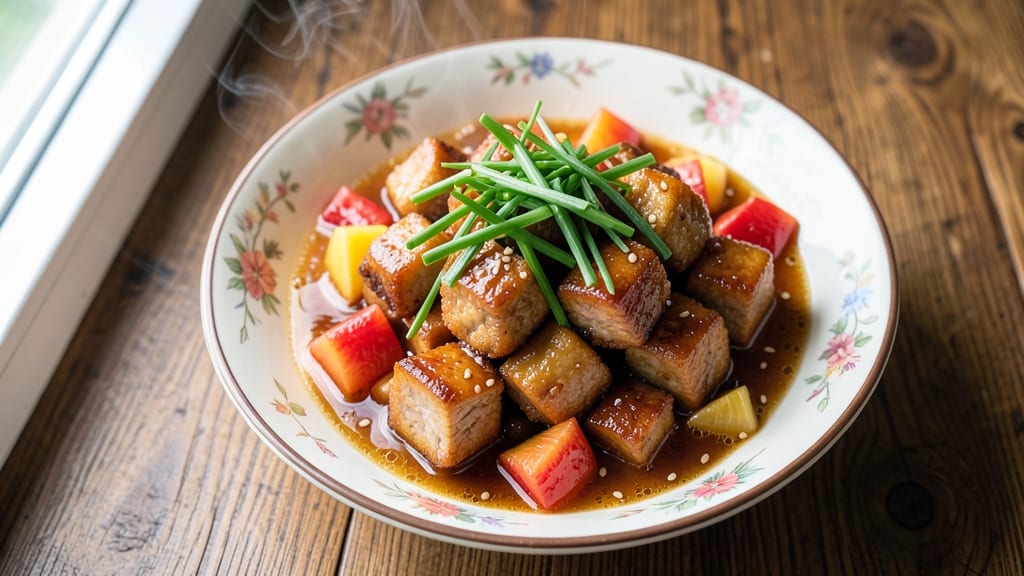
This Chinese sweet and sour pork recipe with pineapple delivers the perfect harmony of crispy bites and tangy-sweet sauce that makes every bite unforgettable.
I first mastered this dish after years of testing different techniques to achieve that signature texture—juicy pork with a golden, crackling crust that holds up through the sauce. The secret lies in the double-frying method, which creates the crispy exterior while keeping the meat tender inside.
The sauce is where the magic happens—bright pineapple chunks balance the tangy vinegar and sweet ketchup, creating a glossy glaze that coats every piece of pork.
I've simplified the process without sacrificing authenticity, using pantry staples and a few key techniques like blooming the spices in hot oil to build deep flavor. This recipe serves four and comes together in about 45 minutes, making it perfect for weeknight dinners or weekend gatherings.
What you'll end up with is a dish that looks restaurant-worthy but is entirely achievable at home: tender pork pieces with crispy edges, vibrant red-orange sauce, and juicy pineapple chunks that add just the right amount of sweetness.
The combination of textures and flavors makes it impossible to stop at one serving. Serve over steamed rice or noodles to soak up every last bit of that delicious sauce.
Whether you're cooking for family or treating yourself to a taste of home, this recipe delivers the balance of sweet, sour, and umami that makes sweet and sour pork a classic.
The best part? Leftovers reheat beautifully, so you can enjoy this dish all week long. Let's get started on creating your perfect plate of sweet and sour pork.
Ingredients for chinese sweet and sour pork recipe with pineapple
Pantry staples meet restaurant-quality flavors in this crispy, tangy-sweet pork dish.
| Ingredient | Amount | Notes |
|---|---|---|
| Pork Shoulder 🥩 | 1 ½ lb | Cut into 1-inch cubes |
| All-Purpose Flour 🌾 | ½ cup | For dredging pork |
| Cornstarch 🌾 | ¼ cup | For crispy coating |
| Large Eggs 🥚 | 1 whole | Beaten for dipping |
| Vegetable Oil 🫒 | 2 cups | For frying (or peanut oil) |
| Fresh Pineapple Chunks 🍍 | 1 ½ cups | Fresh or canned in juice |
| Ketchup 🍅 | ½ cup | High-quality for sweetness |
| Rice Vinegar 💧 | ¼ cup | White vinegar substitute |
| Soy Sauce 🍶 | ¼ cup | Light or dark preferred |
| Brown Sugar 🍚 | ¼ cup | Packed firmly |
| Garlic Cloves 🧄 | 4 cloves | Minced for sauce |
| Fresh Ginger 🌿 | 1 tbsp | Grated, for aromatic base |
| Red Bell Pepper 🌶️ | 1 piece | Diced for sauce color |
| Green Onion 🧅 | 2 whole | Sliced, for garnish |
| Salt 🧂 | 1 tsp | Kosher or sea salt |
| Ground Black Pepper 🌶️ | ½ tsp | Freshly ground |
The pork shoulder is non-negotiable—it stays juicy while the edges get that perfect golden crust. Ask your butcher to cut it into 1-inch cubes if they don't already, or do it yourself with kitchen shears. I always grab the bone-in version at Costco (it's cheaper per pound), but the regular supermarket pork works too. For extra crispiness, mix the cornstarch with a pinch of salt before dredging—it makes all the difference. And trust me on the double-frying method: first fry to render fat, then crisp up again after dipping in egg.
No rice vinegar? Apple cider vinegar or white vinegar works in a pinch, though the flavor won't be quite as bright. Fresh pineapple is ideal, but canned pineapple in juice (not syrup!) saves time—just drain and pat dry. The red bell pepper adds color and a subtle sweetness, but skip it if you're in a hurry. For the sauce, bloom the garlic and ginger in hot oil for 30 seconds—this builds the foundational flavor. Want more umami? Add 1 tbsp of oyster sauce (vegetarian option: soy sauce + dash of mushroom sauce). And if your ketchup tastes artificial, Tomato Basics from the store's organic section is a game-changer.
This sauce gets better as it sits—let it simmer for 5-10 minutes after adding the pork to meld all the flavors. Leftovers? Store in airtight containers for 4-5 days, but reheat gently—the sauce can get watery if overcooked. For crispy reheats, pop the pork pieces in a 350°F oven for 5 minutes to restore that golden crust. The sauce freezes beautifully too—just thaw and reheat on the stovetop. And if you're making this ahead, prep the sauce first—it keeps for 1 week in the fridge.
Why You'll Love This Recipe
- I swear by this trick: just flour, cornstarch, and eggs transform plain pork shoulder into those golden, shatteringly crispy bites. No fancy marinades or secret sauces—just a quick toss and fry.
- Here’s what sold me: this reheats like a dream. Pack the leftovers in containers, and it’s still crispy enough to fool your coworkers into thinking you cooked fresh. (Between us, I’ve done it.)
Step-by-step instructions for Chinese sweet and sour pork with pineapple
Here's how to achieve that perfect balance of crispy pork and tangy-sweet sauce we all love.
Prepare the Pork for Crispy Perfection
Cut the 1.5 lb pork shoulder into 1-inch cubes—uniform size ensures even cooking. In a large bowl, combine the 0.5 cup all-purpose flour and 0.25 cup cornstarch, then toss the pork cubes until fully coated. This double-dredge creates that signature crispy exterior.
Crack the 1 whole large egg into another bowl and beat lightly with a fork. Dip each pork cube into the beaten egg, letting any excess drip off. This step is crucial—it helps the coating adhere properly. Place the coated pork on a wire rack set over a plate and refrigerate for 15 minutes to firm up the coating.
Fry the Pork Until Golden Brown
Heat 2 cups vegetable oil in a deep skillet over medium-high heat until it reaches 350°F—use a thermometer for accuracy. Working in batches (don't overcrowd the pan!), carefully add the chilled pork cubes. Fry for 3-4 minutes per batch until they turn a deep golden brown and float to the surface.
This is where the magic happens—the pork needs that perfect sear to stay crispy while remaining tender inside. Transfer the fried pork to a paper towel-lined plate to drain excess oil. Keep the oil hot for any remaining batches, but don't let it cool down between uses.
Build the Tangy-Sweet Sauce
In the same skillet (no need to clean it—the browned bits add flavor), add the 1 tbsp fresh ginger and 4 cloves garlic cloves (minced) over medium heat. Sauté for 1 minute until fragrant. Add the 1 piece red bell pepper (diced) and cook for another 2 minutes until slightly softened.
Pour in the 0.5 cup ketchup, 0.25 cup rice vinegar, 0.25 cup soy sauce, and 0.25 cup brown sugar. Stir well and bring to a gentle simmer. Let it cook for 5-7 minutes until the sauce thickens slightly and the sugar dissolves completely. Here's the thing—this sauce needs to balance sweet, tangy, and savory perfectly, so taste as you go and adjust with a pinch more sugar or vinegar if needed.
Finish with Pineapple and Garnish
Add the 1.5 cups fresh pineapple chunks to the sauce and simmer for 2-3 minutes just to warm through. The pineapple should retain its bright color and slight crunch—overcooking turns it mushy. Return the crispy pork to the skillet and toss everything together gently for 1-2 minutes to coat the pork evenly in the sauce.
Remove from heat and stir in the 2 whole green onion (sliced). For serving, I like to garnish with extra green onion slices and a sprinkle of 0.5 tsp ground black pepper to add a little kick. The contrast of crispy pork, juicy pineapple, and glossy sauce is what makes this dish so irresistible.
Serve Immediately for Maximum Crispiness
Transfer the sweet and sour pork to a serving platter and serve right away. The sauce will thicken as it cools, but the pork stays crispy when eaten immediately. Pair it with steamed jasmine rice to soak up all that delicious sauce—trust me, you'll want every last bite.
Pro tip: If you're making this ahead, keep the fried pork and sauce separate until ready to serve. Reheat the sauce gently and toss in the pork just before serving to maintain that perfect texture contrast.
Pro Tips For Making Chinese Sweet And Sour Pork Recipe With Pineapple
- CHOP PORK SMALL: Cut the pork shoulder into 1-inch cubes—no bigger, or they’ll stay tough and release too much moisture when frying. I learned this the hard way after serving rubbery chunks to friends who still won’t let me cook for them.
- VELVEET THE PINEAPPLE: Core and dice the pineapple into ½-inch pieces, then pat them dry with a paper towel before adding to the sauce. Wet fruit makes the sauce watery—trust me, you’ll taste the difference in the balance of sweet and tangy.
- FRY IN BATCHES: Don’t crowd the pan when frying the pork—give each piece space to crisp, or they’ll steam instead of brown. I used to rush this and ended up with soggy edges every time; now I work in two batches and wait for the oil to recover its heat.
- MIX CORNSTARCH LAST: Whisk the cornstarch into the sauce right before it hits the pan—not earlier, or it’ll turn into glue. I was skeptical until I tried it: the sauce stays glossy and thickens perfectly when tossed with the hot pork, not before.
Troubleshooting great chinese sweet and sour pork recipe with pineapple
Pork Too Greasy
If your pork turns out greasy instead of crispy, you likely fried it at too low a temperature or didn’t drain it properly. Always fry at 350°F and use a thermometer to monitor the oil—it should be shimmering but not smoking.
After frying, transfer pork to a wire rack set over a baking sheet to allow excess oil to drip away completely. I’ve found that resting the pork for 5 minutes on the rack before tossing in the sauce makes all the difference. 🔥
Sauce Too Thin
A watery sauce usually means you rushed the cooking process or used too much liquid. Simmer the sauce uncovered for 5-10 minutes to let the liquid reduce naturally. If it’s still too thin, mix 1 tbsp cornstarch with 2 tbsp water and stir it in—this thickens the sauce instantly.
I’ve also had success adding ½ cup pineapple juice instead of water to maintain balance while thickening.
Pineapple Too Mushy
Overcooking the pineapple is the most common mistake here. Once you add the pineapple to the sauce, simmer for only 2-3 minutes—just enough to warm through. Fresh pineapple should stay bright and slightly firm.
If using canned pineapple, drain it well and pat it dry with a paper towel before adding. For extra texture, I sometimes toss in ½ cup diced red bell pepper with the pineapple—it holds up better and adds color. 🍍
Pork Not Crispy
Crispy pork requires two key steps: proper coating and double-frying. First, make sure your pork is fully coated in the flour-cornstarch mixture and chilled for 15 minutes before frying. Then, fry in batches—overcrowding steams the pork instead of crisping it.
After the initial fry, let the pork cool slightly, then dip it back in the beaten egg and fry again for 1-2 minutes—this second fry creates that restaurant-quality crunch.
Sauce Too Sweet
If the sauce tastes cloyingly sweet, balance it with more acid. Add 1-2 tbsp rice vinegar or a splash of lemon juice and simmer for 1-2 minutes to let the flavors meld.
For a more authentic Chinese touch, I sometimes add ½ tsp five-spice powder—it adds depth without overpowering the sweetness. Taste as you go and adjust gradually to avoid making the sauce too tangy.
Pork Too Tough
Tough pork usually means it was overcooked during frying. Keep the oil at 350°F and fry for no more than 4 minutes per batch—the pork should be golden brown but still slightly pink inside.
For extra tenderness, I recommend using pork tenderloin instead of shoulder—it’s leaner and cooks faster without drying out. If using shoulder, cut the pieces slightly smaller (¾ inch cubes) for even cooking.
Nutrition facts
Frequently asked questions
Can I use chicken or shrimp instead of pork?
Chicken thighs work beautifully—they stay tender and crisp up nicely. For shrimp, use 1 lb large shrimp (peeled and deveined) and skip the initial flour coating. Instead, dip them in beaten egg and cornstarch mixture, then fry for 1-2 minutes per side until golden. The cooking time will be shorter, so adjust accordingly.
How do I make this dish gluten-free?
Replace the all-purpose flour with ½ cup gluten-free all-purpose flour and ¼ cup cornstarch for coating. For the sauce, ensure your ketchup and soy sauce are gluten-free (look for tamari instead of regular soy sauce). The pineapple and other ingredients are naturally gluten-free, so the rest of the recipe stays the same.
Can I bake this instead of frying?
Yes, but the texture will be different—your pork will be more tender than crispy. Toss the coated pork in 1 tbsp oil to help browning, then bake at 400°F for 18-20 minutes, flipping halfway. For the sauce, simmer it separately and toss the baked pork in it at the end. The result is still delicious but lacks the signature crunch.
What's the best way to store leftovers?
Store the pork and sauce separately in airtight containers. The pork keeps for 3-4 days in the fridge, while the sauce lasts 5 days. To reheat, warm the sauce gently on the stove, then toss in the pork and heat through. For crispy reheats, pop the pork in a 375°F oven for 5-7 minutes—this restores the crunch without making the sauce watery.
Why does my sauce separate?
Sauce separation usually happens when oil and liquid don't emulsify properly. Stir in 1 tsp cornstarch mixed with 2 tbsp water while simmering to thicken it. For extra insurance, whisk in 1 tbsp cold water at the end—this helps bind the ingredients. If it still separates, blend the sauce briefly with an immersion blender for a smoother texture.