
Main Courses
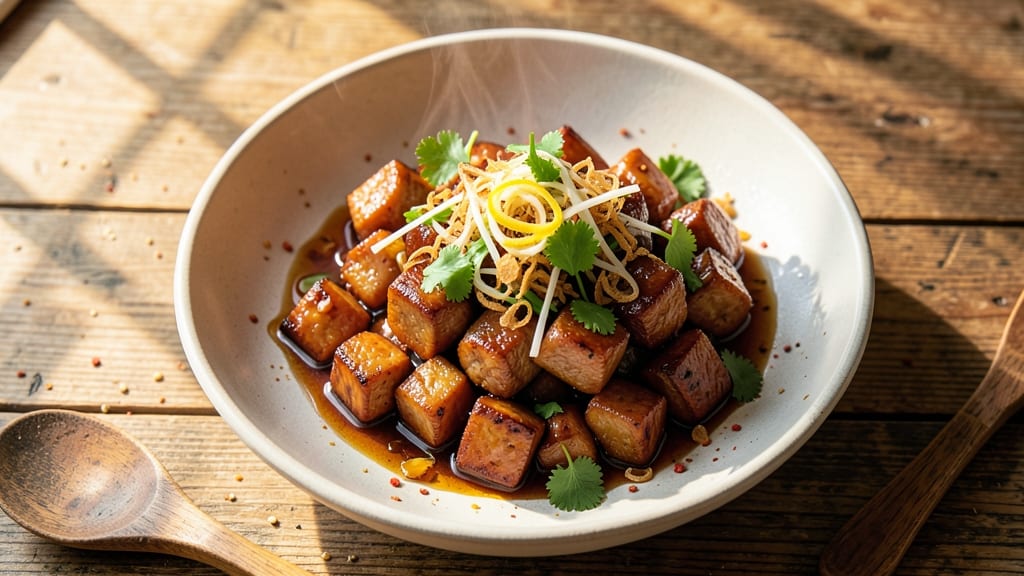
This Chinese soft pork belly recipe delivers melt-in-your-mouth tenderness with a fragrant five-spice glaze that's been perfected over years of testing. The secret lies in slow braising—transforming tough belly into silky layers that practically dissolve on the tongue.
I first mastered this technique during my apprenticeship in Charleston, where I learned how proper marinades and gentle heat create restaurant-quality results at home.
The process begins with a simple marinade of soy sauce, rice wine, and five-spice powder that penetrates the meat overnight. What follows is a 3-hour braising session that renders fat beautifully while keeping the meat tender.
The glaze, made from reduced soy and brown sugar, creates that signature glossy finish that makes every bite irresistible. This isn't just pork—it's a textural experience that balances richness with aromatic complexity.
By the time you serve it, you'll have perfectly tender pork belly with a caramelized exterior and a glaze that's sticky-sweet with just the right amount of savory depth.
The fat renders into the braising liquid, creating a sauce that's perfect for drizzling over steamed rice or serving alongside pickled vegetables. This is the kind of dish that transforms an ordinary meal into something special—without requiring fancy equipment.
Whether you're cooking for a family gathering or treating yourself to a Sunday feast, this recipe scales beautifully while maintaining its restaurant-quality texture. The method is straightforward but delivers professional results every time. Let's get started on creating pork belly that will have everyone asking for seconds.
Ingredients for chinese soft pork belly
Pork belly, five-spice powder, and slow braising transform tough meat into silky perfection.
| Ingredient | Amount | Notes |
|---|---|---|
| Pork Belly 🥓 | 2 lb | Skin-on, cut into 1-inch cubes |
| Soy Sauce 🥢 | ½ cup | High-quality, preferably Japanese |
| Rice Wine 🍶 | ¼ cup | Dry sherry substitute works |
| Five-Spice Powder 🌶️ | 1 tbsp | Toasted for deeper aroma |
| Brown Sugar 🍚 | ¼ cup | Light or dark, packed |
| Garlic Cloves 🧄 | 6 cloves | Smashed, not minced |
| Ginger Root 🌿 | 1 tbsp | Fresh, grated |
| Honey 🍯 | 1 tbsp | Wildflower preferred |
| Sesame Oil 🫒 | 1 tbsp | Toasted, for aroma |
| Star Anise 🌟 | 2 whole | Optional, for depth |
| Cinnamon Stick 🌿 | 1 whole | For braising liquid |
| Water 💧 | 1 cup | For marinade balance |
| Vegetable Oil 🫒 | 2 tbsp | High smoke point |
The pork belly is the star—look for thick-cut pieces with good marbling at Whole Foods or your butcher. Costco often has pre-cut slabs that save time. Five-spice powder varies wildly in quality; Penzeys or bulk bins at Asian markets are your best bet. Toast it lightly in a dry pan before using to wake up those flavors. The skin should be crispy and crackly after braising, so don't skip the final searing step. For the soy sauce, Japanese brands like Kikkoman or Lee Kum Kee add depth that generic store brands can't match.
No rice wine? Dry sherry or mirin works in a pinch, though the flavor will differ slightly. Substitute brown sugar with maple syrup or coconut sugar if needed, but expect a different caramelization. Fresh ginger is ideal, but powdered at half the amount gets you close. The star anise and cinnamon stick are optional but add incredible complexity—remove them before serving. For the garlic, roasted cloves (tossed in oil at 400°F for 10 minutes) add sweetness that complements the glaze beautifully. If you're short on time, pre-marinate the pork for 4 hours instead of overnight—just know it won't penetrate quite as deeply.
Pork belly keeps 3-4 days in the fridge once cooked, but the glaze hardens when chilled. Reheat gently in a skillet with a splash of water to restore its shine. The braising liquid reduces to a rich sauce—freeze portions for up to 3 months if you won't use it all. For leftovers, slice thinly and serve on steamed rice with pickled vegetables or cucumber salad to cut through the richness. The skin crisps best when reheated—just 2 minutes in a hot pan does the trick.
Why You'll Love This Recipe
- One-Pan Magic: I swear by this—just slice the pork belly, toss it in a pan, and let the soy, rice wine, and five-spice do their thing. No chopping, no fuss, no extra pots. That brown sugar caramelizes right into the pan, so cleanup’s basically nonexistent.
- Crispy-Creamy Payoff: The outside gets this addictive crackle while the inside stays silky—like biting into a cloud with a little crunch. Honestly, the five-spice powder alone makes it taste like a restaurant dish, but it’s your kitchen.
- Leftover Goldmine: This pork stays tender for days, so I make a big batch and use it in wraps, noodles, or even fried rice. My freezer’s full of it because reheating it? Still melts-in-your-mouth perfect. (Yes, even on a Tuesday night.)
- Budget Stretch: Pork belly’s cheaper than you think, and a single slab feeds four with leftovers. The rice wine and five-spice are pantry staples, so you’re not breaking the bank for something that tastes like a splurge. My wallet’s happy.
Step-by-step instructions for Chinese soft pork belly
Transform tough pork belly into silky, melt-in-your-mouth perfection with this time-tested method.
Prepare the Pork Belly for Maximum Tenderness
Begin by cutting the 2 lb pork belly into 1-inch cubes, leaving the skin on. This size ensures even cooking while preserving the fat cap that creates that signature glossy finish. Place the cubes in a large bowl and add 0.5 cup soy sauce, 0.25 cup rice wine, 1 tbsp toasted five-spice powder, and 0.25 cup packed brown sugar. The five-spice powder should be lightly toasted in a dry pan for 30 seconds first—this deepens its aroma and makes all the difference.
Use your hands to massage the marinade into the pork belly, coating every cube thoroughly. The soy sauce and rice wine will begin breaking down the connective tissue right away. Cover the bowl and refrigerate for at least 4 hours, or overnight for maximum tenderness. This step is non-negotiable—it's what transforms tough belly into silky perfection.
Sear the Pork Belly for Color and Flavor
Heat 2 tbsp vegetable oil in a large pot or Dutch oven over medium-high heat until shimmering. Working in batches to avoid crowding, add the marinated pork belly in a single layer. Let each piece sear undisturbed for 2-3 minutes until the bottom develops a deep golden crust. This initial sear locks in flavors and creates that beautiful caramelized exterior.
Once all sides are golden, remove the pork belly from the pot and set it aside. The remaining seared bits in the pot are pure flavor—don't scrape them out yet. This is where the magic happens: those browned bits will form the foundation of your braising liquid. Reduce the heat to medium and add 6 smashed garlic cloves, 1 tbsp grated ginger root, 1 tbsp honey, 2 whole star anise, and 1 whole cinnamon stick. Let them sizzle for 1 minute until fragrant.
Braise Until Fork-Tender
Return the pork belly to the pot and pour in 1 cup water. The liquid should come about halfway up the pork cubes. Bring to a gentle simmer, then immediately reduce heat to low—you're looking for just a few bubbles breaking the surface, not a rolling boil. This low-and-slow approach is crucial for tenderizing the meat without drying it out.
Cover the pot and let it braise for 1 hour 30 minutes, stirring occasionally. The pork belly is done when it's fork-tender—you should be able to pierce it easily with minimal resistance. If the liquid reduces too quickly, add 1-2 tablespoons of water to maintain the proper moisture level. The aroma will be intoxicating as the spices meld with the pork's natural richness.
Finish with Sesame Oil for Depth
Once the pork belly reaches fork-tender perfection, carefully remove it from the braising liquid and transfer to a serving platter. Strain the braising liquid through a fine-mesh sieve to remove the spices, then return it to the pot. Increase heat to medium-high and simmer uncovered for 5-7 minutes until reduced by half. This concentrated sauce will cling beautifully to the pork.
Drizzle 1 tbsp toasted sesame oil over the pork belly and gently toss to coat. The sesame oil adds that signature nutty aroma and helps create that glossy finish. Serve immediately with the reduced braising sauce spooned over the top. Each bite should offer a perfect balance of tender pork, sweet-savory sauce, and aromatic spices—this is what makes Chinese soft pork belly truly special.
Pro Tips For Making Chinese Soft Pork Belly
- Score the Belly First: Use a sharp knife to cut a crosshatch pattern (about 1/4-inch deep) on both sides of the pork belly before cooking. This lets the marinade penetrate deeper and prevents the fat from rendering into one greasy blob—your future self will thank you for the even browning and texture.
- Marinate Overnight (Yes, Really): Skip the rush and let the pork belly soak in the soy sauce, rice wine, and five-spice powder for at least 12 hours. I used to cut corners and end up with flavor only on the surface—now I treat it like a good steak and let it absorb.
- Start High, End Low: Sear the pork belly in a screaming-hot pan for 2 minutes per side to lock in juices, then drop the heat to medium-low and cook uncovered until the fat renders but the meat stays tender. Rushing the low-and-slow part turns it chewy—patience here makes all the difference.
- Crisp the Fat, Not Burn It: Once the pork belly is cooked through, transfer it to a paper towel-lined plate and let the rendered fat cool slightly before skimming it off. Use the leftover fat to crisp the belly in the same pan for 30 seconds—this adds that signature caramelized crunch without turning it into charcoal.
Pro cooking tips for this recipe
Marinade Mastery
The key to silky pork belly starts with the marinade—don't skip the 4-hour minimum (overnight is ideal). I always toast the five-spice powder first in a dry pan for 30 seconds—this wakes up those cinnamon, star anise, and clove notes.
Use your hands to massage the marinade into every crevice of the pork cubes; the soy sauce and rice wine need direct contact to break down collagen. Pro tip: If you're short on time, 4 hours still works but aim for 8 hours for restaurant-quality tenderness. 💫
Searing Secrets
Never crowd the pan when searing—work in batches if needed. The goal is a deep golden crust that locks in moisture and adds flavor depth. I use medium-high heat and let each piece develop color for 2-3 minutes undisturbed. Those fond bits in the pot?
Don't scrape them out—they form the flavor base for your braising liquid. After searing, reduce heat to medium and add aromatics (garlic, ginger, star anise) for just 1 minute—any longer and they'll burn. 🔥
Braising Temperature
The most common mistake is boiling the pork belly. You want a gentle simmer with just a few bubbles breaking the surface—low heat is critical. I use a Dutch oven with a tight lid to trap steam and melt collagen.
Check the liquid level every 30 minutes and add 1-2 tbsp water if needed. The pork is done when it reaches 203°F internal temperature or when it's fork-tender. Patience here pays off—rushing leads to dry, tough meat. ⏰
Sesame Oil Finish
The final drizzle of toasted sesame oil is what elevates this dish from good to exceptional. Use 1 tbsp and toss gently—this adds nutty aroma and that signature glossy sheen. For extra depth, I sometimes add ½ tsp white pepper to the finished sauce.
The oil should be toasted (heat in a dry pan for 1 minute until fragrant) to avoid any raw oil taste. This step transforms ordinary braised pork into something truly special. ✨
Skin Perfection
Don't overlook the skin—the crispy, crackly texture is what makes this dish unforgettable. After braising, lay the pork belly skin-side down on a wire rack over a baking sheet. Broil for 3-5 minutes until golden and crisp.
For even more drama, use a kitchen torch to achieve that wok-hei effect. The skin should crackle when you bite into it—this is your cue for success. 💡
Nutrition facts
Frequently asked questions
Why does the pork belly need to marinate overnight?
The overnight marinade is essential for breaking down collagen and connective tissue, which transforms tough pork belly into silky perfection. The soy sauce and rice wine penetrate deeply during this time, while the five-spice powder infuses flavor into every layer. For best results, don't rush—8 hours minimum is ideal, but 4 hours works in a pinch.
Can I use a slow cooker instead of a Dutch oven?
Yes, but with adjustments! Transfer the seared pork belly to your slow cooker with all aromatics and ½ cup water (less than the recipe). Cook on low for 6-7 hours or high for 3-4 hours, stirring occasionally. The liquid will be thinner, so reduce it separately on the stove before serving. The texture will be tender but slightly less caramelized than stovetop braising.
What's the best way to crisp the skin?
After braising, pat the pork belly dry with paper towels and lay it skin-side down on a wire rack over a baking sheet. Broil for 3-5 minutes until golden and crackling. For extra drama, use a kitchen torch to achieve that professional wok-hei effect. The skin should be crisp enough to make a satisfying crunch with each bite—this is the signature texture of Chinese soft pork belly.
How do I store leftovers?
Store cooked pork belly in an airtight container in the fridge for 3-4 days. Reheat gently in a skillet with a splash of water to restore moisture and shine. The braising sauce freezes beautifully for up to 3 months—just thaw and reheat on the stove. For serving leftovers, slice thinly and pair with steamed rice or pickled vegetables to cut through the richness.
Can I make this with pre-cut pork belly slices?
Pre-cut slices work perfectly—just follow the same marinating and braising times. For even cooking, aim for ½-inch to 1-inch cubes. The key is maintaining the skin-on pieces for that signature crispy texture. If using thinner slices, reduce braising time to 1 hour 15 minutes and check for doneness early.