
Main Courses
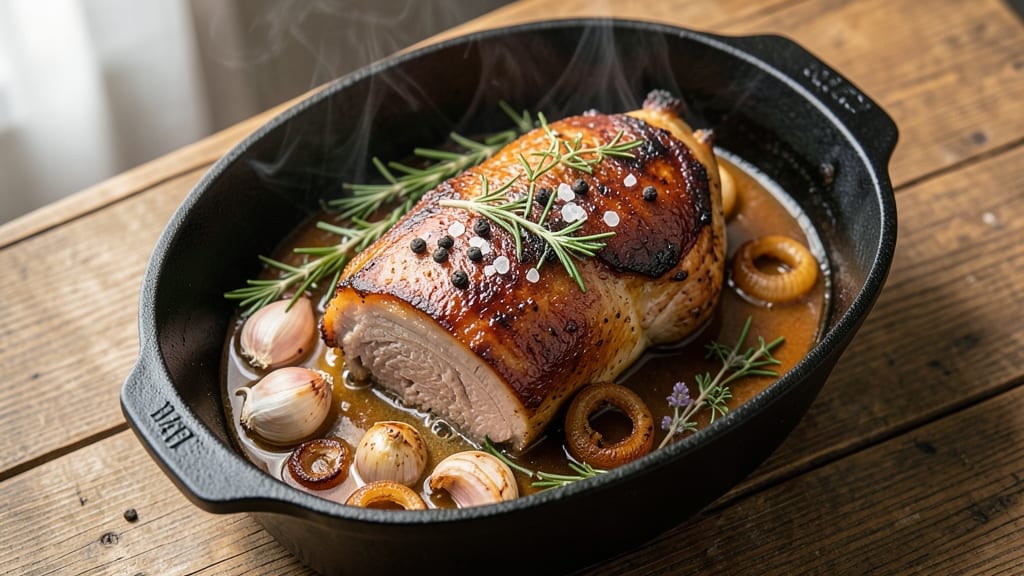
This boneless pork shoulder roast recipe transforms tough cuts into melt-in-your-mouth perfection using a Dutch oven's slow, even heat. The secret lies in low-and-slow braising, where collagen dissolves into rich, velvety sauce that coats every bite.
After years of perfecting the technique, I’ve developed a method that guarantees shatter-tender results—no guesswork, no overcooking, just restaurant-quality meat at home.
The process starts with a simple brine to enhance flavor and moisture, followed by a quick sear to lock in juices. Then, the Dutch oven takes over, cooking the pork gently in its own juices until it reaches 145°F—the ideal temperature for pork that’s fork-tender yet still juicy.
The best part? The same liquid that braises the meat becomes a flavorful sauce for serving, reducing to a perfect consistency without any extra effort.
What you’ll end up with is a foolproof dish that’s rich, aromatic, and impossible to resist—ideal for family dinners or special occasions.
The meat falls apart at the touch of a fork, and the sauce clings to every bite, making it a showstopper that pairs beautifully with roasted vegetables, mashed potatoes, or crusty bread. This isn’t just a recipe; it’s a game-changer for anyone who loves slow-cooked pork.
Whether you’re feeding a crowd or treating yourself to a luxurious meal, this method delivers consistent, professional results every time. The Dutch oven ensures even cooking, while the hands-off approach means minimal monitoring. Ready to master this technique? Let’s get started.
Ingredients for boneless pork shoulder roast recipe dutch oven
Six ingredients transform tough pork into restaurant-quality melt-in-your-mouth perfection using Dutch oven precision.
| Ingredient | Amount | Notes |
|---|---|---|
| Boneless Pork Shoulder Roast 🥓 | 4 lb | Trimmed of excess fat, 1-1.5 inch thickness |
| Kosher Salt 🧂 | ½ cup | Diamond Crystal preferred for precision |
| Fresh Black Peppercorns 🌶️ | 1 tbsp | Coarsely cracked for texture |
| Fresh Thyme Sprigs 🌿 | 8 whole | Stems removed for infusion |
| Fresh Rosemary Sprigs 🌿 | 4 whole | Woody stems removed |
| Garlic Cloves 🧄 | 8 cloves | Smash lightly for aromatic release |
| Yellow Onion 🧅 | 1 whole | Cut into 1-inch chunks |
| Carrots 🥕 | 4 whole | Cut into 2-inch chunks |
| Celery Stalks 🥬 | 4 whole | Cut into 2-inch pieces |
| Dry White Wine 🍷 | 1 cup | Sauvignon Blanc or Pinot Grigio |
| Chicken Stock 💧 | 2 cups | Homemade or high-quality store-bought |
| Olive Oil 🫒 | ¼ cup | Extra-virgin for searing |
| Fresh Parsley 🌿 | ¼ cup | Chopped for garnish |
The pork shoulder is the foundation—look for cuts with good marbling and even thickness. Butcher shops often have better quality than grocery stores, but the standard 4-lb boneless roast from Whole Foods or Costco works perfectly. Trim any large fat deposits, but leave some for flavor and moisture. Fresh herbs are non-negotiable here: Trader Joe's carries excellent thyme and rosemary bundles, or grow your own for peak flavor. The garlic should be firm and plump, not sprouting. For the wine, any dry white will work—Sutter Home is a budget-friendly option that still delivers great acidity.
No fresh herbs? Dried thyme and rosemary at one-third the amount will suffice, though the flavor won't be as bright. Substituting red wine for the white is fine—just add 1 tsp balsamic vinegar per cup to mimic the acidity. Chicken stock can be swapped for vegetable stock if preferred, though the umami depth will differ slightly. The onions, carrots, and celery form the aromatic base—collectively called a mirepoix—so don't skip them. For a deeper flavor, char the vegetables slightly before adding them to the Dutch oven. Prefer a richer sauce? Add 1 tbsp tomato paste with the wine.
The pork keeps best in the fridge for 3-4 days after cooking, though it tastes even better the next day as flavors meld. For longer storage, portion into airtight containers and freeze for up to 3 months. The braising liquid reduces significantly—use it immediately or store it in the fridge for 5 days to use as a base for gravy. Reheat gently on the stove, adding a splash of water or stock if it thickens too much. Leftovers reheat beautifully in a 350°F oven for 20-30 minutes, covered with foil.
Why You'll Love This Recipe
- Dutch Oven Magic: The pork shoulder practically cooks itself—just salt, pepper, and herbs, then let the Dutch oven do the work while you sip wine or fold laundry. Honestly, the hands-off time is my favorite part.
- Crispy-Creamy Payoff: That rosemary and thyme clinging to the outside? It caramelizes into a fragrant crust while the inside stays tender enough to melt. I’ll be real: it’s the kind of bite that makes people pause mid-conversation.
- Leftovers That Don’t Suck: Cold slices the next day are still juicy, and I’ve turned them into sandwiches, tacos, and even a quick stir-fry. Between us, this roast is my secret weapon for lazy lunches.
- Budget-Friendly Feast: Pork shoulder stretches across meals without breaking the bank—one roast feeds my family dinner and lunches for days. Plus, the herbs are cheap, and you’ll use every last bit of flavor.
Step-by-step instructions for Dutch oven braised pork shoulder
Master this low-and-slow technique for meat that falls apart at the touch.
Season and Sear the Pork Shoulder
Begin by patting the 4 lb boneless pork shoulder roast completely dry with paper towels—this ensures maximum browning. In a small bowl, combine the 0.5 cup kosher salt and 1 tbsp coarsely cracked fresh black peppercorns. Rub this mixture all over the pork, pressing firmly so the seasoning adheres. Let it sit at room temperature for 30 minutes while you prepare the Dutch oven.
Heat the Dutch oven over medium-high heat until hot. Add the 0.25 cup extra-virgin olive oil and swirl to coat the bottom evenly. Place the pork shoulder fat-side down in the pan and sear undisturbed for 8-10 minutes until a deep golden-brown crust forms. Flip carefully and sear the other side for another 6-8 minutes. This initial searing locks in juices and builds flavor through the Maillard reaction.
Build the Aromatic Vegetable Base
Remove the pork from the Dutch oven and set it aside. In the same pot, add the 1 whole yellow onion, 4 whole carrots, and 4 whole celery stalks, all cut into 2-inch chunks. Cook the vegetables over medium heat for 8-10 minutes, stirring occasionally, until they begin to soften and develop a golden hue. This step develops the foundational flavors of your braise.
Add the 8 lightly smashed garlic cloves, 8 whole fresh thyme sprigs (stems removed), and 4 whole fresh rosemary sprigs (woody stems removed) to the pot. Stir for 1-2 minutes until the garlic becomes fragrant. Pour in the 1 cup dry white wine and scrape up any browned bits from the bottom of the pot with a wooden spoon. Let the wine simmer for 3-4 minutes until reduced by half.
Braise with Liquid and Stock
Return the pork shoulder to the Dutch oven, fat-side up. Pour in the 2 cups chicken stock, ensuring the pork is mostly submerged. Bring the liquid to a gentle simmer, then reduce heat to low. Cover the Dutch oven with its lid and transfer to a preheated 300°F oven. Braise for 3 hours, then carefully flip the pork and add enough water or stock to maintain 1 inch of liquid above the meat.
Continue braising for an additional 2-3 hours, or until the pork reaches an internal temperature of 203°F and is fork-tender. The meat should pull apart easily with two forks, and the cooking liquid should have reduced significantly. This low-and-slow process breaks down collagen and transforms tough muscle fibers into silky, shatter-tender meat.
Rest and Garnish
Remove the pork shoulder from the Dutch oven and transfer it to a cutting board. Tent loosely with aluminum foil and let it rest for 30 minutes. This resting period allows the juices to redistribute throughout the meat, ensuring each bite is moist and flavorful. Discard the thyme and rosemary sprigs, then strain the braising liquid through a fine-mesh sieve into a clean saucepan if desired.
Reduce the cooking liquid over medium heat until slightly thickened, then stir in the 0.25 cup chopped fresh parsley. Slice the pork shoulder against the grain into ½-inch thick pieces and serve immediately with the reduced braising sauce spooned over the top. The result should be meat that practically melts in your mouth with rich, complex flavors from the slow-cooked vegetables and aromatics.
Pro Tips For Making Boneless Pork Shoulder Roast Recipe Dutch Oven
- CRANK THE HEAT FIRST: High heat for the first 5 minutes—this isn’t the time to be gentle. You’re searing, not simmering, so get that Dutch oven screaming hot before the pork touches it. I used to rush this, and the meat just steamed instead of developing that deep, caramelized crust.
- SALT THE PORK TWICE: Do it now, then again an hour before cooking. The first layer draws out moisture—let it sit uncovered in the fridge while you prep. The second layer locks in flavor right before it hits the pot. Trust me, your pork won’t taste bland if you’re aggressive with the salt.
- DON’T SKIP THE THYME SPRIGS: Yes, they’re small, but those sprigs infuse flavor better than chopped herbs ever will. Tuck them under the meat and around the edges of the Dutch oven—where the heat’s hottest. Chopped thyme burns faster and adds bitterness you won’t notice until it’s too late.
- USE A MEAT THERMOMETER: Pull the pork at 195°F, not when it looks done. I’ve had it fall apart at 190°F because I eyeballed it, and I’ve had it dry at 205°F because I ignored the temp. The Dutch oven traps moisture, but timing is everything—wait for that internal temp, then rest it.
Creative variations of this recipe
Global Comfort Twist
Transform this classic into a Caribbean-inspired dish by adding 2 tbsp soy sauce and 1 tbsp lime juice to the braising liquid. Swap the white wine for ½ cup coconut milk (light can) and add 1 tsp ground allspice for warmth.
Serve with black beans and rice for a fusion meal that feels both familiar and exciting. 🌴
Spicy Korean-Inspired
For a Korean-inspired version, marinate the pork overnight in 2 tbsp gochujang (Korean chili paste), 1 tbsp soy sauce, and 1 tbsp brown sugar. After searing, add 1 cup kimchi (chopped) and 1 tbsp sesame oil to the Dutch oven with the wine.
Garnish with toasted sesame seeds and serve with steamed rice and quick-pickled cucumbers.
Italian-Inspired Braciola
Turn this into an Italian-style braciola by wrapping the pork shoulder in 8 slices of prosciutto before braising. Add 1 cup crushed tomatoes and 1 tsp dried oregano to the Dutch oven with the wine.
Finish with a sprinkle of grated Parmesan and fresh basil. Serve with polenta or crusty bread to soak up the rich sauce. 🍝
Smoky BBQ Fusion
For a smoky BBQ twist, add ½ cup BBQ sauce (like Sweet Baby Ray's) to the braising liquid. Sprinkle the pork with 1 tbsp smoked paprika before searing.
Top with pickled red onions and serve with cornbread or coleslaw. This version keeps the Dutch oven method while delivering bold, tangy flavors. 🔥
Moroccan-Inspired Tagine
Infuse the dish with Moroccan spices by adding 1 tsp ground cumin, 1 tsp ground coriander, and ½ tsp cinnamon to the pork rub. Use orange juice instead of wine and add 1 tbsp honey to the braising liquid.
Garnish with toasted almonds and serve with couscous or crusty flatbread. The warm spices elevate the dish to new heights. 🌿
Herb-Forward French Style
For a French bistro vibe, add 4 sprigs fresh tarragon and 2 sprigs fresh parsley to the aromatics. Deglaze with ½ cup dry vermouth instead of wine and finish with a splash of cognac (flambé carefully!).
Serve with buttery mashed potatoes and sautéed green beans. This version feels elegant yet approachable. ✨
Nutrition facts
Frequently asked questions
Why do I need to sear the pork shoulder before braising?
The sear creates a flavorful crust through the Maillard reaction, locking in juices and building depth. Without it, the meat would taste bland and dry. Aim for a deep golden-brown on both sides—this takes 14-16 minutes total for a 4 lb roast.
Can I use bone-in pork shoulder instead?
Yes, but adjust the cooking time—bone-in takes 1-2 extra hours to reach 203°F internally. The bone adds flavor but requires more liquid (add ½ cup extra stock) to prevent drying. For best results, trim excess fat to avoid greasy braising liquid.
What if my Dutch oven isn't deep enough?
Use a heavy pot with a tight-fitting lid instead—any 5-6 quart Dutch oven substitute works. If liquid overflows, reduce to 1 inch above the meat. For extra insurance, add ½ cup water every hour to maintain moisture. The key is keeping the pork submerged!
How do I fix meat that's still tough after cooking?
Overcooking is the usual culprit—check internal temp with a meat thermometer. If it's 203°F but still tough, shred it aggressively against the grain and blend with some braising liquid into a pulled pork. For future attempts, reduce oven temp to 275°F and braise 4-5 hours total. Patience is key!
Can I make this ahead of time?
Cook the pork 1-2 days ahead—flavors deepen as it rests. Reheat in a 300°F oven for 30 minutes with fresh braising liquid. For meal prep, store components separately: cooked pork, reduced sauce, and veggies. Assemble just before serving to maintain texture.