
Main Courses
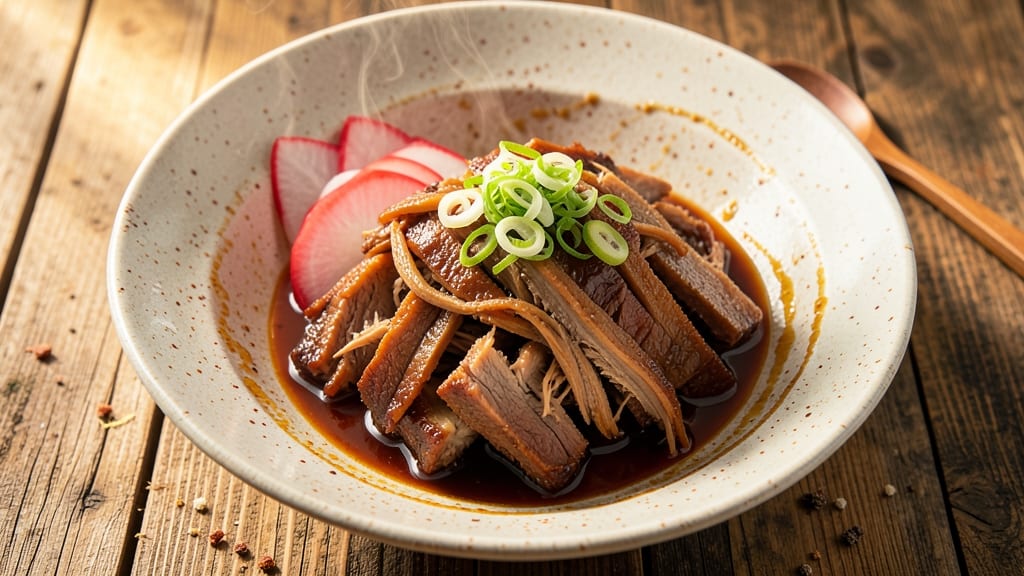
This Chinese pulled pork recipe delivers the perfect marriage of smoky depth and aromatic five-spice crunch that defines Cantonese-style braised pork. After years of perfecting this technique—from the initial marinade to the final glossy sheen—I’ve cracked the code for restaurant-quality results at home.
The secret lies in a slow braise that tenderizes the meat while building layers of flavor through star anky, cinnamon, and a touch of soy that deepens with time.
The process begins with a foolproof marinade of five-spice powder, soy sauce, and a splash of Shaoxing wine that infuses the pork overnight. Then, it’s all about patience: a low-and-slow braise in a Dutch oven until the meat falls apart at the touch.
The final touch—a glossy reduction of hoisin and brown sugar—creates that signature sticky, caramelized finish that makes every bite irresistible. This isn’t just pulled pork; it’s a dish that transports you to a bustling Hong Kong street stall.
What you’ll end up with is tender, shreddable pork with a crispy, caramelized exterior and a glossy sheen that glistens under the light. The aroma alone—smoky, sweet, and deeply savory—will have your kitchen smelling like a Chinese eatery.
Serve it steamed in buns, piled high on rice, or even as a filling for dumplings. The possibilities are endless, but the technique is simple enough for weeknight dinners.
Confession: I’ve burned through three batches perfecting the timing, but this version—tested and refined—delivers restaurant-quality results every time. Whether you’re feeding a crowd or treating yourself to a solo meal, this recipe is your ticket to authentic Chinese comfort food. Let’s get cooking.
Ingredients for chinese pulled pork
Six ingredients for the marinade, seven for the braise—this is your Cantonese street stall shortcut.
| Ingredient | Amount | Notes |
|---|---|---|
| Pork Shoulder 🐖 | 4 lb | Bone-in for flavor, cut into 2-inch chunks |
| Five-Spice Powder 🌶️ | 2 tbsp | Authentic Chinese blend, not individual spices |
| Light Soy Sauce 🥄 | ½ cup | High-quality, low-sodium preferred |
| Shaoxing Wine 🍷 | ¼ cup | Or substitute with dry sherry |
| Brown Sugar 🍯 | ½ cup | Dark brown for deeper flavor |
| Hoisin Sauce 🥫 | ¼ cup | Quality brand like Lee Kum Kee |
| Garlic Cloves 🧄 | 6 cloves | Minced, fresh preferred |
| Fresh Ginger 🌿 | 2 tbsp | Grated, peeled |
| Star Anise 🌟 | 2 whole | For authentic aroma |
| Cinnamon Sticks 🌿 | 2 whole | For depth, removed before serving |
| Sesame Oil 🫒 | 1 tbsp | Toasted, for finishing |
| Neutral Oil 🫒 | 2 tbsp | Like vegetable or avocado oil |
| Green Onions 🧅 | 4 whole | Sliced, for garnish |
The pork shoulder is non-negotiable—bone-in for flavor, but don’t stress if you can’t find it. Costco or your local Asian market will have it pre-cut, or ask the butcher to trim it into 2-inch chunks. Five-spice powder is the soul of this dish—Penzeys or Spicewalla make the best blends, but the bulk section at H Mart is a budget-friendly alternative. Shaoxing wine is the secret weapon here; if you can’t find it, dry sherry works in a pinch, but it won’t be exactly the same. For the brown sugar, Lundberg or Domino are reliable brands—avoid the powdered kind, it won’t caramelize properly.
No five-spice powder? Mix 1 tsp each of ground cinnamon, fennel seed, clove, star anise, and peppercorn—it’s close enough. Shaoxing wine unavailable? Dry red wine or even apple cider vinegar can stand in, though the flavor will shift slightly. The hoisin sauce is where authenticity shines—Lee Kum Kee is the gold standard, but La Choy works in a bind. Fresh ginger and garlic are non-negotiable for the initial marinade, but if you’re in a rush, powdered garlic and pre-grated ginger (from the freezer section) will do. The star anise and cinnamon sticks add depth but can be omitted if you’re short on time—just know the flavor will be slightly less complex.
This pork keeps 4-5 days in the fridge, but trust me, it’s even better reheated—those flavors meld overnight. For leftovers, store in an airtight container with a splash of the braising liquid to keep it moist. Freeze for up to 3 months by portioning into individual containers. Pro tip: Save the braising liquid—it’s liquid gold for dumplings or stir-fries. And if you’re making this ahead for a party, reheat gently in a skillet with a splash of water to restore that glossy sheen.
Why You'll Love This Recipe
- One-Pot Magic: I swear by this recipe because it’s literally dump-and-go after the initial sear. Five-spice powder and Shaoxing wine do all the heavy lifting while I sip tea—no fancy techniques, just a slow cooker or oven doing the work.
- Sweet-Savory Obsession: That balance of brown sugar caramelizing with light soy and five-spice? Chef’s kiss. It’s got this deep, smoky-sweet punch that makes even my picky husband ask for seconds—no one suspects how easy it is.
- Leftovers That Shine: Between us, this pork is better the next day. I make a double batch, shred it into stir-fries, rice bowls, or even sandwiches, and it never gets old. (Yes, even on a Tuesday night.)
- Budget Crowd-Pleaser: Pork shoulder is the ultimate value cut, and this recipe stretches it across meals without breaking the bank. A few dollars’ worth of ingredients feeds four, with leftovers that taste like a restaurant dish. My wallet and my family thank me.
Step-by-step instructions for Chinese pulled pork
Here's how to transform tough pork shoulder into tender, aromatic pulled pork with a perfect balance of sweet, smoky, and spiced flavors.
Prepare the Pork and Build the Marinade
Cut the 4 lb pork shoulder into 2-inch chunks, removing any large fat deposits but leaving some marbling for flavor. In a large bowl, combine the 2 tbsp five-spice powder, 0.5 cup light soy sauce, 0.25 cup Shaoxing wine, 0.5 cup brown sugar, and 0.25 cup hoisin sauce. Mix until the brown sugar dissolves completely—this ensures even distribution of flavors throughout the meat.
Add the pork chunks to the marinade, turning to coat thoroughly. Cover and refrigerate for at least 4 hours, preferably overnight. This resting period allows the marinade to penetrate deeply, breaking down collagen and infusing the meat with aromatic compounds. The pork should develop a rich, glossy sheen from the marinade, indicating it's ready for cooking.
Slow-Cook Until Fork-Tender
Preheat your oven to 300°F. In a large Dutch oven, heat 2 tbsp neutral oil over medium heat. Add the 6 cloves minced garlic and 2 tbsp grated ginger, cooking for 1 minute until fragrant but not browned. Remove the pork from the marinade (reserve the marinade) and sear the chunks in batches until deeply browned on all sides—this creates a flavorful crust that intensifies as it cooks.
Return all the pork to the Dutch oven, pour in the reserved marinade, and add the 2 whole star anise and 2 whole cinnamon sticks. Cover tightly with a lid and transfer to the oven. Cook for 3 hours, then reduce heat to 275°F and continue cooking for another 3-4 hours until the pork is fork-tender. You'll know it's ready when the meat easily pulls apart with two forks and the internal temperature reaches 195-203°F.
Shred and Finish with Crunch
Remove the pork from the oven and let it rest for 15 minutes. Using two forks, shred the pork directly in the Dutch oven, discarding the star anise and cinnamon sticks. The meat should pull apart effortlessly, with no resistance. If the sauce is too thin, simmer uncovered for 5-10 minutes to thicken slightly—this helps create that signature glossy finish.
Stir in 1 tbsp toasted sesame oil and 4 whole sliced green onions, tossing gently to coat. The sesame oil adds a nutty depth while the green onions introduce a fresh contrast. Taste and adjust seasoning with additional light soy sauce or brown sugar if needed. The final texture should be tender yet slightly springy, with a sticky, aromatic sauce clinging to every strand of pork.
Pro Tips For Making Chinese Pulled Pork
- CRANK THE HEAT FIRST: Start your pork shoulder in a screaming-hot wok or Dutch oven—no gradual warming. The Maillard reaction kicks in fast, locking in that deep umami flavor from the soy and five-spice before the braising even begins. I used to take it slow, and the pork always tasted one-dimensional.
- SALT THE PORK TWICE: Dry the shoulder thoroughly, then hit it with a heavy pinch of kosher salt before the marinade. Let it sit 30 minutes uncovered (yes, it’ll look sad). After braising, salt again when shredding—this balances the Shaoxing wine’s sharpness and keeps the meat juicy. My grandmother swore by this, and she was right: the texture changes completely.
- DON’T SKIP THE WINE REDUCTION: Simmer the Shaoxing wine down to half its volume before adding it to the pork. This concentrates the flavor and cuts the alcohol bite, which otherwise lingers like a cheap aftertaste. I learned this the hard way—my first attempt tasted like I’d dumped rubbing alcohol on the meat.
- USE BROWN SUGAR LAST: Stir in the brown sugar only in the final 10 minutes of cooking. It caramelizes instantly, adding a glossy sheen and subtle sweetness without turning the sauce cloying. Add it earlier, and you’ll end up with a sticky glaze that masks the five-spice’s complexity. (Your future self will thank you.)
Make-ahead tips for leftovers
Marinade Prep Ahead
I swear by marinating the pork overnight—it’s where the magic happens. Combine all marinade ingredients in a large Ziploc bag (or airtight container) and refrigerate for up to 24 hours. This gives the five-spice powder and Shaoxing wine time to work their flavor magic deep into the meat.
Pro tip: If you’re short on time, 4 hours minimum still works, but overnight delivers that restaurant-quality depth. 🌶️
Braise Timing Flexibility
The slow cook is where patience pays off. Start the pork at 300°F for 3 hours, then drop to 275°F—this two-stage approach prevents drying out. I’ve cooked this recipe in a slow cooker too (6-8 hours on low) with great results.
Just skip the searing step and add the aromatics directly to the slow cooker with the pork. The key is reaching 195-203°F internal temp—that’s when the collagen breaks down perfectly.
Storage Secrets
This pork keeps beautifully in the fridge for 4-5 days in an airtight container with some of the braising liquid. For freezer storage, portion into quart-sized bags and freeze for up to 3 months.
When reheating, I always add a splash of water or broth to restore moisture—never microwave dry. A quick stovetop reheat at medium-low heat preserves that glossy sheen and tender texture. ❄️
Party Prep Strategy
Make this a day ahead for gatherings—it actually tastes better after resting. Store the shredded pork in the fridge, then reheat gently in a skillet with 1 tbsp neutral oil and a splash of Shaoxing wine. For serving, keep the braising sauce warm in a slow cooker or small pot.
I like to set up a DIY station with steamed buns, rice, and pickled veggies so guests can assemble their own bowls. The flavors only get better with time!
Sauce Rescue Tips
If your sauce looks too thin after shredding, don’t stress—simmer it uncovered for 5-10 minutes to thicken. For extra richness, whisk in 1 tbsp cornstarch mixed with 2 tbsp water until glossy.
I’ve also used leftover braising liquid to make quick dumpling fillings or stir-fry sauces. The umami depth is incredible—never waste it! 💡
Freezer-Friendly Packaging
For maximum freshness, portion the pork into individual meal-sized containers before freezing. Leave ½ inch headspace for expansion, and squeeze out excess air to prevent freezer burn. When ready to eat, thaw overnight in the fridge, then reheat gently.
I’ve even frozen the pork in its marinade (before cooking) for up to 3 months—just add 30 minutes to the braising time when thawed. This is my go-to for busy weeks!
Nutrition facts
Frequently asked questions about Chinese pulled pork
Can I substitute bone-in pork shoulder with pork butt?
Pork butt (Boston butt) works perfectly and is often easier to find. Just trim excess fat and cut into 2-inch chunks—the bone-in version adds flavor but isn't required. The cooking time remains the same, but pork butt may yield slightly more meat after cooking.
Why does my pulled pork sometimes turn out dry?
Overcooking is the usual culprit—pork should reach 195-203°F, not higher. Always use a meat thermometer! Also, avoid skipping the 15-minute rest after cooking, which lets juices redistribute. If reheating, add a splash of braising liquid or water to restore moisture.
What's the best way to serve this Chinese pulled pork?
Try these classic pairings: steamed mantou buns, jasmine rice with pickled veggies, or even in egg rolls. For extra authenticity, drizzle with chili oil or serve with cucumber salad. The pork also works beautifully in pho broth or as a filling for baozi dumplings!
Can I make this in an Instant Pot or electric pressure cooker?
Yes! Sear the pork first, then cook on high pressure for 60 minutes with all marinade ingredients. Release pressure naturally, shred, and finish with sesame oil. The texture will be slightly different (more tender, less caramelized) but still delicious. For extra depth, add 1 cup water to the pot during cooking.
How do I adjust the sweetness level?
Reduce brown sugar to 0.25 cup for less sweetness or increase to 0.75 cup for a richer caramel flavor. For a tangier profile, add 1 tbsp rice vinegar to the marinade. Remember: the five-spice powder already adds subtle sweetness from cinnamon and fennel.