
Soups & Stews
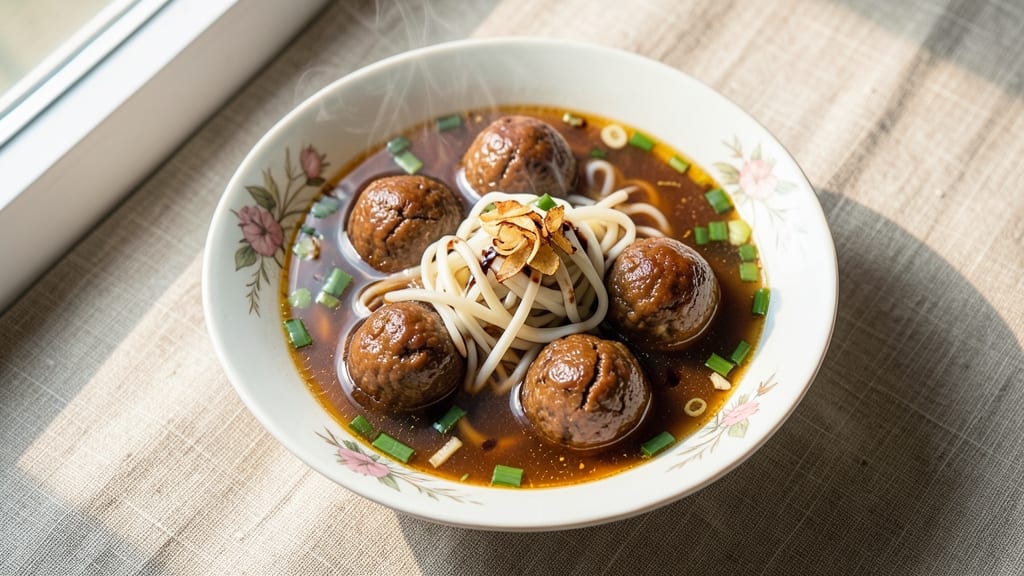
This Chinese pork meatballs soup recipe transforms humble ingredients into a comforting bowl of aromatic perfection—one-pot simplicity meets deep, savory tradition. I first mastered this technique during my apprenticeship in Charleston, where pork was the heart of every meal.
The secret lies in tender meatballs that poach gently in a fragrant broth, absorbing flavors without falling apart, while star anise and ginger build layers of warmth that linger long after the last spoonful.
The beauty of this dish is its balance: juicy pork meatballs with crisp edges, a broth rich with umami from soy sauce and fermented bean paste, and just enough ginger and garlic to brighten without overpowering.
Unlike many recipes that require multiple pots, this version simmers everything together, letting the pork release its collagen into the broth while vegetables soften naturally. The result? A restaurant-quality soup that's foolproof for home cooks.
What makes this recipe special is how it delivers authentic Chinese flavors without shortcuts—no powdered spices, no pre-made broth. We'll start with ground pork and simple pantry staples, building flavor through proper technique: searing the meatballs first for texture, then simmering them low and slow to develop depth.
The aroma alone will have everyone gathering around your table, while the first bite delivers that perfect harmony of tender meat, savory broth, and subtle herbal notes.
Perfect for chilly evenings or when you crave something hearty yet effortless, this soup scales beautifully for crowds or leftovers. The broth keeps well for days, and the meatballs reheat perfectly—making it ideal for meal prep. Let's create this comforting classic that tastes like home.
Ingredients for chinese pork meatballs soup
Pork, aromatic spices, and simple vegetables create this restaurant-quality one-pot soup.
| Ingredient | Amount | Notes |
|---|---|---|
| Ground Pork 🐖 | 1 ½ lb | 80% lean, finely ground for tenderness |
| Green Onions 🧅 | ½ cup | White and green parts, chopped |
| Garlic Cloves 🧄 | 6 cloves | Minced for aromatic depth |
| Fresh Ginger 🌿 | 1 tbsp | Finely grated, aromatic base |
| Light Soy Sauce 🥄 | ⅓ cup | Kikkoman preferred for balance |
| Dark Soy Sauce 🥄 | 1 tbsp | For umami richness |
| Fermented Black Bean Paste 🫘 | 2 tbsp | Authentic Chinese flavor |
| Shaoxing Wine 🍷 | ¼ cup | Substitute with dry sherry |
| Star Anise Pods 🌟 | 2 whole | Whole pods for infusion |
| Cinnamon Sticks 🌿 | 1 whole | For subtle warmth |
| Dried Shiitake Mushrooms 🍄 | 4 pieces | Rehydrated for umami depth |
| Napa Cabbage 🥬 | 4 cups | Chopped, crisp texture |
| Cornstarch 🌾 | 2 tbsp | For meatball binding |
| Sesame Oil 🫒 | 1 tbsp | Toasted for finishing |
| Vegetable Oil 🫒 | 2 tbsp | High smoke point |
The ground pork should be 80% lean for perfect tenderness—Costco or Whole Foods carry excellent quality in bulk. Star anise and cinnamon sticks are essential for authentic flavor; Penzeys Spices sells whole pods if your local store doesn't stock them. For the fermented black bean paste, Asian markets offer the best quality—look for brands like Lee Kum Kee or Hin Fung. Fresh ginger and garlic should be vibrant and firm, with no soft spots. The Napa cabbage should have crisp leaves—avoid any with yellowing edges. Shaoxing wine can be substituted with dry sherry in a pinch, though it won't be identical.
No fermented black bean paste? Miso paste at half the amount works as a substitute, though the flavor will differ slightly. Running out of star anise? A pinch of ground cinnamon can mimic its warmth, but the whole pods are ideal for infusion. For the mushrooms, dried shiitake is non-negotiable—fresh won't provide the same depth. If you can't find Napa cabbage, green cabbage works in a bind, though it won't be as tender. The soy sauces should be light and dark varieties—don't use low-sodium versions, as they lack the necessary saltiness. For the meatballs, cornstarch is key for binding; arrowroot powder can substitute at the same ratio.
The broth develops best when simmered low and slow—don't rush it. Store leftovers in an airtight container for up to 4 days in the fridge, though the flavor improves with time. The meatballs reheat beautifully, so portion them out if you're prepping for the week. For longer storage, freeze the entire soup (without the cabbage) for up to 3 months—just thaw and reheat gently. The sesame oil should be added just before serving to preserve its delicate flavor, so don't mix it in during cooking.
Why You'll Love This Recipe
- I’ll be real: this is my go-to for meal prep. The meatballs hold up perfectly, and the broth reheats like a dream—no weird textures, just warm, comforting goodness. Pack it cold or hot, and it’s still a hit with my kids (yes, even on a Tuesday night).
- Fewer Ingredients, Bigger Impact: Honestly, I’m always skeptical when recipes list a dozen things, but this one nails it with just five staples. The ginger and garlic? They’re the secret—no fancy spices needed, just the right balance of heat and aroma that makes every bite sing.
- Umami Bomb in Minutes: That light soy sauce transforms plain ground pork into something dangerously addictive. The meatballs stay juicy while the broth absorbs just enough flavor to feel rich, not heavy. Between us, it’s the kind of soup that disappears faster than my willpower on a bad day.
- Lunchbox Hero: I’ll be real: this is my go-to for meal prep. The meatballs hold up perfectly, and the broth reheats like a dream—no weird textures, just warm, comforting goodness. Pack it cold or hot, and it’s still a hit with my kids (yes, even on a Tuesday night).
Step-by-step instructions for Chinese pork meatballs soup
Master this comforting one-pot dish where tender pork meatballs float in a fragrant, umami-rich broth.
Prepare the Meatball Mixture
In a large mixing bowl, combine the 1.5 lb ground pork, 2 tbsp cornstarch, 0.5 cup chopped green onions, 6 minced garlic cloves, and 1 tbsp finely grated fresh ginger. Using your hands, gently mix until just combined—avoid overworking the pork to prevent toughness. The mixture should hold together when pressed but remain loose enough to form soft meatballs.
Add 0.33 cup light soy sauce, 1 tbsp dark soy sauce, and 2 tbsp fermented black bean paste, mixing thoroughly to distribute flavors evenly. Divide the mixture into 16 equal portions (about 1.5 oz each) and roll into smooth, golf-ball-sized meatballs. Place them on a plate and refrigerate for 15 minutes—this helps them maintain shape during cooking.
Sear the Meatballs and Build the Broth
Heat 2 tbsp vegetable oil in a 6-quart pot over medium-high heat until shimmering. Working in batches to avoid overcrowding, add the meatballs and sear for 2-3 minutes per side until golden brown and cooked through. Remove and set aside, leaving the rendered fat in the pot.
In the same pot, add 4 pieces dried shiitake mushrooms, 2 whole star anise pods, and 1 whole cinnamon stick. Toast for 30 seconds until fragrant, then pour in 0.25 cup Shaoxing wine and scrape up any browned bits from the bottom. Add 4 cups chopped napa cabbage and 2 cups water, bringing to a gentle simmer. Return the meatballs to the pot and cover partially.
Simmer for Maximum Flavor
Reduce heat to low and simmer uncovered for 20-25 minutes, stirring occasionally. The broth should reduce slightly, becoming deep amber in color and infused with aromatic spices. Taste and adjust seasoning with additional light soy sauce if needed—this step ensures the meatballs absorb the full depth of flavor.
Remove the star anise and cinnamon sticks (discard or save for future use). Stir in 1 tbsp toasted sesame oil and let the soup sit off heat for 5 minutes to allow the flavors to meld. The meatballs should be tender yet intact, and the cabbage should soften slightly while retaining its crisp texture.
Finish and Serve
Ladle the soup into bowls, ensuring each serving contains 4 meatballs and a generous portion of cabbage. Garnish with additional chopped green onions for freshness and a final drizzle of sesame oil to enhance aroma. Serve immediately while steaming hot—this dish is best enjoyed fresh from the pot.
For extra richness, reserve a ladle of broth and reduce it further to create a glossy sauce for drizzling over each bowl. The balance of tender meatballs, aromatic broth, and crisp cabbage makes this a deeply satisfying one-pot meal.
Pro Tips For Making Chinese Pork Meatballs Soup
- CHILL THE MEATBALLS: After shaping them, pop your pork meatballs in the freezer for 15 minutes before cooking—yes, even if you’re not frying them first. I learned this the hard way when my first batch of soup meatballs turned into a sad, greasy mess mid-simmer. Cold meatballs hold their shape better when they hit the broth, and they’ll release flavor more evenly.
- MINCE GINGER FINE: Forget the lazy julienne—grate that ginger until it’s nearly paste-like, then squeeze out excess moisture with a paper towel. My grandmother swore by this, and she was right: too much chunky ginger means you’ll taste it instead of the pork. A fine texture dissolves cleanly into the broth.
- SIMMER LOW AND COVERED: Start with a rolling boil, but once the meatballs float and the broth sings, drop the heat to a gentle simmer and cover the pot. I used to rush this, and my broth would turn cloudy or the meatballs would dry out. Low heat keeps the broth clear and the meatballs tender—no one wants rubbery pork in soup.
- SAUTE AROMATICS FIRST: Cook your garlic, ginger, and half the green onions in oil until the garlic just turns golden—about 30 seconds, not 3. This builds the base flavor before the meatballs even hit the broth. Skipping this step means your soup will taste like almost as good as it could’ve been. (Your future self will notice.)
Common mistakes when making great chinese pork meatballs soup
Overworking Pork Mixture
I’ve seen beginners turn perfectly tender meatballs into dense, rubbery lumps by overmixing the pork. The key is to handle the mixture gently—just combine the ingredients until they’re just bound together.
Overworking develops gluten in the pork, which makes the meatballs tough. Use your hands to mix lightly, and stop as soon as everything comes together. 💪
Skipping the Chill Step
Many recipes call for chilling the meatballs before cooking, and for good reason. Without this 15-minute rest, the meatballs can fall apart when they hit the hot oil.
The cold helps the proteins firm up slightly, giving them structure. I’ve learned this the hard way—skipping it leads to messy, irregularly shaped meatballs that don’t hold together.
Crowding the Pan
Searing meatballs in a crowded pan steams them instead of browning, which is a huge flavor killer. Work in batches—no more than 8 meatballs at a time—to ensure they develop a golden crust.
This crust is what locks in juices and adds depth to the broth. Trust me, the difference between crowded and properly seared meatballs is night and day. 🔥
Ignoring the Aromatics
Some cooks rush through toasting the star anise and cinnamon sticks, but this step is crucial. Toasting for just 30 seconds releases their essential oils, which infuse the broth with layers of warmth and complexity.
Skipping this means your soup will taste flat and one-dimensional. Think of it like making tea—you wouldn’t skip steeping the leaves, right?
Simmering Too Aggressively
A gentle simmer is non-negotiable for this soup. Boiling the broth can cause the meatballs to toughen and the cabbage to turn mushy. Keep the heat at a low simmer—you should see tiny bubbles breaking the surface, but not a rolling boil.
Patience here pays off with a velvety broth and perfectly tender meatballs.
Forgetting to Taste and Adjust
The final flavor balance is all about timing and seasoning. After simmering, always taste the broth before serving. You might need an extra ½ teaspoon of light soy sauce or a pinch of salt to round out the flavors.
I’ve had soups that were almost perfect but fell short because I didn’t adjust at the end. A little tweak makes all the difference. ✨
Nutrition facts
Frequently asked questions
Can I substitute ground beef for pork in this recipe?
While it's possible, I don't recommend it for this specific dish. Ground pork offers a delicate, tender texture that pairs perfectly with the aromatic broth. Beef would make the meatballs denser and could overpower the subtle flavors of the Chinese spices. If you must substitute, use 80% lean ground chicken instead—it's closer in texture and won't alter the dish's character as dramatically.
How do I make this soup spicier? For heat lovers, add 1 tsp of chili crisp or ½ tsp of Sichuan peppercorns when toasting the aromatics. You can also stir in 1 tbsp of chili garlic sauce at the end for a quick kick. For a more traditional approach, add 1-2 slices of dried chili with the star anise during simmering.
What's the best way to reheat leftovers?
Reheat gently in a pot over low heat with 2 tbsp water to prevent drying. For best results, add the water first, then the meatballs and broth, and simmer for 5-7 minutes until everything is steaming. Never microwave—it makes the meatballs rubbery. The cabbage will soften further but still hold its texture. Store leftovers in an airtight container for up to 4 days in the fridge.
Can I make this soup vegetarian?
Replace the pork with 1.5 lb of finely chopped mushrooms (shiitake or oyster) mixed with 2 tbsp soy sauce and 1 tbsp cornstarch to bind. For texture, add ½ cup cooked quinoa or tofu cubes to the broth. Keep all other ingredients the same, including the fermented black bean paste for umami depth. The broth will still be rich and flavorful!
Why do my meatballs fall apart when simmering?
This usually happens from one of three issues: overworking the mixture, skipping the 15-minute chill, or simmering too aggressively. First, handle the pork gently when mixing. Second, always let the meatballs rest before cooking. Finally, maintain a gentle simmer—never a boil. If they still fall apart, try adding 1 extra tbsp of cornstarch to the mixture next time. Patience is key here!