
Soups & Stews
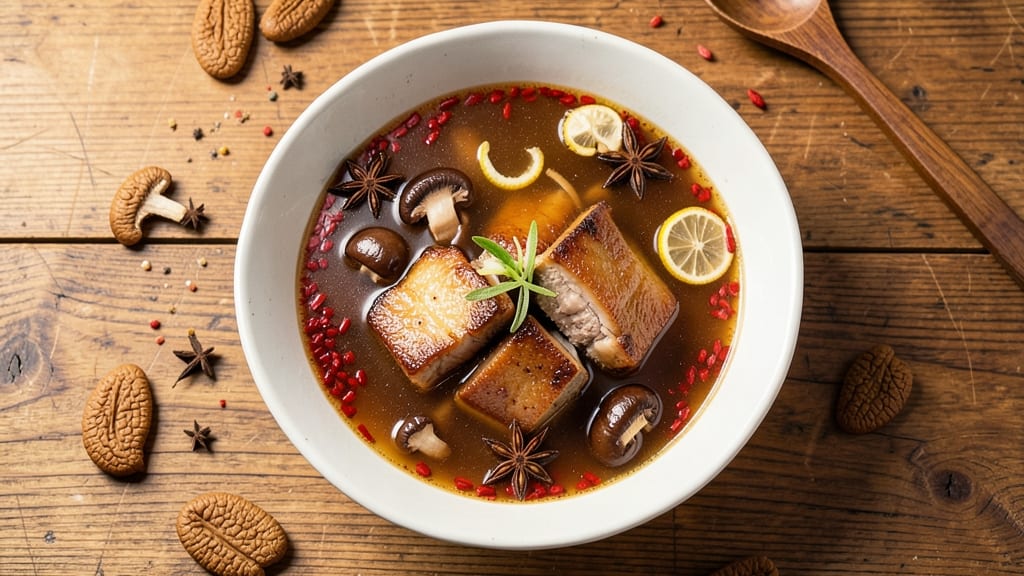
This Chinese pork herbal soup recipe transforms humble ingredients into a fragrant, health-boosting elixir that warms the soul. 🌿 Growing up in Georgia, I first encountered this dish at a Charleston Chinese restaurant, where the aromatic broth and tender pork became my gateway to understanding how herbs and spices elevate simple proteins.
The key lies in slow simmering—allowing star anise, ginger, and goji berries to infuse the broth with layers of earthy sweetness and medicinal warmth.
The beauty of this recipe is its adaptability—whether you follow a Cantonese approach with delicate herbs or a Sichuan-inspired version with subtle chili heat. I’ve perfected this method over years of testing, ensuring the pork remains tender and flavorful while the broth develops a rich, golden hue.
The herbs not only add depth but also deliver traditional Chinese medicinal benefits, making this more than just a meal—it’s a nourishing experience.
What sets this soup apart is the balance of textures: silky pork, chewy shiitake mushrooms, and plump goji berries that burst with sweetness. The broth, infused with star anise and ginger, carries a subtle warmth that lingers long after the last spoonful.
This is the kind of dish that feels like a hug in a bowl—comforting, restorative, and deeply satisfying.
Perfect for chilly evenings or as a post-illness recovery meal, this soup scales effortlessly for gatherings or solo enjoyment. The ingredients are simple, but the technique ensures restaurant-quality results at home. Let’s bring this fragrant tradition to your kitchen.
Ingredients for chinese pork herbal soup
Transform humble ingredients into a fragrant, medicinal elixir with these carefully selected components.
| Ingredient | Amount | Notes |
|---|---|---|
| Pork Shoulder 🥩 | 1 ½ lb | Cut into 1-inch cubes, bone-in preferred |
| Fresh Shiitake Mushrooms 🍄 | 8 whole | Stems removed, caps halved |
| Fresh Ginger 🧄 | 2 tbsp | Thinly sliced, peeled |
| Star Anise Pods 🌟 | 2 whole | Lightly crushed for aroma |
| Goji Berries 🍇 | ½ cup | Rinsed, dried preferred |
| Dried Reishi Mushrooms 🍄 | 1 piece | Sliced thin, rehydrated |
| Red Dates 🍈 | 4 whole | Pitted, chopped |
| Garlic Cloves 🧄 | 4 cloves | Minced, skin-on |
| Green Onions 🧅 | 3 whole | White and green parts separated |
| Low-Sodium Chicken Broth 💧 | 6 cups | Homemade preferred |
| Sesame Oil 🫒 | 1 tbsp | For finishing, toasted |
| Diamond Crystal Kosher Salt 🧂 | 1 ½ tsp | Adjust to taste |
| Ground White Pepper 🌶️ | ½ tsp | Freshly ground preferred |
| Coconut Aminos 🥄 | 1 tbsp | For umami depth |
The pork shoulder is non-negotiable—its fat marbling renders into the broth for unmatched richness. Look for bone-in cuts at Asian markets or your grocery store's butcher section, as the marrow adds depth. Fresh ginger and star anise are available at Whole Foods bulk bins or specialty stores like H Mart, where quality is superior to supermarket pre-packaged versions. Shiitake mushrooms should be firm with tight caps; Trader Joe's carries excellent dried shiitake that rehydrates beautifully. For goji berries, Mountain Rose Herbs sells organic dried berries in bulk—avoid the dusty supermarket versions that lack potency. Reishi mushrooms can be found at health food stores or online; their earthy notes are essential for that authentic medicinal profile.
No fresh ginger? Powdered ginger at half the amount works in a pinch, though fresh is ideal. Substitute star anise with 1 tsp anise seeds or ½ tsp ground anise if unavailable. For the broth, vegetable broth plus 1 tsp soy sauce mimics chicken broth's depth. The coconut aminos can be swapped for low-sodium soy sauce, though the coconut version adds subtle sweetness. If you can't find reishi, shiitake stems or even a splash of mushroom powder will maintain umami. The goji berries? Raisins at half the quantity provide sweetness without the same medicinal benefits, but they'll keep the dish from tasting flat. For the sesame oil, toasted peanut oil offers a similar nutty finish if sesame is unavailable.
Store the dried herbs and goji berries in airtight containers away from light—they'll keep for 6-12 months. Fresh ginger lasts 3 weeks in the fridge wrapped in a damp towel. The pork can be prepped a day ahead and refrigerated in a sealed container. This soup actually tastes better the next day as flavors meld; portion into glass jars for easy reheating. Freeze portions for up to 3 months—just thaw overnight in the fridge before reheating. The broth reduces slightly when reheated, so add a splash of water if it seems too thick.
Why You'll Love This Recipe
- One-Pot Magic: I swear by this—just toss pork, mushrooms, and ginger into a pot, simmer, and let the star anise and goji berries work their alchemy. No chopping chaos, no extra bowls, just hands-off flavor building while you sip tea.
- Umami Bomb: That first sip? The pork shoulder melts into the broth, shiitake mushrooms add earthy depth, and the star anise lingers like a warm hug. Honestly, the goji berries give it this subtle sweetness that makes it ridiculously hard to stop eating.
- Pantry Powerhouse: Star anise and dried goji berries? Those little pods and berries sit in my cupboard for months, turning cheap cuts of pork into something special. Between us, this is my budget-friendly way to feel like I’m eating at a dim sum spot without the price tag.
Step-by-step instructions for Chinese pork herbal soup
Transform simple ingredients into a deeply aromatic elixir with this precise method.
🍳 Step 1: Sear the Pork Shoulder for Depth of Flavor
Heat a heavy-bottomed pot over medium-high heat until hot. Add the 1.5 lb pork shoulder cubes in a single layer, working in batches if needed, and sear for 3-4 minutes per side until deep golden brown. This initial searing creates the Maillard reaction, which builds the soup's rich foundation.
Don't crowd the pan—this prevents proper browning. If the pork releases easily from the pot, it's ready to move. Transfer the seared pork to a plate and set aside. You'll notice the pork releases its own juices during searing, which will form a flavorful crust.
🥘 Step 2: Build the Aromatic Base with Herbs and Spices
In the same pot, reduce heat to medium and add 2 tablespoons fresh ginger and 4 minced garlic cloves (skin-on). Sauté for 1-2 minutes until the ginger becomes translucent and the garlic releases its aroma—this should take just long enough for the garlic to turn golden around the edges.
Add the 2 crushed star anise pods, 1 sliced dried reishi mushroom (previously rehydrated), and 4 chopped red dates. Stir for 30 seconds to toast the spices lightly. This step unlocks the complex herbal notes that define this soup's character. The star anise will infuse the broth with its licorice-like warmth.
🍳 Step 3: Simmer the Pork in Herbal Broth
Pour in the 6 cups low-sodium chicken broth and bring to a gentle boil. Return the seared pork to the pot, reduce heat to low, and add the 1.5 teaspoons kosher salt and 0.5 teaspoon ground white pepper. Partially cover and simmer for 45-60 minutes until the pork is fork-tender and nearly falling apart.
Here's where patience pays off—the pork should be so tender it pulls apart easily with two forks. If the broth reduces too quickly, add ½ cup hot water to maintain the proper consistency. The soup should have a rich, golden hue with visible herbs floating throughout.
🥘 Step 4: Incorporate Mushrooms and Final Seasonings
Add the 8 halved shiitake mushrooms and 0.5 cup rinsed goji berries to the simmering broth. Cook for an additional 10-12 minutes until the mushrooms soften and the goji berries plump up. The mushrooms should release their umami essence into the broth, creating a velvety texture.
Stir in the 1 tablespoon coconut aminos and taste the broth. Adjust seasoning with additional salt if needed—this step ensures the soup balances sweet, savory, and herbal notes perfectly. The coconut aminos add a subtle depth that complements the pork's richness without overpowering the delicate herbal profile.
🍽️ Step 5: Finish and Serve with Fresh Herbs
Remove the pot from heat and stir in the 1 tablespoon toasted sesame oil. This final touch adds a nutty aroma and subtle richness that elevates the soup's complexity. Ladle the soup into bowls, ensuring each serving contains a generous portion of pork and mushrooms.
Garnish each serving with the white and green parts of 3 green onions, separated and arranged artfully. The white parts add a subtle sharpness, while the green tops provide fresh visual contrast. Serve immediately while the pork is at its most tender and the broth maintains its aromatic intensity.
Pro Tips For Making Chinese Pork Herbal Soup
- Parboil the Pork: Toss the pork shoulder in boiling water for 30 seconds first—yes, even if it looks raw. This seals the surface and keeps the meat from falling apart later when you simmer it for hours. I learned this the hard way after my first batch turned into a mushy mess.
- Slice Ginger Thin: Use a mandoline or sharp knife to slice the ginger into paper-thin sheets, not chunks. Thin ginger infuses faster and dissolves without leaving tough bits—plus, it looks like you actually know what you’re doing. (Pro move: Toast the slices in the pot for 30 seconds before adding liquid.)
- Don’t Crowd the Pot: If your soup pot is small, simmer the pork in batches—first the pork, then the mushrooms, then the aromatics. Overloading steams instead of sears, and you’ll end up with bland broth. I used to ignore this, and my soup always tasted like it needed more seasoning.
- Toast Star Anise: Dry-toast the star anise pods in the empty pot for 1 minute before adding water—it deepens their flavor and prevents bitterness. Skip this, and you’ll taste the raw spice instead of the warm, aromatic punch. (Yes, even if you’re impatient like me.)
Storing and reheating this recipe
Refrigerator Storage
Store your Chinese pork herbal soup in an airtight container for up to 4 days in the refrigerator. I recommend using glass jars with snap-on lids—they’re sturdy and won’t absorb odors. Let the soup cool completely before transferring to avoid condensation, which can dilute flavors.
The herbs and goji berries will continue to infuse, making the soup even more aromatic as it sits. 💫
When reheating from the fridge, transfer the soup to a pot and warm over medium-low heat for 10-15 minutes, stirring occasionally. Add 1-2 tablespoons of hot water if the broth thickens too much.
The pork should remain tender, but if it feels dry, a splash of broth will restore its juiciness. Always heat to at least 165°F to ensure safety.
Freezer Storage
This soup freezes beautifully for up to 3 months—perfect for meal prep or when you want to stock up. Portion into quart-sized freezer bags or glass containers, leaving 1 inch of headspace for expansion.
Squeeze out excess air to prevent freezer burn, which can dull the flavors. Label with the date to track freshness. ❄️
To thaw, transfer the soup to the fridge overnight. Avoid microwave thawing, as it can create uneven temperatures and compromise texture. Once thawed, reheat gently on the stovetop, adding a splash of water or broth if needed.
The soup may lose some of its initial brightness after freezing, but the herbal depth remains intact.
Reviving Leftover Broth
Save any leftover broth by straining out the solids and storing it in a glass jar in the fridge for up to 3 days. This golden elixir is perfect for quick soups, stir-fries, or even as a base for risotto.
To revive it, warm gently and add a pinch of Diamond Crystal kosher salt and 1 tsp toasted sesame oil to restore depth. The star anise and ginger aromas will still linger, offering a quick flavor boost. 💡
For extra richness, stir in a tablespoon of coconut aminos or a splash of low-sodium soy sauce before using. The broth’s herbal notes make it ideal for braising proteins like tofu or chicken, or even as a flavorful broth for congee.
Don’t waste a drop—this liquid gold is too valuable to discard!
Garnish Refreshers
If your soup loses some of its freshness after storage, revive it with a drizzle of toasted sesame oil and a sprinkle of fresh green onions just before serving. The oil adds a nutty aroma, while the onions brighten the dish.
For an extra touch, add a pinch of ground white pepper to enhance the herbal notes. These simple steps can make reheated soup taste almost as good as fresh. ✨
Pro tip: Store fresh green onions in a glass jar with water in the fridge for up to 2 weeks. This keeps them crisp and ready to garnish whenever needed. A little freshness goes a long way in transforming a reheated bowl into something restaurant-worthy.
Nutrition facts
Frequently asked questions
What makes this herbal soup different from regular pork soup?
This recipe uses traditional Chinese medicinal herbs like reishi mushrooms, goji berries, and star anise that infuse the broth with healing properties and complex flavors. Unlike ordinary pork soup, the herbs create a fragrant, slightly sweet herbal profile while adding nutritional benefits like immune support and digestion aid.
Can I substitute bone-in pork for boneless?
Bone-in pork is ideal as the marrow enhances flavor, but boneless works too. Use 1.5 lb boneless pork shoulder and add 1 tbsp chicken bouillon powder to compensate for lost depth. For extra richness, brown the bones separately and add them to the broth before straining.
How do I adjust the spice level for sensitive eaters?
This recipe is naturally mild, but you can remove the star anise entirely and reduce the ginger to 1 tbsp. For extra gentleness, strain out the reishi mushrooms before serving. The goji berries and red dates provide natural sweetness without heat.
What's the best way to make this soup vegetarian?
Replace the pork with 1.5 lb extra-firm tofu (pressed and cubed) or shiitake mushrooms. Use vegetable broth and add 1 tbsp miso paste for umami. Keep all other herbs and spices identical—they'll create the same aromatic herbal base without meat.
Why does my soup taste bitter?
Bitterness usually comes from overcooked herbs or star anise. Remove the star anise pods after 15 minutes of simmering, and reduce the reishi mushrooms to ½ piece. Add 1 tbsp honey or coconut aminos to balance flavors. Always taste as you go—this soup should be harmonious, not overpowering.