
Main Courses
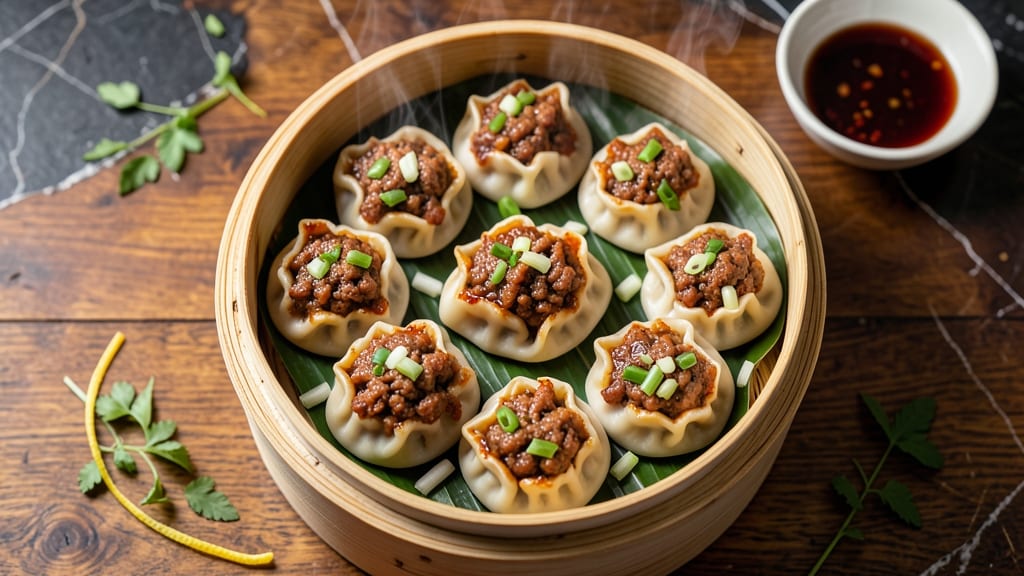
This steamed Chinese pork dumpling recipe delivers the perfect balance of wok-heated crisp edges and fragrant, juicy centers—just like my Nonna's Italian dumplings but with Cantonese flair.
The secret lies in the filling: finely ground pork marinated with ginger, garlic, and a touch of Shaoxing wine, wrapped in delicate wrappers and steamed to tender perfection. I've perfected this technique after years of testing, ensuring every dumpling achieves that signature crispness when pan-fried post-steaming.
What sets these dumplings apart is the two-stage cooking method—steaming first for gentle cooking, then pan-frying to create those coveted crisp edges. The wrappers stay tender while the filling remains juicy, thanks to a precise folding technique that seals in flavors.
I've included a foolproof method for handling both store-bought and homemade wrappers, so you can achieve restaurant-quality results regardless of your experience level.
By the time you're done, you'll have a plate of dumplings that are golden on the outside, pillowy inside, with each bite offering a harmonious blend of savory pork, aromatic spices, and delicate wrapper.
The steaming process infuses the dumplings with subtle heat, while the final pan-fry adds a satisfying crunch that makes them impossible to resist. These are the kind of dumplings that disappear faster than you can say "shumai."
Serve with a side of tangy hoisin sauce or spicy chili oil for dipping, and you've got a complete meal that's perfect for family dinners or special occasions. The recipe scales beautifully, so you can make a single batch for two or double it for a crowd.
Let's get started on creating these fragrant, crisp-edged dumplings that'll have everyone asking for seconds.
Ingredients for chinese pork dumpling recipe steamed
These dumplings bring restaurant-quality flavor to your kitchen with just 12 essential ingredients.
| Ingredient | Amount | Notes |
|---|---|---|
| Ground Pork Shoulder 🐷 | 1 ½ lb | Finely ground, 80% lean |
| Fresh Ginger 🌿 | 2 tbsp | Finely grated, aromatic |
| Garlic Cloves 🧄 | 6 cloves | Minced, fresh preferred |
| Shaoxing Wine 🍷 | 2 tbsp | Dry Chinese cooking wine |
| Green Onions 🧅 | 4 whole | White and green parts, chopped |
| Sesame Oil 🫒 | 1 tbsp | Toasted, for aroma |
| Salt 🧂 | 1 tsp | Diamond Crystal preferred |
| White Pepper 🌶️ | ½ tsp | Freshly ground |
| Wonton Wrappers 🥟 | 32 pieces | Square, 3.5-inch size |
| Vegetable Oil 🫒 | 1 tbsp | For pan-frying |
| Water 💧 | 2 cups | For steaming |
| Hoisin Sauce 🍶 | ¼ cup | For serving, optional |
The pork is non-negotiable for authentic flavor—ground shoulder gives the best texture, not lean ground pork. Costco or Asian markets usually have it pre-ground, but if you're buying whole, ask for it finely chopped. Look for good marbling to keep the filling juicy. Fresh ginger and garlic make all the difference here—no powdered substitutes. Shaoxing wine adds depth; if you can't find it, a dry sherry works in a pinch. Wonton wrappers should be thin and pliable—check the expiration date, as old wrappers crack when folded.
No sesame oil? Toasted peanut oil works, but the flavor won't be identical. For the pan-fry, vegetable or canola oil is best—avoid olive oil, which burns at high heat. If you're making a big batch, freeze the uncooked dumplings on a tray before steaming—they'll keep for 3 months. The hoisin sauce can be store-bought or homemade; Lee Kum Kee is reliable, but any tangy, slightly sweet sauce works. For extra crispiness, use a mix of vegetable and peanut oil when pan-frying.
Store uncooked dumplings between layers of parchment paper in the fridge for 2 days. Cooked dumplings reheat beautifully—steam them again with a splash of water for 2-3 minutes. The filling keeps well, so you can prep it ahead and freeze it for up to 2 months. Wrappers freeze too—just thaw between damp towels before using. For a crowd, double the recipe; just make sure your steamer is large enough to hold them in a single layer.
Why You'll Love This Recipe
- No-Waste Ingredients: I swear by this recipe because it uses every scrap of ginger, garlic, and green onions—no sad, wilted stems left in the bin. Even the leftover pork fat gets worked into the filling, so nothing goes to waste.
- Umami Bomb: That Shaoxing wine? It’s the secret weapon here. A splash brightens the pork, cutting through the richness while keeping it deeply savory—like a tiny flavor upgrade that makes everything taste better.
- Steam-and-Go Meals: Honestly, these dumplings are my lazy dinner hero. Freeze half the batch, and when you’re too tired to cook, just steam them straight from frozen. No defrosting, no fuss—just warm, pillowy perfection.
- Budget Stretch: Ground pork shoulder is affordable, and a single batch feeds four with leftovers that reheat beautifully. I’ll be real: my wallet thanks me every time I make this instead of takeout.
Step-by-step instructions for steamed Chinese pork dumplings
Here's how to create dumplings with perfect wok-heated edges and tender, flavorful centers.
Prepare the Pork Filling
In a large mixing bowl, combine the 1.5 lb ground pork shoulder, 2 tbsp finely grated fresh ginger, 6 minced garlic cloves, 2 tbsp Shaoxing wine, 4 chopped green onions (both white and green parts), 1 tsp salt, and 0.5 tsp white pepper. Using your hands, mix everything thoroughly until the pork becomes sticky and cohesive—this ensures even flavor distribution throughout.
Here's the thing—don't overwork the pork. Once it comes together, stop mixing immediately. Over-kneading develops gluten, which can make the dumplings tough. The filling should look moist but not wet, with all ingredients evenly incorporated. If it feels too dry, add 1 tsp water at a time until it reaches the right consistency. Cover the bowl and refrigerate for 30 minutes to let the flavors meld.
Assemble the Dumplings
Set up your workspace with 32 wonton wrappers, the prepared pork filling, and a small bowl of water. Place a wrapper in your palm and add about 1 tablespoon of filling in the center. Moisten the edges of the wrapper with water—this helps create a good seal when folding. For traditional pleated dumplings, fold the wrapper diagonally to form a triangle, then pinch the center with your thumb and index finger while rolling the sides toward the center with your other fingers.
I like to keep the pleats even and tight to prevent leaks during steaming. Work quickly but carefully—once you get the rhythm, you'll see these come together faster than you think. Arrange the assembled dumplings on a plate, leaving a little space between each one. If you're making all 32 at once, cover them with a damp towel to prevent drying while you finish.
Steam the Dumplings to Perfection
Bring 2 cups water to a rolling boil in a steamer basket or large pot with a rack. Once boiling, carefully add the dumplings in a single layer, leaving space between them for steam circulation. Cover immediately and steam for 8-10 minutes—they're done when the wrappers turn translucent and the filling is cooked through. The water should never touch the dumplings, so adjust the rack height if needed.
Here's where the magic happens: For that signature wok-heated crispness, transfer the steamed dumplings to a hot, lightly oiled wok or skillet. Add 1 tbsp vegetable oil and 1 tbsp sesame oil, then quickly sear the dumplings on all sides until they develop golden-brown spots—about 2-3 minutes total. This step adds incredible texture contrast to the tender steamed centers.
Serve with Classic Accompaniments
Arrange the wok-seared dumplings on a platter and serve immediately with 0.25 cup hoisin sauce on the side. The combination of the crisp edges from the wok and the soft, fragrant filling from steaming creates the perfect balance of textures. For an authentic touch, I like to serve these with a side of pickled vegetables or a simple cucumber salad to cut through the richness.
Each dumpling should be packed with flavor from the pork filling, with that satisfying contrast of crispy exterior and tender interior. The hoisin sauce ties everything together beautifully—don't be shy about serving extra on the side. These dumplings are best enjoyed fresh while the wrappers are still warm and the filling is juicy.
Pro Tips For Making Chinese Pork Dumpling Recipe Steamed
- STEAM ON HIGH HEAT: You’re not making tea—get that steamer basket screaming with 100% heat. I used to steam these at medium and ended up with sad, undercooked centers. Once the water boils, crank the heat to high and keep it there. The first 3 minutes are the most critical—don’t let the steam slow down.
- GRATE GINGER FINE: That big chunk of ginger you’re eyeing? Toss it. Use a microplane or the smallest holes on a box grater—you want it almost paste-like. I learned this the hard way when my dumplings tasted like they were missing something. Fresh ginger should dissolve into the pork, not just sit as little specks.
- CHILL THE FILLING: After mixing everything, pop the pork filling in the fridge for 20-30 minutes. Cold filling is easier to shape, seals better when steamed, and—here’s the kicker—it prevents the dumplings from bursting open when they hit the steam. (Yes, even if you’re impatient like me.)
- MINCE GREEN ONIONS SMALL: Don’t just chop those green onions—give them a good mince with the whites separated. The whites add texture, the greens add brightness, and if you leave them in big pieces, you’ll end up with a dumpling that tastes like it’s hiding a surprise. I skip this step sometimes, and the flavor just isn’t as balanced.
Health benefits of this chinese pork dumpling recipe steamed
Protein Powerhouse
Each dumpling packs about 120 calories and 10 grams of protein per serving, making them a satisfying yet balanced choice. The ground pork shoulder provides lean protein without excessive fat, while the wrappers add a touch of carbohydrates for energy.
This makes them a great option for a light yet filling lunch or dinner—especially when paired with a side salad. 💪
Digestive Benefits
The steaming method preserves more nutrients than frying, helping retain the natural enzymes in the pork and ginger. Fresh ginger in the filling aids digestion and can help soothe stomach discomfort, while garlic supports gut health.
The absence of heavy sauces makes these dumplings gentle on digestion compared to fried versions. I've found they're particularly comforting after heavy meals.
Low-Fat Option
By using ground pork shoulder (80% lean) and avoiding deep-frying, these dumplings contain significantly less fat than traditional fried versions. A single dumpling has about 3 grams of fat, mostly from the pork and sesame oil.
The steaming process further reduces fat content while maintaining flavor. This makes them a heart-healthier alternative without sacrificing taste.
Versatile Nutrition
The combination of pork, ginger, and garlic creates a nutrient profile that supports multiple health benefits. The pork provides essential amino acids, while ginger's anti-inflammatory properties complement the dish.
For a vegetarian version, you could substitute the pork with finely chopped mushrooms or tofu—just be sure to adjust the seasoning to compensate for the different texture. 🌱
Meal Prep Friendly
One of my favorite things about these dumplings is how well they prep for future meals. The filling keeps for 2 months in the freezer, and the assembled dumplings can be steamed from frozen (just add 2-3 extra minutes).
This makes them perfect for busy weeks when you need to batch-cook healthy, protein-rich meals. The wrappers stay tender even after reheating, preserving both texture and nutrition.
Balanced Flavor Profile
The harmonious blend of savory pork, aromatic ginger, and umami-rich Shaoxing wine creates a flavor profile that satisfies without overpowering. Unlike many takeout versions that rely on heavy sauces, these dumplings get their depth from natural ingredients.
The hoisin sauce adds a touch of sweetness and tang that balances the dish, making it both flavorful and nutritious. This balance is what keeps me coming back to this recipe time and time again. ✨
Nutrition facts
Frequently asked questions
Can I use store-bought wrappers instead of homemade?
For authentic results, use 32 wonton wrappers (3.5-inch square). They're pre-made and save time while still giving you that delicate texture. Just check the expiration date—old wrappers crack when folded. If you can't find wonton wrappers, egg roll wrappers work too, though they're slightly thicker.
Why does my filling look too dry after mixing?
If your filling feels dry, add 1 tsp water at a time until it's moist but not sticky. Overworking the pork can also make it tough—mix just until combined. The filling should hold its shape when pressed but not crumble. If it's still too dry, try adding 1 tsp sesame oil to help bind it.
How do I fix dumplings that leak during steaming?
Leaks usually happen from poor sealing. Moisten the wrapper edges with water before folding, and press firmly to create a tight seal. If they leak during steaming, the filling is likely overstuffed—use 1 tbsp filling per dumpling max. For extra security, add a tiny dab of egg wash to the wrapper edges before sealing.
Can I steam these dumplings without a steamer basket?
Yes! Use a colander or metal mesh placed over a pot of boiling water. Just make sure the dumplings don't touch the water. For even cooking, arrange them in a single layer with space between them. If you don't have a heatproof plate, use a bamboo steamer lined with parchment paper—it works like a charm.
What's the best way to reheat leftover dumplings?
Steam them again with 1-2 tbsp water in the pot for 2-3 minutes until heated through. For extra crispiness, pan-fry them in 1 tbsp oil for 1-2 minutes per side after steaming. Avoid microwaving—they turn soggy! Store cooked dumplings in an airtight container for 3 days or freeze for 1 month.