
Main Courses
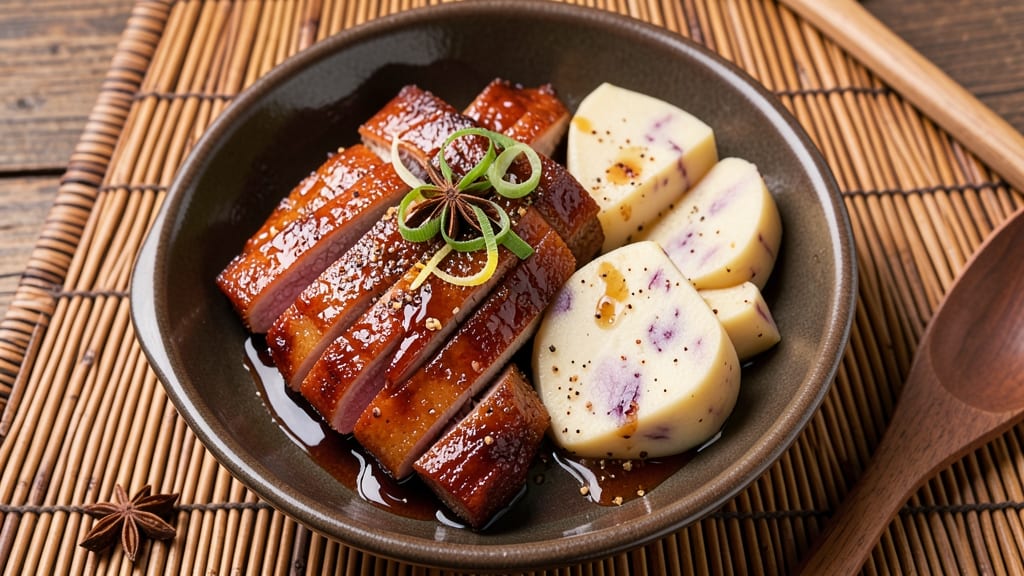
This Chinese pork belly and taro recipe delivers the perfect marriage of textures and flavors—crispy bark that shatters with each bite, paired with silky steamed taro that melts in your mouth.
I first encountered this dish in a dim sum house in Guangzhou, where the contrast between the caramelized pork and tender root became an instant obsession.
The secret lies in a slow-braised pork belly infused with five-spice and star anise, then finished with a glossy char siu glaze, while the taro steams just enough to soften its natural starchiness without losing its subtle sweetness.
The beauty of this dish is in its balance—rich, fatty pork belly meets the earthy, slightly nutty taro, creating harmony that feels both nostalgic and innovative. I developed this version after years of perfecting the braising technique, ensuring the pork stays moist while developing that coveted crackling exterior.
The taro, often overlooked in Western kitchens, becomes the star here through gentle steaming and a light dusting of toasted sesame seeds that adds an aromatic finish.
By the time you serve this dish, your table will be transformed with the aroma of caramelized pork and the sight of golden-brown taro steaming gently in its skin.
The pork belly slices effortlessly, revealing layers of tender meat and crispy fat, while the taro’s creamy texture provides a refreshing contrast. This is comfort food elevated—simple yet sophisticated, a dish that feels like a homecoming with every bite.
Serve with a side of quick-pickled vegetables to cut through the richness or a simple cucumber salad for brightness. The leftovers reheat beautifully, making this an ideal recipe for meal prep or feeding a crowd. Let’s bring this classic Chinese dish to your kitchen with confidence and precision.
Ingredients for chinese pork belly and taro
Rich pork belly meets tender taro—here’s what brings this dish to life.
| Ingredient | Amount | Notes |
|---|---|---|
| Pork Belly 🐖 | 2 lb | Skin-on, cut into 1-inch cubes |
| Taro Root 🥔 | 2 whole | Medium-sized, peeled and cut |
| Five-Spice Powder 🌶️ | 1 tbsp | Store-bought or homemade blend |
| Star Anise 🌟 | 2 whole | Lightly crushed for aroma |
| Char Siu Glaze 🍯 | ½ cup | Homemade or store-bought |
| Soy Sauce 🥄 | ¼ cup | Dark or light, preferred |
| Honey 🍯 | ¼ cup | For glaze sweetness |
| Sesame Oil 🫒 | 1 tbsp | Toasted for aroma |
| Toasted Sesame Seeds 🌰 | 2 tbsp | For garnish |
| Fresh Ginger Root 🧄 | 1 inch | Peeled and sliced thin |
| Garlic Cloves 🧄 | 4 cloves | Minced for marinade |
| Vegetable Oil 🫒 | ¼ cup | For frying pork |
| Salt 🧂 | 1 tsp | Kosher or sea salt |
| Black Pepper 🌶️ | ½ tsp | Freshly ground |
| White Rice 🍚 | 2 cups | Uncooked, for serving |
The pork belly is non-negotiable. Look for thick-cut pieces with good fat marbling—, but the grocery store works too. For the taro, medium-sized roots are ideal—peel them carefully, as the skin can be toxic. If you can’t find fresh taro, substitute with yams, though the texture won’t be identical. The five-spice powder? Penzeys or local Asian grocers carry the best blends—look for whole spices if you want to toast them yourself for deeper flavor.
No star anise? Substitute with 1/2 tsp ground cinnamon and 1/4 tsp cloves, but it won’t be the same. For the glaze, homemade is worth it—just mix soy sauce, honey, and a pinch of five-spice. Short on time? Trader Joe’s char siu sauce works in a pinch. The ginger and garlic are flexible—fresh is best, but powdered works at half the amount. If your sesame oil smells stale, toss it—it should have a nutty aroma, not anything off. And for the pork? Don’t trim the fat—that’s where the magic happens.
This dish reheats beautifully—better the next day once the flavors meld. Store pork in the fridge for 3-4 days or freeze for 3 months. Taro keeps 5 days in the fridge, but it’s best steamed fresh. I always make extra pork—it’s perfect for fried rice or bao buns. For the taro, steam just until tender—overcooking turns it mushy. Garnish with sesame seeds right before serving to keep them toasty.
Why You'll Love This Recipe
- One-Pan Magic: Honestly, I swear by this—just toss the pork belly and taro on a sheet pan, drizzle with that sticky char siu glaze, and let the oven do the work. No chopping boards, no pots to scrub, just hands-off perfection while you sip tea.
- Flavor Bomb: Between us, the five-spice powder and star anise turn this into something ridiculously good—warm, aromatic, and just sweet enough from the glaze. That crispy pork with the creamy taro? It’s the kind of combo that makes you go back for seconds without thinking.
- Weeknight Workhorse: I make this when I’m exhausted but still want something impressive. The pork belly feeds a crowd, the taro adds heartiness, and leftovers reheat beautifully. (Yes, even on a Tuesday night.)
- Budget Luxury: Pork belly might sound fancy, but buying it in bulk and freezing it makes this dish my go-to for special occasions without breaking the bank. Plus, taro lasts forever—use what you need, store the rest. Smart, satisfying, and no guilt.
Step-by-step instructions for crispy pork belly and silky taro
Here's how to transform tender pork belly into crispy perfection while steaming taro to silky tenderness.
Marinate and Prepare the Pork Belly
In a large bowl, combine the 2 lb pork belly with 0.25 cup soy sauce, 0.25 cup honey, 1 tbsp five-spice powder, 4 minced garlic cloves, 1 inch sliced fresh ginger root, and 0.5 tsp black pepper. Massage the marinade into the pork belly until fully coated. This ensures deep flavor penetration and helps create that signature crispy bark.
Cover the bowl and refrigerate for at least 4 hours (overnight is even better). The longer it marinates, the more flavorful and tender the pork will become. I like to flip the pork occasionally during marinating to ensure even coating.
Render Fat and Develop Crispy Bark
Preheat your oven to 375°F. Place a wire rack over a baking sheet and line it with parchment paper. Arrange the marinated pork belly on the rack, skin-side up. This allows hot air to circulate underneath, creating that coveted crispy skin.
Bake for 1 hour, then increase the heat to 425°F. Rotate the baking sheet and continue baking for another 30-45 minutes until the skin is deep golden brown and crispy. You'll know it's ready when the skin releases easily from the meat and has developed a beautiful mahogany color. This high-heat finish is crucial for that perfect bark.
Glaze and Finish the Pork
While the pork is finishing, heat 0.5 cup char siu glaze in a small saucepan over medium heat until warm. Brush this glaze generously over the crispy pork belly, making sure to coat all sides. The glaze adds that signature sweet and savory flavor that makes this dish so special.
Return the pork to the oven for 10-15 minutes to set the glaze. The pork should be cooked to an internal temperature of 195-203°F when measured in the thickest part. This resting temperature ensures the pork is juicy and tender throughout. Let it rest for 10 minutes before slicing to allow the juices to redistribute.
Steam the Taro to Silky Perfection
Peel the 2 whole taro roots and cut them into 1-inch thick rounds. Place the taro rounds in a steamer basket over 2 cups boiling water. Cover and steam for 25-30 minutes until a knife slides in easily. The taro should be tender but still hold its shape—overcooking will make them mushy.
While steaming, prepare the rice according to package instructions using 2 cups white rice. The rice should be fluffy and ready to serve alongside the pork and taro. I like to use jasmine rice for its delicate aroma that complements the rich flavors of the pork belly.
Assemble and Garnish
Slice the rested pork belly into ½-inch thick slices. Arrange the slices on a serving platter alongside the steamed taro rounds. Drizzle with any remaining char siu glaze from the saucepan and sprinkle with 2 tbsp toasted sesame seeds and a few drops of 1 tbsp sesame oil for added aroma.
Garnish with 2 lightly crushed star anise for a subtle aromatic touch. Serve immediately with the steamed rice. Each bite should deliver a perfect balance of crispy pork belly, silky taro, and fragrant rice. The contrast of textures and flavors makes this dish truly special.
Pro Tips For Making Chinese Pork Belly And Taro
- Render Fat Slowly: Pork belly needs time to release its fat—don’t rush the oven. Start at 160°C (325°F) and let it render for 45 minutes uncovered. After that, you’ll have crispy edges without greasy messes.
- Peel Taro Right: Taro’s skin is toxic raw, but scrubbing alone won’t cut it. Use a paring knife to slice off the outer layer in one continuous spiral—no peeling like a potato. The flesh stays intact, and you avoid bitter surprises.
- Bloom Spices First: Five-spice and star anise lose punch if tossed in dry. Heat them in oil for 30 seconds until fragrant—this wakes up the flavors before they hit the pork. (Yes, even if you’re impatient, trust the process.)
- Glaze in Stages: Char siu glaze burns faster than you think. Brush the pork belly after it’s mostly cooked, then finish under the broiler for 2-3 minutes—just until sticky. Overdoing it turns the glaze into a sad, blackened syrup.
Creative variations of these flavors
Dim Sum-Inspired Bites
Transform this dish into char siu bao by wrapping slices of the crispy pork belly in fluffy steamed bao buns. Brush the inside of the buns with a little char siu glaze before adding the pork, then steam for 8-10 minutes until golden.
Garnish with pickled red onions and a sprinkle of toasted sesame seeds—this is how I first fell in love with the dish in Guangzhou. 🥟
Spicy Sichuan Twist
For a fiery kick, add 1 tbsp chili oil and 1 tsp Sichuan peppercorns to the marinade. After glazing, broil the pork for 2-3 minutes to caramelize the spices.
Serve with steamed taro cubes tossed in a light sesame-ginger dressing (mix 1 tbsp soy sauce, 1 tsp rice vinegar, 1 tsp sesame oil, and 1 tsp grated ginger). The heat from the pork belly will balance the taro’s earthiness beautifully. 🌶️
Coconut Curry Fusion
Swap the char siu glaze for a Thai-inspired coconut curry—simmer ½ cup coconut milk, 1 tbsp red curry paste, and 1 tbsp honey until thickened. Brush this over the pork after baking and steam the taro in the same coconut mixture for 20 minutes.
Garnish with cilantro and lime wedges for a tropical twist that still honors the dish’s roots. 🥥
Vegetarian Taro Stew
Skip the pork entirely and make this a vegan taro stew by simmering the steamed taro in a mushroom and tofu broth with 1 tbsp soy sauce, 1 tsp five-spice, and ½ cup coconut milk.
Top with crispy fried shallots and scallion greens for a lighter, equally satisfying dish. This version keeps the taro as the star while offering a plant-based alternative. 🌱
Korean-Inspired Kimchi Taro
Steam the taro as usual, then toss it in a light kimchi slaw made with ½ cup finely chopped kimchi, 1 tbsp gochujang, and 1 tsp sesame oil.
Serve alongside the pork belly and a side of quick-pickled cucumbers. The tangy, spicy kimchi cuts through the pork’s richness while enhancing the taro’s natural sweetness. 🥒
Sweet and Sticky Glazed Taro
For dessert-like taro, caramelize the steamed rounds in a honey-sesame glaze (mix 2 tbsp honey, 1 tbsp soy sauce, and 1 tsp toasted sesame oil). Broil for 3-4 minutes until sticky and golden.
Serve warm with whipped coconut cream and a sprinkle of crushed peanuts—this version turns the taro into a showstopping side or even a dessert! 🍯
Nutrition facts
Frequently asked questions
Can I substitute regular potatoes for taro in this recipe?
While potatoes will work in a pinch, they won't provide the same earthy sweetness or silky texture. Taro has a naturally higher starch content that creates that perfect creamy mouthfeel. If you must substitute, try purple yams or dasheen for closer flavor, but steam them 5-10 minutes longer since they're denser.
How do I know when the pork belly skin is perfectly crispy?
The skin is ready when it's deep golden brown and releases easily from the meat with gentle pressure. Test by lifting a corner—it should crackle audibly and pull away cleanly. If it's still pale or sticky, return it to the oven for 10-15 more minutes at 425°F. Never rush this step!
Can I make this dish ahead of time?
The pork belly actually tastes better the next day as the flavors meld. Cook and glaze it completely, then refrigerate for up to 3 days or freeze for 3 months. Reheat gently in a 350°F oven for 15 minutes to restore crispiness. The taro is best steamed fresh but can be reheated in the microwave for 1-2 minutes.
What's the best way to slice pork belly for maximum crispiness?
Slice against the grain at a 45-degree angle for thinner, more delicate pieces that show off the crispy exterior. Use a sharp knife and cut through both skin and meat simultaneously. For extra presentation, arrange slices fan-style on the platter with the crispy skin facing up.
Is there a way to make the taro less starchy?
Yes! Soak the peeled taro in cold water for 30 minutes before steaming to reduce starchiness. For an even lighter texture, steam it in a bamboo steamer lined with cheesecloth. The cheesecloth helps absorb excess moisture while keeping the taro tender. Drain well before serving.