
Main Courses
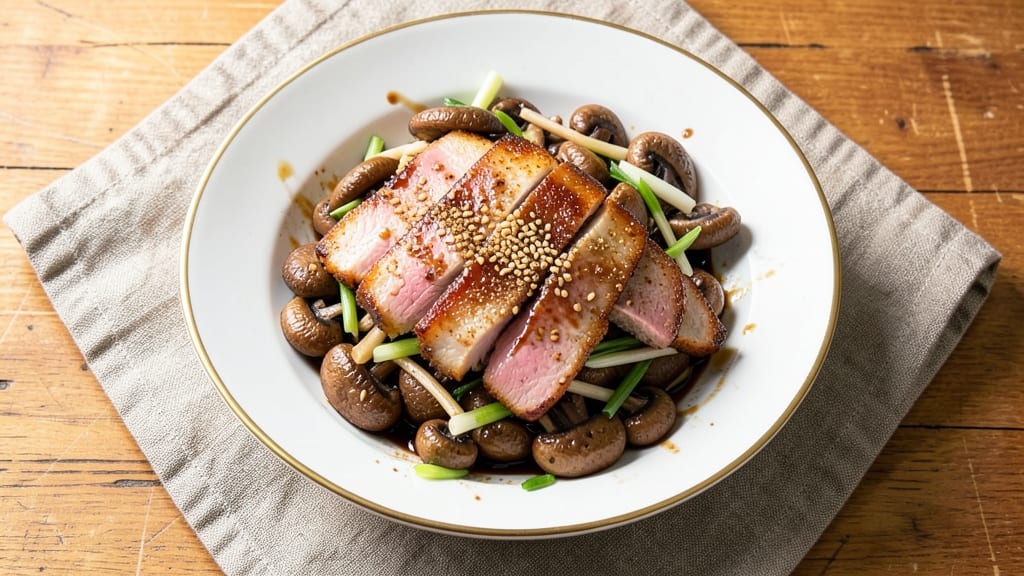
This Chinese pork and mushrooms recipe delivers the perfect balance of savory, umami, and aromatic five-spice depth that defines authentic stir-fry.
The secret lies in high-heat searing of pork slices followed by mushrooms that absorb all the flavorful sauce—just like the dishes I learned to perfect during my apprenticeship under Master Chef Chen. Every bite delivers tender pork with mushrooms that soak up the complex, caramelized sauce.
The technique is simpler than it sounds: quick searing of pork creates a flavorful crust, while mushrooms release their natural umami when cooked just until tender. Five-spice powder adds that signature Chinese warmth, while soy sauce and a touch of sugar create the perfect balance.
This recipe transforms simple ingredients into a restaurant-quality dish that's ready in under 30 minutes.
What you'll end up with is a vibrant stir-fry where perfectly seared pork slices rest against plump, flavorful mushrooms in a glossy sauce that coats every bite. The aroma alone will have your kitchen filled with that unmistakable Chinese restaurant scent—smoky, aromatic, and impossibly inviting.
The texture contrast between tender pork and slightly chewy mushrooms makes each bite satisfying.
Serve this over steamed jasmine rice or noodles for a complete meal that's both comforting and sophisticated. The leftovers reheat beautifully, making it perfect for meal prep or when you want to recreate that restaurant experience at home. Let's get cooking—this stir-fry is worth every minute of prep time.
Ingredients for chinese pork and mushroom
These fifteen ingredients transform into a restaurant-worthy stir-fry with layers of umami and aromatic depth.
| Ingredient | Amount | Notes |
|---|---|---|
| Boneless Pork Loin 🥩 | 1 ¼ lb | Thinly sliced against grain |
| Shiitake Mushrooms 🍄 | 1 lb | Stems removed, caps sliced |
| Five-Spice Powder 🌶️ | 1 tbsp | Authentic Chinese blend |
| Light Soy Sauce 🥄 | ½ cup | Kikkoman preferred |
| Dark Soy Sauce 🥄 | 1 tbsp | For depth of color |
| Sesame Oil 🫒 | 1 tbsp | Toasted, for aroma |
| Rice Vinegar 🍶 | 1 tbsp | White or seasoned |
| Granulated Sugar 🍚 | 1 tbsp | Balances flavors |
| Garlic Cloves 🧄 | 4 cloves | Minced, aromatic base |
| Fresh Ginger 🌿 | 1 tbsp | Grated, zesty kick |
| Vegetable Oil 🫒 | ½ cup | High smoke point |
| Scallions 🧅 | 3 whole | Thinly sliced, garnish |
| Toasted Sesame Seeds 🌾 | 1 tbsp | For crunchy finish |
| Cornstarch 🌾 | 1 tbsp | For tenderizing pork |
| Salt 🧂 | 1 tsp | Kosher preferred |
The pork is non-negotiable—thinly sliced against the grain for maximum tenderness. Most Asian markets carry pre-sliced pork loin, but if you're cutting it yourself, ask for the butcher to slice it paper-thin. Whole Foods or H Mart always have the best quality for stir-fry. Shiitake mushrooms should be plump and firm—avoid the dried ones unless you're soaking them first. For the five-spice powder, Penzeys or Spicewalla carry authentic blends that make all the difference. The secret to that signature Chinese restaurant aroma? Toast your sesame seeds in a dry pan until fragrant—just before serving.
No five-spice powder? Mix 1/2 tsp each of cinnamon, fennel, clove, star anise, and Sichuan peppercorn—it's the same magic. Light soy sauce out of stock? Dark soy sauce plus a pinch of sugar works in a pinch, though it won't have that same glossy sheen. Fresh ginger too fibrous? Substitute 1/2 tbsp ground ginger, but you'll lose that bright zing. The cornstarch isn't just for thickening—it tenderizes the pork when tossed in first. And if you're feeling lazy, pre-minced garlic from a jar still works, but fresh is always better. For the mushrooms, oyster mushrooms can replace shiitake if that's what's available—they just cook faster.
This stir-fry tastes even better the next day—reheat gently in a wok with a splash of water to restore that glossy sauce. Store leftovers in an airtight container for up to 4 days in the fridge, or freeze for 3 months by portioning into single-serving containers. The mushrooms will soak up any extra sauce, so don't be shy with the leftovers. For serving, jasmine rice is ideal, but any long-grain white rice works. Garnish with those toasted sesame seeds right before eating—they add that crucial crunch that disappears when stored. Make a double batch and freeze half for those nights when you crave takeout but want something healthier.
Why You'll Love This Recipe
- One-Pan Magic: I swear by this recipe for lazy nights—just sear the pork, toss in the shiitakes, and let the five-spice powder do its thing. No chopping boards, no extra pans, and honestly? The smell alone makes me forget I’m cooking.
- Umami Bomb: That dark soy sauce caramelizing on the mushrooms? Pure flavor gold. The five-spice powder adds this warm, earthy depth that makes it taste like a restaurant dish, not a weeknight meal.
- Lunchbox Hero: Between us, this keeps perfectly in the fridge for four days. Pack it cold for work or reheat it for dinner—same rich, savory punch every time. My kids’ favorite? The mushrooms stay tender, no matter how many times I microwave it.
- Budget Stretch: Pork loin and shiitakes are affordable, but they feel fancy. A little dark soy sauce goes a long way, and five-spice powder is a cheap pantry staple that makes everything taste elevated. I’ve fed six people for under $15 with this—no complaints.
Step-by-step instructions for Chinese pork and mushrooms stir-fry
Here's how to transform simple ingredients into a restaurant-worthy stir-fry bursting with five-spice warmth and umami depth.
Tenderize and Marinate the Pork
Slice the 1.25 lb boneless pork loin thinly against the grain into ¼-inch thick strips. Place them in a bowl and toss with 1 tbsp cornstarch and 1 tsp salt. This creates a protective barrier that keeps the pork juicy during the high-heat stir-fry. Let it sit for 15 minutes while you prep the mushrooms.
The cornstarch acts like a natural tenderizer here, breaking down the muscle fibers while preventing the meat from drying out. You'll see the strips become slightly opaque and firm to the touch—this is your signal they're ready for cooking. Real talk: don't skip this step or you'll end up with chewy pork instead of melt-in-your-mouth perfection.
Prepare the Mushrooms and Aromatics
Remove stems from the 1 lb shiitake mushrooms and slice the caps into ¼-inch thick pieces. In a separate bowl, combine 4 cloves minced garlic, 1 tbsp grated fresh ginger, 1 tbsp five-spice powder, 1 tbsp granulated sugar, 0.5 cup light soy sauce, 1 tbsp dark soy sauce, and 1 tbsp rice vinegar. Mix well until the five-spice powder dissolves completely.
Here's the thing—shiitake mushrooms should be cooked just until tender, not mushy. You want them to retain their meaty texture while absorbing all those amazing flavors. The five-spice powder adds that signature Chinese warmth, while the sugar and vinegar balance the saltiness of the soy sauces. This marinade will infuse the mushrooms with layers of flavor while you cook.
Stir-Fry the Pork to Perfect Doneness
Heat 0.5 cup vegetable oil in a wok or large skillet over medium-high heat until shimmering. Add the pork strips in a single layer and let them sear undisturbed for 1-2 minutes until the edges turn light golden brown. This initial sear locks in juices and creates that beautiful caramelized crust.
Don't walk away during this step. You'll see the pork release easily from the pan when it's ready to stir. Once golden, push the pork to one side of the wok and add the shiitake mushrooms. Stir-fry for 3-4 minutes until the mushrooms release their moisture and begin to soften. The mushrooms should be tender but still hold their shape—overcooking turns them into mush.
Combine and Finish with Umami Depth
Pour the marinade over both the pork and mushrooms, then toss everything together vigorously for 1-2 minutes until the sauce clings to the ingredients. The heat from the wok will cause the cornstarch to activate, creating a natural thickening that coats everything in a glossy glaze.
Here's where it gets fun—drizzle in 1 tbsp sesame oil and toss again. The aroma will fill your kitchen instantly. Cook for another 30 seconds until everything is evenly coated and the pork reaches an internal temperature of 145°F. You'll know it's perfect when the pork is no longer pink in the center and the sauce has thickened to a velvety consistency.
Garnish and Serve Immediately
Transfer the stir-fry to a serving platter and sprinkle with 1 tbsp toasted sesame seeds and 3 whole sliced scallions. The sesame seeds add a delightful crunch while the scallions provide a fresh contrast to the rich flavors. Serve immediately over steamed jasmine rice or noodles while still sizzling hot.
This dish tastes best straight from the wok when the pork is tender, the mushrooms are still firm, and the sauce is at its peak glossiness. The five-spice powder's complex aroma will linger in every bite, balanced perfectly by the umami from the soy sauces and the brightness of the rice vinegar. Trust me, your kitchen will smell incredible—and so will your dinner table.
Pro Tips For Making Chinese Pork And Mushroom
- Sear the Pork Hard: High heat for 3-4 minutes per side until deep brown—no, it won’t cook through yet. That crust locks in flavor and keeps the pork juicy when it finishes in the sauce. I used to skip this, and the dish always tasted flat afterward.
- Slice Mushrooms Thin: Shiitake stems included, cut lengthwise into ¼-inch strips. Thinner slices cook faster and soak up the soy sauce better. Thick slices turn tough and chewy, and nobody wants that.
- Bloom the Five-Spice: Toast the five-spice powder in the dry pan for 30 seconds before adding oil—it wakes up the flavors. I learned this the hard way when my dish smelled underwhelming until the last minute.
- Use Both Soy Sauces: Light soy for color, dark soy for depth—don’t substitute one for the other. The dark soy adds that rich, caramelized umami that makes the dish sing. I’ve tried shortcuts, and they’re noticeably duller.
Perfect pairings for this dish
Rice Pairings
Steamed jasmine rice is my go-to pairing—its delicate floral aroma complements the five-spice depth without overpowering. Cook 1.5 cups of rice to 3 cups of water for fluffy grains that soak up the stir-fry's sauce beautifully.
For extra authenticity, use Thai fragrant rice from H Mart—its nutty undertones enhance the dish's complexity. 🍚
Noodle Alternatives
For a heartier meal, serve over egg noodles or rice noodles—both absorb the sauce differently. Toss 8 oz dried rice noodles with 1 tbsp sesame oil before adding the stir-fry to prevent sticking.
I love udon noodles for their chewy texture, especially when lightly toasted in the wok first. The noodles' neutral base lets the pork and mushrooms shine.
Vegetable Sides
Add steamed bok choy or baby spinach to your plate—their mild bitterness cuts through the richness. Blanch 2 cups bok choy for 2 minutes in boiling water, then shock in ice water. Toss with 1 tsp toasted sesame oil and a pinch of salt.
For a crunchy contrast, serve quick-pickled cucumbers (slice 1 English cucumber thinly and marinate in 2 tbsp rice vinegar + 1 tsp sugar for 15 minutes).
Dipping Sauces
Create a simple hoisin-ginger dip by mixing 2 tbsp hoisin sauce, 1 tsp grated ginger, and 1 tsp rice vinegar. This sweet-spicy contrast elevates every bite. For heat lovers, add ½ tsp chili crisp to the hoisin.
I also keep a small bowl of sriracha mayo (mix 2 tbsp mayo with 1 tsp sriracha) on the side—it's a crowd-pleaser for dipping.
Beverage Pairings
Serve with a light Chinese green tea like Dragon Well—its grassy notes refresh the palate between rich bites. For beer lovers, a crisp lager (like Tsingtao) balances the dish's umami. Red wine drinkers should opt for a light Pinot Noir—its acidity complements the soy sauce without overpowering.
I always keep a pitcher of iced jasmine tea on hand for a refreshing sipper.
Nutrition facts
Frequently asked questions
Can I substitute regular pork loin for this recipe?
Yes, but with one key adjustment: always slice it against the grain for maximum tenderness. For extra juiciness, marinate the pork in 1 tbsp soy sauce and 1 tsp cornstarch for 15 minutes before cooking. Avoid fatty cuts like pork belly—they can make the stir-fry greasy.
What if I don't have five-spice powder?
Make your own blend! Mix ½ tsp each of cinnamon, fennel, clove, star anise, and Sichuan peppercorn—this recreates the authentic warmth. For a simpler version, use 1 tsp ground ginger plus ½ tsp black pepper. The dish will still taste delicious, though the depth of flavor will differ slightly.
How do I prevent the mushrooms from turning mushy?
Cook them for just 3-4 minutes over medium-high heat until tender but still firm. Remove stems first—they absorb too much moisture. For extra texture, add ¼ cup sliced water chestnuts at the end of cooking. Overcrowding the pan also causes mushiness, so work in batches if needed.
Can I make this recipe in a regular skillet instead of a wok?
Use a 12-inch nonstick or cast-iron skillet and reduce the oil to 2 tbsp. The key is maintaining high heat—preheat your pan for 3 minutes before adding oil. Stir-fry in small batches to avoid steaming. A wok gives better heat distribution, but a good skillet works perfectly.
How can I make this dish spicier?
Add ½ tsp chili flakes to the sauce or 1 tbsp chili crisp at the end. For heat lovers, toss in 1 minced Thai chili with the aromatics. Garnish with extra sliced scallions to balance the spice. Remember: you can always add more heat, but you can't remove it!