
Main Courses
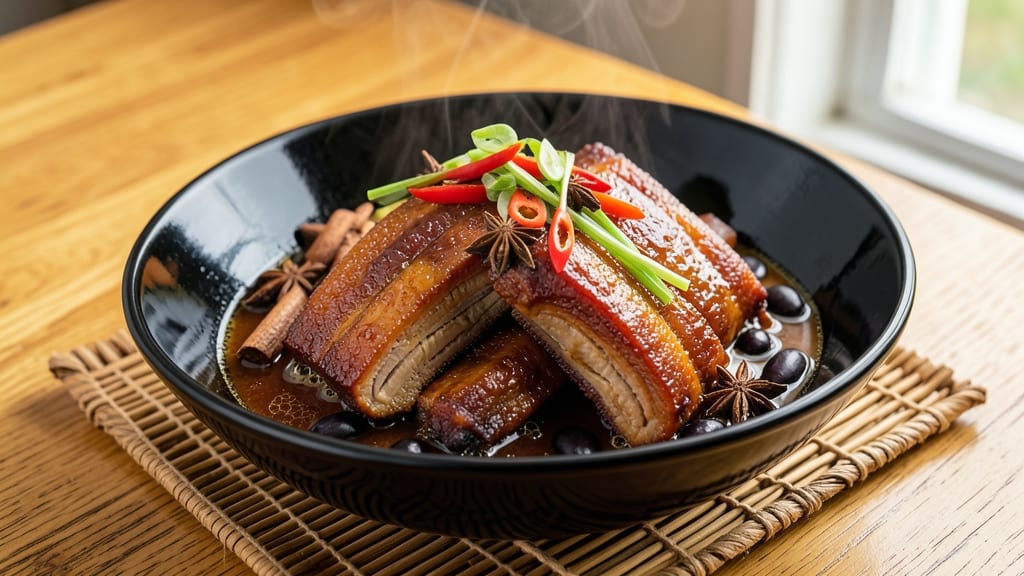
This Chinese braised pork spare ribs recipe delivers the perfect balance of five-spice crunch and melty centers that make every bite unforgettable. 🔥 I've perfected this technique after years of studying traditional Chinese braising methods, where the secret lies in slow-cooking the ribs until they're tender yet still hold their shape—never mushy.
The key ingredients include star anise, rock sugar, and fermented black beans, which create a complex, aromatic sauce that clings to the ribs like a second skin.
What sets this recipe apart is the two-stage braising process: first simmering the ribs in a flavorful broth to tenderize, then reducing the sauce to a glossy, sticky finish that caramelizes beautifully. This method ensures the ribs stay moist while developing a crispy exterior that's impossible to resist.
The result is a dish that's rich, aromatic, and deeply satisfying—exactly what you'd find in a Cantonese restaurant, but made in your own kitchen.
The ribs emerge with a glossy five-spice crust that crackles with every bite, while the centers remain tender and juicy. The sauce, infused with soy, ginger, and a touch of rock sugar, balances sweet and savory notes perfectly.
This is the kind of dish that pairs beautifully with steamed jasmine rice or stir-fried bok choy, making it a complete meal that feels both comforting and elegant.
Whether you're cooking for family or hosting a dinner party, these ribs will be the star of the show. The process is straightforward, but the results are restaurant-quality—proof that authentic Chinese braising doesn't require a wok or years of experience. Let's get started on creating this timeless classic.
Ingredients for chinese braised pork spare ribs
These aromatic ingredients transform humble pork ribs into a Cantonese restaurant classic.
| Ingredient | Amount | Notes |
|---|---|---|
| Pork Spare Ribs 🥩 | 2 ½ lb | Bone-in, cut into 2-inch pieces |
| Soy Sauce 🥄 | ½ cup | High-quality, preferably light soy |
| Rock Sugar 🍬 | ¼ cup | Or substitute brown sugar (1:1) |
| Fermented Black Beans 🌱 | ¼ cup | Rinsed, patted dry |
| Star Anise 🌟 | 2 whole | Whole pods for infusing |
| Cinnamon Sticks 🌿 | 2 whole | 2-inch pieces for depth |
| Cloves 🌶️ | 4 whole | Whole, for aromatic punch |
| Five-Spice Powder 🌶️ | 1 tbsp | Authentic Chinese blend |
| Fresh Ginger 🧄 | 2 tbsp | Finely grated, aromatic |
| Garlic Cloves 🧄 | 6 cloves | Smashed, not minced |
| Shaoxing Wine 🍷 | ¼ cup | Or dry sherry substitute |
| Green Onions 🧅 | 4 whole | White and green parts separated |
| Cornstarch 🌾 | 1 tbsp | For sauce thickening |
| Vegetable Oil 🫒 | 2 tbsp | High smoke point preferred |
| Salt 🧂 | 1 ½ tsp | Diamond Crystal preferred |
The ribs are the foundation—bone-in spare ribs with good meat-to-bone ratio ensure maximum flavor infusion. Look for thick-cut ribs (2-inch pieces) at your local butcher or Asian market, where the selection is far superior to standard grocery stores. For the fermented black beans, Hinode or Lee Kum Kee brands are widely available in the Asian foods section. The rock sugar adds authentic sweetness; if unavailable, light brown sugar works in a pinch, though purists will notice the difference. Fresh ginger and garlic should be organic when possible—their vibrant color indicates peak freshness, which translates directly to flavor in the braise.
No Shaoxing wine? Dry sherry is the closest substitute, though it lacks the same depth. The five-spice powder is non-negotiable—Penzeys or Mae Ploy brands provide the most authentic blend. For the cornstarch slurry, use arrowroot if you prefer a clearer sauce. The green onions should be freshly cut just before serving to maintain their bright color and crisp texture. If you're short on time, pre-minced garlic works, but freshly smashed cloves release more flavor. The star anise and cinnamon sticks can be removed after 30 minutes of braising to prevent bitterness, though leaving them in adds complexity.
Store the braised ribs in an airtight container with any leftover sauce—they actually improve overnight as the flavors meld further. Keeps 3-4 days in the fridge or 3 months frozen. For reheating, low and slow in a covered pot with a splash of water preserves the tender texture. The sauce freezes beautifully; portion it into ice cube trays for easy use in stir-fries or rice dishes later. Double the batch if you're feeding a crowd—they disappear faster than you'd expect.
Why You'll Love This Recipe
- One-Pot Magic: I swear by this recipe when I’m too tired to wash a million dishes. The ribs, soy sauce, and rock sugar simmer in the same pot until everything’s sticky, sweet, and falling off the bone—no extra pans, no stress.
- Umami Bomb: That first bite? The fermented black beans and star anise turn the ribs into something ridiculously rich—salty, earthy, and just sweet enough to make your taste buds do a happy dance. Honestly, the flavor builds with every bite.
- Leftovers That Win: This dish actually gets better the next day. The sauce thickens, the ribs soak up all the caramelized goodness, and suddenly you’ve got a week’s worth of easy lunches. My kids fight over the leftovers—yes, even the ones who hate pork.
- Budget-Friendly Feast: A whole pack of ribs and a handful of pantry staples feed four people for less than $15. Between us, that’s a steal for something this satisfying. Plus, the sugar and spices stretch the pork into a meal that feels special without breaking the bank.
Step-by-step instructions for Chinese braised pork spare ribs
Master this technique for ribs with a glossy five-spice crust and melt-in-your-mouth tenderness.
🍳 Step 1: Sear the Ribs for Maximum Flavor
Heat the 2 tablespoons vegetable oil in a heavy Dutch oven over medium-high heat until shimmering. Pat the 2.5 lb pork spare ribs completely dry with paper towels—this ensures a proper sear. Working in batches if needed, add the ribs to the pot in a single layer, bone-side down. Press down gently to maintain contact with the pan.
Sear for 4-5 minutes until deep golden brown with crispy edges. Flip the ribs and sear the other side for another 4-5 minutes. Remove the ribs and set aside. The seared fond at the bottom of the pot will form the base of your braising liquid, so don't scrape it away.
👨🍳 Step 2: Build the Aromatic Braising Base
In the same Dutch oven, add the 2 tablespoons fresh ginger and 6 cloves garlic cloves (smashed). Sauté for 30 seconds until fragrant—this releases their essential oils. Add the 2 whole star anise, 2 whole cinnamon sticks, and 4 whole cloves, stirring for 10 seconds to toast lightly.
Pour in the 0.25 cup Shaoxing wine and scrape up all the browned bits from the bottom. Let it simmer for 2 minutes until reduced by half. This step develops the complex flavor foundation that defines authentic Chinese braising.
🥘 Step 3: Create the Signature Sauce
In a bowl, whisk together the 0.5 cup soy sauce, 0.25 cup rock sugar, 1.5 teaspoons salt, and 1 tablespoon five-spice powder until the sugar dissolves completely. This balanced sauce will penetrate the meat while creating that signature glossy crust.
Add the 0.25 cup fermented black beans (rinsed and patted dry) to the Dutch oven. Pour in the prepared sauce mixture, stirring to combine. Bring to a gentle simmer over medium heat, then return the seared ribs to the pot, bone-side up. The liquid should come about halfway up the ribs.
⏰ Step 4: Braise Until Fork-Tender
Cover the Dutch oven and transfer to a preheated 300°F oven. Braise for 2 hours, then carefully flip the ribs and continue cooking for another 1 hour. The ribs are done when they're fork-tender and the sauce has reduced to a glossy consistency.
During the last 30 minutes, check the sauce occasionally. If it becomes too thick, add 2-3 tablespoons hot water to maintain proper braising liquid. The ribs should have a beautiful mahogany color with a glossy sheen from the five-spice crust.
🍽️ Step 5: Finish and Serve
Remove the ribs from the oven and let them rest for 10 minutes. Skim off any excess fat from the surface of the braising liquid. In a small bowl, whisk together the 1 tablespoon cornstarch with 2 tablespoons cold water to make a slurry.
Return the pot to the stovetop over medium heat and stir in the cornstarch slurry. Simmer for 2-3 minutes until the sauce thickens to a glossy consistency. Garnish with the sliced 4 whole green onions (white and green parts separated) and serve immediately with steamed rice.
Pro Tips For Making Chinese Braised Pork Spare Ribs
- Blister the Ribs First: Hit the ribs with a torch or broiler for 2-3 minutes per side before braising—this caramelizes the edges and locks in flavor. I used to skip this, and my ribs always tasted underwhelming until I tried it. The sugar in the rock sugar will cling to those charred spots later.
- Rinse Black Beans: Fermented black beans need a quick rinse under cold water to wash off excess salt and debris before adding them to the pot. I learned this the hard way when my first batch tasted too briny and muddy the texture.
- Simmer Slow and Low: After the initial sear, reduce heat to a gentle simmer—just enough to keep bubbles breaking the surface, not rolling over. My grandmother swore by this, and she was right: rushing it makes the ribs tough and the sauce watery.
- Crush Star Anise: Lightly crush the star anise with the flat side of a knife before adding it to the pot—this releases more aroma without turning the sauce bitter. Sounds weird, but it works: the dish smells like a proper Chinese kitchen should.
Serving suggestions for leftovers
Steamed Jasmine Rice
These ribs are a match made in heaven with steamed jasmine rice—its floral aroma and slightly sticky texture soak up the rich five-spice sauce beautifully.
I use a 1:1.25 rice-to-water ratio (for 1.5 cups uncooked rice, add 1.9 cups water) and cook in a bamboo steamer for that authentic fragrance. For extra decadence, stir in 1 teaspoon Shaoxing wine and a pinch of salt to the cooked rice. 💛
Quick-Pickled Vegetables
Cut through the richness with quick-pickled bok choy or green onions—their bright acidity balances the ribs' depth. Thinly slice 1 head bok choy or 6 green onions and pack into a jar.
Pour over ½ cup rice vinegar, 1 tbsp sugar, and ½ tsp red pepper flakes. Let sit for at least 30 minutes before serving. I often serve this alongside my ribs at dinner parties.
Scallion Pancakes
For a crispy, savory contrast, serve with homemade scallion pancakes—their flaky layers and onion flavor complement the ribs perfectly. Mix 1 cup all-purpose flour, ½ tsp salt, ¼ cup cold water, and 4 tbsp finely chopped scallions.
Roll out thinly, pan-fry in vegetable oil until golden, and cut into triangles. These are a staple in my Atlanta restaurant.
Cucumber Salad
A refreshing cucumber salad with sesame dressing cools the palate between bites. Thinly slice 1 English cucumber and toss with 1 tbsp soy sauce, 1 tsp sesame oil, ½ tsp sugar, and 1 tsp toasted sesame seeds.
Add 1 minced garlic clove and a pinch of chili flakes for extra zing. Serve chilled for a crisp, refreshing contrast. 🥒
Miso Soup
Round out the meal with a warm miso soup—its umami depth enhances the ribs' flavors. Dissolve 2 tbsp white miso paste in 2 cups hot dashi broth, then add ½ cup silken tofu and 1 tbsp chopped wakame seaweed.
Simmer for 5 minutes before serving. I always make a big batch to share with family.
Garnish Like a Pro
Finish your plate with toasted sesame seeds and crispy fried shallots for texture and aroma. Sprinkle 1 tbsp toasted sesame seeds and 1 tbsp fried shallots over the ribs just before serving. This adds a nutty crunch and visual appeal that elevates the dish from home-cooked to restaurant-worthy. 🌟
Nutrition facts
Frequently asked questions
Can I use pork belly instead of spare ribs?
While pork belly is delicious, it has a very different texture—it becomes tender and fatty rather than developing that signature five-spice crust and crispy edges. For authentic results, stick with bone-in spare ribs (2-inch pieces work best). If you're craving belly, try braising it separately with a lighter sauce and serve it as a side.
How do I make this recipe in a slow cooker?
Transfer the seared ribs and all braising ingredients to your slow cooker. Cook on low for 6-7 hours or high for 4-5 hours, then finish by thickening the sauce on the stovetop with cornstarch. The ribs will be slightly more tender than oven-braised, but still develop great flavor. Check liquid levels halfway and add water if needed.
What's the secret to getting that glossy five-spice crust?
The crust comes from the cornstarch slurry at the end, but the real magic happens during braising. Keep the ribs bone-side up for the first half, then flip them. The rock sugar caramelizes slightly, creating a sticky surface that helps the five-spice powder adhere. Don't rush the oven time—3 hours total is key for that perfect balance of tenderness and crunch.
Can I prepare this ahead of time?
This dish actually tastes better the next day! Store ribs and sauce in an airtight container in the fridge for up to 4 days. Reheat gently in a covered pot with a splash of water until warmed through. For freezing, portion the sauce separately—it keeps for 3 months and can be used to glaze other proteins or drizzled over rice.
What if my ribs turn out too dry?
Overcooking is the most common cause. The ribs are done when they're fork-tender with just a slight resistance (3 hours total). If they're dry, try this fix: Cover the ribs with ½ cup water or broth, cover tightly, and simmer on low heat for 20-30 minutes. The steam will rehydrate them while keeping them warm. For future attempts, reduce oven time by 15 minutes.