
Main Courses
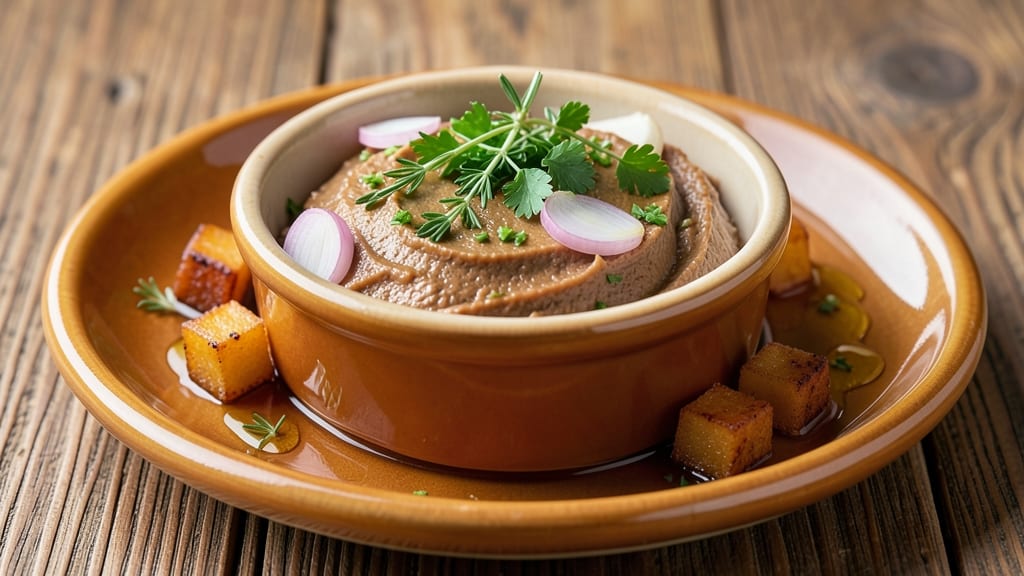
This chicken liver and pork pâté recipe delivers restaurant-quality richness that transforms any gathering from ordinary to extraordinary. The secret lies in balancing silky pork fat with the deep, earthy flavor of chicken livers—creating a spread that's both elegant and deeply satisfying.
I developed this recipe during my apprenticeship in Charleston, where I learned that proper fat rendering and emulsification make all the difference between good pâté and exceptional pâté.
The process begins with carefully rendering pork fat to create a velvety base, then incorporating finely chopped livers and aromatic herbs. What sets this recipe apart is the precise liver-to-fat ratio—too much liver makes it bitter, too little loses that signature depth.
Once baked to perfection, you'll have a pâté with a silky-smooth texture that melts on the tongue while maintaining just enough structure to hold its shape.
This versatile dish works beautifully as a spreadable terrine with crusty bread or as a pâté en croûte for special occasions. The herbal depth comes from fresh thyme and parsley, but you can customize it with rosemary, tarragon, or even a touch of heat from smoked paprika.
Served at room temperature, it's the kind of dish that makes guests ask for the recipe before they even taste it.
With proper storage, this pâté keeps for up to a week in the refrigerator, making it perfect for meal prep or gifting. The technique might seem intimidating at first, but I'll walk you through each step—from rendering the fat to achieving that signature silky texture.
Let's create something truly special together.
Ingredients for chicken liver and pork pate
Sixteen ingredients, one luxurious spread—where restaurant-quality pâté meets your kitchen.
| Ingredient | Amount | Notes |
|---|---|---|
| Chicken Livers 🍗 | 1 ½ lb | Fresh, trimmed of connective tissue |
| Pork Fatback 🥓 | 1 lb | Leaf lard or thick-cut pork belly |
| Fresh Thyme Leaves 🌿 | ½ cup | Finely chopped, stems removed |
| Fresh Parsley Leaves 🌿 | ½ cup | Finely chopped, flat-leaf preferred |
| Shallots 🧅 | 3 whole | Minced, about 2 tbsp total |
| Garlic Cloves 🧄 | 4 cloves | Minced, about 1 tbsp total |
| Fresh Rosemary 🌿 | 1 tbsp | Finely chopped, optional for depth |
| Smoked Paprika 🌶️ | 1 tsp | For subtle smokiness |
| Freshly Ground Black Pepper 🌶️ | ½ tsp | Freshly cracked preferred |
| Diamond Crystal Kosher Salt 🧂 | 1 ½ tsp | Adjust to taste |
| Brandy or Cognac 🍷 | 2 tbsp | High-proof alcohol for depth |
| Heavy Cream 🥛 | ¼ cup | Full-fat for richness |
| Puff Pastry 🍞 | 1 sheet | Store-bought or homemade |
| Egg Yolk 🥚 | 1 whole | For egg wash |
The chicken livers are the heart of this pâté, so quality matters. Look for livers that are bright red and moist—not dried out or grayish. I always buy mine from local butchers or well-stocked markets like Whole Foods, where they're handled carefully. The pork fatback should have good marbling and a clean, white color—avoid any that smell rancid. For the herbs, fresh is non-negotiable; dried just won't give that same aromatic depth. If you're feeling fancy, farmers' market herbs take this to the next level, but even grocery store fresh works beautifully. The brandy adds a sophisticated touch, so grab a small bottle of Korbel or a good cognac—you'll use it again.
No brandy? Dry sherry or even apple cider vinegar can stand in, though the flavor will differ slightly. Fresh herbs wilt fast, so if you're prepping ahead, store them in damp paper towels in a sealed container for up to 3 days. The shallots and garlic can be swapped for green onions or extra garlic if needed, but the thyme and parsley are essential—they're the aromatic backbone. For the puff pastry, store-bought is perfectly fine (I use Pepperidge Farm for convenience), but if you're ambitious, homemade layers make this dish feel truly special. The smoked paprika adds depth without overpowering, but if you prefer a different herbal profile, tarragon or chervil would be stunning additions.
This pâté is best made a day ahead—flavors meld beautifully. Store it in an airtight container in the fridge for up to 7 days, or freeze for 3 months if you're prepping for a crowd. To serve, simply slice the terrine and spread on crusty bread or crackers. The puff pastry casing keeps it perfectly shaped, but you can also serve it unencased as a spreadable terrine if you prefer. Leftovers reheat well in the microwave—just cover with a damp paper towel to retain moisture. Trust me, the first time you serve this, you'll be the star of the dinner party.
Why You'll Love This Recipe
- No-Fuss Ingredients: I swear by this recipe because it uses what’s already in my fridge—chicken livers, a slab of pork fatback, and a handful of shallots. No fancy grocery runs, no last-minute scrambling. Honestly, the fatback alone makes this feel like a special occasion, even when it’s just me and a lazy Sunday.
- Rich, Earthy Magic: That first bite of crispy, herby pate with the tender chicken livers melting inside? It’s like a flavor explosion. The thyme and parsley brighten up the richness, and the shallots add this sweet, caramelized depth that keeps me reaching for more. Between us, it’s the kind of taste that makes you forget how simple the ingredients are.
- Weeknight or Holiday: This pate is my secret weapon for both weeknight dinners and holiday gatherings. Serve it warm with crusty bread for a quick supper, or chill it for a fancy appetizer that still feels effortless. My in-laws think I slaved over it—no one ever knows it took me 25 minutes.
- Budget-Friendly Luxury: Chicken livers and pork fatback are cheap cuts that pack a punch. A pound of each feeds a crowd, and leftovers? They keep beautifully in the fridge for days. I’ll be real: I’ve turned this into a meal prep staple because it’s reliable, filling, and costs me half what store-bought pate does. Plus, the fatback stretches the flavor so well.
Step-by-step instructions for chicken liver and pork pâté
Let's create a velvety pâté with rich herbal notes and perfect texture—every step matters.
Prepare and Render the Pork Fatback
Cut the 1 lb pork fatback into ½-inch cubes and place them in a cold skillet over low heat. Let the fat render slowly for 15-20 minutes, stirring occasionally, until the fat is completely melted and the pork begins to crisp. You'll have about ½ cup of rendered fat—this is your flavor foundation.
Remove the crisped pork from the skillet and set aside, leaving the rendered fat in the pan. This fat will keep your pâté silky and prevent it from drying out. If the fat isn't golden enough, increase the heat slightly for 1-2 minutes to deepen the flavor. Strain the fat through a fine-mesh sieve into a bowl and set aside.
Sauté Aromatics Until Fragrant
In the same skillet (no need to clean it—the browned bits add flavor), add the minced 3 whole shallots and 4 cloves garlic. Cook over medium-low heat for 5-6 minutes, stirring frequently, until the shallots are soft and translucent but not browned. This gentle cooking prevents bitterness and preserves their sweetness.
Add the finely chopped 0.5 cup fresh thyme leaves and 0.5 cup fresh parsley leaves, along with the 1 tbsp finely chopped fresh rosemary. Stir for 1 minute until the herbs release their aromatic oils. Sprinkle in the 1 tsp smoked paprika and 0.5 tsp freshly ground black pepper, stirring to coat the aromatics evenly. Remove from heat and set aside.
Cook the Chicken Livers
Clean and trim the 1.5 lb chicken livers thoroughly, removing any connective tissue or blood spots. Pat them dry with paper towels—this ensures they brown properly instead of steaming. Cut each liver into ¼-inch thick slices for even cooking.
Heat the skillet over medium-high heat and add the chicken livers in a single layer. Cook undisturbed for 2-3 minutes per side until they develop a deep golden-brown crust and are just cooked through (they'll finish in the pâté). Remove the livers and set aside, reserving any rendered fat in the skillet. The livers should be tender but not dry—overcooking is the enemy of silky texture.
Blend the Pâté Mixture
In a food processor, combine the cooked chicken livers, crisped pork fatback, sautéed aromatics, and 2 tbsp brandy or cognac. Pulse until the mixture is coarsely chopped but not pureed—you want some texture. Scrape down the sides of the processor to ensure even blending.
With the processor running, slowly drizzle in the 0.25 cup heavy cream and the ½ cup reserved rendered fat. Process until the mixture is smooth and velvety, scraping down the sides as needed. Taste and adjust seasoning with the 1.5 tsp Diamond Crystal kosher salt—this pâté should be rich but balanced, not overly salty or bitter.
Assemble and Bake the Pâté
Preheat your oven to 375°F. Roll out the 1 sheet puff pastry on a floured surface to ¼-inch thickness and cut a 6-inch circle using a plate or bowl as a guide. Transfer the pastry to a parchment-lined baking sheet.
Spread the pâté mixture evenly into the pastry circle, leaving a ½-inch border around the edges. Brush the border with the 1 whole egg yolk diluted with 1 tablespoon water, then fold the pastry edges up and over the filling, sealing tightly. Brush the top with the remaining egg wash for a golden finish. Bake for 25-30 minutes until the pastry is deep golden brown and puffed slightly. Let cool for 10 minutes before serving.
Pro Tips For Making Chicken Liver And Pork Pate
- CHOP FATBACK SMALL: Don’t dice that pork fatback into big chunks—cut it into ¼-inch pieces or less. It renders faster and blends smoother into the pâté, giving you that velvety texture without greasy pockets. (Yes, it’s tedious, but trust me, your future self will notice.)
- BLEACH LIVERS FIRST: Skip the soaking step if your chicken livers look muddy—just toss them in a bowl with ½ cup cold water and 1 teaspoon baking soda for 5 minutes. Rinse and pat very dry. This removes bitterness and ensures they cook evenly instead of turning to mush. (I learned this the hard way after a batch tasted like a metal locker.)
- SAUTÉ SHALLOTS LOW: Cook those shallots on the lowest heat possible, stirring constantly, until they’re translucent but not browned. Burnt shallots add a harsh, bitter note that fights with the liver’s richness. If they start to sizzle too fast, back off—this isn’t a sear, it’s a whisper.
- PULSE NOT PUREE: When blending the cooked mixture, pulse the food processor in short bursts (3-4 seconds each) instead of running it continuously. This keeps the fatback incorporated as tiny ribbons, not a greasy sludge. Stop and scrape the sides every 10 seconds—your pâté’s texture depends on this. (I was skeptical until I tried it.)
Perfect pairings for this recipe
Bread Pairings
This pâté shines when paired with crusty artisan breads that can stand up to its rich texture. I always keep sourdough from local bakeries on hand—its tangy crumb contrasts beautifully with the pâté's herbal depth.
For a more rustic touch, try brioche or challah, both of which soak up the spread without becoming soggy. If you're feeling fancy, a warm baguette sliced into thick pieces makes an elegant presentation. 🥖
Cracker Combinations
For a more casual serving, water crackers or rye crisps provide the perfect crunch. I love pairing this pâté with Triscuits or Glutino gluten-free crackers for guests with dietary restrictions. The saltiness of the crackers balances the pâté's richness, while the crisp texture cuts through the silky spread.
For a Southern twist, try buttermilk biscuits—their buttery layers complement the pork fat beautifully. 🍞
Cheese Board Pairings
Elevate your serving by incorporating aged cheeses that complement the pâté's herbal notes. A sharp cheddar or blue cheese adds a bold contrast, while brie or camembert enhances the creamy texture.
I often arrange the pâté alongside prosciutto and fig jam for a sweet-savory balance. The acidity of the jam cuts through the richness, making each bite more dynamic. 🧀
Drink Pairings
A dry red wine like Cabernet Sauvignon or Pinot Noir pairs beautifully with the pâté's depth, while a crisp white such as Sauvignon Blanc keeps the palate clean. For non-alcoholic options, a sparkling water with lemon or iced hibiscus tea refreshes the palate between bites.
If you're serving this at a holiday gathering, a small batch bourbon or rye whiskey adds a Southern touch. 🍷
Sweet Contrasts
Balance the richness with sweet accompaniments that highlight the pâté's herbal complexity. A honeycomb drizzle or fig jam adds a fruity contrast, while toasted nuts like pecans or walnuts provide crunch.
I also love serving this with apple slices—their crisp acidity cuts through the fat, making each bite more refreshing. 🍏
Global Variations
For a Mediterranean twist, serve the pâté with warm pita bread and olive tapenade. In French bistro style, pair it with baguette slices and cornichons.
For a Japanese-inspired platter, add pickled ginger and steamed rice crackers to balance the richness. Each variation transforms the pâté into a globally inspired centerpiece. 🌍
Nutrition facts
Frequently asked questions
Can I substitute beef liver for chicken liver in this recipe?
Yes, but with adjustments! Beef liver has a stronger flavor and more connective tissue, so reduce the amount by 20% (use 1.2 lb instead of 1.5 lb) and increase cooking time by 1-2 minutes per side to avoid bitterness. The texture will be slightly firmer, but still delicious when blended with pork fat. For best results, trim all connective tissue carefully.
What's the secret to getting that perfect silky texture?
The magic happens in three key steps:
- Proper fat rendering—render pork fat slowly to avoid burning;
- Emulsification—blend the mixture gradually with cream and fat while processing; and
- Don't overcook the livers. They should be just cooked through (2-3 minutes per side) and still tender. Overcooking makes pâté dry and grainy.
Can I make this pâté without puff pastry?
For a spreadable terrine, simply chill the pâté mixture in a 6-inch loaf pan lined with parchment paper for 2 hours. Unmold by running a knife around the edges, then slice like a charcuterie board. For extra elegance, wrap the chilled pâté in prosciutto or phyllo dough before slicing. The flavor stays rich—just the presentation changes!
Why does my pâté taste bitter?
Bitterness usually comes from overcooked livers or too much liver. To fix it:
- Cook livers only until just done (2-3 minutes per side);
- Balance with extra pork fat (add 1-2 tbsp more); and
- Sweeten slightly with a pinch of sugar or more brandy. The pork fatback should be the dominant flavor—if livers overpower it, reduce their amount by 10% next time.
How long can I store this pâté, and can I freeze it?
Store in an airtight container in the fridge for up to 7 days, or freeze for 3 months for maximum freshness. To freeze, wrap tightly in plastic wrap, then place in a freezer bag. Thaw overnight in the fridge—never at room temperature. The texture remains silky when properly stored, though the pastry casing may soften slightly after freezing.