
Soups & Stews
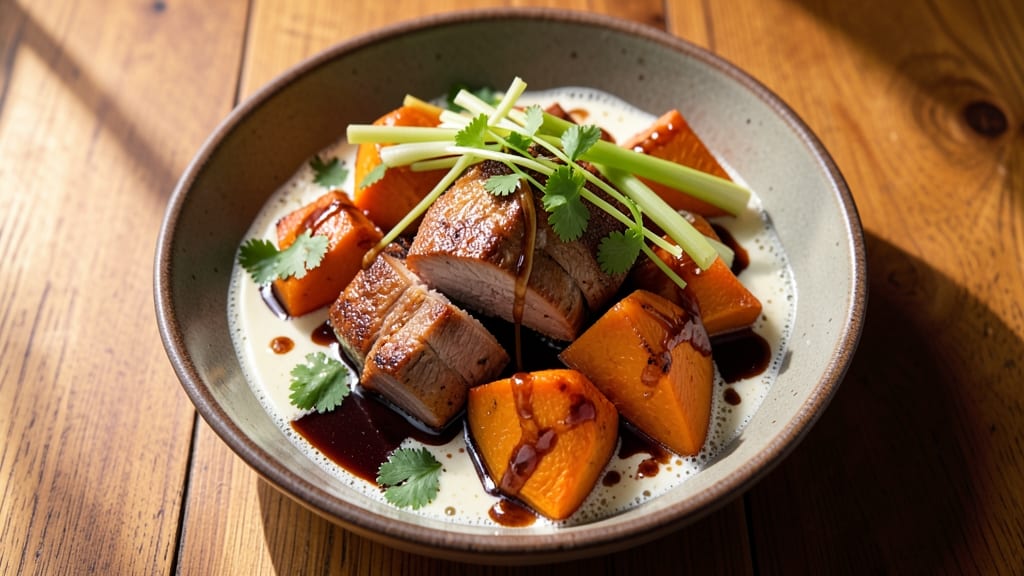
This Burmese pumpkin pork stew transforms humble ingredients into a symphony of spiced coconut and tender meat—where every spoonful tells a story of Myanmar's rich culinary traditions.
The secret lies in balancing tamarind's tang with coconut's richness, while fermented fish sauce adds depth that elevates this humble stew to restaurant-worthy status.
I first discovered this recipe during my time in Yangon, where it was served in family-run eateries, the aroma wafting through bustling streets long before the meal arrived.
The dish begins with pork shoulder, slow-cooked until fork-tender, then infused with turmeric, garlic, and lemongrass that form the aromatic backbone. Pumpkin—sweet yet sturdy—holds its shape while absorbing the complex flavors, while celery adds that signature crunch that cuts through the richness.
What makes this recipe special is the layering of flavors: first the spices bloom in coconut milk, then tamarind brightens the sauce, and finally fermented fish sauce ties it all together with umami depth.
What you'll achieve is a stew that's equally comforting and sophisticated—golden from the spices, velvety from the coconut, and vibrant with the green of fresh herbs.
The pork falls apart at the touch of a spoon, the pumpkin remains tender yet substantial, and each bite delivers a perfect balance of sweet, sour, and savory. This is the kind of dish that transforms a simple weeknight dinner into a celebration of Burmese home cooking.
Serve it with steamed jasmine rice to soak up every last drop of that fragrant coconut broth, or pair with pickled vegetables to cut through the richness. The leftovers, if there are any, taste even better the next day as the flavors continue to meld.
This recipe delivers restaurant-quality results with the soul of home cooking—exactly what makes it so special.
Ingredients for burmese pumpkin pork stew
Pantry staples meet aromatic spices for this soulful Burmese stew—where coconut milk and tamarind create perfect balance.
| Ingredient | Amount | Notes |
|---|---|---|
| Pork Shoulder 🥩 | 1 ½ lb | Bone-in for richer flavor |
| Pumpkin 🎃 | 2 cups | Cubed, skin removed |
| Celery 🧅 | 1 cup | Chopped into thin sticks |
| Coconut Milk 🥥 | 1 can (13.5 oz) | Full-fat for creaminess |
| Tamarind Paste 🍯 | 2 tbsp | Adjust to taste |
| Fermented Fish Sauce 🐟 | 2 tbsp | Red Boat preferred |
| Lemongrass 🌿 | 3 whole | Bruised stems only |
| Garlic Cloves 🧄 | 6 cloves | Minced for aroma |
| Turmeric Powder 🌶️ | 1 tsp | Fresh root preferred |
| Ground Coriander 🌿 | 1 tsp | Freshly ground if possible |
| Fresh Cilantro 🌿 | ¼ cup | Chopped for garnish |
| Vegetable Oil 🫒 | 2 tbsp | For searing pork |
| Salt 🧂 | 1 ½ tsp | Kosher or sea salt |
| Black Pepper 🌶️ | ½ tsp | Freshly ground |
The pork shoulder is non-negotiable here—bone-in for maximum flavor, pork butt if you can find it. Whole Foods or Asian markets often carry it pre-cut, but butcher shops will trim it perfectly. Lemongrass and galangal (if you can find it) are the aromatic stars—bruise the lemongrass stems with the side of your knife to release oils. For tamarind, Mae Ploy brand is reliable, but the block form works best if you're feeling ambitious. The pumpkin should be firm and sweet—sugar pumpkins or kabocha hold up beautifully.
No fermented fish sauce? Soy sauce plus a pinch of MSG gets you close, though it won't be identical. Running short on coconut milk? Light coconut milk plus extra water works in a pinch, but the texture will be thinner. Celery can be swapped for green beans or snap peas if you prefer a different crunch. Fresh turmeric? Use 1.5 tsp ground turmeric as a substitute. The cilantro is purely for garnish—skip it if you're sensitive to its flavor, but trust me, it brightens the dish beautifully.
This stew tastes even better the next day as flavors meld—double the batch if you can. Store in the fridge for 4-5 days or freeze for 3 months. The pork will continue tenderizing in the fridge, so plan accordingly. For serving, jasmine rice is traditional, but basmati works too. Garnish with extra cilantro and a drizzle of chili oil for heat.
Why You'll Love This Recipe
- Pantry-Friendly Magic: I swear by this one—just pork, pumpkin, and a few pantry staples (like tamarind and coconut milk) transform into something restaurant-worthy. No specialty ingredients hunting here; what you’ve got in your cupboard works.
- Tamarind’s Tangy Twist: That tamarind paste? It’s the secret weapon—cuts through the richness of the pork and coconut milk with a bright, almost citrusy punch. The pumpkin soaks it up like a sponge, turning every bite into a flavor explosion.
- Weeknight to Potluck: Make it once, eat it three times: the stew thickens beautifully overnight, and it’s just as welcome at a casual family dinner as it is at a potluck. Serve it with rice or naan, and suddenly you’ve got a crowd-pleaser with zero fuss.
- Budget Meal, Big Payoff: Pork shoulder’s cheap, pumpkin’s seasonal, and coconut milk stretches like crazy. I’ve made this for under $10 and still felt like I’d splurged on something special. Leftovers? Even better the next day—if they last that long.
Step-by-step instructions for Burmese pumpkin pork stew
This rich stew balances sweet pumpkin, tender pork, and aromatic coconut milk for a dish that's both comforting and vibrant.
Sear the Pork Shoulder for Deep Flavor
Heat the 2 tablespoons vegetable oil in a large Dutch oven over medium-high heat until shimmering. Pat the 1.5 pound pork shoulder dry with paper towels—this ensures a proper sear. Working in batches if needed, brown the pork on all sides for 4-5 minutes per side until deeply golden and developing a crust.
The reason for searing isn't just for color—it builds flavor through the Maillard reaction. You'll know it's ready when the pork releases easily from the pan. Remove the pork and set aside on a plate, leaving the rich browned bits in the pot for the sauce.
Build the Aromatic Base with Lemongrass and Garlic
In the same Dutch oven, add the 3 whole lemongrass stems (bruised by pounding gently with the side of a knife) and 6 minced garlic cloves. Cook over medium heat for 2-3 minutes until fragrant—you should smell that bright, citrusy lemongrass aroma and sweet garlic notes. Add the 1 teaspoon turmeric powder and 1 teaspoon ground coriander, stirring constantly for 30 seconds to toast the spices and deepen their flavor.
This step is where the stew's signature complexity begins. The lemongrass infuses its citrusy depth while the garlic and spices create a warm, earthy foundation. Don't rush this—properly toasting the spices prevents a metallic or bitter taste in the final dish.
Develop the Sauce with Tamarind and Fish Sauce
Pour in the 2 tablespoons tamarind paste and 2 tablespoons fermented fish sauce, stirring vigorously to scrape up any browned bits from the bottom of the pot. Let it simmer for 2 minutes until the tamarind dissolves completely—it should create a glossy, slightly tangy liquid. Add the 1 cup chopped celery and cook for another 3 minutes until softened but still retaining some crunch.
The tamarind provides the signature Burmese tang, while the fish sauce adds umami depth. This balance is crucial—too much tamarind makes it overly sour, while too little fish sauce weakens the savory foundation. Taste the mixture now; you should detect a complex interplay of sweet, sour, and salty flavors.
Simmer the Stew with Pumpkin and Coconut Milk
Return the pork shoulder to the pot. Add the 2 cups cubed pumpkin, 1 can (13.5 oz) full-fat coconut milk, 1.5 teaspoons salt, and 0.5 teaspoon black pepper. Bring to a gentle simmer, then reduce heat to low and cover partially. Let it cook for 1 hour 15 minutes, stirring occasionally, until the pork is fork-tender and the pumpkin is easily pierced with a knife.
This long, slow cook time is essential—it allows the pork to become melt-in-your-mouth tender while the pumpkin absorbs all the rich coconut and spice flavors. The stew should reduce slightly, creating a thick, velvety sauce that clings to the pork and vegetables. If it looks too thin, uncover and simmer for an additional 10 minutes to thicken.
Finish and Garnish for Fresh Contrast
Once the pork is tender, remove it from the pot and let it rest for 10 minutes before slicing against the grain into ¼-inch thick pieces. Return the sliced pork to the stew and stir gently to combine. Taste and adjust seasoning—you may need a touch more salt or tamarind paste to balance the flavors. Ladle the stew into bowls and garnish with the ¼ cup chopped fresh cilantro just before serving.
The cilantro adds a bright, herbal contrast to the rich, spiced stew. Serve immediately with steamed jasmine rice to soak up every last drop of that fragrant coconut-pumpkin sauce. The dish should be a harmonious blend of sweet, savory, tangy, and umami flavors with just the right amount of celery crunch in every bite.
Pro Tips For Making Burmese Pumpkin Pork Stew
- Brown the Pork First: Don’t just toss in raw pork shoulder—sear it in batches until deep golden. I learned this the hard way: skipping the browning leaves the stew tasting flat, even with all the spices. Use a heavy pot, medium-high heat, and let those fat render for 5-6 minutes per side.
- Peel and Cube Pumpkin Dry: Pat pumpkin chunks completely dry before adding them to the stew—wet skin steams instead of caramelizing. I was skeptical until I tried it: the edges turn nutty and sweet, while the inside stays tender. No need to soak or blanch; just a paper towel wipe does the trick.
- Simmer Tamarind Slow: Tamarind paste burns faster than you’d think. After adding it, reduce heat to low and let the stew bubble gently for 10 minutes before adding coconut milk. I’ve ruined three batches by rushing this step—patience here keeps the sauce balanced, not bitter.
- Strain the Celery: Finely chop celery, then strain it through a fine-mesh sieve after simmering 15 minutes. It softens into the broth but leaves behind fibrous bits that make the stew feel heavy. (Yes, it’s extra work, but your mouth will notice the difference.)
Flavor customization for this dish
Sweet Heat Boost
Add 1-2 teaspoons of chili paste (like Maesri Thai Chili Jam) when developing the sauce for a subtle heat that lingers. I like to balance it with ½ teaspoon sugar to prevent it from overpowering the tamarind's tang.
Start with less—you can always add more later. This variation reminds me of the fiery-sweet balance in Yangon street food. 🌶️
Herbal Freshness
Stir in 2 tablespoons of chopped Thai basil or mint leaves during the final minute of cooking for an aromatic lift. The basil's anise notes complement the lemongrass beautifully, while mint adds a bright, cooling contrast.
Garnish generously—this is where the dish gets its vibrant green color and refreshing finish. I keep fresh herbs on hand year-round for this exact purpose. 🌿
Creamy Depth
For a richer texture, stir in ¼ cup of coconut cream (the thick part from a can of coconut milk) during the last 10 minutes of cooking. This creates a luxurious, velvety sauce that clings to every bite.
I often use this variation when serving guests—it feels indulgent yet still light. The key is to add it late to prevent curdling. 🥥
Smoky Char
Char ½ cup of pumpkin cubes directly over a gas flame or under a broiler before adding them to the stew for a smoky depth. This technique adds a caramelized sweetness that pairs perfectly with the tamarind's tang.
I learned this trick from street vendors in Myanmar who use it to enhance even simple dishes. Just watch them closely—they know exactly when to pull them off the heat. 🔥
Citrus Zing
Finish with a squeeze of 1 lime wedge per serving just before eating to brighten the flavors. The acidity cuts through the coconut's richness and enhances the tamarind's tang.
I also like to add thinly sliced shallots to the garnish for an extra layer of sharpness. This final touch elevates the dish from comforting to restaurant-worthy. 🍋
Spice Blend Swap
Replace the coriander with ½ teaspoon ground cumin and ¼ teaspoon cinnamon for a warmer, earthier profile. This variation works beautifully with the pumpkin's natural sweetness, creating a cozy, almost autumnal flavor.
I developed this version after experimenting with spice blends from a local Charleston market—it's become a favorite for cooler evenings. 🌱
Nutrition facts
Frequently asked questions
Can I substitute chicken for the pork in this recipe?
While pork is traditional, you can use chicken thighs instead—they'll stay moist during the long simmer. Just reduce cooking time to 45-50 minutes once the chicken reaches 165°F internally. Bone-in chicken thighs work best to mirror the pork's texture. Avoid breast meat as it dries out.
What type of pumpkin works best for this stew?
Look for firm, sweet varieties like sugar pumpkin or kabocha—these hold their shape when cooked. Avoid butternut as it becomes too soft. If using canned pumpkin, drain it well and season with ½ teaspoon salt before adding to the stew.
How do I adjust the tamarind's sourness if it's too strong?
Balance it by adding ½ teaspoon sugar or 1 teaspoon more coconut milk to mellow the acidity. For a quicker fix, stir in 1 teaspoon fish sauce to deepen the umami instead. Taste as you go—Burmese cooking relies on this flavor dance!
Can I make this stew in an Instant Pot?
Yes! Sauté the pork and aromatics first, then add all ingredients and pressure cook for 40 minutes on high. Release pressure naturally, then finish with 10 minutes on sauté mode to thicken. The texture will be slightly different but still delicious.
What's the best way to reheat leftovers?
Gently reheat on the stove over low heat with 1-2 tablespoons water to prevent drying. Microwave in 30-second bursts with a damp paper towel covering. Never reheat above 165°F—this stew tastes even better the next day!