
Main Courses
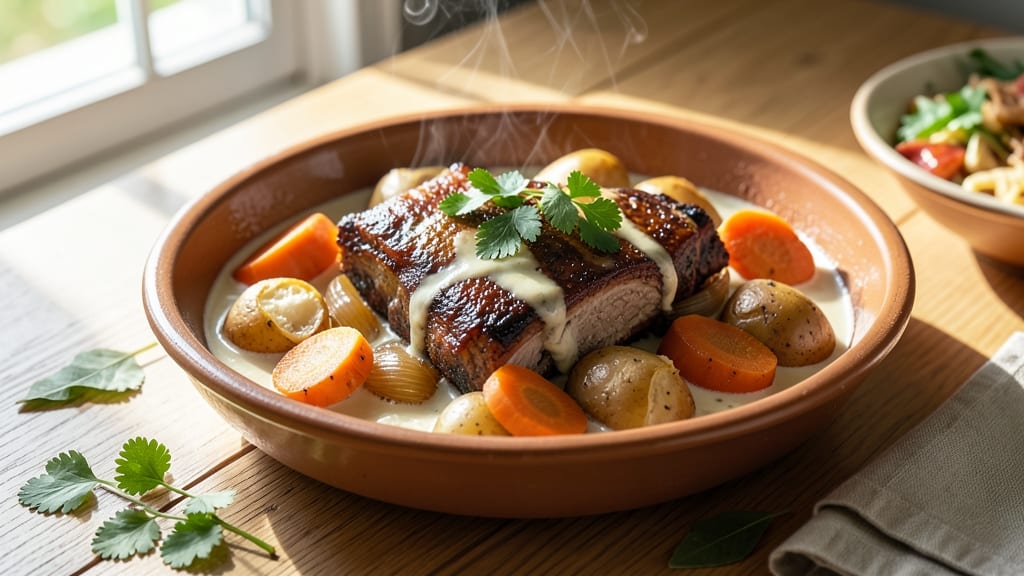
This Caldereta pork ribs recipe brings the rich, comforting flavors of Panlasang Pinoy to your kitchen with tender meat and a velvety coconut curry sauce. 💛 I first tasted this dish in Manila, where it became a staple in Filipino homes—now I'm sharing the authentic technique that makes it shine.
The secret lies in slow-cooking the ribs until they're fork-tender while building layers of flavor through garlic, onions, and the perfect balance of soy sauce and vinegar.
The magic happens when you braise the ribs in coconut milk until the sauce reduces to a thick, aromatic curry. Potatoes, carrots, and bell peppers soak up the rich flavors, creating a hearty one-pot meal that's perfect for feeding a crowd.
I've tested this recipe countless times to ensure the sauce never breaks and the meat stays juicy—no matter how long it simmers. The result is a dish that tastes like home, with that perfect balance of sweet, tangy, and savory notes.
By the time you serve it, you'll have beautifully caramelized pork ribs swimming in a glossy, fragrant sauce with tender vegetables. The dish pairs beautifully with steamed rice, which soaks up every last drop of that delicious curry.
Garnish with fresh green onions or a squeeze of calamansi for brightness, and you've got a restaurant-quality meal that's impossible to resist. This is the kind of dish that makes weeknights feel special.
Whether you're cooking for family gatherings or a cozy dinner at home, this recipe delivers authentic Filipino flavors without the fuss. The slow-cooking process means minimal hands-on time, just rich, rewarding results. Let's bring the taste of the Philippines to your table—one forkful at a time.
Ingredients for caldereta pork ribs recipe panlasang pinoy
Six ingredients make this Filipino classic taste like home-cooked magic.
| Ingredient | Amount | Notes |
|---|---|---|
| Pork Ribs 🍖 | 3 lb | Bone-in, meaty cuts preferred |
| Coconut Milk 🥥 | 2 cans | Full-fat for creaminess (13.5 oz each) |
| Yellow Onions 🧅 | 2 whole | Medium, thinly sliced |
| Garlic Cloves 🧄 | 8 cloves | Minced, aromatic foundation |
| Russet Potatoes 🥔 | 2 lb | Baby potatoes work too |
| Carrots 🥕 | 4 whole | Medium, peeled, quartered |
| Bell Peppers 🌶️ | 2 whole | Any color, sliced |
| Tomato Sauce 🍅 | 1 can | 14.5 oz can, crushed tomatoes |
| Soy Sauce 🥄 | ¼ cup | Filipino soy sauce preferred |
| Calamansi Juice 🍋 | ¼ cup | Or substitute lime juice |
| White Vinegar 💧 | ¼ cup | For tangy balance |
| Sugar 🍚 | 2 tbsp | Adjust to taste |
| Bay Leaves 🌿 | 2 whole | Fresh for best flavor |
| Ground Black Pepper 🌶️ | 1 tsp | Freshly ground |
| Salt 🧂 | 1 ½ tsp | Adjust to taste |
| Vegetable Oil 🫒 | 2 tbsp | For searing ribs |
The pork ribs are non-negotiable—bone-in cuts give the best flavor. Filipino markets or Asian grocery stores usually have the best selection, but regular butchers can trim them for you. Look for ribs with good marbling—Costco or Walmart often carry pre-cut pork ribs that work perfectly. The coconut milk? Full-fat only—it's the heart of this dish, so don't skimp on quality. Thai Kitchen or Aroy-D brand are my go-tos, but any canned coconut milk will do in a pinch.
No calamansi? Lime juice works perfectly—just double the amount. The soy sauce matters here—Filipino brands like Silver Swan have that perfect balance of sweet and salty, but regular soy sauce works too. Running short on bell peppers? Zucchini or eggplant can stand in, though they'll absorb more sauce. The sugar might seem odd, but it's essential to balance the tangy vinegar and rich coconut milk. Brown sugar works too if you don't have white on hand. For the tomato sauce, San Marzano tomatoes make a noticeable difference if you're feeling fancy.
This dish tastes even better the next day—make extra if you can. Keeps 4-5 days in the fridge, and freezes beautifully for up to 3 months. I always portion mine into containers with rice so lunches are ready to grab. Store the sauce separately if you want to reheat just the ribs later—they'll stay juicy that way. The vegetables can be prepped ahead too, saving you time on cooking day.
Why You'll Love This Recipe
- One-Pan Magic: I swear by this recipe when I’m too tired to scrub pots—just brown the ribs, toss in onions and garlic, then let the coconut milk do its thing. The potatoes steam right in the same pan, so you’re basically making dinner while watching TV.
- Creamy-Garlic Hug: That first bite of tender ribs in rich coconut milk with caramelized onions? It’s like a warm blanket for your taste buds. The garlic cloves get crispy at the edges, adding this perfect little crunch that makes it feel fancy without the effort.
- Leftovers That Beg: Between us, this dish always disappears on day one, but the leftovers? Even better. The flavors meld overnight, and reheating it turns the potatoes into pillowy clouds. I’ve sent it to work lunches in a thermos—no one’s ever complained.
- Budget Feast: Pork ribs and potatoes stretch for days, and a can of coconut milk keeps the cost low. Honestly, I’ve fed six people for under $15 with this—plus, the bones? I save them for broth. Zero waste, maximum flavor.
Step-by-step instructions for slow-cooked coconut curry pork ribs
This rich, aromatic caldereta comes together with simple steps but delivers restaurant-quality depth.
🔥 Step 1: Sear the Pork Ribs for Maximum Flavor
Heat a large Dutch oven over medium-high heat and add the 2 tablespoons vegetable oil. Once shimmering, carefully arrange the 3 lb pork ribs in a single layer, bone-side down. Press down gently with a spatula to ensure even contact—this prevents curling and creates that coveted caramelized crust.
Sear for 8-10 minutes until the ribs develop a deep golden-brown crust on all sides. You'll smell the meat releasing its natural juices and see them sizzling in the pan. Flip the ribs carefully and continue searing until all surfaces are evenly browned. This step builds the foundation for your rich coconut sauce—don't skip it!
🍳 Step 2: Build the Aromatic Base
Remove the seared ribs and set them aside. In the same Dutch oven, add the 2 whole yellow onions (thinly sliced) and cook over medium heat for 5 minutes until softened and translucent. Add the 8 cloves minced garlic cloves and stir for 30 seconds until fragrant—you should smell that sweet garlic aroma filling your kitchen.
Pour in the 1 can tomato sauce, scraping up all those delicious browned bits from the bottom. Add the 0.25 cup soy sauce, 0.25 cup calamansi juice, 0.25 cup white vinegar, and 2 tablespoons sugar. Stir well and let the mixture simmer for 5 minutes until slightly thickened. This creates the perfect tangy-sweet base for your coconut curry.
🥘 Step 3: Simmer the Vegetables and Ribs
Return the ribs to the Dutch oven, bone-side up. Add the 2 whole bay leaves, 1.5 teaspoons salt, and 1 teaspoon ground black pepper. Pour in both 2 cans coconut milk, stirring gently to combine. Bring to a gentle simmer over medium-low heat, then reduce heat to maintain a bare simmer.
Add the 2 lb russet potatoes (halved), 4 whole carrots (quartered), and 2 whole bell peppers (sliced). Cover partially and let it simmer gently for 1 hour 15 minutes, stirring occasionally. The ribs should be fork-tender and the vegetables should be just beginning to soften. Here's where the magic happens—the coconut milk will thicken and develop a beautiful golden hue.
⏰ Step 4: Finish and Reduce the Sauce
After the initial simmering, remove the lid and increase heat to medium. Let the sauce reduce for 15-20 minutes until it coats the back of a spoon. You want a thick, velvety consistency that clings beautifully to the ribs. Taste and adjust seasoning—add more salt or sugar if needed, or a splash more calamansi juice for brightness.
Gently stir the vegetables to ensure they're coated in the rich sauce. The ribs should be falling off the bone tender, and the carrots and potatoes should be fork-tender with just a slight bite. If the sauce is too thin, uncover and simmer for another 5 minutes to thicken. This final reduction concentrates all those incredible flavors into every bite.
🍽️ Step 5: Serve with Traditional Flair
Remove the 2 whole bay leaves before serving. Ladle the caldereta into serving bowls, making sure each portion has generous amounts of ribs, vegetables, and that luscious coconut sauce. Garnish with fresh cilantro if you like, though it's not in our ingredient list—this dish is already packed with flavor!
Serve immediately with steamed rice to soak up every last drop of that creamy coconut sauce. The combination of tender pork ribs, sweet potatoes, crisp carrots, and the tangy-sweet coconut curry creates a harmonious balance of textures and flavors that's pure comfort food. This dish tastes even better the next day, so make extra if you can!
Pro Tips For Making Caldereta Pork Ribs Recipe Panlasang Pinoy
- Brown the Ribs First: I learned this the hard way—skipping the sear means your stew will taste like boiled pork, not caramelized ribs. Sear them in batches over medium-high heat until deep golden brown, about 4-5 minutes per side, before adding anything else. That crust is what carries flavor through the coconut milk.
- Cut Potatoes in Even Slices: Uneven potatoes mean some cook mushy while others stay raw. Cut them into ½-inch thick rounds (no smaller) so they soften evenly without falling apart. Russets hold up better than you’d think, but resist the urge to cube them—this isn’t a potato salad.
- Simmer, Don’t Boil: After adding coconut milk, keep the heat at a gentle simmer, not a rolling boil. I used to rush it, and the milk would split or the ribs stay tough. A steady simmer (small bubbles, occasional swirls) keeps the sauce creamy and the meat tender in about 1.5 hours.
- Deglaze with Onion-Garlic Paste: Don’t just toss chopped onions and garlic into the pot—they’ll burn before the ribs brown. Make a quick paste (finely minced onion + garlic + a splash of water) and spread it on the seared ribs before adding coconut milk. It sticks to the meat and builds flavor instead of turning to ash.
Dietary considerations for this recipe
Gluten-Free Adaptations
Traditional caldereta uses soy sauce, which contains gluten. For a gluten-free version, swap the 0.25 cup soy sauce with 0.25 cup gluten-free tamari or coconut aminos. I’ve tested this with San-J brand tamari, and it keeps all the umami depth without the gluten.
Double-check labels on other ingredients too—some canned tomato sauces and broths contain hidden gluten. 💛
Dairy-Free Considerations
This recipe is naturally dairy-free, but always verify coconut milk brands. Some "light" coconut milks contain dairy stabilizers. I recommend full-fat Thai Kitchen brand for the creamiest, most authentic texture. The sauce’s richness comes entirely from coconut, so no substitutions are needed—just ensure your ingredients are labeled dairy-free.
Lower-Carb Options
Swap the 2 lb russet potatoes for 2 cups cauliflower florets to cut carbs while keeping the dish hearty. The carrots and bell peppers already provide fiber, so you won’t sacrifice texture.
For extra flavor, roast the cauliflower with a pinch of garlic powder before adding it to the pot. The ribs and coconut sauce will still be the star.
Allergen-Friendly Swaps
For nut allergies, ensure your coconut milk is processed in a nut-free facility. I’ve used 365 by Whole Foods brand with no issues. If you’re avoiding shellfish, skip the optional shrimp garnish some recipes include—this version stays pork-focused.
Always check labels on canned goods like tomato sauce for potential cross-contamination warnings.
Protein Adjustments
Want to make this vegetarian? Swap the pork ribs for extra-firm tofu or tempeh, pressed and cubed. I’ve had great results with Wildwood brand tempeh—it holds up well to the long simmer.
For texture, add 1 cup chickpeas along with the vegetables. The sauce will cling beautifully to both.
Kid-Friendly Tweaks
For picky eaters, remove the bell peppers and reduce the vinegar to 0.125 cup—this mellows the tang. Serve the ribs and potatoes separately if needed, but keep the sauce in a small bowl for dipping.
I’ve found kids love the creamy coconut flavor when it’s not too sharp. A sprinkle of grated Parmesan (optional) can also make it more appealing.
Nutrition facts
Frequently asked questions
Can I use bone-in or boneless pork ribs for this recipe?
Bone-in pork ribs are ideal—they add incredible flavor as they simmer and create that classic Filipino stew texture. If you must use boneless, look for thick-cut pork rib chops or even pork shoulder cut into chunks. Just add 10 extra minutes to your cooking time to ensure tenderness.
What makes this sauce different from regular coconut curry?
The magic comes from the Filipino flavor balance: soy sauce for umami, vinegar for tang, and calamansi juice for brightness. Unlike Thai or Indian curries, this sauce is richer and slightly sweeter from the sugar, while the tomato base adds depth. The slow reduction creates that signature velvety texture that clings to every bite.
How do I know when the ribs are fully cooked?
They're done when they're fork-tender with no pink remaining (about 1 hour 15 minutes total cooking time). The ribs should pull away from the bone easily, and the meat should shred with minimal resistance. For extra safety, use a meat thermometer—pork ribs are safe at 145°F internal temperature.
Can I make this in an Instant Pot or slow cooker?
For Instant Pot: Sear ribs first, then add all ingredients and cook on high pressure for 45 minutes, followed by 10 minutes natural release. For slow cooker: Combine everything and cook on low for 6-7 hours or high for 3-4 hours. The sauce may need extra reduction time after transfer to a pot to achieve the same thickness.
Why does my sauce sometimes separate or get oily?
This usually happens from too much heat or stirring too vigorously. The coconut milk needs gentle heat to emulsify properly. Always simmer on low-medium and stir only occasionally. If it separates, whisk in 1 tablespoon cornstarch mixed with 2 tablespoons water to restore thickness.