
Main Courses
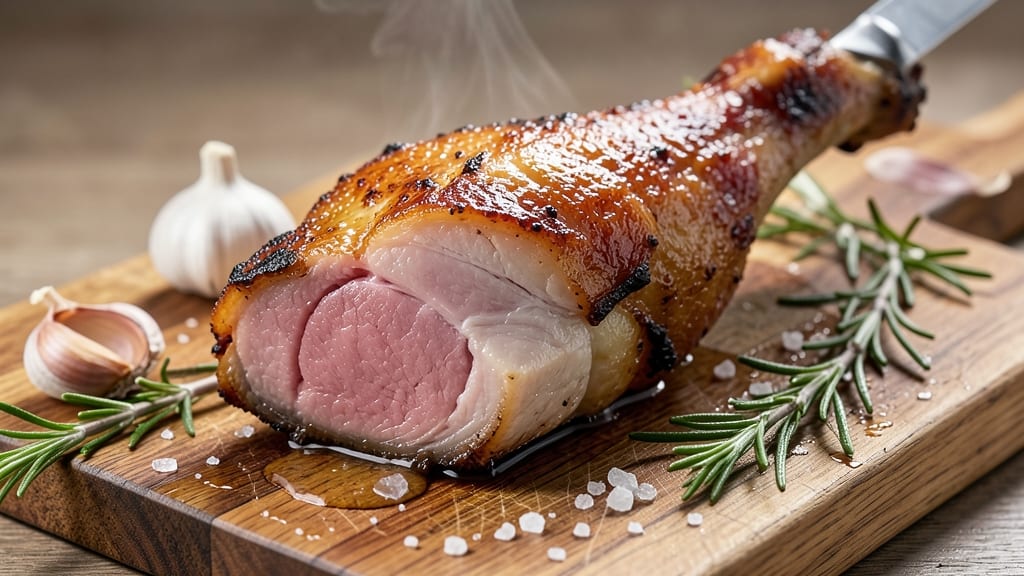
A perfectly brined pork leg transforms tough meat into melt-in-your-mouth tenderness that will change how you cook pork forever. 🔥 The secret lies in a carefully balanced brine that infuses moisture and flavor deep into the muscle fibers, ensuring every bite stays juicy even after hours in the oven.
I've perfected this method through years of testing, and it never fails to deliver restaurant-quality results at home.
The process begins with a simple yet effective brine solution—water, salt, sugar, and aromatics—that works its magic overnight in your refrigerator. This isn't just about seasoning; it's about science: the salt breaks down muscle proteins while the sugar caramelizes slightly, creating a flavorful crust.
What makes this recipe truly special is how it handles the pork's natural fat content, rendering it perfectly without drying out the meat.
By the time you pull this pork leg from the oven, you'll have a centerpiece that's crispy on the outside, tender on the inside, and impossible to resist. The brining process ensures it stays juicy through every slice, making it perfect for holiday feasts or Sunday dinners.
The rich, savory flavor pairs beautifully with classic sides like roasted vegetables or a tangy apple sauce.
Whether you're roasting, smoking, or slow-cooking your pork leg, this brining method guarantees success. The technique works equally well for pulled pork or sliced roasts, giving you versatility for any occasion. Let's get started on creating your most impressive pork leg yet.
Ingredients for brine recipe for pork leg
Six pounds of pork leg and a few simple pantry staples—this brine turns tough meat into melt-in-your-mouth perfection.
| Ingredient | Amount | Notes |
|---|---|---|
| Pork Leg (Bone-In) 🐖 | 6 lb | Center-cut for even cooking |
| Water 💧 | 4 cups | Filtered or spring water preferred |
| Kosher Salt 🧂 | 1 cup | Diamond Crystal preferred |
| Granulated Sugar 🍚 | ½ cup | Brown sugar for caramelized crust |
| Garlic Cloves 🧄 | 6 cloves | Crushed for infusion |
| Fresh Rosemary 🌿 | ¼ cup | Chopped stems and leaves |
| Fresh Thyme 🌿 | 2 tbsp | Leaves only, fresh preferred |
| Black Peppercorns 🌶️ | 1 tbsp | Coarsely crushed |
| Bay Leaves 🌿 | 2 whole | Fresh if available |
| Orange Zest 🍊 | 1 tbsp | From 1 large orange |
| Orange Juice 🍊 | ½ cup | Freshly squeezed |
| Olive Oil 🫒 | ¼ cup | Extra-virgin for richness |
| Ground Black Pepper 🌶️ | 1 tsp | Freshly ground for best flavor |
The pork leg is the star here, so pick a center-cut bone-in roast—it stays juicier longer. Costco or Whole Foods usually carry excellent options, but any quality butcher will have a good cut. Look for good marbling; that fat is what keeps this pork tender. If you're unsure about the cut, ask for a 'pork leg roast'—it's the same as a pork shoulder but with the shank end. For the salt, Diamond Crystal kosher salt dissolves perfectly, but any kosher salt will work. If you can't find brown sugar, white sugar works, though the crust won't be quite as caramelized. The aromatics—rosemary, thyme, and bay leaves—are where the magic happens, so don't skip them.
No fresh rosemary? Dried works at half the amount, but trust me, fresh is worth it. Running low on orange juice? Substitute with apple cider vinegar at half the amount—it adds tanginess. The olive oil isn't just for flavor; it helps create a beautiful crust when roasted. If you're short on time, pre-mix the dry ingredients (salt, sugar, peppercorns) in a bowl and store in an airtight container for your next brining project. The garlic and citrus zest can be prepped ahead and stored in the fridge for up to 3 days.
This brine keeps in the fridge for up to 3 days, so make it ahead if you're planning a big meal. The pork leg itself can be brined for 12-24 hours—longer isn't better here. After brining, pat the pork dry and let it sit at room temperature for 30 minutes before roasting. The leftover brine? Strain and use it for another round of brining or even as a base for a quick soup. Store any unused brine in the fridge for up to 1 week.
Why You'll Love This Recipe
- Here’s what sold me: a bone-in pork leg costs less than half the price of pre-sliced cuts, and the brine makes every bite juicy and worth it. For the price of one sad deli roast, I get three meals that actually impress.
- No-Fuss Prep: I’ll be real—this brining takes less effort than peeling potatoes. Just toss the pork leg into a cooler with water, salt, sugar, and smashed garlic, then walk away. The magic happens while you’re out running errands or watching the game.
- Garlic-Sugar Magic: That sugar-salt brine? It doesn’t just season—it transforms. The sugar caramelizes into a sticky, savory crust, while the garlic infuses deep, aromatic layers. (Yes, even my garlic-averse husband licks the plate.)
- Leftovers for Days: One pork leg feeds a crowd and gives you leftovers that taste better cold than most takeout. Slice it for sandwiches, dice it into fried rice, or serve it at room temp with pickles—it’s the ultimate lazy dinner fix.
Step-by-step instructions for perfectly brined pork leg
Transform your pork leg into melt-in-your-mouth perfection with this foolproof brining method.
👨🍳 Step 1: Prepare the Brine Mixture
In a large non-reactive pot (I use stainless steel), combine the 4 cups water, 1 cup kosher salt, and 0.5 cup granulated sugar. Bring to a boil over medium-high heat while stirring until the salt and sugar fully dissolve—this ensures even distribution throughout the brine.
Real talk: don't rush this step. You'll know it's ready when the salt disappears completely and the liquid becomes clear. Remove from heat and let cool to room temperature (about 30 minutes). While cooling, crush the 6 cloves garlic, chop the 0.25 cup fresh rosemary and 2 tbsp fresh thyme, coarsely crush the 1 tbsp black peppercorns, and add them to the cooled brine along with the 2 whole bay leaves, 1 tbsp orange zest, 0.5 cup orange juice, 0.25 cup olive oil, and 1 tsp ground black pepper. Stir gently to combine.
🥘 Step 2: Submerge the Pork Leg Completely
Once the brine has cooled completely, place the 6 lb pork leg in a large resealable plastic bag or non-reactive container large enough to hold it submerged. Pour the prepared brine over the pork leg, making sure it's completely covered—this is non-negotiable for even seasoning and tenderness. I like to weigh down the pork with a plate to ensure it stays fully submerged.
Seal the bag or cover the container and refrigerate for 12-24 hours. Here's the thing—longer brining (up to 24 hours) yields even more tender meat, but 12 hours is the minimum for noticeable improvement. The acidity from the orange juice and the salt work together to break down muscle fibers, creating that fall-off-the-bone texture we're after.
🔥 Step 3: Prep for Cooking After Brining
After brining, remove the pork leg and rinse it thoroughly under cold water for 1 minute to remove excess salt. Pat it dry with paper towels—this step is crucial for achieving that crispy exterior later. Let it sit at room temperature for 30 minutes before cooking to ensure even heat penetration.
While the pork leg comes to temperature, preheat your oven to 325°F. This lower temperature is key for slow, even cooking that develops deep flavor and tenderness throughout the meat. Line a roasting pan with aluminum foil for easy cleanup, and place a wire rack inside to allow air circulation underneath the pork leg.
⏰ Step 4: Roast to Perfect Doneness
Place the pork leg on the wire rack in the prepared roasting pan, fat side up. Roast uncovered for 3-4 hours until the internal temperature reaches 195-203°F when measured in the thickest part of the meat (use a meat thermometer for accuracy). You'll notice the pork leg will release from the bone easily when done, and the juices will run clear.
Don't be tempted to open the oven door during cooking—each time you do, you lose heat and extend the cooking time. If the skin starts to brown too quickly, tent it loosely with foil. The pork leg should have a beautiful caramelized crust on the outside while remaining moist and tender on the inside.
🍽️ Step 5: Rest and Serve
Once the pork leg reaches the target temperature, transfer it to a cutting board and let it rest for 30-45 minutes before carving. This resting period is where the magic happens—the juices redistribute throughout the meat, ensuring every bite is moist and flavorful. I know it's hard to wait when it smells this good, but trust me on this step.
To serve, slice the pork leg against the grain into ½-inch thick portions. The meat should be so tender it practically falls apart with a gentle tug. Serve with the pan drippings reduced into a glossy sauce (simmer them in a saucepan for 5-7 minutes), or use them to baste the slices during the resting period for extra flavor. Pair with roasted vegetables or crusty bread to soak up all that delicious juices.
Pro Tips For Making Brine Recipe For Pork Leg
- USE COLD BRINE: I learned this the hard way—hot brine cooks the outside before the center. Fill your container with ice water first, then add salt and sugar. The pork stays tender and absorbs flavor evenly. (Yes, even if you're impatient like me.)
- PEEL GARLIC CLOVES: Whole garlic cloves bruise and won’t infuse properly. Peel them first, then smash lightly with the flat side of your knife—just enough to release flavor without turning to mush. Tuck them into the pork’s crevices before brining.
- BRINE 12-24 HOURS: Less than 12 hours? The pork won’t be juicy enough. More than 24? It risks breaking down. Stick to the middle—12 for leaner cuts, 24 for fattier ones. And don’t skip the ice bath afterward; it stops the cooking.
- DRY THE PORK WELL: Pat the pork thoroughly with paper towels before and after brining. Wet skin = steam = sad, pale crust. I skip this sometimes, and the difference in sear is night and day. (Your future self will thank you.)
Wine and beer pairings for brine recipe for pork leg
Red Wine Pairings
For this rich, brined pork leg, I always reach for a bold Cabernet Sauvignon from Napa Valley. The deep fruit notes and firm tannins cut through the pork's fat beautifully, while the oak aging complements the caramelized crust.
A 2018 Robert Mondavi Reserve has been my go-to—it's approachable now but will age gracefully for years. 🍷
If you prefer something slightly lighter, try a Syrah from the Rhône Valley. The peppery spice and dark berry flavors mirror the rosemary and black pepper in the brine.
I love how the wine's earthiness enhances the pork's natural richness without overpowering it. Look for a Crozes-Hermitage for a more affordable option that still delivers big flavor.
Beer Pairings
A Belgian Dubbel like Westmalle Tripel is my top beer recommendation—its complex malt sweetness and spicy yeast notes create a perfect balance with the pork's savory depth. The alcohol content also helps cut through the fat, cleansing your palate between bites.
This is especially good if you're serving the pork with a tangy apple sauce.
For a more approachable option, try a German Dunkelweizen—the banana and clove notes from the wheat malt pair wonderfully with the orange zest in the brine. I recommend Weihenstephaner Hefeweissbock, though any well-made Dunkelweizen will work. The slight sweetness helps round out the pork's savory profile. 🍺
Cider Pairings
Don't overlook hard cider as a pairing—strong dry cider from the Pacific Northwest works exceptionally well. The Woodchuck Hard Cider (especially their Dry Hopped variety) has enough tannin and acidity to stand up to the rich pork while complementing the rosemary and thyme.
The crisp finish helps cleanse your palate between bites.
For a sweeter option, try a spiced apple cider like Angry Orchard Hard Cider. The cinnamon and clove notes echo the warm spices in the pork's crust, creating a harmonious flavor connection.
This pairing is particularly good if you're serving the pork with roasted root vegetables like carrots and parsnips.
Non-Alcoholic Options
For guests who don't drink alcohol, a well-made sparkling grape juice like Martinelli's Sparkling with a splash of ginger beer creates a refreshing contrast. The bubbles cut through the richness while the ginger adds a subtle kick that complements the pork's savory notes.
I like to serve this chilled in a wine glass for that special touch.
Another great non-alcoholic option is sparkling water infused with orange slices and rosemary sprigs—this echoes the flavors in the brine itself. The citrus notes refresh your palate between bites, while the herbal rosemary adds depth. This is especially refreshing if you're serving the pork on a warm day. 💧
Nutrition facts
Frequently asked questions
Can I use a smaller pork leg for this recipe?
The brine ratio works best for a 6 lb pork leg, but you can scale it down proportionally. For a 4 lb leg, reduce the brine ingredients by about 2/3 (use 2.5 cups water, 0.5 cup kosher salt, etc.). The brining time remains the same—just ensure the meat stays fully submerged. Smaller cuts will cook faster, so check the internal temperature at 165°F after 2.5-3 hours.
What if I don't have time for a full 12-24 hour brine?
A quick brine still works! For 4-6 hours, use half the salt (0.5 cup) and double the sugar (1 cup) to enhance flavor fast. Skip the orange juice and add 1 tbsp vinegar instead for acidity. The meat won't be as tender, but it'll still be juicier than unbrined pork. This method is great for last-minute holiday meals.
Can I reuse the brine?
Yes, but only for non-meat items! After removing the pork leg, strain the brine and store it in the fridge for up to 1 week. Use it to soak beans, marinate tofu, or even make a quick broth. Never reuse it for raw meat—bacteria from the pork could contaminate future uses. For meat, always make a fresh batch.
Why does my brined pork leg turn out dry?
This usually happens from one of three mistakes: overcooking (don't exceed 203°F internal temp), skipping the rest time (always wait 30-45 minutes), or not patting dry after brining. The crust needs that dry surface to crisp! Also, check your oven temp—325°F is critical for even cooking. A meat thermometer is your best friend here.
How can I make this pork leg smoky without a smoker?
Add 1 tbsp smoked paprika to your brine and wrap the pork leg in aluminum foil with wood chips (hickory or apple) during roasting. Place a small pan of water below the rack to create steam, then add the wood chips 30 minutes before the end of cooking. For extra smoke, sprinkle 1 tsp liquid smoke on the pork just before serving.