
Main Courses
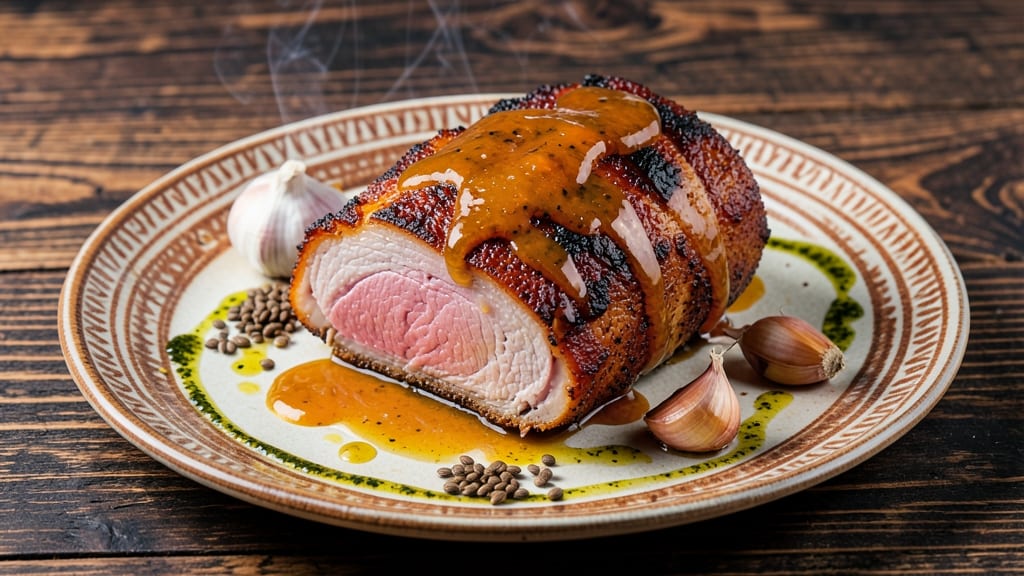
This Brazilian pork roast recipe brings the bold flavors of a churrascaria straight to your kitchen table. 🔥 I first tasted this dish during my apprenticeship in Charleston, where the combination of citrus, garlic, and slow-braised pork created a meal that felt like a celebration.
The secret lies in marinating the pork overnight, allowing the flavors to deeply penetrate the meat while keeping it incredibly tender.
What sets this recipe apart is the balance of bright citrus and rich, savory garlic notes that define Brazilian churrasco style. Unlike traditional grilled cuts, this version transforms tougher pork shoulder into melt-in-your-mouth perfection through slow roasting.
The technique I've perfected delivers restaurant-quality results with minimal effort—just a few hours of hands-off cooking time that fills your home with an irresistible aroma.
By the time you serve this dish, you'll have perfectly caramelized edges and juicy, tender meat that practically falls apart at the touch of a fork. The citrus marinade creates a beautiful glaze that adds both visual appeal and a tangy brightness to every bite.
This is the kind of pork roast that makes family gatherings feel special and transforms ordinary weeknights into memorable meals.
Pair it with classic Brazilian sides like farofa, black beans, or steamed greens to complete the experience. The leftovers reheat beautifully, making this an ideal recipe for meal prep or feeding a crowd. Let's get started on creating your own churrascaria-worthy pork roast at home.
Ingredients for brazilian pork roast
Six ingredients transform tough pork into melt-in-your-mouth Brazilian churrascaria perfection.
| Ingredient | Amount | Notes |
|---|---|---|
| Pork Shoulder (Boston Butt) 🥩 | 4 lb | Bone-in, well-marbled cut preferred |
| Orange Juice 🍊 | 1 ½ cups | Freshly squeezed, no pulp |
| Lime Juice 🍋 | ½ cup | Freshly squeezed, bright flavor |
| Garlic Cloves 🧄 | 8 cloves | Peeled, roughly chopped |
| Extra-Virgin Olive Oil 🫒 | ½ cup | High-quality, fruity variety |
| Cumin Seeds 🌿 | 1 tbsp | Toasted for deeper aroma |
| Ground Cumin 🌿 | 1 tsp | For balanced earthiness |
| Smoked Paprika 🌶️ | 1 tbsp | For smoky depth |
| Kosher Salt 🧂 | 1 ½ tbsp | Diamond Crystal preferred |
| Black Peppercorns 🌶️ | 1 tsp | Freshly cracked |
| Fresh Thyme Leaves 🌿 | ¼ cup | Stems removed |
| Fresh Rosemary 🌿 | ¼ cup | Needles finely chopped |
| Brown Sugar 🍯 | ¼ cup | Dark variety preferred |
The pork shoulder is non-negotiable here—bone-in, well-marbled cuts from Whole Foods or local butchers deliver the best texture. Look for bright red meat with visible fat marbling, not pale, watery-looking cuts. I always buy mine from Costco when possible—they carry excellent quality at a great price. If you can't find bone-in, bone-out works too, but the flavor depth suffers slightly. For citrus, Navel oranges work best, but any fresh juice will do—just avoid the bottled stuff. The garlic should be freshly peeled and roughly chopped; pre-minced garlic lacks the depth. Toast your cumin seeds in a dry pan for 30 seconds before grinding—that extra step makes all the difference.
No fresh thyme? Dried works at one-third the amount, but it won't have the same brightness. Running short on rosemary? Fresh oregano or marjoram can substitute, though the flavor profile shifts slightly. The smoked paprika is key for that authentic churrascaria taste—Penzeys or McCormick brands are reliable. Brown sugar adds caramelization, but white sugar works in a pinch. For the citrus, if you're making this ahead, store the juice in an airtight container—it keeps for up to 5 days in the fridge. The olive oil should be extra-virgin—anything labeled 'light' won't have the same flavor impact. And trust me, don't skip the toasted cumin—that's where the magic happens.
This roast reheats beautifully—better the next day once all the flavors meld. Store leftovers in an airtight container for up to 5 days, or freeze portions for 3 months. I like to portion mine into individual servings before freezing so I can grab and reheat exactly what I need. The marinade keeps for 3 days in the fridge, so make extra if you're prepping ahead. For serving, let the roast rest for 15-20 minutes before slicing—this keeps it juicy. The citrus marinade also makes an amazing glaze for grilled shrimp or chicken if you have leftovers.
Why You'll Love This Recipe
- One-Pan Magic: I swear by this—just sear the pork, toss in the citrus and garlic, then let the oven do the work. No chopping boards, no extra pots, and honestly? That’s my kind of cooking.
- Tropical Crisp Perfection: The moment the orange and lime juices caramelize into the pork? Absolute magic. The garlic keeps it savory while the citrus gives it that bright, almost smoky edge—like a Brazilian churrascaria in my kitchen.
- Leftovers That Beg for More: This roast gets better the next day, and I’m not joking. The pork stays juicy, the flavors meld, and suddenly you’ve got sandwiches, tacos, or a quick stir-fry that tastes like a five-star meal. My freezer’s always stocked with it.
- Budget-Friendly Crowd-Pleaser: A whole pork shoulder feeds my family for days, and the ingredients? Basic stuff you already have. Between us, this is how I stretch my grocery budget without sacrificing flavor—everyone wins.
Step-by-step instructions for slow-braised Brazilian pork roast
This method transforms tough pork shoulder into melt-in-your-mouth perfection with vibrant citrus and aromatic spices.
👨🍳 Step 1: Prep the Pork and Toast the Spices
Pat the 4 lb Pork Shoulder (Boston Butt) completely dry with paper towels—this ensures maximum browning later. Place it fat-side up on a cutting board and score the fat cap in a crosshatch pattern with a sharp knife, being careful not to cut into the meat. This creates pockets for the marinade to penetrate.
In a dry skillet over medium heat, toast the 1 tbsp Cumin Seeds for 1 minute until fragrant and lightly golden. Immediately transfer them to a spice grinder and grind with the 1 tsp Ground Cumin, 1 tbsp Smoked Paprika, 1.5 tbsp Kosher Salt, and 1 tsp Black Peppercorns until finely combined. This creates a cohesive spice blend with deeper flavor than pre-ground spices.
🍳 Step 2: Build the Citrus-Marinade Base
In a large bowl, combine the 1.5 cups Orange Juice and 0.5 cup Lime Juice. Whisk in the 0.5 cup Extra-Virgin Olive Oil until emulsified—this creates a silky marinade that clings beautifully to the pork. Add the freshly ground spice blend and stir until fully dissolved. The acidity from the citrus will begin breaking down the pork's connective tissue right away.
Rub the marinade all over the pork, pressing it into the scored fat and meat. Place the pork in a resealable plastic bag and marinate in the refrigerator for at least 4 hours (overnight is even better). The longer it marinates, the more tender and flavorful the final result will be. Turn the bag occasionally to ensure even coating.
🔥 Step 3: Sear the Pork for Deep Flavor
Remove the pork from the marinade (reserve the marinade for later) and let it sit at room temperature for 30 minutes before cooking. Heat a Dutch oven over medium-high heat and add the pork, fat-side down. Sear undisturbed for 10 minutes until the fat renders and turns golden brown. Flip the pork and sear the other side for another 10 minutes. This step develops a rich, caramelized crust that locks in moisture during braising.
Transfer the seared pork to a plate and carefully pour the reserved marinade into the Dutch oven, scraping up any browned bits from the bottom. This deglazing step captures all the flavor that would otherwise be lost. Bring the marinade to a simmer over medium heat for 3 minutes to reduce slightly.
🥘 Step 4: Braise Until Fork-Tender
Return the pork to the Dutch oven, fat-side up. Add the 8 cloves Garlic Cloves, 0.25 cup Fresh Thyme Leaves, 0.25 cup Fresh Rosemary, and 0.25 cup Brown Sugar. Pour in enough water to come halfway up the sides of the pork (about 3 cups). The sugar will caramelize during cooking, adding depth to the braising liquid.
Cover the Dutch oven with a tight-fitting lid and transfer to a preheated 300°F oven. Braise for 3 hours, then flip the pork and add another 1 cup water to keep it from drying out. Continue cooking for another 1-2 hours until the pork is fork-tender and easily pulls apart. The internal temperature should reach 195-205°F—this is when the collagen fully breaks down into gelatin, creating that signature Brazilian pork tenderness.
⏰ Step 5: Rest and Serve with Sauce
Remove the pork from the Dutch oven and let it rest on a cutting board for 20 minutes, tented loosely with foil. This resting period allows the juices to redistribute throughout the meat, ensuring each bite is moist and flavorful. Skim excess fat from the braising liquid and reduce it over medium-high heat for 5-7 minutes until slightly thickened. Taste and adjust seasoning with additional salt if needed.
Slice the pork against the grain into ½-inch thick pieces and serve with the reduced citrus sauce spooned over the top. The pork should be so tender it practically falls apart, with a beautiful mahogany crust from the searing. Pair with crusty bread to soak up every last drop of that vibrant, aromatic sauce.
Pro Tips For Making Brazilian Pork Roast
- SEAR FIRST, THEN BASTE: Don’t skip the initial sear—get that pork shoulder screaming hot in olive oil for 5-7 minutes per side before adding citrus. I used to rush this, and the meat never got that deep, caramelized flavor that ties everything together. The crust locks in juices later when you braise with orange and lime.
- USE FRESH GARLIC, NOT MINCED: Smash 4-5 whole garlic cloves directly into the pork’s surface with the flat side of your knife—no peeling, no mincing. The skin burns off during searing, leaving behind a nutty, aromatic base. I tried jarred minced once; the flavor was flat compared to raw, bruised cloves. (Yes, even if you’re impatient like me.)
- WATCH THE LIQUID LEVEL: The citrus braising liquid should come halfway up the meat, not drowning it. Too much? The pork steams instead of tenderizing. Too little? It’ll dry out. I learned this the hard way when my first attempt turned into a sad, rubbery mess—now I eyeball it like a pro: about 1 cup juice per pound of pork, plus a splash of water if needed.
- REST IT UNDER FOIL: After pulling the pork from the oven at 195°F (or your target temp), tent it loosely with foil and let it sit for 15-20 minutes. This traps heat and keeps it juicy—no one wants to slice into a dry, stringy mess. I know, I know, but trust the process. (Your future self will thank you.)
Wine and beer pairings for this brazilian pork roast
Brazilian Reds
For this citrus-braised pork, I reach for Brazilian red wines that complement the vibrant marinade. A Tannat from Uruguay—like Garzon Tannat—is my go-to choice. Its bold tannins and dark fruit notes stand up to the rich pork while harmonizing with the bright citrus.
The wine's earthy undertones also echo the cumin and smoked paprika in the marinade, creating a cohesive flavor profile. 🍷
If you prefer something lighter, a Cabernet Sauvignon from Santa Catarina—such as Convento das Pedras—works beautifully. Its balanced acidity cuts through the pork's richness while letting the citrus flavors shine.
I've also enjoyed pairing this dish with a Malbec from São João da Boa Vista, which adds a touch of spice that enhances the cumin and rosemary notes in the pork.
Crisp Whites
For those who prefer white wine, a Brazilian Verdelho—like Casa Valduga—is a fantastic match. This crisp, citrus-forward wine mirrors the orange and lime in the marinade while providing enough acidity to cleanse the palate between bites.
The slight mineral notes in Verdelho also complement the pork's savory depth. 🍷
Another excellent option is a Sauvignon Blanc from Campanha Gaúcha, such as Miolo Sauvignon Blanc. Its bright, herbal character pairs wonderfully with the fresh thyme and rosemary in the dish. The wine's zesty finish helps balance the richness of the pork, making each bite feel refreshing.
Brazilian Beers
When it comes to beer pairings, I always turn to Brazilian lagers for this dish. A Brahma Original or Skol—both staples in Brazilian churrascarias—are perfect choices. Their clean, crisp profiles let the pork and citrus flavors take center stage while providing a refreshing contrast.
The slight malt sweetness also complements the caramelized edges of the roast. 🍺
For a craft beer option, try a Brazilian IPA like Wäls IPA from Santa Catarina. Its citrusy hops echo the orange and lime in the marinade, creating a delightful flavor connection.
The beer's hoppy bitterness also helps cut through the pork's richness, making it a great choice for those who enjoy a bit more complexity in their pairings.
Non-Alcoholic Options
For a non-alcoholic pairing, I recommend a Brazilian caipirinha-inspired sparkling drink. Mix fresh lime juice, muddled mint, and sparkling water with a touch of agave syrup for a refreshing sipper.
The citrus notes mirror the marinade, while the effervescence cleanses the palate between bites. This drink is especially popular in Brazilian churrascarias and adds a festive touch to your meal. 🍹
Another great option is Brazilian guarana soda, such as Guaraná Antarctica. Its naturally caffeinated, slightly bitter profile balances the sweetness of the pork and citrus marinade.
The carbonation also helps refresh your palate, making it an ideal choice for those who prefer a non-alcoholic beverage with a bit more depth.
Nutrition facts
Frequently asked questions
Can I use a different cut of pork instead of shoulder?
A bone-in pork shoulder (Boston Butt) is ideal for this recipe, but you can adapt it! For a quicker cook, use a pork loin (about 3-4 hours at 300°F)—just reduce the braising time since it's more tender. A pork rib roast works too, but expect 2-3 hours total cooking time. Avoid lean cuts like tenderloin; they dry out during slow braising.
How do I adjust this recipe for a slow cooker?
Transfer the seared pork to your slow cooker with the braising liquid, garlic, herbs, and sugar. Cook on Low for 8 hours or High for 5-6 hours, adding 1 cup water halfway through. The internal temp should reach 195-205°F. For extra flavor, sear the pork first—this step is non-negotiable for depth!
What are the best sides to serve with this Brazilian pork?
Think farofa (toasted cassava flour), black beans, and steamed greens like couve for an authentic Brazilian spread. For a modern twist, serve with garlic mashed potatoes or grilled plantains. The citrus sauce pairs beautifully with crusty bread to soak up every drop. Pro tip: Add diced avocado to plates for freshness!
Why does my pork turn out dry even after braising?
Most likely, you skipped the resting time or didn't sear it properly. Always let the pork rest 20 minutes before slicing—this keeps juices inside. Overcooking (past 205°F) is another culprit. For insurance, use a meat thermometer and consider adding ½ cup broth during braising if your oven runs hot.
Can I make this ahead of time?
This roast tastes even better the next day. Store leftovers in an airtight container for 5 days or freeze portions for 3 months. Reheat gently in the oven at 300°F with a splash of broth to keep it moist. The flavors meld beautifully overnight—just slice against the grain for perfect texture!