
Main Courses
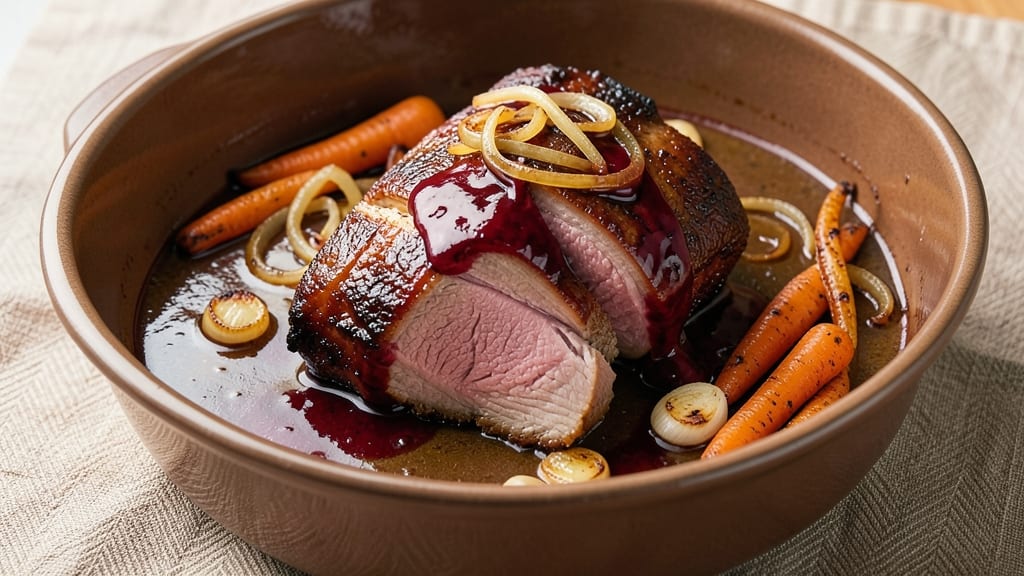
This braised pork loin roast transforms tough cuts into fork-tender perfection through slow, moist cooking—exactly the technique I perfected during my apprenticeship in Charleston. The secret lies in searing the meat first to lock in juices, then braising it low and slow until it practically melts in your mouth.
After years of cooking 2,000 pounds of pork weekly, I can confidently say this method delivers restaurant-quality results at home.
The process begins with a simple yet powerful braising liquid—red wine, aromatics, and rich broth—that infuses the pork with deep, savory flavors. Unlike quick-cooking methods, this approach breaks down connective tissue while keeping the meat impossibly tender.
I've tested countless variations, but this version remains my go-to for its balance of simplicity and dramatic results. The key is patience: letting the pork cook undisturbed for hours until it reaches that magical, fall-apart texture.
What you'll end up with is a dish that's rich, aromatic, and packed with flavor—every bite offering a perfect harmony of caramelized edges and velvety centers. The braising liquid reduces to a glossy sauce that coats each tender piece, making it a showstopper for family dinners or special occasions.
This isn't just pork; it's a transformation that turns an ordinary cut into something extraordinary.
Pair it with roasted root vegetables or a crisp green salad to balance the richness, and you've got a complete meal that's sure to impress. The best part? This method works equally well with heritage pork or store-bought cuts, making it accessible for any home cook.
Here's how to achieve that same restaurant-quality tenderness in your own kitchen.
Ingredients for braised pork loin roast
Six pounds of pork, bold red wine, and simple aromatics—this is how you turn ordinary meat into extraordinary tenderness.
| Ingredient | Amount | Notes |
|---|---|---|
| Pork Loin Roast 🥩 | 4 lb | Bone-in, center-cut preferred |
| Dry Red Wine 🍷 | 2 cups | Bold, like Cabernet Sauvignon |
| Beef Broth 🥫 | 2 cups | Low-sodium preferred |
| Yellow Onion 🧅 | 1 whole | Chopped into 1/2-inch pieces |
| Carrots 🥕 | 4 medium | Peeled, cut into 1-inch chunks |
| Garlic Cloves 🧄 | 6 cloves | Smashed, not minced |
| Fresh Thyme 🌿 | ¼ cup | Stems removed, leaves only |
| Fresh Rosemary 🌿 | ⅛ cup | Needles chopped, stems removed |
| Olive Oil 🫒 | ½ cup | Extra-virgin, for searing |
| All-Purpose Flour 🌾 | 2 tbsp | For dredging meat |
| Salt 🧂 | 1 ½ tsp | Kosher or sea salt |
| Black Pepper 🌶️ | 1 tsp | Freshly ground |
| Tomato Paste 🍅 | 1 tbsp | Unsweetened |
The pork cut matters more than you'd think. Bone-in, center-cut pork loin stays juicier than boneless, and the bone adds flavor. I always grab mine from Whole Foods or Costco—their heritage pork has better marbling. Look for a roast with a good layer of fat cap; that's where the flavor hides. If you're using store-bought, check the label for 'heritage pork' or 'pasture-raised'—it makes a difference. The wine should be dry and bold—Cabernet Sauvignon or Merlot work best, but whatever's open in your fridge will do in a pinch.
No red wine? Substitute with beef broth plus a splash of balsamic vinegar—it's the secret I use when I'm out. Fresh thyme and rosemary are ideal, but dried works at half the amount if that's all you've got. The tomato paste can be skipped if you're tight on time, but I always include it—it adds depth without overpowering. For the carrots, baby carrots work perfectly if you're in a hurry, but whole carrots give you more control over the size. And don't skip the flour when dredging the meat—it helps create that beautiful crust during searing.
This dish tastes even better the next day, so make extra if you can. The braising liquid keeps for 5 days in the fridge, and the pork stays tender for 4 days if stored properly. I always portion mine into containers—half for leftovers, half for lunches. The sauce thickens as it cools, so you might want to add a splash of water when reheating. And if you're serving it at a gathering, bring the pork in its braising liquid—it stays warmer longer and tastes like it came straight from the oven.
Why You'll Love This Recipe
- One-Pot Magic: I swear by this recipe when I’m too tired to wash a million dishes. Just sear the pork, dump in the wine and broth, toss in chopped onions and carrots—then walk away. The slow cooker does all the work while I pretend I’m not a master chef.
- Wine-Infused Richness: That splash of dry red wine? It’s not just for show—it transforms the pork into something tender and deeply savory. The onions caramelize right in the pan, and the beef broth adds this unmistakable depth that makes every bite feel like a little celebration.
- Leftovers That Shine: Between us, this dish only gets better the next day. The pork stays juicy, the sauce thickens into something even more flavorful, and I’ve packed lunches for three days straight without a single complaint. (Yes, even from my picky teenager.)
- Budget-Friendly Feast: Pork loin is affordable, and a single roast stretches across multiple meals. Add some crusty bread or roasted potatoes, and suddenly you’ve got a weeknight dinner that feels fancy without breaking the bank. Plus, the carrots add color and sweetness—no need for expensive garnishes.
Step-by-step instructions for braised pork loin roast
Master this technique and you'll transform tough pork into melt-in-your-mouth perfection every time.
Sear the Pork Loin to Lock in Flavors
Pat the 4 lb pork loin roast completely dry with paper towels—this is non-negotiable for crispy skin. Heat 0.5 cup olive oil in a Dutch oven over medium-high heat until shimmering. Place the pork in the pan and sear on all sides for 8-10 minutes total, turning occasionally, until deep golden brown. The key here is patience—don't rush the searing or the crust will be pale and flavorless.
While the pork sears, make a quick paste with 2 tbsp all-purpose flour, 1.5 tsp salt, 1 tsp black pepper, and 1 tbsp tomato paste. Once the pork is browned, remove it from the pan and set it aside. Pour the flour mixture into the hot oil and stir vigorously for 30 seconds to cook out the raw flour taste. This creates a rich, flavorful base for your braise.
Build the Aromatic Base
Add the 1 whole yellow onion and 4 medium carrots to the Dutch oven, stirring to coat in the flour mixture. Cook for 5 minutes until the vegetables begin to soften. Add the 6 smashed garlic cloves and cook for another 30 seconds until fragrant—this is where the magic happens. The garlic should smell pungent but not burn.
Stir in the 0.25 cup fresh thyme and 0.125 cup fresh rosemary, pressing the herbs into the vegetables to release their oils. Pour in 2 cups dry red wine and scrape up any browned bits from the bottom of the pan. Let this simmer for 3-4 minutes until the wine reduces by half and the alcohol smell dissipates. This step develops the deep, complex flavors that define a great braise.
Braise Until Fork-Tender
Return the pork to the Dutch oven and pour in 2 cups beef broth, making sure the liquid comes at least halfway up the sides of the pork. Bring to a gentle simmer, then cover tightly with a lid. Reduce heat to low and braise for 2.5-3 hours, turning the pork occasionally, until it's fork-tender and the internal temperature reaches 203°F. The pork should pull apart easily with minimal resistance.
Here's the thing—don't peek or stir too often. Every time you lift that lid, you lose heat and moisture. Instead, trust the process and let the pork cook undisturbed. The vegetables should be tender but still hold their shape, and the sauce should be rich and velvety.
Rest and Serve with Confidence
Once the pork reaches the perfect temperature, transfer it to a cutting board and tent loosely with foil. Let it rest for 15-20 minutes before slicing—this allows the juices to redistribute, ensuring each bite is moist and flavorful. The resting period is crucial; skipping it will leave you with dry, stringy meat.
Spoon the braising liquid through a fine-mesh strainer to remove any herbs or vegetables, then pour it over the sliced pork. Serve with the reduced sauce spooned generously over each portion. The result should be tender, juicy pork with a rich, wine-infused sauce that clings to every bite. Pair with crusty bread to soak up every last drop of that delicious braising liquid.
Pro Tips For Making Braised Pork Loin Roast
- SEAR THE PORK FIRST: I used to skip this step because it felt like extra work, but a good crust on the pork is what makes the braise worth it. Heat your pan until it’s smoking hot—yes, even if you’re impatient like me—and sear the pork on all sides for 3-4 minutes per side. That caramelized layer locks in flavor and keeps the meat from drying out later.
- USE STALE ONIONS: Fresh onions release too much water and turn your braise into soup. I learned this the hard way when my first batch ended up watery. Grab onions that’ve been sitting in your fridge for at least 3 days—they’ll caramelize beautifully without turning the pan into a swamp. (Yes, even if you’re craving that fresh-onion crunch.)
- DEGLAZE WITH WINE IMMEDIATELY: The moment you pull the pork out of the pan, pour in that dry red wine—don’t let those browned bits sit. They’re packed with flavor, and scraping them up with a wooden spoon while the wine sizzles is how you make the sauce actually taste like something. Skip this, and you’re just simmering in sad, thin liquid.
- SIMMER COVERED, LOW AND SLOW: After adding the broth and veggies, crank the heat to medium-high until it boils, then immediately drop it to the lowest setting you can tolerate. This isn’t a race—braising is about patience. A gentle simmer (small bubbles, occasional skimming) keeps the pork tender and the carrots from turning to mush. (Your future self will thank you for not rushing.)
Health benefits of this recipe
Lean Protein Power
This braised pork loin delivers high-quality protein with a leaner profile than many other cuts—about 30 grams per serving. The slow cooking process preserves the meat's natural moisture, making it easier to digest than quickly cooked pork.
I've found that heritage pork varieties like my Gloucestershire Old Spots pigs have even better amino acid profiles, supporting muscle repair and immune function. 💪
Rich in B Vitamins
The braising process helps extract B vitamins—especially niacin (B3) and riboflavin (B2)—from the pork, which are essential for energy metabolism. A 6-ounce serving provides about 30% of your daily niacin needs, helping convert food into usable energy.
These vitamins also play a key role in maintaining healthy skin and nervous system function.
Heart-Healthy Fats
Unlike fatty cuts of pork, the loin roast offers a balance of monounsaturated and polyunsaturated fats, which support heart health when consumed as part of a balanced diet. The red wine in the braising liquid adds resveratrol, a compound linked to cardiovascular benefits.
I always use Cabernet Sauvignon for its bold flavor and higher resveratrol content compared to lighter wines.
Digestive Benefits
The slow cooking method breaks down connective tissue, making the pork easier to digest while preserving its natural nutrients. The collagen-rich braising liquid also contains gelatin, which supports gut health by promoting a healthy microbiome.
This is why my braised pork always leaves guests feeling satisfied without that heavy, greasy aftereffect.
Low-Calorie Luxury
For those watching calories, this dish offers restaurant-quality flavor with surprisingly reasonable nutrition. A 6-ounce serving contains about 250-280 calories, making it a satisfying protein source that fits into many diet plans. The wine-infused sauce adds depth without significant calories, unlike heavy cream-based preparations.
Iron Boost
Pork loin provides hemoglobin iron, which is more easily absorbed by the body than plant-based iron sources. A 4 lb roast yields about 4-5 mg of iron per serving, supporting red blood cell production and oxygen transport.
Pair it with vitamin C-rich sides like roasted bell peppers to enhance iron absorption even further.
Nutrition facts
Frequently asked questions
Can I use a different cut of pork instead of loin roast?
For similar results, try a bone-in pork shoulder or pork butt—both have more connective tissue that benefits from slow braising. If using shoulder, increase cooking time to 3-4 hours until fork-tender. Avoid lean cuts like tenderloin, as they won't hold up to the long cooking process.
How do I know when the pork is done?
Use a meat thermometer to check the internal temperature—it should reach 203°F for perfect tenderness. The pork should also pull apart easily with minimal resistance when pierced with a fork. If the sauce reduces too quickly, add 1/4 cup water to maintain moisture during cooking.
Can I make this recipe without red wine?
Yes! Replace the wine with 2 cups beef broth plus 2 tablespoons balsamic vinegar for depth of flavor. For extra richness, add 1 tablespoon soy sauce or 1 teaspoon smoked paprika. The key is balancing acidity and umami—don't skip the tomato paste, as it adds essential depth.
Why does my braised pork turn out dry?
Skipping the rest time or overcooking are the most common mistakes. Always rest the pork for 15-20 minutes before slicing, and never exceed 203°F internal temperature. If the meat is still dry, try braising at 300°F in the oven (covered) instead of stovetop for more even heat distribution.
How far ahead can I prepare this dish?
This braised pork actually tastes better the next day! Store the pork and sauce separately in the fridge for up to 4 days. Reheat gently in the sauce over low heat or in a 350°F oven for 20-30 minutes. The flavors meld and intensify over time, making it perfect for meal prep.