
Sauces & Condiments
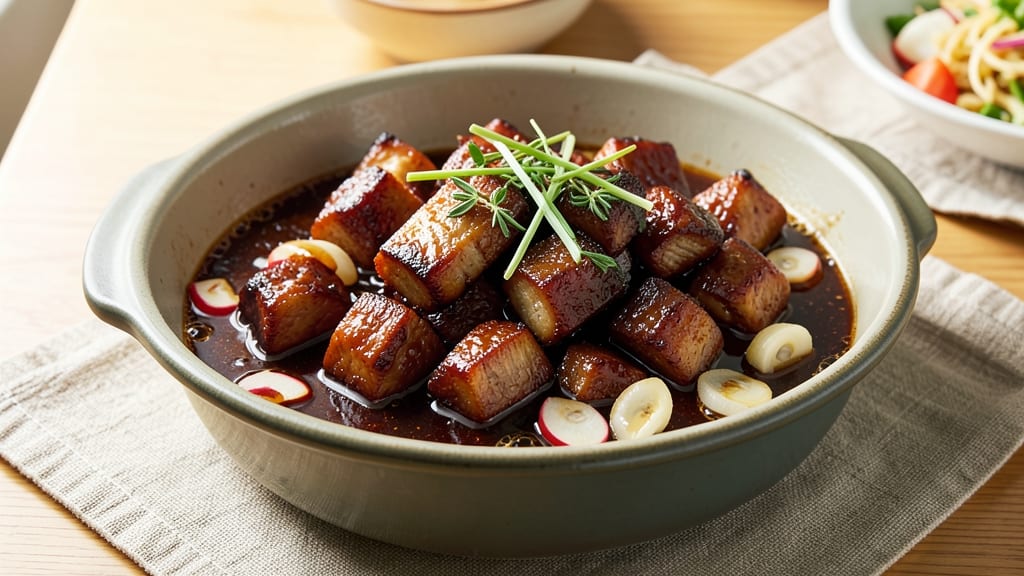
This braised pork in soy sauce delivers restaurant-quality depth with just one pot and 30 minutes of active prep. The secret lies in searing pork belly first—creating that caramelized crust that holds up through hours of slow braising—before letting soy sauce, ginger, and garlic work their umami magic.
I learned this technique from Master Chef Chen, who'd say "Patience in the braise is where flavor hides." What makes this dish special is how the pork transforms from tough to tender, falling apart with each bite while absorbing the rich, glossy sauce.
The key is low-and-slow cooking—2 hours at 300°F—that develops layers of flavor without drying out the meat. I've perfected this for weeknight dinners, but it's equally impressive for holiday tables when you want that restaurant-quality result.
By the time you're done, you'll have succulent pork that practically melts in your mouth, coated in a sauce that's perfect for dipping steamed rice or tossing with noodles. The aroma alone will have everyone asking what's for dinner. The best part?
Leftovers taste even better the next day, making this a meal that gives back. Serve with steamed jasmine rice and quick-pickled vegetables to balance the richness. Here's how to make it—foolproof and packed with that deep umami satisfaction.
Ingredients for braised pork in soy sauce
Pork belly and soy sauce make this one-pot wonder unforgettable—just 14 ingredients, restaurant magic inside.
| Ingredient | Amount | Notes |
|---|---|---|
| Pork Belly 🥓 | 1 ½ lb | Cut into 1-inch cubes |
| Dark Soy Sauce 🍶 | ½ cup | For deep umami color |
| Light Soy Sauce 🍶 | ¼ cup | Balances saltiness |
| Ginger Root 🌿 | 2 tbsp | Freshly grated, aromatic |
| Garlic Cloves 🧄 | 6 cloves | Minced, aromatic base |
| Honey 🍯 | 2 tbsp | For subtle sweetness |
| Sesame Oil 🫒 | 1 tbsp | Toasted, nutty finish |
| Star Anise Pods 🌟 | 2 whole | Whole, removed after cooking |
| Cinnamon Sticks 🌿 | 1 whole | For warmth, removed after cooking |
| Bay Leaves 🍃 | 2 whole | Fresh or dried |
| Green Onions 🧅 | 3 whole | Sliced, for garnish |
| Vegetable Oil 🫒 | 2 tbsp | High smoke point |
| Water 💧 | 1 cup | For braising liquid |
| Salt 🧂 | 1 tsp | Kosher or sea salt |
| Black Pepper 🌶️ | ½ tsp | Freshly ground |
Pork belly is the star here—look for thick-cut, well-marbled pieces at the butcher counter (or pre-cut from Costco if you're short on time). The cubes should be roughly 1-inch—too small and they'll cook too fast, too big and they won't tenderize properly. For the soy sauce, Kikkoman or Lee Kum Kee are my go-tos, but any good-quality brand works. Fresh ginger and garlic are non-negotiable—they make all the difference, so don't skip the time to zest that ginger or mince the garlic finely. If you're feeling fancy, toast your star anise and cinnamon sticks in a dry pan for 30 seconds to wake up their flavors before adding to the pot.
No dark soy sauce? Light soy sauce plus 1 tsp molasses gets you close. Running out of ginger? Ginger powder at half the amount works in a pinch, though fresh is always better. Star anise or cinnamon sticks hard to find? Skip them—the dish will still be delicious. For the honey, any variety works, but raw or clover honey adds a touch of floral depth. The sesame oil should be toasted—Kadoya brand is my favorite, but any good-quality toasted sesame oil will do. And if you're worried about the pork being too fatty, don't be—those fat pockets melt into the sauce during braising, creating that luxurious texture.
This braise gets better with time—2 hours at 300°F is ideal, but if you're in a hurry, you can do 3 hours at 275°F. The pork keeps for 4 days in the fridge, and the sauce only gets richer over time. For leftovers, portion into containers with a little extra sauce—freezes beautifully for 3 months. The sauce also works as a dipping sauce for rice or noodles, so make extra if you're serving it as a side. And if you're making this ahead for a party, the aroma alone will have guests lining up for seconds.
Why You'll Love This Recipe
- One-Pot Magic: Honestly, this dish is that easy—just sear the pork belly, toss in the garlic and ginger, then let the soy sauces do their thing. No chopping mountains of veggies or fussing with multiple pans. The dark soy sauce caramelizes right in the pot, turning it into a glossy, sticky sauce that’s basically foolproof.
- Umami Bomb: Between us, the combo of dark and light soy sauce is ridiculously good—deep, salty, slightly sweet, with that crispy edge on the pork belly. The ginger and garlic? They melt into the sauce, giving it a warmth that makes every bite feel like a hug. It’s the kind of flavor that sticks with you long after the last forkful.
- Leftovers That Shine: Here’s what sold me—this pork tastes even better the next day. I make a big batch on Sunday, and by Wednesday, it’s still the star of my lunch. Slice it thin over rice, toss it in noodles, or just eat it straight from the pot. It’s my secret weapon for lazy days when I don’t want to cook.
- Budget-Friendly Luxury: Pork belly isn’t cheap, but a single cut stretches far—especially when braised. The soy sauces stretch the flavor, so you’re not just paying for meat; you’re getting a whole meal’s worth of richness. Plus, it’s the kind of dish that makes you feel like you’re eating at a restaurant, even when you’re wearing pajamas.
Step-by-step instructions for braised pork in soy sauce
Here's how to create rich, tender pork belly with deep umami flavor in one simple pot.
Sear the Pork Belly for Maximum Flavor
Heat the 2 tablespoons vegetable oil in a large Dutch oven over medium-high heat until shimmering. Working in batches if needed, add the 1.5 lb pork belly cubes and sear for 3-4 minutes per side until golden brown. This step develops deep flavor through the Maillard reaction.
Don't overcrowd the pan or the pork will steam instead of brown. I press down gently on the cubes during the first minute to prevent curling. Once all pieces are golden, remove them and set aside on a plate.
Build the Aromatic Base
In the same Dutch oven, reduce heat to medium and add the 2 tablespoons grated ginger root and 6 cloves minced garlic. Sauté for 1-2 minutes until fragrant but not browned. Add the 1 whole cinnamon stick, 2 whole star anise pods, and 2 whole bay leaves, stirring for 30 seconds to toast the spices.
Here's where it gets good—pour in the 0.5 cup dark soy sauce and 0.25 cup light soy sauce, scraping up any browned bits from the bottom. Let it simmer for 2 minutes until the sauce thickens slightly and becomes glossy. This creates the flavor foundation for your braise.
Braise with Honey and Liquid
Return the pork belly to the pot along with any accumulated juices. Add the 2 tablespoons honey, 1 cup water, 1 teaspoon salt, and 0.5 teaspoon black pepper. Stir gently to combine, then bring to a simmer.
Cover tightly with a lid and transfer to the oven preheated to 300°F. Braise for 2 hours, turning the pork occasionally to ensure even cooking and coating in the sauce. The pork is done when it's fork-tender and the sauce has reduced to a thick, glossy consistency.
Finish with Sesame Oil and Garnish
Remove the pork from the braising liquid and transfer to a serving platter. Strain the sauce through a fine-mesh sieve into a clean saucepan to remove the spices, then return it to medium heat. Add the 1 tablespoon sesame oil and simmer for 2-3 minutes until slightly thickened.
Slice the 3 whole green onions and sprinkle them over the pork. Drizzle generously with the finished sauce. Each bite should deliver tender, caramelized pork with layers of sweet, salty, and aromatic flavors. Serve immediately with steamed rice to soak up every delicious drop of sauce.
Pro Tips For Making Braised Pork In Soy Sauce
- Sear the Belly First: Hit that pork belly with a screaming-hot pan—no rushing—until it’s deep golden and crisp in spots. I used to skip this, and my braise always tasted flat; the Maillard reaction is what turns bland pork into something addictive.
- Balance the Soy Sauces: Dark soy sauce is for color, light for flavor—use about 2:1 light to dark. I learned this after my first batch looked like mud and tasted like a salt lick. A splash of light soy at the end brightens the sauce without overpowering.
- Don’t Overcrowd the Pan: Brown the pork in batches or you’ll steam it instead of sear it. I crammed everything in once, and the meat ended up gray and soggy—like a sad, watery pork cloud. Patience here makes all the difference.
- Simmer Low and Slow: Once everything’s in the pot, drop the heat to a bare simmer—no boiling, no rushing. I burned the garlic once and had to start over; now I just walk away and let it do its thing for 1.5 hours. The result? Fall-apart tender pork every time.
Perfect pairings for this braised pork in soy sauce
Rice Pairings
Steamed jasmine rice is my go-to pairing—its delicate floral notes complement the pork's richness without overpowering it. Cook 1 cup jasmine rice with 1.5 cups water and a pinch of salt, then fluff with a fork before serving. For extra luxury, add 1 tablespoon butter while steaming. 🥘
Short-grain sushi rice works beautifully too, especially if you want to make rice bowls. Cook 1 cup rice with 1.25 cups water and 1 tbsp rice vinegar, then spread in a shallow dish.
Top with braised pork, sliced cucumber, avocado, and a drizzle of spicy mayo for a fusion twist.
Noodle Combinations
For a quick weeknight meal, serve over udon noodles—their hearty texture stands up to the tender pork. Cook 8 oz fresh udon according to package, drain, and toss with 1 tbsp toasted sesame oil before adding the pork and sauce.
The noodles soak up every last drop of that umami-rich braising liquid. 🍜
Thin rice vermicelli noodles create a lighter option. Soak 6 oz dried noodles in warm water for 10 minutes, drain, and toss with the pork, sliced green onions, and a splash of the braising sauce. Add fresh herbs like cilantro or Thai basil for brightness.
Vegetable Sides
Quick-pickled cucumbers cut through the richness with their tangy crunch. Thinly slice 1 English cucumber, toss with 2 tbsp rice vinegar, 1 tsp sugar, and ½ tsp salt, then let sit for 30 minutes before serving. 🥒
Sautéed bok choy adds a fresh, slightly bitter contrast. Heat 1 tbsp sesame oil in a pan, add 2 whole bok choy (halved lengthwise), and stir-fry for 3-4 minutes until wilted but still crisp. Finish with a sprinkle of sesame seeds.
Sauce Variations
Use the leftover braising sauce as a dipping sauce for potstickers or dumplings. Simmer it with 1 tbsp cornstarch and 1 tbsp water to thicken slightly, then drizzle with extra sesame oil. The balance of sweet, salty, and umami makes it irresistible. 🍢
For a spicy kick, blend 2 tbsp of the sauce with 1 tsp gochujang and ½ tsp honey, then drizzle over the pork or use as a dipping sauce. This adds a Korean-inspired twist that pairs perfectly with the dish's Asian roots.
Nutrition facts
Frequently asked questions
Can I use pork shoulder instead of pork belly?
Yes, but you'll need to adjust the cooking time. Pork shoulder is leaner and requires 3-4 hours at 275°F to become tender. Cut it into 1.5-inch cubes and expect slightly less fat in the sauce. The flavor will be equally rich, just with a different texture profile.
What if I don't have dark soy sauce?
Mix 0.5 cup light soy sauce with 1 teaspoon molasses or ½ teaspoon brown sugar for color and depth. For extra richness, add ½ teaspoon oyster sauce—it enhances the umami without changing the dish's structure. The color won't be as dark, but the flavor will be just as satisfying.
Can I make this in a slow cooker?
Sear the pork as directed, then transfer everything to a slow cooker. Cook on Low for 6-7 hours or High for 4-5 hours. The sauce may be thinner, so reduce it on the stovetop at the end by simmering uncovered for 10-15 minutes. The slow cooker makes this perfect for hands-off weeknight cooking.
Why did my pork turn out tough?
This usually happens from one of three issues: overcrowding during sear (steaming instead of browning), too high oven temp (over 325°F dries it out), or not enough cooking time. For pork belly, 2 hours at 300°F is non-negotiable—it needs that slow transformation. If using pork shoulder, extend to 4 hours minimum.
How do I reheat leftovers?
Reheat gently in the oven at 300°F for 15-20 minutes covered with foil, or warm in a skillet with 1 tablespoon water over low heat for 3-4 minutes. Microwaving works in a pinch, but the sauce may separate. The leftovers actually improve as the flavors meld further—this dish tastes even better the next day!