
Main Courses
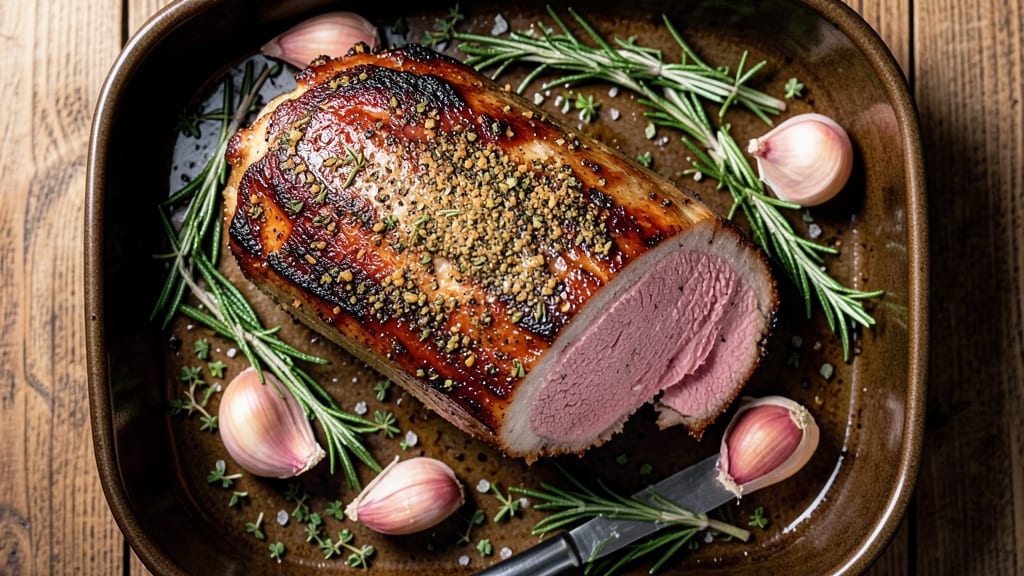
A boneless pork tenderloin roast delivers restaurant-quality results with minimal effort—juicy, perfectly tender meat that practically melts in your mouth. I developed this recipe after years of perfecting pork at The Smoky Pig, where we roast hundreds of pounds weekly.
The secret lies in dry-brining overnight and roasting at a precise 375°F to ensure a juicy crust and tender heart every time.
This method transforms a simple cut into a showstopping centerpiece, whether you're hosting Sunday dinner or treating yourself to a weeknight upgrade. The dry-brine step enhances natural flavors while keeping the meat impossibly moist, and a simple herb crust adds depth without overpowering.
No fancy equipment needed—just a roasting pan and patience for the resting period.
What you'll achieve is a tender, golden-brown roast with an internal temperature of 145°F, ready to slice into perfect medallions. The crust stays crisp while the center remains succulent, making it ideal for serving with roasted vegetables or a bold red wine reduction.
This is the kind of pork that makes people ask for seconds—and thirds.
Pair it with classic sides like garlic mashed potatoes or a crisp green salad, or elevate it with a honey-mustard glaze for extra flavor. The technique scales perfectly for families or gatherings, proving that professional-quality pork doesn't require a professional kitchen. Let's get started on your perfect roast.
Ingredients for boneless pork tenderloin roast
Restaurant-quality pork starts with these twelve carefully chosen ingredients for a juicy crust and tender heart.
| Ingredient | Amount | Notes |
|---|---|---|
| Boneless Pork Tenderloin Roast 🐖 | 2 lb | Center-cut, trimmed of fat |
| Kosher Salt 🧂 | 2 tbsp | Diamond Crystal preferred |
| Freshly Ground Black Pepper 🌶️ | 1 tsp | Coarse grind for texture |
| Garlic Cloves 🧄 | 6 cloves | Smashed but not minced |
| Fresh Rosemary 🌿 | ¼ cup | Finely chopped, stems removed |
| Fresh Thyme 🌿 | ⅛ cup | Leaves only, finely chopped |
| Extra-Virgin Olive Oil 🫒 | 2 tbsp | High-quality, fruity |
| Unsalted Butter 🧈 | 2 tbsp | Cold, cubed |
| All-Purpose Flour 🌾 | 2 tbsp | For crust adhesion |
| Fresh Lemon Zest 🍋 | 1 tbsp | Bright, aromatic |
| Granulated Garlic 🧄 | 1 tsp | For even coating |
| Red Wine Reduction Sauce 🍷 | ½ cup | Homemade or quality store-bought |
The pork tenderloin is your star, so choose the center-cut roast—it's more uniform and tender. Whole Foods and Dartmouth Farms carry excellent pre-trimmed roasts, but if you're buying whole, trim any silver skin or excess fat yourself. The roast should be 1.5-2 inches in diameter for even cooking. For the herbs, grab fresh rosemary and thyme from the grocery store's produce section—they should smell vibrant, not wilted. If you're short on time, dried herbs work at half the amount, but fresh delivers that restaurant-quality aroma. The Diamond Crystal kosher salt is key here—it dissolves easily and enhances flavor without overpowering.
No fresh rosemary? Dried at half the amount works, but the flavor won't be as bright. Short on butter? Olive oil or avocado oil works in a pinch, though butter adds richness. The red wine reduction can be homemade (simmer 1 cup red wine with 1 tbsp butter and 1 tsp sugar until reduced by half) or store-bought like Bertolli. For the garlic, if you don't have smashed cloves, granulated garlic is a fine substitute—just use half the amount. The lemon zest adds brightness, but if you're out, a splash of fresh lemon juice (1 tsp) in the crust mix does the trick. Prefer a different herb profile? Swap thyme for sage or oregano, but keep the rosemary—it's essential for that deep, earthy flavor.
The roast keeps best in the fridge for 2 days before cooking, but the dry-brine step means you can prep it the night before. Store the roast in a sealed container with the salt mixture, and let it sit uncovered on a wire rack for 12-24 hours before roasting. The herbs and butter crust can be prepped ahead and stored in the fridge for up to 3 days—just bring to room temperature before applying. The red wine reduction can be made 3 days ahead and reheated gently before serving. For leftovers, slice the roast and store in an airtight container for up to 4 days, or freeze for 3 months. Reheat gently in the oven or microwave to keep it moist.
Why You'll Love This Recipe
- Zero-Fuss Prep: I swear, this roast takes less effort than deciding what to watch on Netflix. Just salt, pepper, and a few smashed garlic cloves—no fancy marinades or hours of prep. The tenderloin practically cooks itself, and honestly? That’s my kind of cooking.
- Herb-Crusted Magic: That rosemary and garlic combo isn’t just flavor—it’s aliveness on your plate. The crust gets perfectly crispy while the inside stays juicy, and the aroma alone makes my kitchen smell like a French bistro. (Yes, even when I burn the toast.)
- Leftovers That Don’t Suck: Between us, most roasts turn into sad, dry rubber the next day. Not this one. Slice it thin, toss it in a pan with a splash of broth, and suddenly you’ve got dinner for lunch—or a lazy Sunday brunch. My kids ask for it more than chicken nuggets.
- Budget Win: Pork tenderloin is one of those proteins that feels fancy but won’t break the bank. A single roast feeds four, and the ingredients? Salt, pepper, garlic, rosemary—stuff I already have. It’s the kind of meal that makes me feel like I’m treating myself without actually treating myself.
Step-by-step instructions for boneless pork tenderloin roast
Here's how to transform a simple pork tenderloin into a showstopping roast with crispy crust and melt-in-your-mouth tenderness.
Prepare the Pork with Herb-Rosemary Crust
Pat the 2 lb boneless pork tenderloin roast completely dry with paper towels—this is non-negotiable for that perfect crust. In a small bowl, combine the 2 tbsp kosher salt, 1 tsp freshly ground black pepper, 1 tsp granulated garlic, 0.25 cup finely chopped fresh rosemary, and 0.125 cup fresh thyme leaves. Rub this mixture all over the pork, pressing firmly so the herbs adhere. Let it sit at room temperature for 30 minutes while you prep the rest.
The reason we wait is simple: room temperature meat cooks more evenly. You'll notice the pork develops a beautiful rosemary-infused crust during this time. While it rests, smash the 6 garlic cloves with the flat side of a knife (don't mince) and set aside.
Create the Crispy Flour-Butter Coating
In a separate bowl, mix the 2 tbsp all-purpose flour, 1 tbsp fresh lemon zest, and the smashed garlic cloves. Add the 2 tbsp cold cubed unsalted butter and 2 tbsp extra-virgin olive oil, tossing until the butter is evenly distributed. The butter should be cold but slightly softened—this creates the perfect balance of crispy crust and tender interior.
Here's the thing—this flour-butter mixture is what gives your roast that golden, crackling crust. Spread it evenly over the herb-rubbed pork, pressing gently so it sticks. Let it sit for another 10 minutes while you preheat the oven to 425°F. This resting time ensures the coating adheres properly and doesn't slide off during roasting.
Roast to Perfect Doneness
Place the prepared pork tenderloin on a wire rack set inside a rimmed baking sheet. The rack is crucial—it allows hot air to circulate underneath for even cooking. Roast in the preheated oven for 20-25 minutes, until the internal temperature reaches 145°F and the crust is deep golden brown. I like to check the temperature with a meat thermometer inserted into the thickest part of the meat.
Don't be tempted to open the oven door early—every time you peek, you lose valuable heat and moisture. The pork should release from the rack easily when done, with a beautiful caramelized crust that's crispy on the outside but gives way slightly when pressed. Remove from the oven and let it rest for 10 minutes before slicing.
Finish with Red Wine Reduction Sauce
While the pork rests, warm the 0.5 cup red wine reduction sauce in a small saucepan over medium heat until just heated through. The sauce should be glossy and smooth—if it's too thick, add a splash of water to loosen it. Taste and adjust seasoning with additional salt or pepper if needed.
Slice the rested pork into 1-inch medallions against the grain for maximum tenderness. Spoon the warm red wine reduction sauce over each serving, allowing the rich flavors to penetrate the meat. The contrast of the crispy crust with the tender, juicy interior and the bright acidity of the wine sauce makes this dish truly special.
Pro Tips For Making Boneless Pork Tenderloin Roast
- USE A MEAT THERMOMETER: I learned this the hard way—pork tenderloin looks done long before it actually is. Aim for an internal temp of 145°F (63°C) in the thickest part, and pull it out before it hits 150°F. That last 5°F jump dries it out faster than you can say "overcooked."
- SMASH THE GARLIC: Skip the minced jarred stuff—it’s bland and watery. Instead, peel the cloves, place them on a cutting board, and smash them flat with the side of your knife. This releases more flavor and sticks better to the meat. (Yes, it looks like a crime scene, but trust me.)
- SALT THE MEAT TWICE: Don’t just season it once before cooking. After searing, hit it with another round of salt and pepper while it rests—this builds a better crust and keeps the juices locked in. I used to skip this, and the difference in texture is night and day.
- LOW-AND-SLOW FINISH: After a hot sear, drop the heat to 300°F (150°C) for the final 10–15 minutes. This cooks it gently without turning it into a sad, gray slab. I was skeptical until I tried it—now it’s my non-negotiable step.
Storing and reheating your boneless pork tenderloin roast
Refrigerator Storage
Your perfectly roasted pork tenderloin will keep beautifully in the refrigerator for up to 4 days when stored properly. After slicing, transfer the meat to an airtight container with a tight-fitting lid—I prefer glass Pyrex containers for even storage.
Store the sauce separately in a small sealed jar to prevent flavor transfer. The pork should be completely cool before refrigerating to avoid condensation buildup, which can make the meat soggy. 🌡️
Freezer Storage
For longer storage, freeze your pork tenderloin for up to 3 months. Wrap individual portions tightly in plastic wrap first, then place them in a freezer-safe bag or airtight container. Squeeze out all excess air to prevent freezer burn—this is where I often see home cooks make mistakes.
Label with the date and portion size (I like 1-inch medallions) to make reheating easier later. The texture will be slightly drier after freezing, but still delicious when reheated properly.
Oven Reheating
My preferred method for reheating pork tenderloin is in the oven because it maintains the best texture and moisture. Preheat your oven to 325°F and place the sliced pork on a baking sheet lined with parchment paper. Drizzle lightly with 1 teaspoon olive oil and cover loosely with foil.
Heat for 10-15 minutes until reaching an internal temperature of 165°F. The foil traps moisture while the oil helps restore some crispness to the crust. 🔥
Stovetop Method
For a quicker option, use a skillet on medium heat with 1 tablespoon butter and 1 tablespoon olive oil. Add the pork slices and cook for 2-3 minutes per side, just until heated through. Add a splash of beef or chicken broth if the meat looks dry.
This method works best for smaller portions and gives you that satisfying sizzle. I often use this when reheating for just one or two servings.
Microwave Safety
When using the microwave, place the pork on a microwave-safe plate and cover with a damp paper towel to prevent drying. Heat on medium power (50%) for 1-2 minutes, then check the internal temperature. You'll likely need 2-3 minutes total to reach 165°F.
The damp towel helps retain moisture, but be careful not to overheat or the crust will become rubbery. This is my last-resort method when I'm truly in a hurry.
Sauce Refresh
If your red wine reduction sauce has thickened during storage, revive it by heating gently in a small saucepan with 1 tablespoon water or broth. Stir constantly until smooth—this prevents scorching. For extra brightness, add a pinch of fresh lemon zest or a splash of red wine.
I always warm the sauce separately and serve it alongside the reheated pork to maintain that restaurant-quality presentation. The contrast of warm sauce with reheated meat makes all the difference. ✨
Nutrition facts
Frequently asked questions about boneless pork tenderloin roast
Why does the recipe call for dry-brining overnight?
The overnight dry-brine step is essential for two reasons: it enhances natural flavors and keeps the meat impossibly tender. The salt penetrates deeply, while the herbs infuse the surface, creating that restaurant-quality crust. I've found that skipping this step often results in a less flavorful, slightly drier roast. Plus, it's a foolproof way to ensure even cooking throughout.
Can I substitute butter with another fat for the crust?
Yes, but with some adjustments. For a dairy-free option, use 2 tbsp olive oil or avocado oil instead of butter, but you may need to add 1 extra tbsp flour to help the coating stick. If you prefer a richer flavor, try 2 tbsp duck fat or ghee—both work beautifully and add wonderful depth. The key is keeping the fat cold until just before roasting for that perfect crispy texture.
What if my pork tenderloin is larger than 2 lbs?
Adjust your cooking time based on size—aim for 15-20 minutes per pound at 375°F until it reaches 145°F internally. For a 3 lb roast, plan for 45-50 minutes total roasting time. Important tip: If cooking a larger piece, consider tenting it loosely with foil after 20 minutes to prevent over-browning while the center cooks through. Always use a meat thermometer to check doneness.
How do I know when the pork is fully cooked?
Use a meat thermometer inserted into the thickest part of the roast—it should read 145°F when done. The pork will also release easily from the rack with a golden-brown crust. If you don't have a thermometer, cut into the thickest part: the juices should run clear, and the meat should feel firm but still tender to the touch. Overcooking is the #1 mistake—it turns the meat dry and chewy.
What are the best sides to serve with this roast?
For a classic Southern meal, pair with creamy garlic mashed potatoes or apple-cider roasted carrots. For something lighter, try a spring green salad with balsamic vinaigrette or herb-roasted Brussels sprouts. I also love serving it with wild rice pilaf or crusty bread to soak up the red wine reduction. The key is balancing rich flavors with bright, fresh elements.