
Main Courses
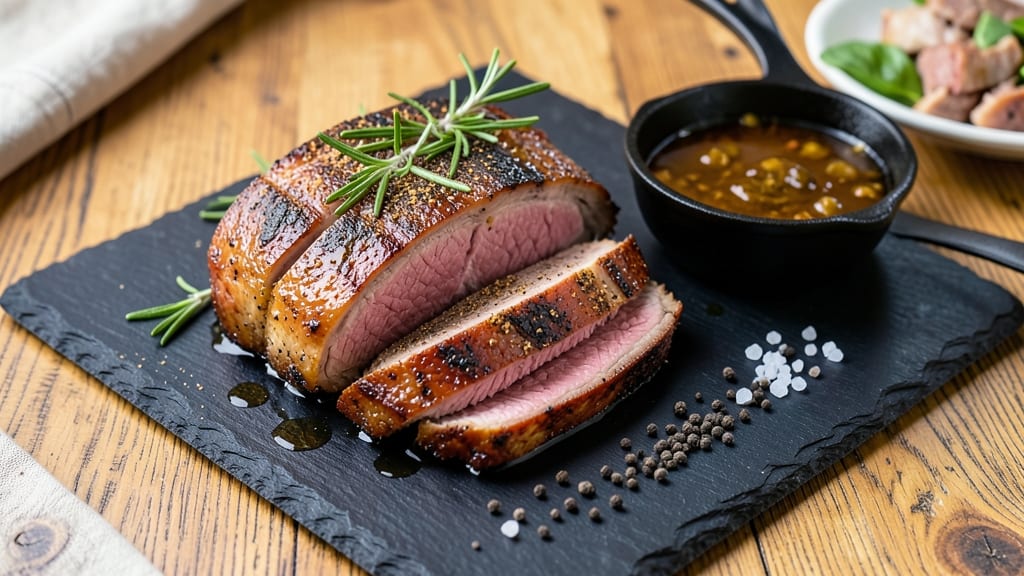
This boneless pork sirloin roast recipe transforms your grill into a juicy masterpiece—no dry moments in sight. 🔥 As a pitmaster trained in French technique, I’ve perfected the balance between sear and slow cook, ensuring every bite stays tender while developing a flavorful crust.
The secret lies in temperature control and proper resting, two steps that make all the difference between good and extraordinary pork.
What sets this recipe apart is the method: we start with a dry rub of coarse salt and smoked paprika for depth, then use indirect heat to cook the roast slowly to 145°F internally.
This approach guarantees a tender, juicy center while the exterior develops a rich, caramelized bark. No marinade is needed—the flavors come from the meat itself, enhanced by the grill’s natural char.
Once you’ve achieved that perfect internal temperature, the real magic happens during the 10-minute rest. This critical step allows juices to redistribute, ensuring each slice stays moist and flavorful.
The result? A roast so tender it nearly falls apart, with a crust that’s crisp enough to stand up to bold sides like grilled peaches or a tangy slaw.
This recipe is designed for those who appreciate the art of grilling—where patience and precision turn a simple cut of pork into a showstopper. Whether you’re feeding a crowd or treating yourself to a weekend meal, the techniques here will elevate your skills and your dinner table. Let’s get started.
Ingredients for boneless pork sirloin roast recipe grill
Six ingredients transform a simple pork roast into grill perfection—no dry bites in sight.
| Ingredient | Amount | Notes |
|---|---|---|
| Boneless Pork Sirloin Roast 🥩 | 3 ½ lb | Center-cut for even cooking |
| Coarse Kosher Salt 🧂 | 2 tbsp | Diamond Crystal preferred |
| Smoked Paprika 🌶️ | 1 ½ tbsp | For deep smoky flavor |
| Freshly Ground Black Pepper 🌶️ | 1 tsp | Freshly cracked for best flavor |
| Extra-Virgin Olive Oil 🫒 | 2 tbsp | For oiling grill grates |
| Fresh Rosemary Sprigs 🌿 | 4 whole | Woody stems removed |
| Garlic Cloves 🧄 | 4 cloves | Smashed for aroma infusion |
| Yellow Onion 🧅 | 1 whole | Quartered for optional bed |
| Fresh Thyme Leaves 🍃 | ¼ cup | From 2 sprigs |
| Apple Cider Vinegar 🍎 | 1 tbsp | For balancing richness |
| Honey 🍯 | 1 tbsp | Light variety preferred |
| Wood Chips 🌳 | 1 cup | Hickory or applewood |
The pork cut matters most here. Center-cut boneless sirloin stays juicy longer than shoulder cuts—look for good marbling at Costco or Whole Foods. If your butcher offers vacuum-sealed, grab that. The 3.5 lb size feeds a crowd comfortably, but adjust up or down based on your grill capacity. For the dry rub, Diamond Crystal kosher salt dissolves better than table salt, and smoked paprika from Penzeys adds that authentic barbecue depth without overpowering. I always double-check the internal temp probe before buying—it should be bright red, not grayish.
No smoked paprika? Regular paprika plus a pinch of liquid smoke works in a pinch (start with 1/4 tsp). Fresh rosemary wilting? Dried thyme at one-third the amount keeps the earthy notes. The honey and vinegar combo is optional but adds a bright contrast to the rich pork—skip it if you prefer classic grill flavors. For wood chips, hickory gives bold smoke, while applewood stays lighter. If you can't find fresh wood chips, soaked wood chunks from the grocery store work too. The olive oil is just for oiling the grates—don't drown the pork in it.
Pork roasts hold up beautifully for 2 days in the fridge if wrapped tightly in butcher paper. For leftovers, slice against the grain and reheat gently in a skillet with a splash of broth—never microwave, or you'll dry it out. The dry rub keeps for 3 months in an airtight container, so make extra. I always grill a test piece first to check seasoning—taste as you go. The wood chips can be reused once, then composted. And for that perfect crust? Cast iron skillets on the grill work wonders if your grill lacks sear zones.
Why You'll Love This Recipe
- Five-Ingredient Magic: I swear, this is the kind of recipe where you open the pantry and boom—everything you need is already there. That smoky paprika and coarse salt? They turn a simple roast into something that tastes like it’s been slow-smoked all day, no fancy marinade required.
- Grill in Minutes: Between us, I’ve tried those complicated rubs and brines, but this? Just a quick coat of olive oil, a sprinkle of salt and pepper, and you’re good to go. The grill does all the work—no babysitting, no stress.
- Leftovers That Don’t Suck: Honestly, I make this on purpose just to have it for lunch the next day. Slice it thin, toss it in a sandwich with some pickles and mustard, and suddenly you’ve got a meal that feels fancy but costs next to nothing.
- Weeknight Crowd-Pleaser: Here’s what sold me—this feeds four without breaking the bank, and everyone at the table will ask for seconds. (Yes, even the picky eaters.) The best part? It’s ready while you’re still debating whether to open a bottle of wine.
Step-by-step instructions for grill-perfect pork sirloin roast
Here's how to transform your pork into a juicy, flavorful masterpiece that stays tender through every bite.
🔥 Step 1: Prep the Roast with Smoky Dry Rub
Remove the pork from the refrigerator and let it sit at room temperature for 30 minutes—this ensures even cooking. Pat it dry thoroughly with paper towels, especially focusing on the corners where moisture tends to hide. I like to press down firmly to remove as much surface moisture as possible, as this helps create that beautiful crust we're after.
In a small bowl, combine the 2 tbsp coarse kosher salt, 1.5 tbsp smoked paprika, and 1 tsp freshly ground black pepper. Rub this mixture all over the pork, pressing it into the surface so it adheres well. Don't be shy—this is where the flavor starts. Let the seasoned pork rest uncovered for another 15 minutes while you prepare the grill.
🍳 Step 2: Set Up the Grill for Indirect Heat
While the pork rests, prepare your grill for indirect heat cooking. If using a charcoal grill, arrange coals on one side only, leaving the other side empty. For gas grills, turn on only one side of the burners. Preheat the grill to 275°F—this lower temperature is crucial for preventing the outside from overcooking before the inside reaches temperature.
Soak the 1 cup wood chips in water for 30 minutes before adding them to the hot coals or smoker box. This prevents them from burning too quickly and creating bitter smoke. Once the grill reaches 275°F and you see clean, blue smoke, you're ready to cook. Oil the grill grates with the 2 tbsp extra-virgin olive oil using a folded paper towel to ensure the pork doesn't stick.
👨🍳 Step 3: Grill the Pork with Precision
Place the pork on the cooler side of the grill, away from direct heat. Close the lid and maintain the 275°F temperature—this is where patience pays off. Cook for 1 hour 15 minutes per pound, which for our 3.5 lb roast means about 3 hours 30 minutes total. The key is to keep the temperature steady; if it fluctuates, adjust the heat source accordingly.
Here's the thing—I like to check the internal temperature using a meat thermometer after 2 hours. It should be around 145°F at this point. If it's not, give it more time. The pork is done when it reaches 145°F internally, which should take the full 3 hours 30 minutes. Don't rush this; slow cooking is what makes the meat tender and juicy.
🥘 Step 4: Create the Glaze and Finish
Once the pork reaches 145°F, remove it from the grill and let it rest on a cutting board for 10 minutes. While it rests, prepare the glaze by combining the 1 tbsp apple cider vinegar, 1 tbsp honey, 4 smashed garlic cloves, and 0.25 cup fresh thyme leaves in a small saucepan. Simmer over medium heat for 3-4 minutes until slightly thickened.
Brush this glaze generously over the pork, then place it back on the grill over direct heat for 5-7 minutes to caramelize the surface. You'll see it develop a beautiful sheen and slightly crisp edges—this is your signal that it's ready. Meanwhile, quarter the yellow onion and grill them on the hot side for 5 minutes as a bed for serving.
⏰ Step 5: Rest and Slice for Maximum Juiciness
Transfer the glazed pork to a cutting board and let it rest for another 10 minutes before slicing. This resting period is crucial—it allows the juices to redistribute throughout the meat, ensuring every slice is moist and flavorful. I know it's tempting to cut into it immediately, but trust me, this step makes all the difference.
Slice the pork against the grain into ½-inch thick slices. Arrange them over the grilled onion quarters and serve immediately. The result should be a beautifully caramelized exterior with tender, juicy meat inside. Each bite delivers that perfect balance of smoky, sweet, and savory flavors we worked so hard to achieve.
Pro Tips For Making Boneless Pork Sirloin Roast Recipe Grill
- Dry It First: Pat the pork sirloin thoroughly with paper towels—this isn’t just about flavor, it’s about getting that crust. Wet meat steams instead of searing, and you’ll end up with a sad, pale roast instead of a smoky, caramelized masterpiece. (Yes, even if you’re impatient like me.)
- Salt It Generously: Don’t be shy with the kosher salt—aim for at least 1 tablespoon per pound, applied at least 30 minutes before grilling. The salt needs time to penetrate the lean pork and draw out moisture, which is what gives you that perfect crust when it hits the grill. I used to skimp, and the results were always disappointing.
- Start Hot, Then Back Off: Crank the grill to high heat for the first 5 minutes—you want that pork sizzling like crazy. After that, drop it to medium-high and let it cook through; rushing the low-and-slow part leads to dry meat. I learned this the hard way when my first attempt turned out chewy instead of tender.
- Rest It Under Foil: As soon as the pork hits 145°F, pull it off the grill and tent it loosely with foil for 5-10 minutes. This keeps the juices from bolting out the second you slice into it. I know, I know—you’re eager to eat it—but skipping this step means a fork-dry roast. (Your future self will thank you.)
Serving suggestions for this boneless pork sirloin roast recipe grill
Classic Grill Sides
Grilled vegetables bring out the natural sweetness of your pork while balancing its richness. I love serving grilled asparagus with a sprinkle of flaky sea salt and lemon zest—the bright acidity cuts through the smoky pork beautifully.
For a heartier option, try grilled sweet potatoes tossed with 1 tbsp olive oil, ½ tsp smoked paprika, and a pinch of cayenne for a touch of heat. 🌱
Fresh Salad Pairings
A crisp arugula salad with shaved fennel, cherry tomatoes, and a light balsamic vinaigrette adds freshness to the meal. I like to toss in toasted pine nuts for crunch and a sprinkle of Parmesan cheese for depth.
The peppery bite of arugula contrasts perfectly with the smoky pork. For a summer twist, swap in cucumber ribbons and radishes for extra refreshment.
Bread & Butter
Crusty baguette slices brushed with garlic-infused olive oil and toasted on the grill are a must. I also serve buttermilk biscuits with a touch of honey butter—the sweetness pairs wonderfully with the savory pork.
For a lighter option, try grilled cornbread with a hint of jalapeño for a spicy kick. These sides soak up any leftover juices beautifully.
Sauces & Dips
Serve your pork with a side of spicy apple chutney—I blend 2 apples, 1 tbsp apple cider vinegar, 1 tsp mustard seeds, and a pinch of red pepper flakes for a tangy contrast.
Another favorite is creamy horseradish sauce, made with ½ cup sour cream, 1 tbsp prepared horseradish, and a squeeze of lemon juice. The sharpness balances the pork’s richness perfectly. 🌶️
Dessert Harmony
Finish the meal with grilled peaches drizzled with honey and cinnamon—the caramelized fruit complements the smoky pork beautifully. For a lighter option, serve vanilla bean ice cream with a drizzle of caramel sauce.
The cool creaminess cools the palate after the rich, savory main course. If you're feeling adventurous, try grilled pineapple slices with a sprinkle of chili powder for a sweet-spicy finish.
Nutrition facts
Frequently asked questions
Why does the recipe specify indirect heat for grilling pork?
Indirect heat prevents the pork's exterior from overcooking before the center reaches 145°F. This method ensures a tender, juicy interior while allowing the crust to develop properly. For a 3.5 lb roast, maintaining 275°F lets the heat penetrate evenly without drying out the meat.
Can I use a marinade instead of the dry rub?
The dry rub works perfectly for this recipe because it creates a flavorful crust without adding excess moisture that could dilute the pork's natural taste. However, if you prefer a marinade, try a mix of olive oil, apple cider vinegar, garlic, and rosemary for 4-6 hours before grilling. Just pat the pork dry afterward to ensure a good sear.
What’s the best way to check if the pork is done?
Use a meat thermometer to check the thickest part of the roast—it should read 145°F internally. Avoid cutting into the meat to test doneness, as this releases juices and can dry it out. The 10-minute rest after grilling is just as important as cooking time for ensuring juiciness.
How do I adjust the cooking time for a different-sized roast?
Calculate 1 hour 15 minutes per pound for indirect heat cooking. For example, a 5 lb roast would take about 5 hours 15 minutes. Always check the internal temperature with a thermometer—pork is done at 145°F, regardless of size. Larger roasts may benefit from a 5-minute extension to ensure even cooking.
What if my grill doesn’t have indirect heat capability?
No problem! Use a grill basket or foil packet to mimic indirect heat. Line a foil pan with heavy-duty foil, place the pork on it, and position it away from direct flames. Add wood chips to the coals for smoke, and monitor the temperature closely. A charcoal chimney starter helps maintain steady heat if your grill lacks built-in controls.