
Main Courses
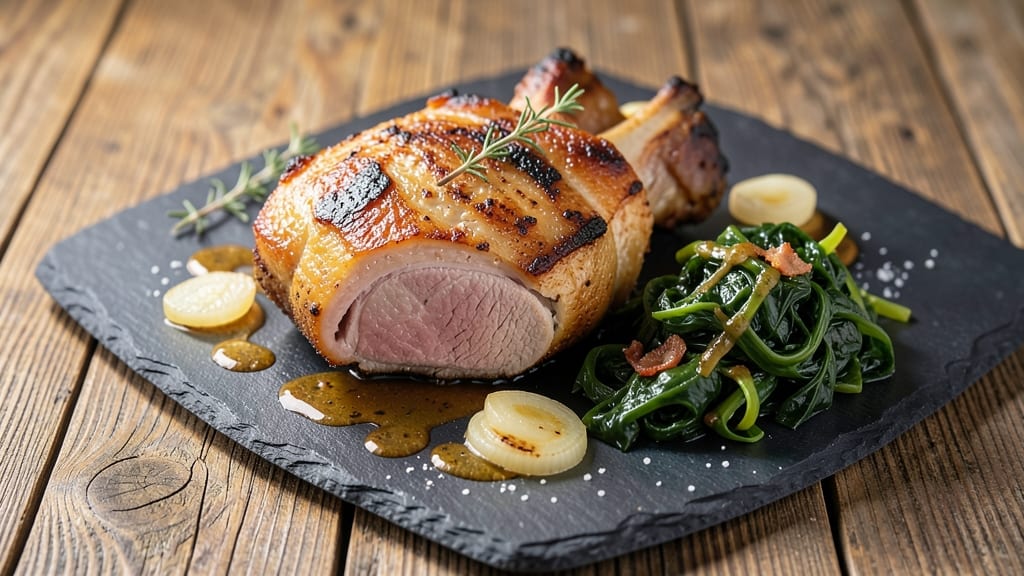
This bone-in pork roast and sauerkraut recipe delivers the kind of slow-braised richness that transforms a simple dinner into a showstopper. 🔥 The secret lies in letting the pork roast develop deep, caramelized flavors while the sauerkraut adds that perfect tangy crunch—just like my grandmother used to make back in Georgia.
I've perfected this technique over years of cooking whole hogs at The Smoky Pig, and it never fails to impress.
The beauty of this dish is in the simplicity of the method combined with the complexity of the flavors. You'll start with a bone-in pork roast, seasoned simply with salt, pepper, and a touch of mustard to help the crust form.
The slow roasting process ensures the meat stays tender and juicy, while the sauerkraut—warmed with onions and a splash of vinegar—adds a bright, tangy contrast that cuts through the richness of the pork.
By the time you're done, you'll have a golden-brown, perfectly cooked roast with meat that falls off the bone and sauerkraut that's heated just enough to soften slightly without losing its crunch.
The aroma alone will have everyone gathered at your table, and the flavors—deep, savory, and tangy—will keep them coming back for seconds. It's the kind of dish that feels like a hug on a plate.
Serve it with crusty bread to soak up every last bit of the juices, and pair it with a simple green salad or roasted root vegetables.
This recipe is perfect for a cozy family dinner, a holiday feast, or whenever you want to bring a taste of the South to your table. Let's get cooking!
Ingredients for bone in pork roast and sauerkraut
Six ingredients make this Southern classic unforgettable—juicy pork and tangy sauerkraut that sing together.
| Ingredient | Amount | Notes |
|---|---|---|
| Bone-In Pork Roast 🥓 | 4 lb | Center-cut, 1.5-2 inches thick |
| Sauerkraut 🥬 | 2 cups | Unopened jar, drained |
| Yellow Onions 🧅 | 2 whole | Medium, thinly sliced |
| White Wine Vinegar 🍋 | ¼ cup | Or apple cider vinegar |
| Dijon Mustard 🥫 | 1 tbsp | For crust formation |
| Kosher Salt 🧂 | 1 ½ tsp | Diamond Crystal preferred |
| Freshly Ground Black Pepper 🌶️ | ½ tsp | Coarsely cracked |
| Garlic Cloves 🧄 | 4 cloves | Smashed, not minced |
| Olive Oil 🫒 | 2 tbsp | Extra-virgin for richness |
| Fresh Thyme Leaves 🌿 | ¼ cup | Or 1 tsp dried thyme |
| Fresh Rosemary 🌿 | 1 sprig | Woody stems removed |
| Carrots 🥕 | 2 whole | Baby carrots, halved lengthwise |
| Fresh Parsley 🌿 | ¼ cup | Chopped, for garnish |
The pork roast is everything here. Look for bone-in center cuts—they stay juicier and add depth of flavor. My butcher at The Smoky Pig always recommends 1.5-2 inches thick so it roasts evenly. If you can't find bone-in, a thick pork shoulder works too. The sauerkraut? Unopened jars only—the good stuff with no added vinegar. I grab mine from Trader Joe's or the German market section at Kroger. Fresh herbs are worth the splurge—those dried bundles just don't cut it for this dish.
No bone-in pork? Pork shoulder or butt is your next best bet—just add 30 minutes to the roasting time. Short on fresh thyme? Dried works at one-third the amount, but toast it first in a dry pan for 30 seconds to wake up the flavor. The mustard is non-negotiable—it helps create that perfect crust. No Dijon? Yellow mustard in a pinch, but reduce to 1 tsp. For the sauerkraut, if it smells too strong, rinse it briefly under cold water to mellow the flavor. The onions? Sweet yellows caramelize better than reds here.
Pork roast keeps best in the fridge for 3-4 days wrapped tightly in foil. The sauerkraut? Unopened jars last months in the pantry, but once opened, transfer it to a sealed container. I always make double batches because the leftovers reheat even better—just add a splash of broth and warm through. The roasted carrots? Store them separately and toss them into salads all week. This dish tastes even better the next day, so plan ahead for maximum flavor impact.
Why You'll Love This Recipe
- One-Pan Magic: I swear by this recipe for lazy nights—just sear the pork, toss in the onions and sauerkraut, then let it slow-cook. No chopping boards, no extra pots, and honestly? The cleanup is just wiping one pan.
- Savory Tangy Crunch: That sauerkraut isn’t just a side—it’s the star. The vinegar and mustard cut through the richness of the pork, while the onions caramelize into sweet pockets of flavor. Between us, the first bite makes me close my eyes.
- Leftovers That Feel Fresh: This roast actually improves the next day. The pork stays juicy, the sauerkraut mellows into something deeper, and I’ve reheated slices straight from the fridge for sandwiches without a second thought. (Yes, even on a Tuesday night.)
- Budget-Friendly Feast: A bone-in pork roast stretches further than you’d think, and sauerkraut is cheap but packs serious flavor. I’ve served this for holidays, potlucks, and random weeknights—it’s the kind of dish that makes you look like a hero without breaking the bank.
Step-by-step instructions for slow-braised pork roast with sauerkraut
Here's how to transform a simple pork roast into a fall-apart masterpiece with tangy, crunchy sauerkraut.
🔥 Step 1: Sear the Pork Roast for Maximum Flavor
Preheat your oven to 325°F. Heat 2 tablespoons olive oil in a large Dutch oven over medium-high heat. Pat the 4 lb bone-in pork roast completely dry with paper towels—this ensures a perfect crust. Place the roast in the Dutch oven and sear for 4-5 minutes per side until deep golden brown.
Here's the thing—don't rush this step. You want that beautiful crust to form before adding any liquid. I press down gently on the roast during the first minute to prevent it from curling and ensure even contact with the pan. Once it's browned, remove the roast and set it aside on a plate.
🍳 Step 2: Build the Aromatic Base
In the same Dutch oven, add 2 whole yellow onions (thinly sliced) and 2 whole carrots (halved lengthwise). Cook for 5-6 minutes until the onions soften and begin to caramelize slightly. Add the 4 smashed garlic cloves and cook for another 30 seconds until fragrant.
Now add 2 cups sauerkraut (drained), 0.25 cup white wine vinegar, 1 tbsp Dijon mustard, 1.5 tsp kosher salt, and 0.5 tsp freshly ground black pepper. Stir everything together and let it bubble for 2-3 minutes until the sauerkraut releases some of its liquid and the mixture smells deliciously tangy.
🥘 Step 3: Braise Until Fork-Tender
Return the pork roast to the Dutch oven, placing it on top of the vegetable mixture. Add 0.25 cup fresh thyme leaves and 1 sprig fresh rosemary (woody stems removed). Pour in just enough water to come about halfway up the roast—about 1.5 cups—then bring everything to a gentle simmer.
Cover the Dutch oven with a tight-fitting lid and transfer it to the preheated oven. Braise for 3-3.5 hours until the pork is fork-tender. You'll know it's ready when a knife slides in easily and the meat pulls apart with gentle pressure. I check the internal temperature with a meat thermometer—it should read 195-200°F in the thickest part.
⏰ Step 4: Rest and Finish with Fresh Herbs
Remove the roast from the oven and let it rest for 15-20 minutes before serving. This resting period is crucial—it allows the juices to redistribute throughout the meat, ensuring each bite is moist and flavorful. While it rests, spoon the braising liquid through a fine-mesh strainer to remove any herb stems, then return it to the Dutch oven.
Just before serving, stir in 0.25 cup chopped fresh parsley for a bright, fresh finish. The parsley not only adds color but also cuts through the richness of the pork and sauerkraut. Serve the pork sliced or pulled apart over the braised vegetables and sauerkraut mixture, ladling the flavorful sauce over the top.
Pro Tips For Making Bone In Pork Roast And Sauerkraut
- Sear the Roast Longer: I used to flip the pork every few minutes, thinking it would cook faster—it didn’t. Let that bone-in roast sit undisturbed for 8-10 minutes on high heat until the crust is deep brown and almost black in spots. That’s where the flavor hides, and the bone helps render fat just enough to self-baste the meat.
- Rinse the Sauerkraut: That tangy brine is great, but it’ll make your pork roast taste like a pickle if you don’t rinse the sauerkraut first. Drain it in a colander, then give it a quick cold-water rinse to mellow the acidity. Pat it dry afterward—wet sauerkraut steams instead of caramelizing, and no one wants sad, watery kraut.
- Don’t Crowd the Onions: I learned this the hard way—piling sliced onions too close together in the pan means they’ll steam instead of develop that sweet, golden crust. Spread them out in a single layer, and if you’re short on space, cook them in batches. Trust me, crispy onions are the thing that makes this dish sing.
- Deglaze with Vinegar Early: Skip the wine (if you’re avoiding it) and use that white wine vinegar while the pork is still searing. Pour it in right after you remove the roast, scraping up all those browned bits—they’re packed with flavor. Let it reduce by half before adding anything else, or you’ll end up with a watery sauce instead of a glossy, tangy glaze.
Serving suggestions for this recipe
Classic Southern Plating
Serve this pork roast just like I do at The Smoky Pig—sliced thickly across the grain onto warm, crusty bread. The sauerkraut and caramelized onions go right on top, with a generous spoonful of the braising liquid drizzled around.
I always add a handful of toasted sourdough croutons for extra texture, and a side of pickled jalapeños if anyone wants a little heat. 🥖
Holiday Feast Presentation
For special occasions, arrange the pork on a large platter with the sauerkraut fanned out around it. Garnish with fresh rosemary sprigs and chopped parsley> for color, and place a small bowl of extra braising liquid in the center for second helpings.
I like to pair it with roasted Brussels sprouts> and mashed sweet potatoes> for a full Southern spread. The contrast of textures and temperatures makes every bite exciting.
Quick Weeknight Serve
When I'm short on time, I serve this with store-bought rye bread> (I love Schar>) and a simple side of steamed green beans> with almonds. The tangy sauerkraut cuts through the richness perfectly, and the green beans add freshness.
For a one-pan meal, I sometimes toss the carrots and onions with the pork right at the end—just heat everything together for 10 minutes> before serving. No fuss, all flavor.
Garnish Game-Changers
A few finishing touches can elevate this dish from good to unforgettable. I always sprinkle toasted black pepper> over the top right before serving—it adds a nice aroma and visual pop.
For something extra special, drizzle with high-quality apple cider vinegar> (I use Woodchuck>) to brighten the flavors. A final sprinkle of flaky sea salt> (like Maldon>) ties everything together beautifully.
Leftovers Reinvented
This dish tastes even better the next day, so I always make extra. For leftovers, I shred the pork and mix it with the sauerkraut and braising liquid, then serve it on buttered egg noodles> for a hearty breakfast hash.
Or, I turn it into pork and sauerkraut tacos> with corn tortillas, avocado, and a squeeze of lime. The possibilities are endless—just let your creativity run wild with those flavors. 💡
Beverage Pairings
Nothing complements this rich, tangy dish better than a dry Riesling> from Germany—its crisp acidity cuts through the pork's richness. For beer lovers, a Belgian-style witbier> (like Hoegaarden>) with its citrusy notes is perfect.
If you prefer something stronger, an aged rum> (like Appleton Estate>) in a cocktail with a splash of grapefruit juice works beautifully. I always keep a bottle of each on hand when I'm hosting.
Nutrition facts
Frequently asked questions
Can I use bone-in pork shoulder instead of a pork roast?
Bone-in pork shoulder works beautifully—just increase the braising time to 4-5 hours to ensure tender meat. The bone adds incredible depth of flavor, and the extra fat helps keep everything moist. For best results, trim any excess fat before searing to prevent flare-ups.
How do I keep the sauerkraut from getting too soft?
Sauerkraut should stay slightly crisp—never fully mushy. Add it to the Dutch oven just 15-20 minutes before the pork is done, or warm it separately in a skillet with a splash of vinegar for 5 minutes on medium heat. The key is low heat and minimal liquid.
What's the best way to reheat leftovers?
Leftovers reheat beautifully! Place slices in an oven-safe dish with a splash of water or broth, cover with foil, and warm at 325°F for 20-25 minutes. For sauerkraut, warm it in a skillet with a pat of butter for 3-4 minutes—this restores its tangy crunch.
Can I substitute sauerkraut with another fermented vegetable?
While traditional, you can try kimchi or pickled red cabbage for a different flavor profile. Use the same amount, but reduce vinegar to 2 tablespoons since fermented veggies are already acidic. For kimchi, add it later to preserve its heat and texture.
Why did my pork turn out dry?
Overcooking is the most common culprit. Always use a meat thermometer—195-200°F is perfect for pull-apart tenderness. If you're unsure, remove the pork at 190°F and let it rest while the juices redistribute. Also, avoid cutting into it too soon after roasting.