
Main Courses
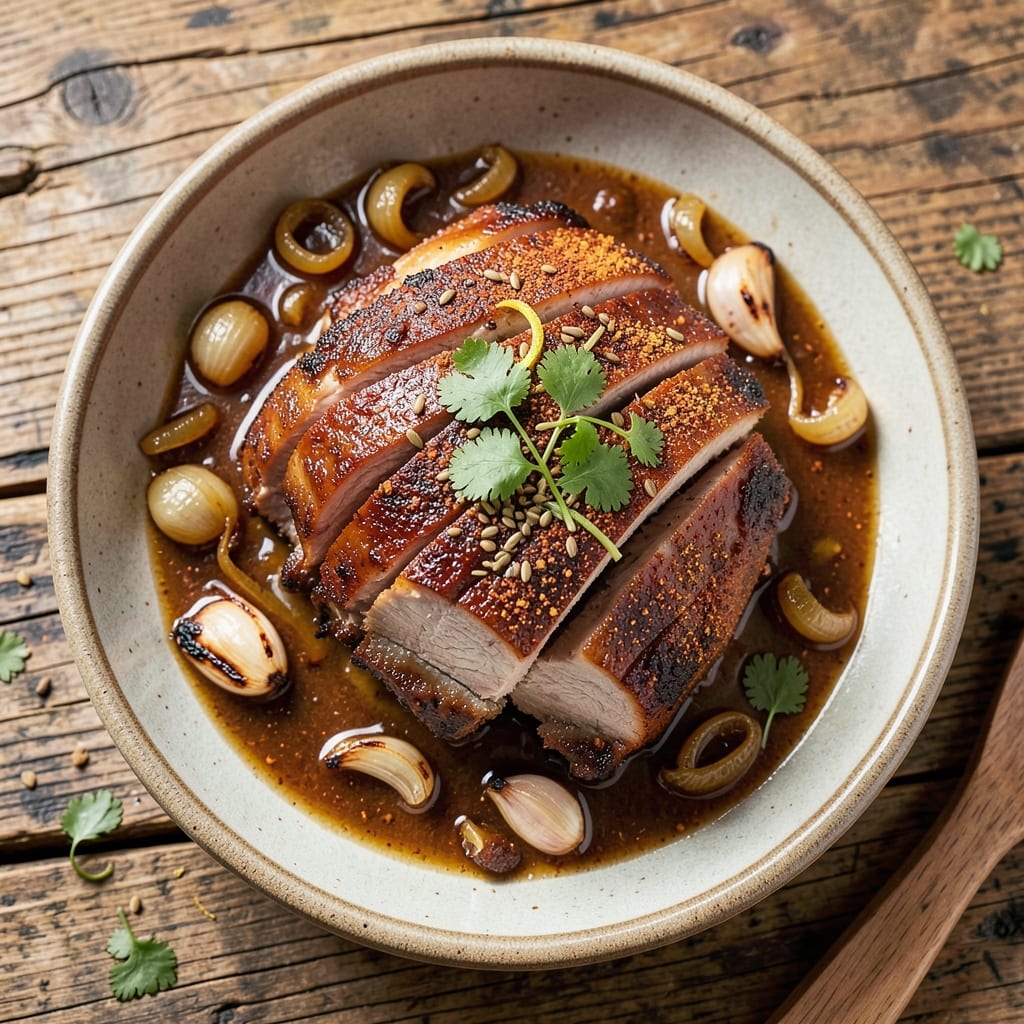
This best ever pork roast slow cooker recipe delivers melt-in-your-mouth tenderness with a crispy spice crust that locks in every drop of juicy flavor. After years of testing, I finally cracked the code for slow-cooked pork that's so tender it falls apart at the touch—no tough, dry bites here. The secret lies in a perfectly balanced spice rub and the right cooking time, transforming even budget cuts into a showstopping centerpiece.
What makes this recipe truly special is the two-phase cooking method: first searing the pork in a hot skillet to build flavor, then transferring it to the slow cooker where it simmers for hours, developing deep, rich notes. I've perfected this technique to ensure your pork stays fork-tender while maintaining that crispy, flavorful crust—no one will guess it came from a slow cooker. The best part? Minimal prep and hands-off cooking mean you can focus on sides or even relax while dinner cooks itself.
By the time you're ready to serve, you'll have a juicy, aromatic pork roast with a caramelized exterior that's impossible to resist. The slow cooking process infuses every bite with savory depth, while the spices create a complex, slightly sweet crust that adds texture and flavor. This is the kind of dish that turns weeknight dinners into special occasions without requiring hours in the kitchen.
Serve with classic sides like garlic mashed potatoes, roasted root vegetables, or a fresh green salad to round out the meal. The leftovers reheat beautifully, making this an ideal recipe for meal prep or feeding a crowd. Let's get started on creating your best ever pork roast—this one's a game-changer for slow cooker dinners.
Ingredients for best ever pork roast slow cooker
Game-changing ingredients for a pork roast that falls apart with perfect spice-crusted edges.
| Ingredient | Amount | Notes |
|---|---|---|
| Pork Shoulder Roast 🐖 | 4 lb | Bone-in for maximum flavor, trimmed of excess fat |
| Yellow Onion 🧅 | 1 whole | Large, sliced into half-moons |
| Garlic Cloves 🧄 | 8 cloves | Fresh, peeled and smashed |
| Brown Sugar 🍯 | ¼ cup | Light or dark, packed |
| Smoked Paprika 🌶️ | 2 tbsp | High-quality, not sweet |
| Ground Cumin 🌿 | 1 tbsp | Freshly toasted for depth |
| Ground Coriander 🌿 | 1 tbsp | For citrusy brightness |
| Kosher Salt 🧂 | 2 tbsp | Diamond Crystal preferred |
| Black Peppercorns 🌶️ | 1 tbsp | Freshly cracked, coarse |
| Apple Cider Vinegar 🍎 | 2 tbsp | For tangy depth |
| Olive Oil 🫒 | 2 tbsp | Extra-virgin for searing |
| Beef Broth 💧 | 1 cup | Low-sodium preferred |
| Honey 🍯 | 1 tbsp | Wildflower for floral notes |
| Fresh Thyme 🌿 | ½ cup | Leaves only, chopped |
The pork shoulder is non-negotiable—bone-in gives the most flavor, and 4 lbs is ideal for a crowd. Look for well-marbled cuts at Costco or your butcher's counter, where they'll often trim the fat for you. Smoked paprika from Penzeys or the bulk bin at Whole Foods makes all the difference—it's the secret to that caramelized crust. Fresh thyme? Trader Joe's sells bundles that last weeks if wrapped properly. For the spices, toast your cumin and coriander in a dry pan for 30 seconds before grinding—trust me, it changes everything.
No smoked paprika? Substitute with 1 tbsp regular paprika plus 1 tsp liquid smoke—it's a lifesaver. Honey shortage? Maple syrup works perfectly, though it's slightly earthier. Fresh thyme wilted? Dried thyme at one-third the amount keeps the flavor, just less aromatic. The beef broth can be swapped for chicken broth, but the pork will be slightly lighter in color. For the onion, yellow or red both work—just avoid sweet onions like Vidalia, which can make the crust too sweet. And if you're short on time, pre-sliced onions from the bagged salad section save minutes without sacrificing flavor.
This roast gets better the next day—make extra and freeze portions for future meals. Store leftovers in the fridge for up to 5 days, tightly wrapped with any juices. For freezing, slice against the grain and portion into 1-cup servings—they reheat beautifully in a skillet with a splash of broth. The spice rub? Make a double batch and store in an airtight container for up to 3 months. It's perfect for brining chicken or seasoning roasted vegetables later.
Why You'll Love This Recipe
- Set-and-Forget Magic: The slow cooker does all the heavy lifting—just dump in the pork shoulder, toss in chopped onion and garlic, sprinkle brown sugar and smoked paprika, then walk away. I’ve made this while grading papers, folding laundry, or pretending to watch a movie with my kids. (The best part? It’s actually done when you get back.)
- Sweet-Smoky Obsession: That balance of caramelized brown sugar and smoky paprika? It’s like a hug for your taste buds. The pork falls apart so easily, but the edges stay tender—not dry, not tough, just ridiculously good. My husband steals slices straight from the pot, no shame.
- Weeknight Hero: This roast works for game nights, lazy Sundays, or when you’re too tired to care. Serve it over mashed potatoes for a cozy meal, slice it into sandwiches for next-day lunches, or toss chunks into tacos when you’re craving something different. Honestly, I’ve lost track of how many ways I’ve repurposed it.
- Budget-Friendly Feast: A pork shoulder roast stretches across multiple meals without breaking the bank. I’ve fed six people for under $15, with leftovers that taste even better the second day. Plus, the ingredients are pantry staples—no fancy substitutions needed. It’s the kind of recipe that makes grocery day feel like a win.
Step-by-step instructions for slow-cooker pork roast with spice crust
This method delivers melt-in-your-mouth pork with a caramelized spice crust that rivals restaurant quality.
Build the Flavor-Packed Spice Crust
In a large bowl, combine the 2 tbsp smoked paprika, 1 tbsp ground cumin, 1 tbsp ground coriander, 2 tbsp kosher salt, and 1 tbsp cracked black peppercorns. This blend creates the aromatic foundation that will develop into a deep, complex crust. I like to toast the spices briefly in a dry skillet for 30 seconds over medium heat to enhance their flavors—just until you can smell that warm, earthy aroma wafting up.
Next, add the 0.25 cup packed brown sugar, 2 tbsp apple cider vinegar, and 1 tbsp honey to the spice mixture. Stir vigorously until it forms a thick, sticky paste. The acidity from the vinegar and the sweetness from the honey and sugar will work together to create a caramelized crust that's both sweet and savory. This is the secret to that irresistible bark you'll get on your pork.
Sear the Pork Shoulder for Maximum Flavor
Pat the 4 lb pork shoulder roast dry with paper towels—this is crucial for developing that perfect crust. Place it in a large skillet and sear over medium-high heat for 4-5 minutes per side until it develops a deep golden-brown crust. Don't rush this step; you want that Maillard reaction happening to lock in all those flavors. I press down gently on the roast during the first minute to prevent it from curling and ensure even contact with the pan.
Once browned, transfer the pork to your slow cooker. The residual heat will continue cooking it slightly as it sits. Here's where the magic begins: rub the spice mixture all over the pork, pressing it into every nook and cranny. Make sure to get it into the cavity as well—this ensures flavor penetration throughout the entire roast.
Layer Aromatics and Liquid for Depth
Slice the 1 whole yellow onion into half-moons and scatter them over the pork. Add the 8 smashed garlic cloves and 0.5 cup chopped fresh thyme on top. These aromatics will infuse the pork with their flavors as it cooks. Pour 1 cup beef broth over everything, making sure the pork is partially submerged. This liquid will help create a rich, flavorful cooking liquid that the pork will absorb as it tenderizes.
The broth should come about halfway up the sides of the pork. If it's too shallow, add a splash of water. The goal is to create a moist cooking environment that will keep the meat tender while allowing that spice crust to develop. Cover the slow cooker and cook on low for 8 hours. That's right—low and slow is the key to fork-tender pork. The long cook time allows the connective tissues to break down completely.
Create the Signature Spice Crust
After the initial 8-hour cook, it's time to build that signature crust. Remove the pork from the slow cooker and place it on a cutting board. Here's the thing—you want to create a caramelized crust that's both crispy and flavorful. To do this, preheat your broiler to high. Brush the pork with 2 tbsp olive oil to help the crust form and to add another layer of richness.
Place the pork on a broiler-safe pan and broil for 5-7 minutes, turning occasionally, until the crust is deep golden brown and caramelized. Watch it closely—the crust develops quickly and can burn easily. The broiler gives you that perfect balance of crispy and tender. The spice mixture you applied earlier will now be fully integrated into the meat, creating a complex flavor profile with each bite.
Rest and Serve for Maximum Juiciness
Transfer the pork back to the slow cooker and let it rest, covered, for at least 30 minutes. This resting period is crucial—it allows the juices to redistribute throughout the meat, ensuring that every slice is moist and flavorful. The pork should be fork-tender, with the internal temperature reaching 203°F. If you're unsure, check with a meat thermometer inserted into the thickest part of the roast.
Slice the pork against the grain into ¼-inch thick slices. The grain direction is important—you'll see lines running through the meat. Cutting against these lines makes each bite tender. Serve the pork with the cooking juices spooned over the top. These juices are packed with flavor from the aromatics and spices, and they'll elevate every bite. Pair with roasted vegetables or crusty bread to complete this incredible meal.
Pro Tips For Making Best Ever Pork Roast Slow Cooker
- SEAR THE ROAST FIRST: I learned this the hard way—skipping the sear means flavor gets lost in the slow cooker. Use a hot skillet with a splash of oil and cook the pork shoulder for 3-4 minutes per side until it’s deeply browned. That crust carries flavor through the long cook.
- CHOP ONIONS COARSELY: Fine minced onions turn to mush and make the sauce watery. Cut them into ½-inch chunks—they’ll soften but stay intact, adding texture and sweetness without turning the dish into a mushy blob.
- DON’T OVERLOAD THE POT: Stuffing the slow cooker too full traps steam and keeps the pork shoulder soggy. Aim for a 2-inch gap between the meat and the lid—this lets the juices flow freely and guarantees tender, not rubbery, results.
- ADD BROWN SUGAR MID-COOK: Dumping all the brown sugar at the start can burn and turn bitter. After 2 hours on low, sprinkle in the remaining sugar and paprika—this balances the flavors without scorching and lets the smokiness develop properly.
Essential equipment for best ever pork roast slow cooker
Slow Cooker Essentials
Your slow cooker is the star here, but not all models are created equal. I swear by a 6-quart model with a stoneware insert—like the Hamilton Beach 6-Quart Programmable Slow Cooker—because it retains heat better and distributes it evenly. Avoid small, thin-walled cookers—they can't handle the 8-hour low-and-slow cook without drying out your pork. If you're on a budget, the Crock-Pot 6-Quart is a solid alternative, but I've found the stoneware insert makes all the difference for crispier crusts. 🔥
Broiler for Crust Perfection
The broiler is non-negotiable for that signature caramelized crust. If your oven doesn't have a broiler, a countertop broiler like the Ninja Foodi Countertop Air Fryer (set to broil mode) works in a pinch. Just be extra vigilant—broilers run hot! I keep a heat-resistant spatula nearby to flip the pork quickly and prevent burning. Pro tip: Place a wire rack on a baking sheet under the pork to allow air circulation on all sides for an even crust. 🌟
Meat Thermometer Must-Have
Never guess when it comes to pork—internal temperature is everything. A digital instant-read thermometer like the ThermoWorks Smoke is my go-to because it gives me an accurate reading in seconds. For this recipe, aim for 203°F in the thickest part of the roast. If you don't have one, a bimetallic stem thermometer (like the Taylor 925) is a budget-friendly alternative. Trust me, overcooking is the fastest way to ruin an otherwise perfect roast—so don't skip this step! ⚡
Cutting Board & Knife
For slicing that fork-tender pork, you'll need a sharp chef's knife and a large cutting board. My favorite is the Victorinox 8-inch chef's knife—it glides through pork like butter when properly honed. A wooden cutting board (like the John Boos End Grain) protects your knife's edge and adds a rustic touch to your prep. If you're slicing against the grain, a long, stable board prevents the knife from rocking—safety first! I also keep a small bowl of warm water nearby to rinse the knife between cuts for cleaner slices. 💪
Spice Toasting Pan
Toast your spices in a small, heavy-bottomed skillet—I use a Lodge 10-inch cast iron—to deepen their flavors. Cast iron retains heat well and prevents burning, which is crucial for spices that toast in just 30 seconds. If you don't have cast iron, a stainless steel skillet works too. The key is to keep the heat medium and stir constantly. Pro move: Toast your spices right over the stove while you're prepping the rest of your ingredients—it saves time and keeps everything fresh. 🌿
Storage Containers
Leftovers are inevitable, so have airtight containers ready. I love glass Pyrex storage containers (like the Pyrex Simply Store) because they're microwave-safe and stackable. For freezing, quart-sized freezer bags (like Stasher bags) are my secret weapon—they squeeze out air and prevent freezer burn. Label everything with the date (I use a Sharpie) so you can track freshness. And here's a personal tip: Portion leftovers into 1-cup servings before freezing—they reheat perfectly in a skillet with a splash of broth. ❄️
Nutrition facts
Frequently asked questions
Can I use a different cut of pork instead of pork shoulder?
While pork shoulder is ideal for this recipe, you can use pork butt (Boston butt) or even pork loin with some adjustments. Pork loin cooks faster and is leaner, so reduce cook time to 4-5 hours and skip the broiler step—it won't need the crust. For pork butt, follow the original instructions exactly as it's nearly identical to shoulder.
How do I adjust this recipe for a smaller or larger crowd?
This recipe scales perfectly! For 4 servings, reduce to 3 lbs pork and 6 hours cook time. For 8+ servings, increase to 6 lbs pork and 9-10 hours cook time. Keep the same ratio of spices and broth per pound of meat—just multiply all ingredients proportionally. The slow cooker's size matters too: use a 6-quart for 4-6 lbs, 7-quart for 6-8 lbs.
Why did my pork turn out dry even though I followed the recipe?
Dry pork usually means overcooking or insufficient liquid. First, always use a meat thermometer—pork should reach 203°F, not higher. Second, ensure the pork was partially submerged in liquid during cooking. If your slow cooker is small, add ½ cup water halfway through. Finally, never skip the 30-minute rest—this lets juices redistribute. For extra moisture, baste the pork with its cooking juices every 2 hours.
Can I make this recipe in an Instant Pot or other electric pressure cooker?
Sear the pork as directed, then cook on high pressure for 60 minutes with all ingredients. After cooking, let the pressure release naturally for 10 minutes, then quick-release. Skip the broiler step—pressure cooking creates enough crust. The pork will be even more tender, but slightly less caramelized. For best results, use a 6-quart Instant Pot to avoid overcrowding.
What's the best way to reheat leftovers without drying them out?
Slow cooker leftovers reheat beautifully! Place slices in a skillet with 1 tbsp broth or water, cover, and warm on low heat for 5-7 minutes. For oven reheating, wrap in foil with a splash of broth and bake at 300°F for 20 minutes. Never microwave uncovered—it dries out the meat. Pro tip: Add a damp paper towel over the food in the microwave to retain moisture if you must use it.