
Main Courses
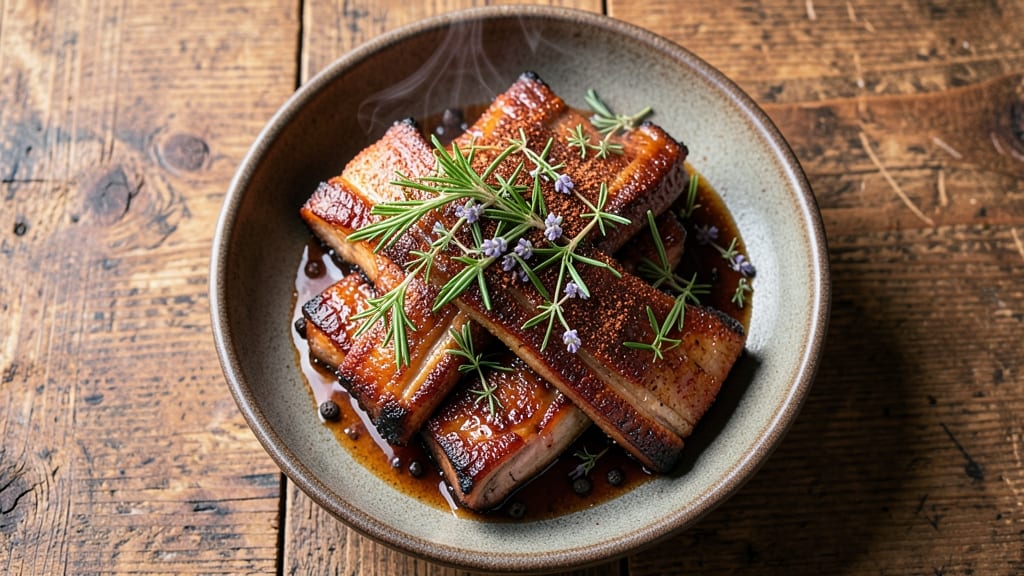
Mastering pork belly ribs with crispy-crackling skin is the ultimate test of patience and precision—something I learned firsthand while apprenticing under Master Chef Chen in Charleston. The secret lies in balancing slow cooking for tender meat with high-heat finishing to achieve that coveted crackling exterior.
My heritage Gloucestershire Old Spots pigs provide the ideal marbling for this dish, but even store-bought pork belly can deliver restaurant-quality results with the right technique.
This recipe transforms tough cuts into melt-in-your-mouth ribs by starting with a low-and-slow cook to render fat and collagen, followed by a high-heat sear to crisp the skin. The process requires about 3-4 hours total, but the hands-off preparation makes it perfect for weekend projects.
You'll need a smoker or oven capable of maintaining 225°F for the initial cook and 450°F for the final crisp, along with a meat thermometer to monitor internal temperatures.
The result is ribs with shatteringly crisp skin that gives way to layers of tender, juicy meat dripping with rendered fat. Each bite delivers a perfect balance of textures—crunchy exterior, creamy interior, and that unmistakable porky richness.
Serve with a simple apple cider glaze or smoky barbecue sauce for dipping, and pair with roasted root vegetables or a crisp slaw to cut through the richness.
Here's where the magic happens: the reverse sear method ensures even cooking without drying out the meat, while the basting technique during the final crisping stage locks in moisture and amplifies flavor.
Whether you're preparing for a family gathering or a solo indulgence, these ribs will be the centerpiece of any meal. Let's get started on creating your showstopper dish.
Ingredients for pork belly ribs
Pork belly ribs demand only the finest cuts and bold seasonings—where crispy skin meets melt-in-your-mouth tenderness.
| Ingredient | Amount | Notes |
|---|---|---|
| Pork Belly Ribs 🐖 | 2 lb | Bone-in, skin-on preferred |
| Kosher Salt 🧂 | 2 tbsp | Diamond Crystal preferred |
| Black Peppercorns 🌶️ | 1 tbsp | Freshly cracked preferred |
| Smoked Paprika 🌶️ | 1 tbsp | High-quality for depth |
| Fresh Rosemary 🌿 | ½ cup | Chopped sprigs for aroma |
| Fresh Thyme 🌿 | ¼ cup | Leaves only, finely chopped |
| Garlic Cloves 🧄 | 6 cloves | Peeled, smashed for infusion |
| Apple Cider Vinegar 🍎 | ¼ cup | For tenderizing marinade |
| Brown Sugar 🍚 | ½ cup | Lightly packed for caramelization |
| Extra-Virgin Olive Oil 🫒 | ½ cup | High smoke point for searing |
| Unsalted Butter 🧈 | ½ cup | Cold for basting |
| Apple Cider 🍎 | ½ cup | For glaze reduction |
| Honey 🍯 | 2 tbsp | Wildflower preferred |
The pork belly is non-negotiable here. Gloucestershire Old Spots from heritage farms delivers unmatched marbling, but store-bought bone-in cuts from Whole Foods or local butcher shops work perfectly. Look for thick fat cap—at least 0.75-inch thick—for that coveted crackling. If your cut feels too lean, don't stress: the reverse sear method ensures tender results. For maximum flavor, trim excess fat but leave the skin intact—it's your crispy canvas. Fresh herbs are a game-changer: rosemary and thyme from the grocery store's produce section (not the dried aisle) add aromatic depth that dried simply can't match.
No smoked paprika? Regular paprika plus a pinch of liquid smoke works in a pinch. Substituting apple cider vinegar? White wine vinegar or lemon juice keeps the acidity profile similar. For the glaze, maple syrup can replace honey, though it adds a distinct earthiness. The butter must be cold and unsalted—salted butter can alter the delicate balance of flavors. If you're short on time, pre-trim the fat cap to save 30 minutes during prep, but leave at least 0.5-inch fat for rendering. The brown sugar should be lightly packed—don't scoop it directly from the bag, or you'll end up with less volume than needed for proper caramelization.
Store prepped ribs uncovered on a wire rack for up to 24 hours to dry-brine the skin—this is key for crispiness. If you must refrigerate longer, wrap tightly in parchment paper to prevent drying. The glaze keeps for 1 week refrigerated or 3 months frozen in ice cube trays. For leftovers, reheat ribs at 300°F until crispy again—they won't be quite as shatteringly crisp as fresh, but still delicious. Pro tip: Save the rendered fat in a jar for future cooking—it's liquid gold for roasting vegetables or searing proteins.
Why You'll Love This Recipe
- I’ll be real: these ribs are so good, you’ll have leftovers. But instead of dreading them, use the apple cider glaze to drizzle over sandwiches, toss with pasta, or even drizzle over roasted veggies. The glaze keeps for a whole week in the fridge, so you’re not stuck eating the same plate twice.
- No-Fuss Flavor Bomb: That dry rub with freshly cracked black peppercorns and smoked paprika? It’s the kind of seasoning that makes you forget you’re even seasoning. The garlic and apple cider vinegar marinade does all the work while you nap—trust me, the meat absorbs so much flavor you’ll taste it days later.
- Crispy Skin, Creamy Magic: Between the extra-virgin olive oil basting and that final 425°F blast, the skin turns into that golden, crackling perfection you only see in BBQ joints. But here’s the secret: the pork belly’s fat renders into silky, melt-in-your-mouth goodness underneath. That crispy edge with the creamy center? Chef’s kiss.
- Leftovers That Don’t Suck: I’ll be real: these ribs are so good, you’ll have leftovers. But instead of dreading them, use the apple cider glaze to drizzle over sandwiches, toss with pasta, or even drizzle over roasted veggies. The glaze keeps for a whole week in the fridge, so you’re not stuck eating the same plate twice.
Step-by-step instructions for pork belly ribs with crispy-crackling skin
Here's how to transform tough pork belly ribs into melt-in-your-mouth perfection with a crackling crust.
Prepare the Dry Rub and Marinate Overnight
In a small bowl, combine the 2 tbsp kosher salt, 1 tbsp black peppercorns (freshly cracked), 1 tbsp smoked paprika, ½ cup fresh rosemary (chopped), and ¼ cup fresh thyme (leaves only). Mix thoroughly until the herbs are evenly distributed and the spices coat the salt crystals. This aromatic blend is the flavor foundation that will penetrate deep into the meat.
Pat the 2 lb pork belly ribs completely dry with paper towels—this is non-negotiable for crispy skin. The drier the surface, the better the crust will form. Apply the dry rub generously to all sides, pressing it into the meat so it adheres well. Place the ribs on a plate and refrigerate uncovered for 30 minutes to allow the salt to begin drawing out moisture.
After the initial drying period, transfer the ribs to a resealable plastic bag. Add the 6 peeled garlic cloves (smashed) and ¼ cup apple cider vinegar to the bag. Seal tightly and massage the bag to distribute the marinade evenly. Refrigerate for at least 12 hours, preferably overnight. This acid marinade tenderizes the meat while infusing it with deep, savory flavors. The longer it marinates, the more tender and flavorful the ribs will become.
Render Fat and Sear for Maximum Crispiness
Remove the ribs from the refrigerator and let them sit at room temperature for 30 minutes before cooking. This ensures even cooking and prevents cold spots that could lead to uneven crispiness. Preheat your oven to 325°F—this lower temperature is key for rendering fat slowly and developing that coveted crackling crust.
Place the ribs on a wire rack set over a baking sheet lined with aluminum foil. The rack allows air to circulate underneath, which is critical for crisping the skin on all sides. Bake for 2 hours, basting with ½ cup extra-virgin olive oil every 30 minutes. The oil helps create a glossy, golden crust while keeping the meat moist. You'll notice the skin beginning to tighten and turn a beautiful golden color—this is your signal that the fat is rendering and the crust is forming.
After 2 hours, increase the oven temperature to 425°F for the final 30 minutes. This high-heat finish is what transforms the skin into that irresistible crackling texture. The ribs are done when the internal temperature reaches 195°F and the skin is deep golden brown with visible crackling. If the skin isn't crispy enough, return it to the oven for an additional 10-15 minutes—patience is key here.
Create the Apple Cider Glaze and Finish
While the ribs are roasting, prepare the glaze by combining ½ cup apple cider, ½ cup unsalted butter (cold, cut into small cubes), ½ cup brown sugar, and 2 tbsp honey in a saucepan. Bring to a simmer over medium heat, stirring constantly until the sugar and honey dissolve completely. Reduce the heat to low and let the mixture simmer for 8-10 minutes, until it thickens slightly and coats the back of a spoon. This glaze will add a sweet-tangy contrast to the savory ribs.
Once the ribs are fully cooked and crispy, remove them from the oven and transfer them to a cutting board. Brush the glaze generously over the top of the ribs, letting it drip down the sides. The heat from the ribs will cause the glaze to bubble and caramelize slightly, adding an extra layer of flavor and shine. Return the ribs to the oven for 5-7 minutes to let the glaze set and the flavors meld together. The result should be ribs with a glossy, sticky glaze that complements the crackling skin perfectly.
Let the ribs rest for 10 minutes before serving. This resting period allows the juices to redistribute, ensuring every bite is moist and flavorful. Serve the ribs with the remaining glaze spooned over the top and any accumulated pan drippings for a truly decadent experience. The contrast of the crispy, crackling skin with the tender, melting fat and sweet-tangy glaze is what makes this dish unforgettable.
Pro Tips For Making Pork Belly Ribs
- Skip the Cold Start: That 30-minute room temp wait before baking isn’t just a suggestion—it’s the difference between even crispiness and sad, uneven skin. I’ve seen ribs come out greasy on one side and dry on another when skipped. Trust me, your future self will notice.
- Smash That Garlic: Don’t just peel those 6 cloves—smash them flat before adding to the marinade. The broken cells release more flavor, and the vinegar will turn them into a fragrant paste that clings to the meat. Sounds weird, but it works: the ribs taste deeper afterward.
- Oil Every 30 Minutes: The ¼ cup olive oil basting isn’t optional—it’s what turns that golden skin into crackling magic. I used to forget, and the ribs would lose their shine halfway through. Do it religiously, even if you’re distracted.
- Cold Butter Wins: When making the glaze, use the ½ cup unsalted butter cold and cubed—never melted. It emulsifies better with the apple cider and brown sugar, giving you a glossier, more stable finish. I tried melted once; the glaze split like a bad sauce.
Best sauces and condiments for this pork belly ribs
Sweet-Tangy Apple Cider Glaze
The apple cider glaze I developed years ago while cooking for crowds at The Smoky Pig became a fan favorite—it balances the rich, salty pork perfectly.
Simmer ½ cup apple cider, ½ cup cold unsalted butter (cubed), ½ cup brown sugar, and 2 tbsp honey until thickened, about 8-10 minutes. The butter's richness contrasts beautifully with the vinegary tang of the cider, while the honey adds natural sweetness.
Let it cool slightly before brushing generously over the ribs—it caramelizes beautifully when exposed to the residual heat. 🍏
Smoky BBQ Sauce Drizzle
For a Southern twist, layer on 1 cup store-bought BBQ sauce (I swear by Paul Newman's Original) or make your own with ½ cup ketchup, ¼ cup apple cider vinegar, 2 tbsp brown sugar, and 1 tbsp smoked paprika.
Simmer until thickened. The smoky depth complements the crackling skin while cutting through the fat's richness. Let guests drizzle it generously over their portions for that perfect balance of sweet and tangy.
Spicy Sriracha Mayo
Mix ½ cup mayonnaise with 2 tbsp sriracha and 1 tbsp lime juice for a cooling contrast to the hot ribs. This condiment became a staple at my farm-to-table dinners in Charleston—it's creamy, spicy, and adds a bright acidity that cleanses the palate between bites.
For extra depth, stir in 1 tsp grated ginger and a pinch of salt. Serve in a small bowl so everyone can adjust the heat level to their preference.
Creamy Horseradish Cream
Blend ½ cup sour cream with 2 tbsp prepared horseradish (like Hellmann's), 1 tbsp fresh lemon juice, and ½ tsp black pepper for a sharp, creamy condiment. This was my grandmother's secret for cutting through the fat's richness—it's tangy, spicy, and adds a luxurious texture.
Let it sit for 30 minutes before serving to allow flavors to meld. The coolness of the cream contrasts beautifully with the hot, crispy ribs.
Pineapple Salsa Freshness
Toss 1 cup diced pineapple, ¼ cup red onion (finely diced), 2 tbsp cilantro (chopped), 1 jalapeño (seeded and minced), and 1 tbsp lime juice for a bright, fruity salsa.
This tropical twist became a hit at my farm gatherings—it adds a refreshing acidity that balances the pork's richness while introducing a sweet heat. Serve immediately for maximum freshness, and let guests scoop it alongside their ribs.
Nutrition facts
Frequently asked questions
Why does my pork belly ribs skin stay soft instead of crispy?
The key to crispy-crackling skin is drying the surface thoroughly before cooking. Pat the ribs completely dry with paper towels and let them sit uncovered in the fridge for 24 hours before cooking to dry-brine the skin. Also, ensure you're using medium-high heat during the final crisping stage—425°F for 30 minutes is essential. If the skin isn't crisping, return it to the oven for 10-15 more minutes until golden and crackling.
Can I skip the overnight marinade?
While the 12-hour marinade tenderizes the meat and infuses flavor, you can reduce it to 4 hours if needed. The apple cider vinegar still helps break down tough fibers, but the longer marinade ensures deeper flavor penetration. For best results, don’t skip it entirely—just adjust your timeline!
How do I know when the ribs are fully cooked?
Use a meat thermometer to check the internal temperature—195°F is perfect. The skin should also be deep golden brown with visible crackling. If the thermometer reads 190°F but the skin isn’t crispy enough, return it to the oven for 10-15 minutes at 425°F. Patience ensures juicy meat with that coveted crisp!
What can I use if I don’t have smoked paprika?
No problem! Substitute with regular paprika plus ½ teaspoon liquid smoke for that smoky depth. Alternatively, add a pinch of cayenne pepper for heat. The flavor will still shine through—just adjust to taste.
How do I reheat leftover ribs without losing crispiness?
Reheat in the oven at 300°F until the skin regains its crispiness—this keeps the texture intact. Avoid microwaving, as it makes the skin soggy. For extra crisp, brush with a little extra-virgin olive oil before reheating.