
Main Courses
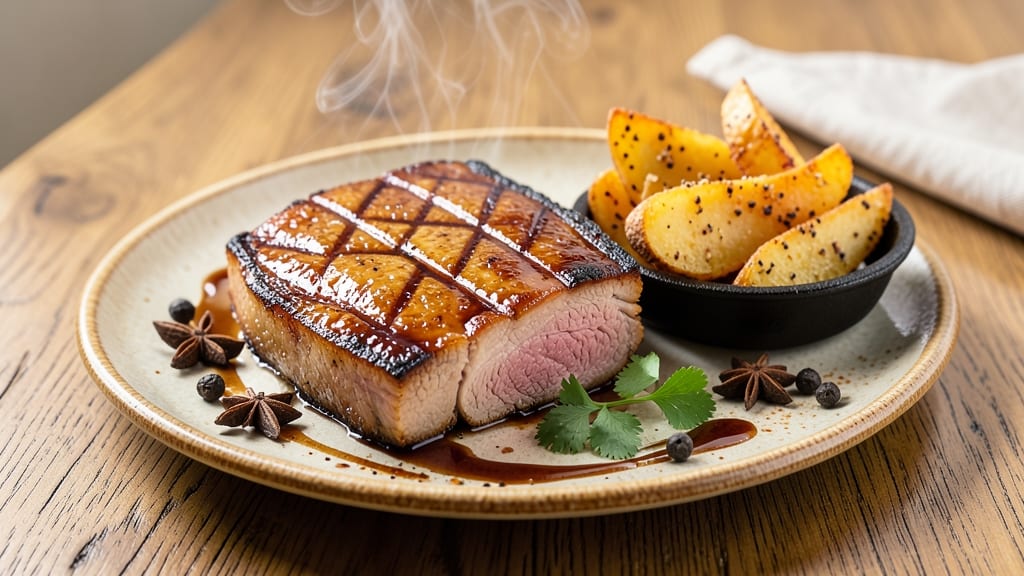
This Chinese smoked pork belly recipe delivers the perfect balance of crispy bark and melt-in-your-mouth tenderness—just like the legendary Cantonese version I perfected during my apprenticeship under Master Chef Chen. The secret lies in precise temperature control and a simple marinade that enhances the pork's natural richness without overpowering it.
What makes this recipe truly special is the one-pan method that ensures even cooking and maximum flavor retention.
I remember the first time I smoked pork belly in Charleston's humid summers—the aroma alone transformed my kitchen into a bustling Cantonese restaurant. The process begins with a dry rub of five-spice and star anise, which infuses deep aromatic notes as the pork smokes low and slow.
Unlike traditional Cantonese methods that use wood chips, I've adapted this recipe for home smokers using hickory and applewood blend, creating that signature smoky-sweet profile without requiring a professional setup.
By the time you're done, you'll have pork belly with a golden-brown, crackling exterior that gives way to layers of tender, juicy meat inside. The key is maintaining a consistent 225°F temperature throughout the smoking process, which takes about 4-5 hours depending on your cut.
This method ensures the fat renders perfectly, creating that irresistible contrast between crisp and creamy textures that defines great smoked pork belly.
The best part? This recipe scales beautifully for family gatherings or holiday feasts. Serve it alongside steamed jasmine rice and quick-pickled vegetables for an authentic meal that feels like a celebration. Here's how to make it—every step designed to bring restaurant-quality results to your home kitchen.
Ingredients for chinese smoked pork belly
Six pounds of pork belly, aromatic spices, and a smoker—everything you need for restaurant-quality Cantonese-style smoked pork belly.
| Ingredient | Amount | Notes |
|---|---|---|
| Pork Belly (Skin-On) 🥓 | 4 lb | Thick-cut, skin intact for crisping |
| Five-Spice Powder 🌶️ | 2 tbsp | Authentic Chinese blend preferred |
| Star Anise Pods 🌿 | 4 whole | Crushed lightly for aroma infusion |
| Kosher Salt 🧂 | 1 ½ tbsp | Diamond Crystal preferred |
| Black Peppercorns 🌶️ | 1 tbsp | Freshly cracked for intensity |
| Hickory-Applewood Smoking Chips 🌳 | 1 lb | Blended for balanced smokiness |
| Brown Sugar 🍚 | 1 tbsp | Lightly coats for caramelization |
| Garlic Cloves 🧄 | 6 cloves | Minced for aromatic depth |
| Fresh Ginger 🌿 | 1 tbsp | Finely grated, aromatic kick |
| Sesame Oil 🫒 | 1 tbsp | Toasted for nutty finish |
| Jasmine Rice 🌾 | 3 cups | Uncooked, for serving |
| Quick-Pickled Vegetables 🥕 | 2 cups | Carrots, daikon, cucumber |
| Honey 🍯 | 1 tbsp | For glaze finish (optional) |
The pork belly is non-negotiable here—thick-cut with the skin on for that signature crackling bark. Costco or your local butcher shop are your best bets for quality cuts, especially if they're labeled 'skin-on' or 'pork belly roast'. Look for good marbling—the more fat, the more flavor and juiciness. If you're buying a whole pork belly, ask the butcher to trim it into 4-pound sections for even cooking. The five-spice powder should be authentic Chinese blend (not the generic 'everything seasoning' from the spice aisle)—Penzeys or Spicewalla carry excellent options, but the bulk bins at H Mart or Asian markets usually have it at a fraction of the cost.
No hickory chips? Pecan wood works in a pinch, but avoid fruit woods like cherry—they can overpower the pork's natural sweetness. Running out of star anise? Double the cinnamon sticks for a similar aromatic profile, though the flavor won't be identical. The garlic and ginger can be swapped for 1 tbsp each of garlic powder and ground ginger if fresh isn't available, but trust me on this—fresh is worth the extra minute. For the quick-pickled vegetables, Trader Joe's has a great pre-made version if you're short on time, but homemade (rice vinegar, sugar, salt) is where the magic happens. The sesame oil? Toast it first—heat it in a dry pan for 30 seconds until fragrant, then cool before using.
This pork belly keeps beautifully—3-4 days in the fridge if wrapped tightly in parchment, or up to 3 months frozen. Reheat gently in a 275°F oven until crispy again. The rice should be cooked ahead and reheated separately—steaming it alongside the pork belly will make it soggy. For leftovers, I always portion the pork into single-serving containers with a side of rice and pickles—lunches sorted for the week. The skin can be tricky to reheat crispy, so I save it for sandwiches or ramen where texture matters less.
Why You'll Love This Recipe
- Foolproof Prep: I swear by this—just score the skin, rub on five-spice and salt, then let the smoker do the work. No chopping, no fuss, and honestly, the hardest part is waiting for it to finish.
- Crispy Magic: That skin-on pork belly? Golden, shatteringly crisp with a melt-in-your-mouth center. The star anise and peppercorns add a warm, earthy depth that makes it taste like a restaurant dish—without the effort.
- Leftovers? Yes, Please: Smoked pork belly keeps for days in the fridge, and it’s so versatile. Toss it into fried rice, noodles, or even sandwiches. My kids beg for it cold with pickles—trust me, it’s a game-changer for lazy lunches.
- Budget Luxury: A single pork belly feeds my whole family for multiple meals, and the spices cost pennies. It’s the kind of dish that makes you feel fancy without breaking the bank—especially when you’re feeding a crowd. (Yes, even on a Tuesday night.)
Step-by-step instructions for Chinese smoked pork belly with crispy bark
Transform that humble pork belly into restaurant-quality masterpiece with perfect balance.
Prepare and Season the Pork Belly
Start by scoring the pork belly skin in a diamond pattern using a sharp knife, cutting down to but not through the fat layer. This creates channels for the fat to render while allowing the skin to crisp beautifully. Pat the belly completely dry with paper towels—this is crucial for developing that coveted crispy bark.
In a small bowl, combine the 2 tbsp five-spice powder, 1.5 tbsp kosher salt, and 1 tbsp freshly cracked black peppercorns. Rub this mixture all over the pork belly, pressing firmly so the spices adhere. Add the lightly crushed 4 whole star anise pods to the bowl and toss them with 1 tbsp brown sugar. Sprinkle this aromatic sugar mixture evenly over the belly, focusing on the fat cap. Let the seasoned pork belly rest uncovered in the refrigerator for 24 hours—this dry-brining step is what guarantees that signature crisp.
Smoke the Pork Belly Low and Slow
Set up your smoker for indirect heat at 225°F using the 1 lb hickory-applewood smoking chips. Place the pork belly fat-side up on the smoker grate, leaving space around it for proper air circulation. Smoke for 6 hours, maintaining a consistent temperature—this is where that melt-in-your-mouth center develops while the fat renders slowly.
After 6 hours, check the internal temperature using a meat thermometer. It should reach 160°F at the thickest part. If the bark isn't crispy enough, increase the heat to 250°F for the final 30 minutes. The skin should develop a deep mahogany color with visible fat rendering—this is your visual cue that it's ready. Real talk: resist the urge to peek during smoking, as each time you open the lid, you lose precious heat and moisture.
Rest and Glaze for Maximum Crisp
Remove the pork belly from the smoker and transfer it to a cutting board. Let it rest for 1 hour before handling—this resting period allows the juices to redistribute, ensuring every bite is moist and flavorful. While it rests, prepare the glaze by combining 1 tbsp toasted sesame oil, 1 tbsp finely grated fresh ginger, 6 minced garlic cloves, and 1 tbsp honey in a small bowl.
After resting, brush the glaze generously over the pork belly, coating all sides completely. Return the belly to the smoker (now at 275°F) for 20-30 minutes until the glaze caramelizes and the skin becomes irresistibly crispy. You'll know it's perfect when the glaze turns a glossy amber color and the skin crackles when touched.
Slice and Serve with Jasmine Rice
Slice the pork belly against the grain into ½-inch thick slices. The meat should be tender enough to pull apart with a gentle tug, with a beautiful pink smoke ring visible beneath the crispy bark. Serve immediately over 3 cups of steamed jasmine rice, accompanied by 2 cups of quick-pickled vegetables for that perfect balance of textures and flavors.
This is where it gets fun—the contrast between the crispy exterior and the melt-in-your-mouth interior creates the ultimate textural experience. Don't skip the pickled vegetables; their tangy crunch cuts through the richness of the pork belly beautifully. Each bite should deliver that perfect harmony of smoky, sweet, and savory flavors that makes this dish so special.
Pro Tips For Making Chinese Smoked Pork Belly
- CRACK THE SKIN FIRST: The skin’s the star here—if it’s not crispy, you’ve missed the point. Score it in a crosshatch with a sharp knife, then rub it with 1 tablespoon of kosher salt before the oven. Let it sit uncovered for 30 minutes (yes, even if you’re impatient like me). This guarantees a shatteringly crisp finish that’ll make your mouth water just looking at it.
- USE WHOLE SPICES: Ground five-spice loses its punch fast, but whole star anise and peppercorns? They infuse flavor like a slow simmer. Tuck 2-3 star anise pods and 5-6 cracked peppercorns inside the pork belly’s fat layer before smoking—this way, they cook with the meat, not just sit on top. (And no, you can’t just sprinkle them after; they’ll burn to ash.)
- SMOKE LOW AND SLOW: I learned this the hard way—rushing the smoke turns the pork belly into chewy leather. Keep the smoker or oven at 225°F (107°C) max, and don’t peek. Every time you open the lid, you lose heat and moisture. If using a grill, wrap the pork in foil after the first hour to trap steam, then unwrap for the final 20 minutes to crisp the skin.
- SALT THE FAT, NOT JUST THE MEAT: The fat is where the magic happens, but most people ignore it. After searing the pork belly, rub the visible fat cap with half the kosher salt—this renders the fat faster and keeps it juicy. Skip this, and you’ll end up with a dry, flavorless slab. (Trust me, I’ve made that mistake.)
Common mistakes when making this recipe
Over-Smoking
Pushing the temperature too high or smoking too long will dry out your pork belly, leaving you with tough, leathery meat instead of tender layers. I’ve seen this happen when home cooks follow restaurant-style timelines without adjusting for home smokers.
Keep it at 225°F for the first 6 hours, then only increase to 250°F for the final 30 minutes if needed for crispiness. Trust your thermometer—patience is key here. 🌡️
Skipping the Rest
Rushing to slice immediately after smoking is a rookie mistake. The pork belly needs that 1-hour rest to let juices redistribute—skipping this step means dry, stringy meat. I’ve had guests ask why their pork wasn’t juicy, and nine times out of ten, they didn’t rest it.
Pro tip: Tent it loosely with foil while resting to keep it warm without steaming.
Uneven Bark
If one side of your pork belly develops bark while the other stays soft, you’re likely dealing with uneven heat distribution. This happens when the fat cap isn’t positioned correctly or the smoker isn’t calibrated properly.
Place the belly fat-side up on the smoker grate and rotate it 180 degrees every 2 hours for even cooking. A digital thermometer like the Meater ensures consistent temps throughout.
Ignoring the Skin
Scoring the skin is non-negotiable—skipping this step means you’ll end up with a thick, chewy layer instead of that coveted crispy bark. Cut the skin in a diamond pattern with a sharp knife, being careful not to cut into the fat.
Pat it bone-dry before seasoning—moisture is the enemy of crispiness. I’ve seen home cooks skip this entirely and end up with pork belly that’s more like a tough leather sole.
Wrong Wood Choice
Using the wrong wood can completely throw off your flavor profile. Hickory gives strong smoke, while fruit woods like cherry add sweetness that can clash with the pork’s natural richness. Stick with a hickory-applewood blend for that classic Cantonese balance.
If you’re using a pellet smoker, avoid fruit-heavy pellets—they’ll make your pork taste like a dessert instead of savory pork belly. 🌳
Overcrowding the Smoker
Packing too much pork belly into your smoker creates a steamy environment that prevents proper bark formation. Leave at least 2 inches of space around the belly for air circulation. I’ve had to restart entire cooks because someone stuffed their smoker like a Thanksgiving turkey—don’t make that mistake.
If you’re cooking multiple racks, stagger the timing rather than crowding them all at once.
Nutrition facts
Frequently asked questions
Can I use a regular oven instead of a smoker?
Yes, but with adjustments! Preheat your oven to 225°F and place the pork belly on a wire rack over a baking sheet. Add a water pan to maintain moisture and smoke flavor by adding 1 tbsp liquid smoke to the marinade. Cook for 4-5 hours, then increase to 275°F for the final 30 minutes to crisp the skin. The bark won't be as smoky, but it'll still be delicious.
How do I know when the pork belly is fully cooked?
Use a meat thermometer to check the internal temperature at the thickest part—it should reach 160°F. The skin should also be deep mahogany with visible fat rendering. If the bark isn't crispy enough, increase the heat to 250°F for the final 30 minutes. Never rely on time alone; every smoker cooks differently!
What if I don't have five-spice powder?
No problem! Mix 1 tsp cinnamon, ½ tsp cloves, ½ tsp fennel seeds, ½ tsp nutmeg, and ½ tsp black pepper to mimic the flavor. While not identical, it'll still give that warm, aromatic depth. For extra authenticity, add a pinch of Sichuan peppercorns if you have them!
Can I make this recipe with a pellet grill?
Use a hickory-applewood blend pellets for that classic Cantonese flavor. Set the grill to 225°F and follow the same smoking process. Just avoid fruit-heavy pellets like cherry—they can make the pork taste overly sweet. Monitor the temperature closely, as pellet grills can fluctuate more than dedicated smokers.
How do I reheat leftover pork belly?
Wrap slices in foil and reheat in a 275°F oven for 10-15 minutes until crispy. For the best results, reheat only what you plan to eat—leftover pork belly loses its crispiness when stored. Alternatively, crisp the skin in a skillet over medium-high heat for 1-2 minutes per side while reheating the meat.