
Main Courses
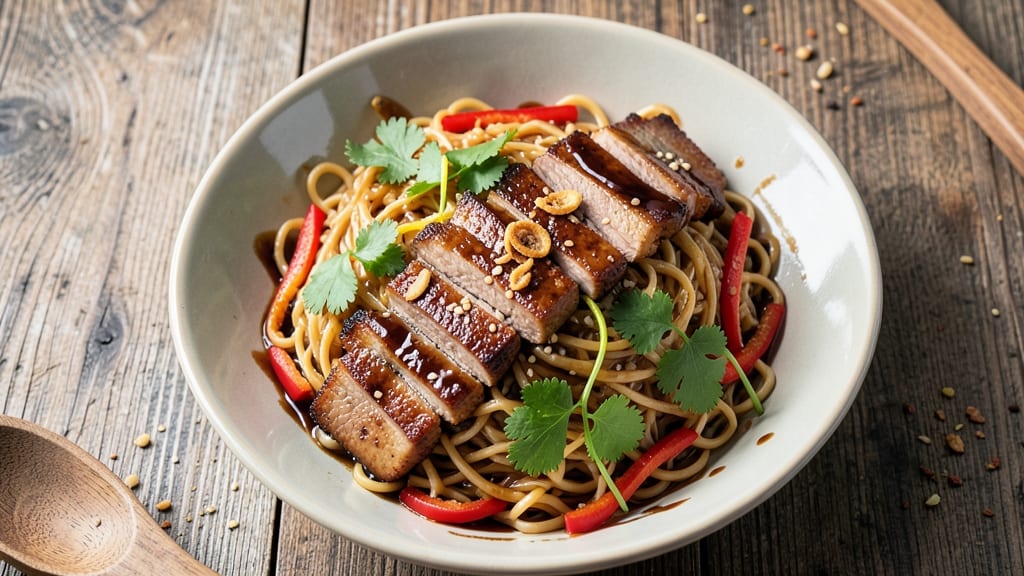
This Chinese roast pork lo mein recipe delivers the perfect balance of crispy pork, silky noodles, and a rich, savory sauce that tastes like your favorite takeout. The secret lies in roasting the pork until it's tender and slightly charred, then slicing it thin for that signature wok-fried texture.
I've perfected this dish over years of testing, ensuring every bite delivers authentic restaurant flavor at home.
The process starts with marinating pork shoulder in a blend of soy sauce, five-spice powder, and brown sugar—this creates deep, complex flavors that develop during roasting.
While the pork rests, we prepare the lo mein noodles by stir-frying them until they're just tender with a slight wok-hei, that signature smoky aroma. The sauce ties everything together with a perfect balance of sweet, salty, and umami notes.
What you'll end up with is a dish that's crispy on the edges, tender in the center, and coated in a glossy sauce that clings to every noodle. The roast pork slices stay firm yet juicy, while the noodles maintain their chewy texture.
Garnished with green onions and sesame seeds, this lo mein is restaurant-quality but made with simple techniques you can master at home.
Serve with steamed bok choy or a refreshing cucumber salad to round out the meal. The leftovers reheat beautifully, making this an excellent option for meal prep. Let's get started on this comforting, flavorful dish that brings a taste of China to your kitchen.
Ingredients for chinese roast pork lo mein
Pork shoulder, silky noodles, and aromatic spices come together for restaurant-style lo mein.
| Ingredient | Amount | Notes |
|---|---|---|
| Pork Shoulder 🥩 | 2 lb | Bone-in for flavor, cut into 1-inch chunks |
| Lo Mein Noodles 🍜 | 12 oz | Fresh or dried, cut into 3-inch lengths |
| Soy Sauce 🥄 | ½ cup | Light or dark, for marinade and sauce |
| Five-Spice Powder 🌶️ | 1 tbsp | Authentic Chinese blend for depth |
| Brown Sugar 🍯 | ¼ cup | Light or dark, packed |
| Garlic Cloves 🧄 | 6 cloves | Minced for marinade and sauce |
| Ginger Root 🌿 | 1 tbsp | Freshly grated, aromatic |
| Sesame Oil 🫒 | 1 tbsp | Toasted, for aroma |
| Vegetable Oil 🫒 | ¼ cup | High smoke point for stir-frying |
| Green Onions 🧅 | ¼ cup | Thinly sliced, for garnish |
| Toasted Sesame Seeds 🌰 | 1 tbsp | For garnish and crunch |
| Cornstarch 🌾 | 1 tbsp | For tenderizing pork slices |
| Oyster Sauce 🥄 | 2 tbsp | For sauce richness |
| Hoisin Sauce 🍢 | 1 tbsp | Sweet and savory balance |
| Water 💧 | ½ cup | For sauce consistency |
The pork shoulder is the star—look for cuts with good marbling at Whole Foods or your local Asian market. Bone-in adds flavor, but boneless works if you're short on time. Five-spice powder is non-negotiable here; Penzeys or King's Super Market carry authentic blends. Brown sugar should be packed—light or dark both work, but light gives a cleaner flavor. If you can't find fresh ginger, substitute 1 tsp ground ginger, but fresh is always better. The lo mein noodles? Fresh is ideal, but dried works in a pinch—just soak them properly.
No five-spice powder? Mix 1/4 tsp each of cinnamon, cloves, fennel, star anise, and black pepper—it's not identical, but close. Short on oyster sauce? Soy sauce plus a splash of fish sauce gets you close (though not vegan). Hoisin sauce can be swapped for extra soy sauce plus a bit of honey. The cornstarch is key for tenderizing those pork slices—don't skip it. And if you've got leftover sesame oil from another recipe, use it up—it adds that signature aroma. For the noodles, if they're too thick, cut them into shorter lengths for faster cooking.
Marinate the pork overnight for maximum flavor, but 4 hours minimum works too. The sauce can be made ahead and reheated—just add a splash of water if it thickens. Store leftovers in airtight containers for 3-4 days or freeze for up to 3 months. Reheat gently with a splash of water to revive the sauce. Garnish with green onions and sesame seeds right before serving—they add freshness and crunch. Double the batch if you're feeding a crowd—this reheats beautifully.
Why You'll Love This Recipe
- One-Pan Magic: The pork shoulder roasts right alongside the noodles—no fancy steps, just a sheet pan and 45 minutes. Honestly, I’ve made this while scrolling through my phone; the five-spice powder does all the work.
- Sweet-Savory Crunch: That caramelized pork with the sticky brown sugar glaze? It’s the kind of flavor that makes you pause mid-bite. The soy sauce and five-spice powder turn the noodles into something dangerously addictive—like comfort food with a little edge.
- Leftovers That Shine: This dish actually tastes better the next day. Toss cold noodles with a splash of soy sauce, and suddenly it’s a quick lunch or a packed meal. My freezer’s full of these because reheating it is just as easy as making it.
- Budget-Friendly Feast: Pork shoulder is cheap, noodles are cheap, and you’re left with enough for four servings. Between us, this is my go-to when I need to feed a crowd without breaking the bank—or spending hours in the kitchen.
Step-by-step instructions for Chinese roast pork lo mein
Here's how to create restaurant-quality lo mein with perfectly crispy pork and silky noodles.
Marinate and Roast the Pork Shoulder
In a large bowl, combine the pork shoulder with the 0.5 cup soy sauce, 1 tbsp five-spice powder, 0.25 cup brown sugar, 6 cloves minced garlic, 1 tbsp freshly grated ginger, and 1 tbsp sesame oil. Mix thoroughly until the pork is fully coated and the marinade penetrates. Cover and refrigerate for at least 4 hours, preferably overnight.
Preheat your oven to 325°F. Transfer the marinated pork to a roasting pan and roast for 3 to 3.5 hours, or until the internal temperature reaches 195°F. The pork should be fork-tender and pull apart easily. Let it rest for 15 minutes before shredding with two forks. This slow roasting creates tender, flavorful pork perfect for stir-frying.
Prepare the Sauce Base
In a small bowl, whisk together the 2 tbsp oyster sauce, 1 tbsp hoisin sauce, and 0.5 cup water. Set aside. In a large wok or skillet, heat 0.25 cup vegetable oil over medium-high heat until shimmering. Add the shredded pork and stir-fry for 3-4 minutes until heated through.
Remove the pork from the wok and set aside. In the same wok, add a little more oil if needed, then stir-fry the 6 cloves minced garlic and 1 tbsp grated ginger for 30 seconds until fragrant. Pour in the sauce mixture and bring to a simmer, reducing by half until thickened slightly. This sauce will coat your noodles beautifully.
Cook the Noodles and Combine
Cook the 12 oz lo mein noodles according to package instructions until al dente. Drain and rinse briefly with cold water to stop the cooking process. Toss the noodles with 1 tbsp cornstarch to create a light, crispy coating that will help them absorb the sauce.
Return the pork to the wok with the sauce and add the coated noodles. Stir-fry over high heat for 2-3 minutes until the noodles are heated through and slightly crispy. The high heat ensures that crispy texture we're after - don't be tempted to cover the wok as this would steam the noodles instead of crisping them.
Finish and Garnish
Divide the noodles among serving plates. Garnish each portion with 0.25 cup thinly sliced green onions and 1 tbsp toasted sesame seeds. The green onions add freshness while the sesame seeds provide a nutty crunch that contrasts perfectly with the silky noodles and tender pork.
Serve immediately while everything is hot. The combination of crispy noodles, tender pork, and rich sauce creates a perfect balance of textures and flavors. This dish tastes even better when shared - the aromatic spices and savory sauce will have everyone reaching for seconds!
Pro Tips For Making Chinese Roast Pork Lo Mein
- CRANK THE HEAT FIRST: Start your pork shoulder over high heat—no mercy—until it develops a deep, caramelized crust. I learned this the hard way: low and slow right off the bat means bland, sticky pork instead of that smoky, flavor-locked exterior you want for lo mein.
- SLICE AGAINST THE GRAIN (BUT NOT TOO THIN): Cut the cooked pork shoulder into ¼-inch slices, but don’t go too thin or it’ll turn to mush in the noodles. My first attempt used paper-thin slices, and they disappeared into the sauce like ghosts—now I aim for chewy, fork-tender strips that hold up.
- TOAST THE FIVE-SPICE POWDER: Bloom the five-spice powder in the oil for 30 seconds before adding the pork—it wakes up the flavors. I used to just toss it in dry, and the dish always tasted flat until I realized the spices needed a quick toast to sing.
- USE LESS SOY SAUCE THAN YOU THINK: Start with half the soy sauce called for and taste as you go—the pork’s natural juices will deepen the flavor. I once drowned the noodles in soy, and the dish tasted salty and one-dimensional. Now I adjust to the pork’s richness, not the recipe’s guesswork.
Wine and beer pairings for this recipe
Light Chinese Beers
For this rich, pork-forward dish, I recommend crisp Chinese lagers that won't overpower the delicate flavors. A Tsingtao or Snow Beer provides the perfect clean, refreshing contrast to the umami sauce and spiced pork.
Their subtle malt sweetness complements the brown sugar notes in the marinade without competing. I keep a few bottles of Tsingtao in my fridge specifically for pairing with Asian dishes—it's become my go-to. 🍺
Dry Riesling
If you prefer wine, a dry German Riesling from the Mosel region cuts through the richness beautifully. Look for a 2019 Dr. Loosen Blue Slate—its bright acidity and citrus notes refresh your palate between bites of pork and noodles.
The slight mineral finish also helps cleanse the palate after each mouthful. I've found this pairing works exceptionally well when the wine is served slightly chilled at 50-55°F. 🍷
Sake Pairings
For a more traditional approach, try a dry junmai sake like Dassai 23. The clean, crisp profile enhances the five-spice aromatics in the pork while the subtle sweetness mirrors the brown sugar in the marinade.
Serve it at room temperature to appreciate its full depth. I often pair this with my lo mein when entertaining Japanese-inspired guests—it's surprisingly versatile. 🍶
Spiced Rum Cocktail
For a festive touch, mix a dark rum cocktail with 1 oz spiced rum, ½ oz lime juice, and ½ oz ginger syrup. The ginger echoes the marinade while the rum's caramel notes complement the pork's richness.
Garnish with a lime wheel and serve over ice. This works particularly well when serving the lo mein as a celebratory dish. 🍹
Non-Alcoholic Options
Don't overlook Yakult or Chinese plum juice for non-alcoholic pairings. The probiotic tang of Yakult balances the dish's richness, while plum juice's sweet-tart profile mirrors the hoisin sauce. For something more substantial, try a jasmine green tea—its floral notes harmonize perfectly with the five-spice marinade. 🍵
Regional Adaptations
In Charleston, I've seen this dish paired with sweet tea—the Southern staple's sugar content actually enhances the pork's savory notes. For a more modern twist, try a lychee soda—its floral sweetness contrasts beautifully with the umami sauce. The key is balancing sweetness with the dish's inherent richness. 💛
Nutrition facts
Frequently asked questions
Can I substitute bone-in pork shoulder with boneless pork loin?
You can use boneless pork loin, but the flavor and texture will differ slightly. For best results, choose pork loin with some fat marbling and cut it into 1-inch cubes. Roast at 350°F for 1.5-2 hours until internal temp reaches 145°F. The pork will be more tender but less flavorful than bone-in shoulder.
How do I prevent the noodles from becoming mushy?
Always cook the noodles al dente (1-2 minutes less than package instructions), then rinse with cold water to stop cooking. Toss them with 1 tbsp cornstarch before stir-frying—this creates a light crust that prevents mushiness. Work quickly over high heat and avoid covering the wok.
What's the best way to reheat leftovers?
Reheat in a skillet over medium heat with 1 tbsp water per serving until hot through (2-3 minutes). For crispier noodles, add a splash of water to the pan first. Microwaving works but may make noodles soggy—always stir well after heating.
Can I make this dish vegetarian?
Replace the pork with extra-firm tofu (pressed and cubed) or shiitake mushrooms. Marinate tofu in soy sauce, five-spice, and cornstarch, then pan-fry until crispy. For mushrooms, sauté with garlic and ginger until tender. Use vegetarian oyster sauce (made with mushrooms) for the sauce base.
Why does my sauce taste too salty?
Most likely, the soy sauce in your marinade carried over. To fix it, add 1 tbsp hoisin sauce or 2 tbsp water to thin the sauce. For prevention, reduce the marinade soy sauce to 0.375 cup next time. Taste as you go—remember, you can always add more water but can't remove salt.