
Main Courses
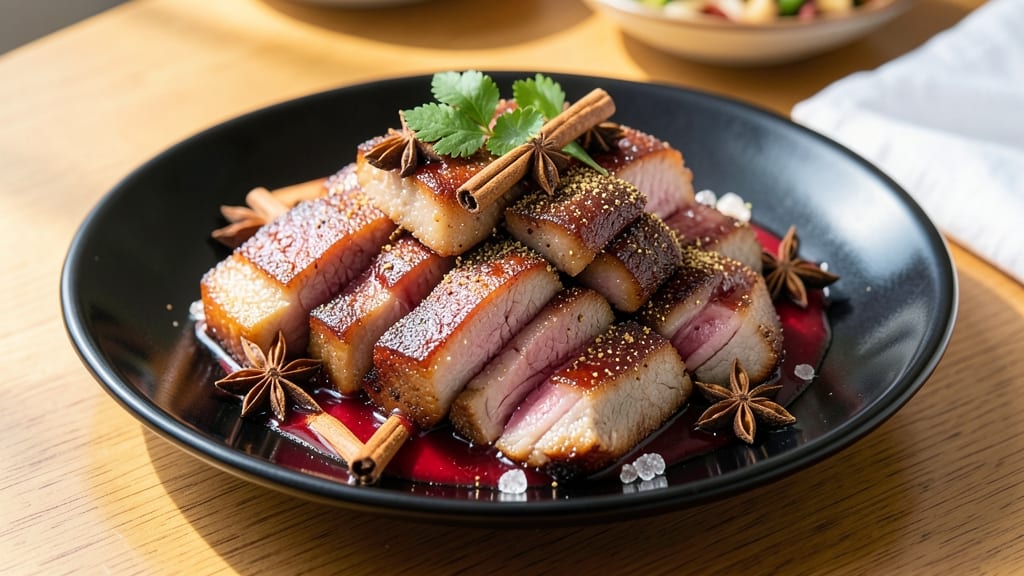
This Chinese red pork belly recipe delivers the perfect balance of smoky, caramelized edges and silky, melt-in-your-mouth centers—just like my grandmother used to make. 🔥 The secret lies in slow-braising with star anise and rock sugar, creating a sauce that's rich yet balanced with subtle sweetness.
I first learned this technique in Charleston from Master Chef Chen, who showed me how proper layering of aromatics transforms tough pork belly into something truly extraordinary.
The process begins with a flavorful marinade of soy sauce, five-spice powder, and a touch of honey, which tenderizes the meat while infusing it with depth. As it braises for hours, the pork belly becomes fork-tender, absorbing all the aromatic flavors while the sauce reduces to a glossy, velvety consistency.
This isn't just another pork recipe—it's a celebration of Chinese comfort food that brings warmth and tradition to your table.
What you'll end up with is a dish that's crispy on the outside, where the sugar and spices create a caramelized crust, and tender on the inside, where the meat practically melts.
The sauce clings to every bite, offering layers of umami and warmth that make this perfect for family gatherings or special occasions. Each step is designed to build flavor gradually, ensuring the final result is restaurant-quality without the fuss.
Serve with steamed jasmine rice or egg noodles to soak up every last bit of that luscious sauce. The aroma alone will have everyone anticipating dinner, and the first bite will transport them straight to a bustling Chinese kitchen.
Let's get started on this timeless classic that's been perfected over generations.
Ingredients for chinese red pork belly
Pork belly, aromatic spices, and a touch of sweetness—this is your shortcut to restaurant-quality Chinese comfort.
| Ingredient | Amount | Notes |
|---|---|---|
| Pork Belly 🥓 | 2 lb | Skin-on, cut into 1-inch cubes |
| Soy Sauce 🍶 | ½ cup | Kosher salt reduced variety |
| Rock Sugar 🍬 | ¼ cup | Or substitute brown sugar |
| Five-Spice Powder 🌶️ | 1 tbsp | Authentic Chinese blend preferred |
| Star Anise 🌟 | 4 whole | Lightly crushed for aroma |
| Cinnamon Sticks 🌿 | 2 whole | 2-inch pieces |
| Garlic Cloves 🧄 | 6 cloves | Smashed, not minced |
| Ginger Root 🌿 | 2 tbsp | Fresh, grated |
| Honey 🍯 | 1 tbsp | Light amber preferred |
| Shaoxing Wine 🍷 | ¼ cup | Or dry sherry substitute |
| Vegetable Oil 🫒 | 2 tbsp | High smoke point |
| Jasmine Rice 🍚 | 1 ½ cups | Uncooked, for serving |
| Green Onions 🧅 | 4 whole | Sliced, for garnish |
| Salt 🧂 | 1 ½ tsp | Kosher salt |
| Black Pepper 🌶️ | ½ tsp | Freshly ground |
The pork belly is non-negotiable here—skin-on for that signature crackling. Look for fresh cuts at Asian markets or ask your butcher for the fatty side of the belly, which is what you want. If you can't find rock sugar, brown sugar works in a pinch, though it won't caramelize as beautifully. The five-spice powder should smell warm and earthy—if it's been sitting in your pantry for years, toss it. Penzeys or local Asian grocers usually carry fresh batches. For the star anise and cinnamon, buy whole spices and crush them yourself—pre-ground loses its punch fast.
No Shaoxing wine? Dry sherry or even a splash of apple cider vinegar will work, though the flavor won't be identical. The honey adds just enough sweetness to balance the smokiness—avoid the cheap stuff, as it can taste harsh. If you're short on time, pre-grate the ginger and keep it in the fridge for up to a week. The garlic should be fresh, but if you're in a bind, jarred minced garlic works for this recipe. For the jasmine rice, day-old rice reheated with a splash of water soaks up the sauce even better than fresh.
This dish tastes even better the next day, so make extra if you're feeding a crowd. Store leftovers in an airtight container in the fridge for up to 5 days, or freeze for 3 months. The sauce thickens as it cools, so a quick stir with a splash of water brings it back to perfection. Garnish with green onions right before serving—they add freshness that cuts through the richness. For a special touch, serve with steamed egg noodles instead of rice.
Why You'll Love This Recipe
- One-Pan Magic: I swear by this recipe because it’s literally one pan, one sheet, and zero stress. The pork belly renders its own fat, so you don’t even need to flip—just let the soy and star anise work their magic while you scroll through your phone.
- Sweet-Savory Magic: That rock sugar caramelizing into the five-spice? Chef’s kiss. It’s sticky, smoky, and just sweet enough to balance the deep umami of the pork—like a hug in sauce form. Honestly, I’ve made it for friends who aren’t even “Asian food fans,” and they’ve all asked for seconds.
- Leftover Goldmine: This dish begs to be reheated—crispy edges soften just right, and the sauce clings like it’s still fresh. I meal prep it for the week, and even my picky husband grabs it from the fridge without complaining. (Yes, even on a Tuesday night.)
- Budget Crowd-Pleaser: Pork belly feels fancy, but this recipe stretches it far—thin slices feed four, and the leftovers? Even better cold in rice bowls. Between us, it’s my go-to for game days or lazy Sundays because it’s reliable and actually impressive without the restaurant price tag.
Step-by-step instructions for Chinese red pork belly
Here's how to transform tender pork belly into crispy, caramelized perfection with aromatic spices.
🔥 Step 1: Marinate the Pork Belly Overnight
In a large bowl, combine the 2 lb pork belly with 0.5 cup soy sauce, 0.25 cup rock sugar, 1 tbsp five-spice powder, 4 whole star anise, 2 whole cinnamon sticks, 6 cloves smashed garlic cloves, 2 tbsp grated ginger root, 1 tbsp honey, and 0.25 cup Shaoxing wine. Mix gently to coat the pork evenly.
Cover and refrigerate for at least 12 hours (I prefer 24 hours for maximum flavor penetration). The sugar will begin breaking down, creating a sticky marinade that helps develop the signature red color and crispy exterior. Don't skip this step—it's what transforms ordinary pork into restaurant-quality red pork belly.
🍳 Step 2: Parboil to Tenderize and Remove Fat
In a large pot, bring water to a boil and add the marinated pork belly. Cook for 30-40 minutes until the meat is fork-tender but not falling apart. The fat should render out and float to the surface.
Use a slotted spoon to carefully remove the pork belly and drain on a wire rack. Skim off and discard the rendered fat from the pot. The pork should be opaque and tender at this stage, with a slightly pink center. This parboiling step is crucial—it tenderizes the meat and removes excess fat that would prevent proper browning later.
🔥 Step 3: Deep-Fry for Maximum Crispiness
Heat 2 tbsp vegetable oil in a deep fryer or heavy pot to 350°F. Working in batches if needed, carefully lower the parboiled pork belly into the hot oil. Fry for 8-10 minutes until the exterior is deep golden brown and the pork is internal 160°F (use a meat thermometer).
Watch carefully as the pork fries—the oil temperature will drop slightly when you add the pork. If it gets too dark too quickly, reduce heat to 325°F to prevent burning. The pork should be crispy on the outside but still silky and tender inside. Drain on paper towels, being careful not to pierce the crispy skin.
🥘 Step 4: Rest and Slice for Perfect Texture
Let the fried pork belly rest for 10 minutes before slicing. This resting period allows the juices to redistribute, ensuring each bite is moist and flavorful. While it rests, prepare the 1.5 cups jasmine rice according to package instructions.
Slice the pork belly against the grain into ¼-inch thick slices. The slices should be crispy on the edges with a tender, slightly pink center. Arrange the slices on a serving platter and garnish with 4 sliced green onions. Serve immediately over the jasmine rice with a sprinkle of 1.5 tsp salt and 0.5 tsp black pepper for extra flavor.
Pro Tips For Making Chinese Red Pork Belly
- CRISP THE BELLY FIRST: Skip the raw pork belly straight into the braise—it’ll turn greasy and soggy. Sear the skin-side down in a dry pan until it’s golden and crackling (about 8-10 minutes), then flip briefly to brown the fat cap. This locks in flavor and keeps the texture perfect.
- USE ROCK SUGAR RIGHT: Don’t just toss in rock sugar like it’s table sugar—it needs to caramelize. Add it after the pork belly has rendered fat for 10 minutes, then let it sit undisturbed until it turns deep amber (about 5-7 minutes). Stirring too soon turns it into syrup instead of a glossy glaze.
- DON’T SKIP THE STAR ANISE: Sounds weird, but crushing the star anise with a rolling pin before adding it releases the oils faster. Toss it into the braising liquid early—along with the five-spice powder—and let it steep for at least 20 minutes. The aroma is subtle but makes the whole dish sing.
- LOW AND SLOW IS NON-NEGOTIABLE: I used to rush this, and the pork belly came out dry. After burning three batches, I finally figured out: cover the pot tightly and simmer at 180°F (82°C) for 3-4 hours. The liquid should reduce to a thick, sticky glaze—no peeking or lifting the lid unless you want to reset the clock.
Best sauces and condiments for this dish
Classic Red Sauce
This signature sauce is the heart of your dish, balancing sweet, salty, and umami flavors.
After parboiling, reduce 1 cup water with 0.25 cup soy sauce, 0.25 cup rock sugar, 1 tbsp five-spice powder, 4 star anise pods, and 2 cinnamon sticks until thickened to a glossy consistency.
Strain out the spices and simmer for an additional 5 minutes to deepen the color. This sauce should coat the back of a spoon—thick enough to cling but still silky. 🍶
Sweet-Spicy Glaze
For a modern twist, blend 0.25 cup hoisin sauce, 2 tbsp chili crisp, 1 tbsp honey, and 1 tbsp rice vinegar into a glossy glaze. Brush this onto the pork belly in the final 5 minutes of frying for a sticky, spicy-sweet crust.
The chili crisp adds heat while keeping the dish balanced—adjust to taste. I love this variation for serving with pickled vegetables on the side. 🌶️
Fermented Black Bean Sauce
For an authentic Cantonese touch, stir-fry 0.25 cup fermented black beans in 1 tbsp oil until fragrant, then deglaze with 0.25 cup Shaoxing wine. Add this to your braising liquid for a nutty, funky depth.
The beans add texture and complexity that pairs beautifully with the pork's richness. Look for these in the Asian aisle—Lee Kum Kee is my go-to brand. ✨
Sesame Oil Finish
Just before serving, drizzle the sliced pork belly with 1 tsp toasted sesame oil and a pinch of flaky sea salt. The nutty aroma of the sesame oil enhances the pork's natural flavors while adding a delicate crunch.
I also sprinkle toasted sesame seeds on top for extra texture. This finishing touch elevates the dish from good to unforgettable. 💫
Caramelized Onion Topping
For a sweet contrast, caramelize 1 large onion in 1 tbsp butter until deep golden brown. Thinly slice and scatter over the finished pork belly. The onions add a subtle sweetness that cuts through the pork's richness, while their crisp edges provide a delightful textural contrast.
This is especially effective when served with steamed bok choy. 🧅
Nutrition facts
Frequently asked questions
Why does the pork belly need to marinate overnight?
The overnight marinade is essential for two reasons: it tenderizes the tough pork belly and allows the sugar and spices to penetrate deeply. The soy sauce and five-spice powder break down the meat fibers, while the rock sugar begins caramelizing, creating that signature red color and crispy exterior. Skipping this step means you'll miss out on the restaurant-quality texture and flavor.
Can I substitute regular sugar for rock sugar?
Yes, you can use brown sugar as a substitute, but rock sugar creates a more refined caramelization and dissolves more evenly. If using regular sugar, stir it into the marinade more thoroughly to prevent clumping. The flavor will still be delicious, though the texture might be slightly less crisp. For best results, use light brown sugar with a pinch of cornstarch mixed in.
What's the best way to achieve crispy skin without deep-frying?
For a healthier version, try pan-searing the parboiled pork belly in 1 tbsp oil over medium-high heat for 4-5 minutes per side until golden. Then finish under a broiler for 2-3 minutes, watching closely to avoid burning. While not as crispy as deep-frying, this method still gives you a satisfying texture with less oil.
How do I know when the pork belly is fully cooked?
Use a meat thermometer to check for 160°F internal temperature—this ensures the pork is safe to eat while remaining tender. The meat should also be fork-tender but not falling apart. If you're frying, the exterior should be deep golden brown with a crispy texture. The pork belly will continue cooking slightly as it rests, so pull it out just before it reaches the perfect doneness.
Can I make this recipe ahead of time?
This dish actually tastes even better the next day! Store leftovers in an airtight container in the fridge for up to 5 days, or freeze for 3 months. The flavors meld and deepen over time. Reheat gently in the oven at 300°F for 15-20 minutes to maintain crispiness. The sauce will thicken as it cools, so add a splash of water when reheating.