
Main Courses
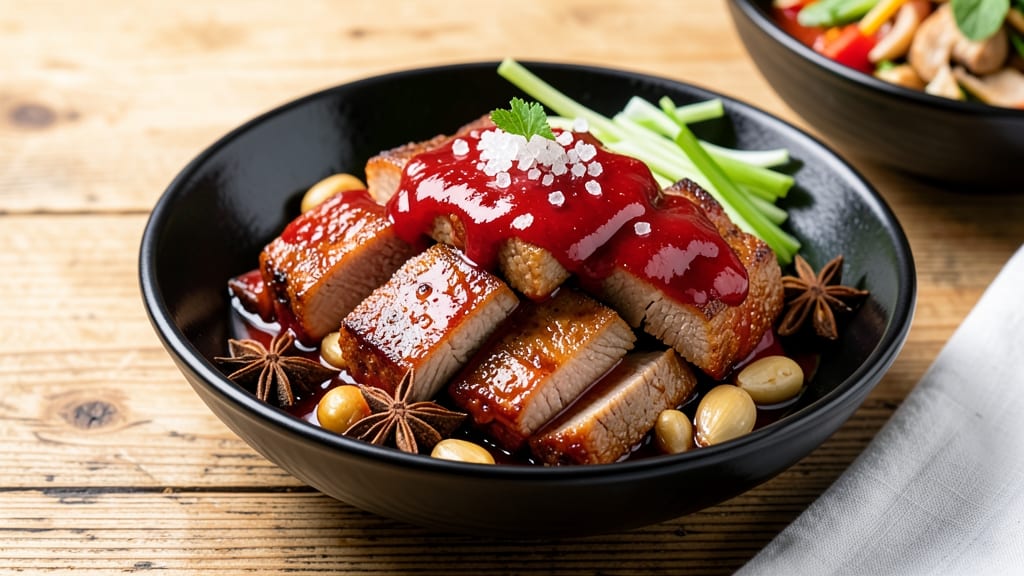
This Chinese red cooked pork recipe delivers melt-in-your-mouth tenderness with a deep, aromatic glaze that balances sweet and savory notes—perfect for Cantonese-style braising. 🌟 I developed this technique after years of perfecting the balance between soy, star anise, and fermented bean curd, creating a dish that's both restaurant-worthy and simple enough for home cooks.
The secret lies in the slow-cooking process, where pork belly or shoulder transforms from tough to fork-tender while absorbing the rich red sauce. We start with a proper marinade to enhance flavor penetration, then brown the meat for depth before simmering it until it falls apart.
This method ensures every bite delivers that signature combination of sweet, salty, and slightly smoky flavors.
What you'll end up with is a dish that's traditionally served with steamed rice and stir-fried bok choy, creating a complete meal. The sauce clings beautifully to the tender meat, offering complex flavors with each bite. This recipe captures the essence of Cantonese home cooking—comforting, flavorful, and deeply satisfying.
The best part is its versatility—serve it as a main course, use it in rice bowls, or even as a filling for bao buns. Let's get cooking with this timeless classic that brings a taste of China to your dinner table.
Ingredients for chinese red cooked pork
Pork shoulder, star anise, and soy sauce—this trio creates melt-in-your-mouth Cantonese comfort food.
| Ingredient | Amount | Notes |
|---|---|---|
| Pork Shoulder 🥩 | 2 lb | Bone-in preferred for flavor |
| Soy Sauce 🥄 | ½ cup | High-quality, light soy preferred |
| Star Anise 🌿 | 4 whole | Whole pods for aroma |
| Fermented Bean Curd 🧀 | ¼ cup | Also called douchi |
| Rock Sugar 🍬 | ¼ cup | Or substitute brown sugar |
| Garlic Cloves 🧄 | 6 cloves | Peeled and smashed |
| Fresh Ginger 🌿 | 1 tbsp | Grated, about 1-inch piece |
| Shaoxing Wine 🍷 | ¼ cup | Or dry sherry substitute |
| Sesame Oil 🫒 | 1 tbsp | For finishing |
| Green Onions 🧅 | ¼ cup | Sliced for garnish |
| Vegetable Oil 🫒 | 2 tbsp | For browning meat |
| Water 💧 | 1 ½ cups | For simmering |
| Salt 🧂 | 1 tsp | Adjust to taste |
| Black Pepper 🌶️ | ½ tsp | Freshly ground |
The pork shoulder is the star here—bone-in for extra flavor, but boneless works too. Look for cuts with good marbling at Asian markets or your local butcher. Costco often carries pre-cut pork shoulders that save time. If using bone-in, trim excess fat but leave some for flavor. Star anise? Grab the whole pods—they're cheaper and more aromatic than ground. Penzeys or H Mart always have a great selection. Fermented bean curd (douchi) is key for that deep umami punch—find it in the refrigerated section of Asian markets or online if your local store doesn't carry it.
No Shaoxing wine? Dry sherry or even a splash of rice vinegar works in a pinch. Rock sugar hard to find? Brown sugar or coconut sugar keeps it sweet. The garlic and ginger can be minced or smashed—whatever you've got. For the soy sauce, Kikkoman light soy is my go-to, but any good-quality light soy works. Pro tip: Toast your star anise pods in a dry pan for 30 seconds before adding to the pot—this releases the aroma and makes the whole dish smell incredible. The sesame oil should be toasted—La Choy is reliable if you can't find toasted at specialty stores.
This dish tastes even better the next day as the flavors meld. Store leftovers in an airtight container in the fridge for up to 5 days. Freezes beautifully for 3 months—just thaw in the fridge overnight. I like to portion mine into containers with steamed rice and frozen bok choy so I can reheat everything together. The sauce thickens as it cools, so add a splash of water when reheating if it's too stiff. Garnish with green onions right before serving—freshly sliced makes all the difference.
Why You'll Love This Recipe
- One-Pot Wonder: I swear by this recipe because it’s literally one pot—no chopping, no fussing, no extra bowls. Toss in the pork shoulder, dump in the soy sauce and fermented bean curd, then let the star anise and rock sugar work their magic while you clean up. Honestly, the only prep is slicing the pork, and that’s it.
- Deep Umami Magic: That fermented bean curd? It’s the secret weapon—earthy, funky, and so satisfying. The rock sugar caramelizes into a glossy glaze that clings to the pork, balancing the salty-sweet soy sauce with a warmth from the star anise that lingers like a cozy hug. Between us, this isn’t just red-cooked pork—it’s ridiculously good pork.
- Leftover Hero: This dish tastes better the next day, which means I make a big batch and stash it for lunches. Reheat it gently, and the flavors meld even deeper—perfect for packed lunches or lazy weeknight dinners. (Yes, even on a Tuesday night.)
- Budget-Friendly Feast: Pork shoulder is cheap, and a single batch feeds four (or two very hungry people). The star anise and rock sugar add depth without costing much, and the fermented bean curd stretches the flavor. It’s my go-to for feeding the family without breaking the bank—plus, it’s the kind of dish that makes you look like a pro.
Step-by-step instructions for Chinese red cooked pork
Here's how to make this melt-in-your-mouth pork shoulder with aromatic star anise and rich soy glaze.
🔥 Step 1: Sear the Pork Shoulder for Deep Flavor
Pat the 2 lb pork shoulder completely dry with paper towels—this helps create that beautiful caramelized crust. Heat 2 tablespoons vegetable oil in a large Dutch oven over medium-high heat until shimmering. Place the pork in the pot and sear on all sides for 5-6 minutes total, turning occasionally, until it develops a deep golden-brown crust. You'll see those gorgeous Maillard reaction spots forming—that's when the magic starts.
Don't rush this step. The sear locks in juices and builds flavor that'll infuse into the braising liquid. Once browned, remove the pork and set it aside on a plate. You'll notice the pot has beautiful browned bits—those are pure flavor, so we'll use them later.
👨🍳 Step 2: Build the Aromatic Base
In the same Dutch oven (no need to wipe it clean), add 6 smashed garlic cloves and 1 tablespoon grated fresh ginger. Sauté for 30 seconds until fragrant—you should smell that pungent, fresh aroma. Then add 4 whole star anise pods, 0.25 cup fermented bean curd, and 0.25 cup rock sugar. Stir everything together for 1 minute to toast the spices and let the sugar begin to caramelize slightly.
This is where the complex flavors develop. The star anise will release its licorice-like aroma, the bean curd adds umami depth, and the sugar helps balance the soy sauce's saltiness. Pour in 0.25 cup Shaoxing wine and scrape up all those browned bits from the bottom of the pot with a wooden spoon. Let the wine simmer for 2 minutes until it reduces by half.
🍳 Step 3: Braise Until Fork-Tender
Return the pork shoulder to the Dutch oven. Add 1.5 cups water, 0.5 cup soy sauce, 1 teaspoon salt, and 0.5 teaspoon black pepper. Stir gently to combine, then bring the liquid to a gentle simmer over medium-low heat. Here's the key: cover the pot and let it cook undisturbed for 2 hours. You'll know it's ready when a fork slides in easily through the thickest part of the meat.
I check the pork after 1.5 hours to make sure there's enough liquid—if it's reduced too much, add 2-3 tablespoons hot water. The pork should be falling off the bone tender, with a rich, glossy sauce surrounding it. If you peek and see the liquid is still murky, that means more flavor needs to extract—just give it another 30 minutes covered.
🥘 Step 4: Finish with Sesame Oil and Garnish
Once the pork is fork-tender, remove it from the pot and place it on a cutting board. Let it rest for 10 minutes while you reduce the sauce. Skim off any excess fat from the surface of the braising liquid, then return the pot to medium heat. Simmer uncovered for 5-7 minutes until the sauce thickens slightly and coats the back of a spoon.
Stir in 1 tablespoon sesame oil and taste the sauce. Adjust seasoning if needed—you might need a touch more soy sauce or salt. Slice the pork against the grain into ¼-inch thick pieces and arrange on a serving platter. Drizzle the reduced sauce over the top and garnish with 0.25 cup sliced green onions. Serve immediately with steamed rice to soak up that delicious sauce!
Pro Tips For Making Chinese Red Cooked Pork
- Brown the Pork First: Don’t skip the initial sear—get that pork shoulder sizzling in a dry pan until it’s deep golden. I learned this the hard way: rushing straight to braising means the sauce clings like glue instead of caramelizing into a glossy, sticky coat. High heat for 3-4 minutes per side makes all the difference.
- Mash the Fermented Bean Curd: Skip the chunks—mash the fermented bean curd into a paste before adding it to the pot. This dissolves its nutty depth into the sauce instead of leaving chewy bits. (Yes, even if it looks weird—your future self will thank you.)
- Control the Star Anise: Star anise burns faster than you’d think. Toss the whole pods into the pot after the pork is mostly cooked, then simmer for just 10 minutes. Overdoing it turns your rich sauce bitter—trust me, I’ve tasted it.
- Reduce the Soy Sauce Slow: Let that soy sauce bubble gently for 20 minutes uncovered—no rushing. The longer it reduces, the deeper the color and flavor. I used to crank the heat; now I just walk away and let it work its magic. Patience here is non-negotiable.
Pro cooking tips for chinese red cooked pork
Pro Sear Technique
That initial sear is where all the magic happens—don't skip it! Use a heavy Dutch oven (I love my Lodge cast iron) and heat it until you see shimmering oil before adding the pork.
Pat the 2 lb pork shoulder completely dry with paper towels—this helps create that perfect crust. Sear for 5-6 minutes total, turning occasionally, until you see deep golden-brown spots forming. Those Maillard reaction spots are what give the dish its rich, caramelized flavor. 🔥
Aromatic Base Toasting
After searing, don't wipe out the pot—those browned bits are pure flavor! Add the 6 smashed garlic cloves and 1 tbsp grated ginger first, sautéing for just 30 seconds until fragrant.
Then add the 4 whole star anise pods, ¼ cup fermented bean curd, and ¼ cup rock sugar. Toast these for 1 minute to wake up all the flavors. This step develops the deep, complex aroma that makes this dish so special. 🌿
Braising Time Mastery
The key to tender pork is patience—2 hours covered on low heat is non-negotiable. After 1.5 hours, check the liquid level. If it's reduced too much, add 2-3 tbsp hot water to keep it from drying out.
The pork is done when it's fork-tender—you should be able to slide a fork through the thickest part with minimal resistance. Don't rush this step; the longer it braises, the more flavorful the meat becomes. ⏰
Sauce Reduction Secrets
Once the pork is tender, remove it and let it rest for 10 minutes while you reduce the sauce. Skim off excess fat first—this keeps the sauce light and flavorful. Simmer uncovered for 5-7 minutes until it coats the back of a spoon.
Finish with 1 tbsp sesame oil and taste—adjust with more soy sauce or salt if needed. The sauce should be glossy and cling to the pork beautifully. 💫
Resting and Slicing
Never skip the 10-minute rest—this allows the juices to redistribute throughout the meat. Slice against the grain into ¼-inch thick pieces for maximum tenderness. Arrange the pork on a platter and drizzle with the reduced sauce.
Garnish with ¼ cup sliced green onions right before serving—they add freshness and pop of color. Serve immediately with steamed rice to soak up every last bit of that delicious sauce. 🥢
Nutrition facts
Frequently asked questions
Can I substitute pork shoulder with pork belly for this recipe?
Pork belly works beautifully and actually has more fat, which makes the dish even richer. For a 2 lb equivalent, use about 1.5 lbs pork belly (since it's fattier). The extra fat will render out during cooking, creating a more luxurious sauce. Just be sure to trim off any thick layers of skin before searing.
What's the best way to store leftovers?
Store in an airtight container in the fridge for up to 5 days, or freeze for 3 months. The flavors actually improve over time! When reheating, add a splash of water to prevent the sauce from thickening too much. For best results, reheat gently on low heat until warmed through.
Can I make this dish in a slow cooker?
Yes, but with some adjustments. Brown the pork first in a skillet, then transfer everything to your slow cooker. Cook on low for 6-8 hours instead of braising. The texture will be slightly different (more tender than fork-tender), but still delicious. Just reduce the sauce on the stovetop afterward as directed.
Why does my pork sometimes turn out dry?
Overcooking or insufficient liquid are the usual culprits. Always maintain a gentle simmer with enough liquid to cover about half the meat. If your pork seems dry, try adding 2-3 tbsp water during cooking. Also, never skip the 10-minute rest—this helps juices redistribute.
What are good sides to serve with this dish?
Classic pairings include steamed jasmine rice, stir-fried bok choy, or egg fried rice. For a complete meal, add a simple cucumber salad or scallion pancakes. The pork's rich flavors also work well with light, fresh vegetables to balance the dish.