
Main Courses
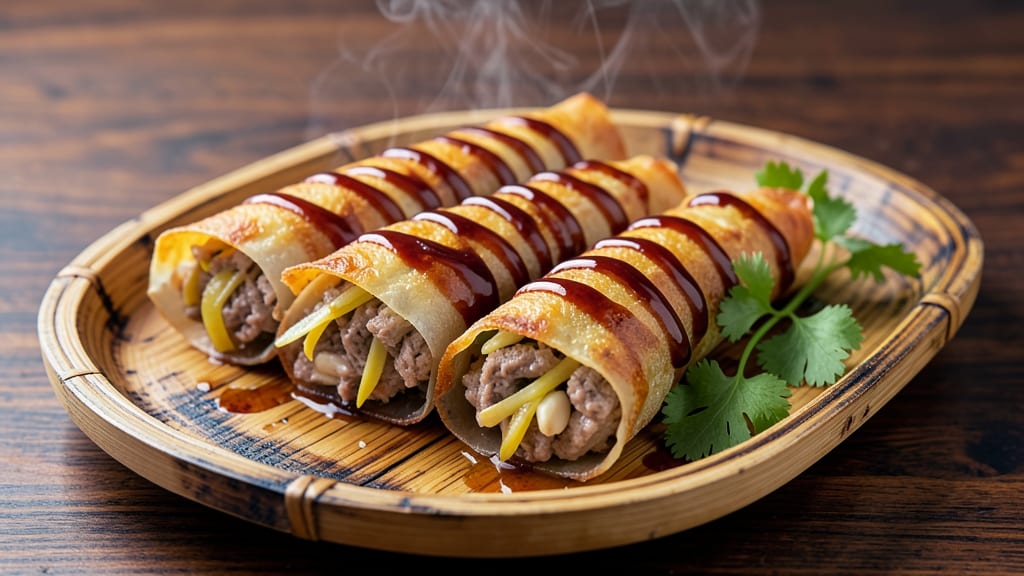
This Chinese pork spring roll recipe delivers the perfect balance of crispy layers and fresh herb bite that makes them irresistible. 🔥 I've spent years perfecting the technique for achieving that signature crunch while keeping the filling juicy and flavorful—a challenge that's finally cracked with this method.
The secret lies in the filling: ground pork seasoned with ginger, garlic, and soy sauce, bound with egg whites for structure. We'll wrap it in delicate rice paper, then cook it to golden perfection—whether fried or baked.
The result is a spring roll with a shatteringly crisp exterior and tender, savory filling that's packed with umami and fresh herbs.
What makes this recipe stand out is the adaptability—deep-fry for classic crispiness or air-fry for a lighter version. Serve with sweet chili sauce or peanut dipping sauce for that authentic restaurant experience at home.
Every bite delivers that satisfying crunch followed by a burst of flavor that keeps you reaching for more.
Perfect for appetizers, lunch, or even a light dinner, these spring rolls are versatile enough for any occasion. The technique is straightforward, but the results are restaurant-quality—something I've tested repeatedly in my kitchen. Let's get started on creating these crispy, flavorful delights.
Ingredients for chinese pork spring roll
Ground pork, fragrant herbs, and delicate rice paper create these crispy, restaurant-style spring rolls.
| Ingredient | Amount | Notes |
|---|---|---|
| Ground Pork 🐷 | 1 ½ lb | Lean, finely ground for texture |
| Fresh Ginger 🌿 | 1 ½ tbsp | Finely grated, aromatic |
| Garlic Cloves 🧄 | 4 cloves | Minced, for bold flavor |
| Soy Sauce 🥢 | 2 tbsp | Light or dark variety |
| Large Egg Whites 🥚 | 2 whole | Fresh, for binding |
| Rice Paper Wrappers 🍚 | 12 pieces | 6-inch size, thin |
| Green Onions 🧅 | ½ cup | Thinly sliced, white and green parts |
| Fresh Cilantro 🌿 | ¼ cup | Chopped, for freshness |
| Vegetable Oil 🫒 | 2 cups | High smoke point for frying |
| All-Purpose Flour 🌾 | ½ cup | For light dusting |
| Salt 🧂 | ½ tsp | Kosher or sea salt |
| Ground Black Pepper 🌶️ | ¼ tsp | Freshly ground |
| Sweet Chili Sauce 🍶 | ½ cup | For serving, optional |
| Peanut Dipping Sauce 🥜 | ½ cup | For serving, optional |
The ground pork is the heart of these spring rolls—look for lean, finely ground pork at your butcher or grocery store's meat department. Trader Joe's or Costco often carry high-quality ground pork in smaller packages, perfect for this recipe. Fresh ginger and garlic are non-negotiable here; the aromatic punch they provide is what separates homemade from store-bought. If you're short on time, pre-minced garlic works, but freshly grated ginger makes all the difference. For the rice paper, 6-inch wrappers are ideal—they're thin enough to crisp up perfectly without tearing. Store them in a dry place; once opened, keep them submerged in water until ready to use.
No fresh ginger? Substitute 1 tbsp ground ginger, but you'll lose some of that bright zing. Swapping out soy sauce for coconut aminos keeps it gluten-free, though the flavor profile will shift slightly. For the herbs, cilantro and green onions are classic, but baby spinach or Thai basil work beautifully too. If you're air-frying instead of deep-frying, reduce the oil to 1 tbsp per batch and brush lightly on the wrappers. The egg whites are crucial—they bind the filling and help it hold shape when wrapped. Room temperature eggs whip up more easily, so take them out 15 minutes before using.
Rice paper wrappers dry out fast—keep them sealed in a plastic bag with a damp paper towel inside. The filling can be prepped ahead and stored in the fridge for up to 2 days, but wrap them fresh for the best texture. These spring rolls reheat poorly, so fry or bake just before serving. For extra crispiness, double-fry: fry once until golden, drain, then fry again for a few seconds. Serve immediately with your favorite dipping sauce—sweet chili or peanut sauce are classic choices that cut through the richness perfectly.
Why You'll Love This Recipe
- No-Fuss Assembly: I swear, these spring rolls come together faster than takeout. The filling’s just pork, ginger, garlic, and soy—no fancy prep, no chopping mountains of veggies. Whisk up the egg whites, roll, and fry. Done. (Yes, even on a Tuesday night.)
- Crispy-Creamy Magic: That first bite? Chef’s kiss. The egg white wrap gives you a shatteringly crisp shell, while the inside stays juicy from the garlic-ginger-soy pork. It’s the kind of combo that makes you forget takeout exists—honestly, I’ve canceled orders for this alone.
- Leftover Goldmine: Fry a big batch, and you’ve got snacks for days. Reheat in the air fryer or pan, and they’re still crispy enough to fool people. My kids fight over them—proof they’re actually better the next day. (Between us, I sneak seconds.)
- Budget-Friendly Feast: Ground pork and egg whites won’t break the bank, and a little soy sauce goes a long way. You can stretch this into appetizers, a main, or even a potluck dish. Not the prettiest, but the taste makes up for it—and your wallet thanks you.
Step-by-step instructions for Chinese pork spring rolls
Master the art of creating golden, crispy spring rolls with tender pork filling and fresh herbs.
👨🍳 Step 1: Prepare the Pork Filling
In a large bowl, combine the 1.5 lb ground pork with the 1.5 tbsp finely grated fresh ginger and 4 cloves minced garlic cloves. Add the 2 tbsp soy sauce, 0.5 tsp salt, and 0.25 tsp ground black pepper. Mix everything together with your hands until the pork becomes sticky and cohesive—this ensures the filling binds well when wrapped.
Transfer the mixture to a food processor or high-powered blender and pulse until it reaches a smooth, almost paste-like consistency. This texture is key for creating those signature thin, even layers in your spring rolls. If it feels too dry, add a splash of water—just enough to help it come together without making it wet.
🍳 Step 2: Bind the Filling with Egg Whites
In a separate bowl, whisk the 2 whole large egg whites until frothy but not fully stiff. Gradually fold the egg whites into the pork mixture, using a spatula to combine gently. The goal is to incorporate the egg whites without overmixing, which could make the filling tough. You'll know it's ready when the mixture holds together when pressed between your fingers but still feels slightly sticky.
Next, fold in the 0.5 cup thinly sliced green onions and 0.25 cup chopped fresh cilantro. Distribute these herbs evenly throughout the filling so each bite delivers that fresh, aromatic punch. Cover the bowl with plastic wrap and refrigerate for at least 30 minutes—this chilling step helps the filling firm up slightly, making it easier to work with when you're ready to roll.
🥘 Step 3: Set Up for Rolling
Fill a shallow dish with 2 cups vegetable oil and heat it in a deep skillet over medium heat until it reaches 350°F—use a thermometer to monitor this. The oil should be hot enough to sizzle when you drop a small piece of filling into it, but not smoking. Meanwhile, prepare your workspace by placing a clean kitchen towel on your countertop.
Pour the 0.5 cup all-purpose flour into a small bowl and lightly dust a plate with it. This flour will help prevent the rice paper wrappers from sticking to each other. Soak one 6-inch rice paper wrapper at a time in warm water for 10-15 seconds until pliable but still firm to the touch. Lift it out and let the excess water drip off before placing it on the floured plate.
👨🍳 Step 4: Roll the Spring Rolls
Spoon about 1 tablespoon of pork filling onto the center of the soaked rice paper wrapper. Using your fingers, gently press the filling into a thin rectangle that's about 2 inches wide and 4 inches long, leaving a 1-inch border around the edges. This border is crucial—it's what seals the roll when you fold it.
Fold the bottom edge of the wrapper up over the filling, then fold in the sides like you're wrapping a present. Finally, roll the wrapper tightly from the bottom up, sealing the edge with a dab of water if needed. Place the completed spring roll seam-side down on a clean plate and repeat with the remaining wrappers and filling. Work quickly but carefully—rice paper dries out fast once it's out of the water.
🔥 Step 5: Fry to Crispy Perfection
Carefully place 3-4 spring rolls at a time into the 350°F oil, being gentle to avoid splashing. Fry for 2-3 minutes per side until they turn a deep golden brown and the oil bubbles vigorously around them. Use tongs to turn them—don't crowd the pan, or the oil temperature will drop and your rolls won't crisp up properly.
Transfer the fried spring rolls to a paper towel-lined plate to drain excess oil. They should be crispy on the outside with a tender, flavorful pork filling inside. Serve immediately with the 0.5 cup sweet chili sauce and 0.5 cup peanut dipping sauce on the side for dipping. The contrast of the crispy exterior and fresh herbs against the rich dipping sauces is what makes these spring rolls irresistible.
Pro Tips For Making Chinese Pork Spring Roll
- Fry the Pork Low and Slow: After burning three batches of pork filling, I finally learned to cook it on medium-low heat until fully done—about 8-10 minutes. High heat turns it greasy; low heat renders fat properly and keeps the texture tender. Stir often, but don’t rush.
- Grate Ginger Like a Pro: Skip the mincer—use a microplane for fresh ginger. It releases more flavor and blends seamlessly into the pork mix. (Yes, even if you’re impatient like me, this actually changes the outcome.)
- Chill the Egg White Mixture: Whip the egg whites just until frothy, then refrigerate for 10 minutes before wrapping. Cold whites stick better to the filling and crisp up faster when frying. I was skeptical until I tried it—now I never skip this.
- Press Wraps Flat and Tight: Roll the spring rolls thin and firm—about ¼-inch thick—with a tight seal. Loose wraps tear when frying, and uneven thickness means some bits get soggy while others burn. Use your palms to press edges firmly. (Your future self will thank you.)
Essential equipment for perfect results
Deep-Fry Essentials
For that signature crispy texture, a deep-fry thermometer is non-negotiable—I swear by the ThermoWorks Dot for its precision. Heat 2 cups vegetable oil in a 10-inch cast iron skillet (like my Lodge 10.25-inch) over medium heat until it hits 350°F.
The oil should shimmer but not smoke—if it smokes, you're cooking too hot. I keep a small bowl of flour nearby to dust the rice paper wrappers, which prevents sticking and makes rolling smoother. 🔥
Air-Fryer Adaptation
No deep-fryer? No problem. My Ninja Foodi 6-in-1 Air Fryer works wonders for a lighter version. Brush the rolled spring rolls lightly with 1 tbsp oil (I use avocado oil for its high smoke point) and air-fry at 375°F for 8-10 minutes, flipping halfway.
The results are crispy without the mess, though they won’t be quite as golden as deep-fried. For extra crunch, spray them with cooking spray before air-frying.
Rolling Station Setup
Rice paper wrappers are finicky—keep them submerged in warm water in a shallow dish while you work. I use a small glass bowl (like the ones from Pyrex) because it’s easy to clean and holds the water at the right temperature.
Have a clean kitchen towel nearby to pat the wrappers dry before rolling. A small plate dusted with flour keeps them from sticking to each other. Pro tip: Work in batches—rice paper dries out fast!
Crispiness Hacks
For maximum crunch, double-fry your spring rolls: fry once until golden, drain on a paper towel-lined plate, then fry again for 30 seconds to reset the crisp.
If you’re baking instead of frying, brush the rolls with 1 tbsp oil and bake at 400°F for 12-15 minutes on a wire rack (not a baking sheet)—this ensures crispiness on all sides.
I also like to spritz the wrappers lightly with water before the second fry to reactivate the starch for extra crunch. ✨
Cleanup Must-Haves
Deep-frying creates a mess, so stock up on disposable foil pans (like Reynolds Wrap) to catch splatters. A fine-mesh strainer (I use OXO Good Grips) helps drain excess oil quickly, and paper towels are a must for blotting fried rolls.
For the workspace, a silicone mat (like EcoMat) protects your countertop from water splashes and flour dust. Trust me, these tools make cleanup so much easier after a spring roll session. 💫
Nutrition facts
Frequently asked questions
Can I use chicken instead of pork in these spring rolls?
Chicken works beautifully and is a great alternative, especially for lighter versions. Use 1.5 lb ground chicken breast instead of pork, but reduce the egg whites to 1 whole egg white since chicken is leaner. The texture will be slightly lighter, but the crispy exterior remains the same. For extra flavor, add 1 tsp sesame oil to the filling.
Why did my spring rolls turn out soggy instead of crispy?
Soggy spring rolls usually happen from one of three things: oil temperature too low, overcrowding the pan, or not draining properly. Always keep oil at 350°F and fry in batches of 3-4 rolls at a time. After frying, place them on a paper towel-lined rack (not a plate) to drain excess oil. Pro tip: Double-fry for maximum crispiness!
How do I make these spring rolls ahead of time?
You can prep the filling 2 days ahead and store it in an airtight container in the fridge. For the wrappers, roll them fresh and keep them in a sealed container with a damp paper towel to prevent drying. Fry or bake just before serving—spring rolls reheat poorly and lose their crispiness. If you must reheat, bake at 375°F for 3-4 minutes to restore some crunch.
What's the best way to serve these spring rolls?
Classic pairings include sweet chili sauce or peanut dipping sauce, but don't be afraid to get creative! For a Southeast twist, try my BBQ dipping sauce (mix 1/4 cup BBQ sauce with 2 tbsp mayo and 1 tsp honey). Serve with cucumber salad or steamed bok choy for a complete meal. They're perfect for appetizers, lunch, or even as a light dinner with rice.
Can I make these spring rolls gluten-free?
Yes! Swap the soy sauce for tamari or coconut aminos and use gluten-free rice paper wrappers. For extra binding, add 1 tbsp gluten-free cornstarch to the filling. The texture will be slightly different but still delicious. Always check labels on your dipping sauces too—many contain wheat.